
Houthis Attack Saudi Red Sea Energy Routes, Maritime Blockade
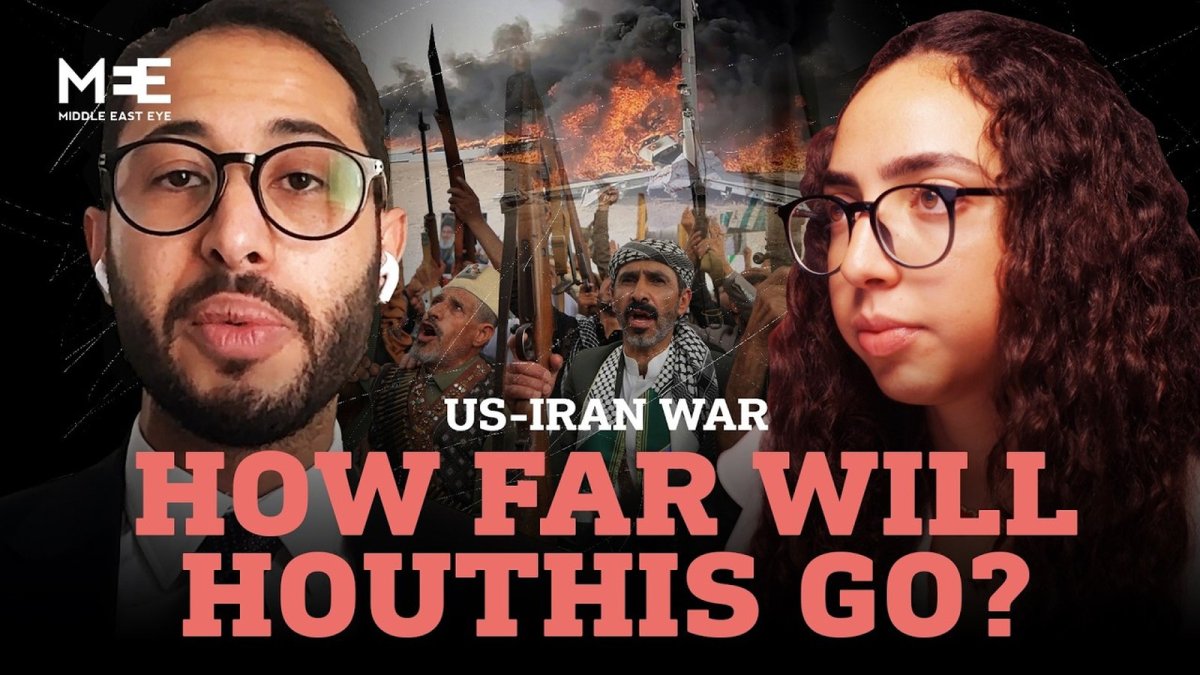
In a recent Middle East Eye report, Yemen expert Ibrahim Jalal analyzed whether the Houthis can change the course of the Iran war. The group has attacked Saudi Red Sea energy infrastructure and tankers, declared a maritime blockade, and killed at least 30 Yemeni soldiers in Marib and Hadramout as Riyadh weighs a military response.
In a recent Middle East Eye report examining whether the Houthis could change the course of the Iran war, senior researcher Ibrahim Jalal outlined the motivations driving Ansar Allah's recent actions and the risks of broader regional involvement. The US-Israeli war on Iran, now in its sixth month since strikes began in February 2026, has drawn the Houthis into direct confrontation with Saudi Arabia through a series of maritime and aerial attacks. These developments threaten to reopen Yemen's civil war while disrupting vital energy routes in the Red Sea.
Houthis Escalate Red Sea Strikes on Saudi Energy Routes
Sanaa, Yemen – August 7, 2026 — The Houthis have launched a sustained campaign of attacks on Saudi Arabian targets, including oil facilities and airports, in what they describe as retaliation for Riyadh's restrictions on Yemeni ports and airspace. Houthi military spokesman Yahya Saree has claimed multiple strikes on tankers and energy sites, while Saudi officials report interceptions and civilian injuries in Najran province.
Background to the Escalation
The US-Israeli war on Iran began with strikes in February 2026. Roughly one-fifth of the world's traded oil and gas passed through the Strait of Hormuz before the conflict. Yemen's civil war, which started in 2014 when the Houthis took over Sanaa, saw a Saudi-led coalition intervention begin in 2015. After four years of relative calm since 2022, fighting has intensified in recent weeks.
Houthi leader Abdul Malik al-Houthi has framed the current campaign as retaliation for a 12-year Saudi blockade of Yemen. The group says its actions respond to Riyadh's prohibition, at the request of Yemen's internationally recognised government, on certain maritime and air travel to block Iranian weapons supplies.
The Houthi movement's evolution from a local Zaydi revivalist group into a formidable military actor reflects years of adaptation amid isolation and external pressure. After consolidating control in the capital, the movement faced a prolonged Saudi-led intervention that aimed to restore the previous government but instead produced a grinding stalemate across front lines. During this period, the Houthis developed indigenous missile and drone production networks, drawing on smuggled components and reverse-engineering to create a credible deterrent against superior air forces.
This capability fostered a "siege for a siege" approach, whereby restrictions on Yemeni ports and airspace were met with reciprocal threats to regional shipping and energy routes. The outbreak of wider conflict involving Iran altered these calculations, prompting the Houthis to recalibrate their posture from defensive survival toward leveraging their geographic position at the Bab al-Mandab strait as part of a broader regional pressure campaign.
Initial Cross-Border Exchanges in July
On July 13, 2026, the Saudi Air Force allegedly bombed the runway at Sanaa International Airport to prevent an Iranian plane from landing. The Houthis responded with an attack on Saudi Arabia's Abha airport, which Riyadh said was intercepted.
By July 20, the Houthis declared a maritime blockade of Saudi Arabia in the Red Sea, calling it a "siege for a siege" campaign. Throughout July, the group claimed attacks on three Saudi tankers: NCC Ghazal, Encelia, and Layla. Riyadh confirmed on July 23 that an attack on the Encelia caused a fire.
Strikes on Energy Infrastructure
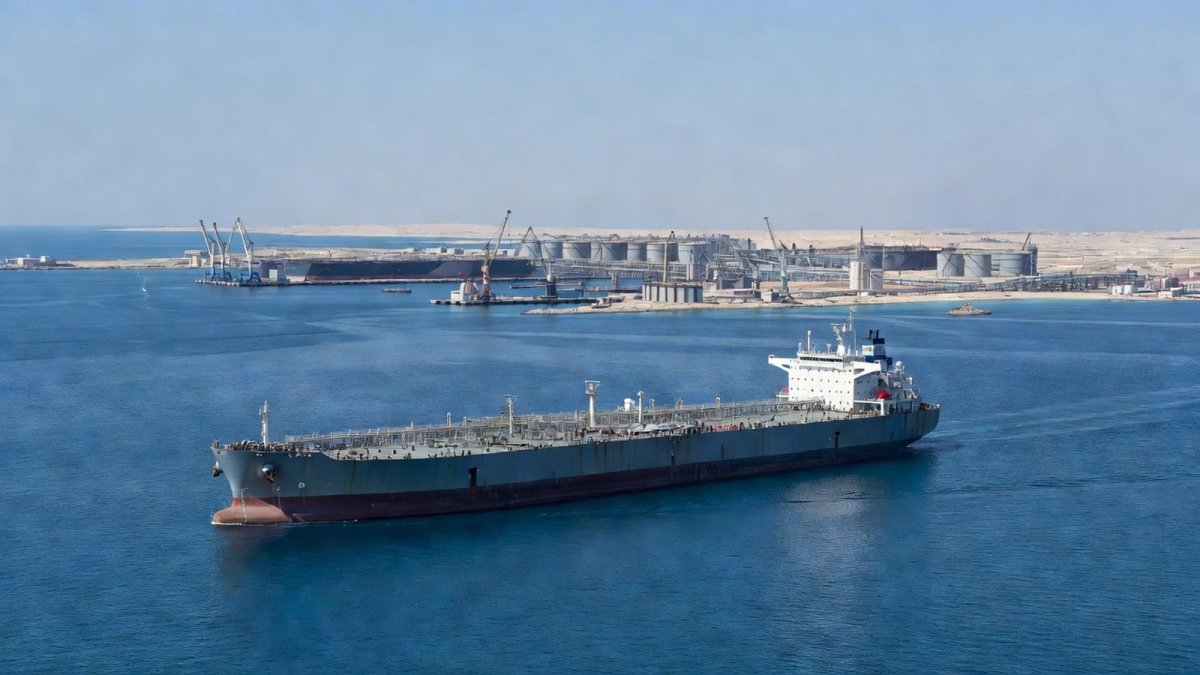
On July 25, the Houthis claimed attacks on energy facilities at Yanbu and Jazan, a Saudi Red Sea refinery processing 400,000 barrels per day. Saudi Aramco suspended operations at Jazan following the attack. Analyst Kate Dourian at the Energy Institute in the UK described Yanbu as a vital artery for oil since the closure of the Strait of Hormuz, noting that any disruption would send immediate shockwaves through the market.
On July 27, Saudi Arabia's eastern energy facilities, including Abqaiq, the world's largest crude oil stabilisation plant, were targeted by drones and seen on fire. Riyadh blamed Iran-backed militias in Iraq, while the Houthis claimed the attack. On August 5, Saree claimed a ballistic missile attack on the Wafa, a Saudi oil tanker near Yanbu, which exports around 4 million barrels per day.
Facilities such as Abqaiq represent critical nodes in global energy supply chains, where any disruption carries immediate ripple effects far beyond the immediate combatants. The 2019 precedent demonstrated how quickly attacks on stabilisation infrastructure can unsettle markets and raise questions about the security of even heavily defended sites. Yanbu's role as a major export terminal underscores the vulnerability of concentrated export points that handle millions of barrels daily.
Analysts like Kate Dourian have noted that sustained targeting of such assets risks compounding existing volatility in oil prices, with consequences that ultimately fall heaviest on households across the region already struggling with inflation and supply shortages. For ordinary civilians in Yemen and neighbouring states, these strikes threaten to deepen economic hardship without resolving the underlying political grievances that fuel the conflict.
Maritime Coalition and Regional Response
On July 30 and 31, Saudi Arabia announced a maritime coalition to protect the Red Sea with 13 other countries, forming a 14-member group that notably excludes the United States and the European Union. UKMTO reported a tanker master hearing a loud explosion in the Gulf of Aden and separately an attack off Yemen north of the Bab al-Mandeb strait by an uncrewed surface vessel that caused a fire, with the crew rescued and the vessel reported sunk.
On August 4, Saree claimed an attack on Saudi Arabia's southern Najran airport in response to Saudi drones violating airspace over Saada and Hodeidah. Later on August 5, Saree said the Houthis successfully targeted the Saudi oil tanker Daisy in the Gulf of Aden. Saudi Arabia has not confirmed either strike.
Renewed Fighting Inside Yemen
On August 6, the Houthis killed at least 30 Yemeni government soldiers and wounded 15 in missile and drone attacks on military camps in Hadramout and Marib governorates, government sources told Al Jazeera. Some reports put the death toll as high as 58. The attacks represent the fiercest military escalation in Yemen since 2022.
Yahya Saree said the attacks, using missiles and drones, led to hundreds of casualties. Yemeni military sources said the Houthis fired eight missiles from al-Jawf governorate targeting al-Thiniya and al-Abr in Hadramout and al-Rouk in Marib. The strike hit at 2pm local time on camps of the Homeland Shield Forces, formed in 2022 with Saudi backing and numbering tens of thousands, the Emergency Forces created by presidential decree in late 2025, and the First Military Region. Casualties were high because troops had gathered for a morning training exercise.
The August 6 attacks signal a dangerous erosion of the fragile 2022 truce that had allowed limited humanitarian access and reduced large-scale ground offensives. Yemen's humanitarian crisis, long described by UN assessments as among the world's most severe, now faces renewed strain as supply routes and aid corridors come under fresh threat from intensified clashes.
Years of war have left state institutions fragmented, with competing authorities controlling different territories and struggling to deliver basic services. Escalation places civilians in an impossible position, caught between Houthi forces and Saudi-backed government units, where displacement, loss of livelihoods, and restricted access to food and medicine become daily realities rather than temporary disruptions.
Human Impact and Civilian Toll
Early on August 7, a Saudi official accused the Houthis of indiscriminately shelling civilian areas in southern Najran province, injuring 11 civilians including a four-year-old child. The injured included seven Saudis, one Yemeni, two Egyptians and one Pakistani national. Maj Gen Turki al-Maliki, spokesperson for the Saudi-led coalition, called it a flagrant violation of international humanitarian law.
Saree warned pro-government fighters to leave the Saudi enemy camps and return to their homes before it is too late. Yemen's defence ministry said its armed forces would respond at the appropriate place and time, while the health minister ordered medical facilities to increase readiness. The US embassy in Yemen called the attacks cowardly and yet another example of terrorism against Yemeni people.
Diplomatic Efforts and Future Risks
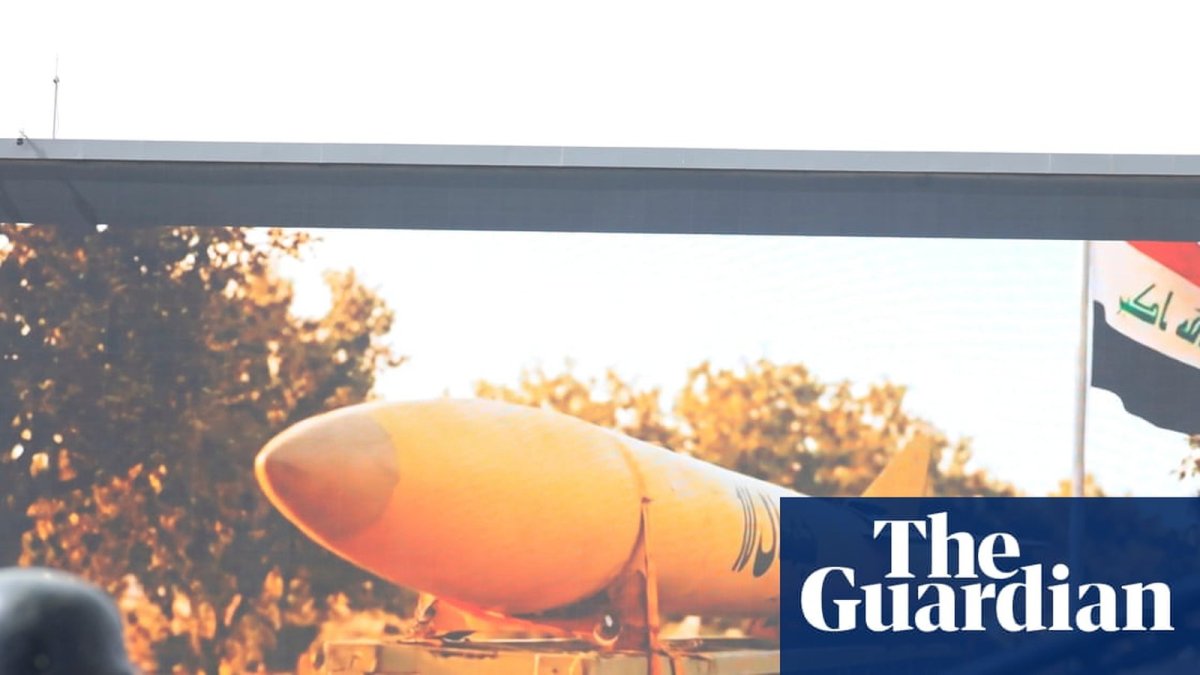
Yemeni sources say Saudi Arabia is preparing for a major military offensive against the Houthis by sea and possibly by land in central Yemen to break their chokehold on Saudi oil exports through the southern Red Sea. A senior Saudi official said the kingdom expected imminent coordinated attacks from the north and south by Iraqi militias and the Houthis under the supervision of Iran's Islamic Revolutionary Guard Corps, with intelligence indicating civilian and economic sites could be targeted.
Saudi Arabia is reportedly in talks with the Houthis via Oman, which mediated the May 2025 end of Operation Rough Rider. Riyadh denies talks. Iran and Oman say negotiations on an agreement over the Strait of Hormuz are in their final stage of drafting, likely contingent on the US lifting its blockade on Iran's ports.
Implications for Yemen's Frozen Conflict
Houthi spokesman Abdul Malik al-Mekhlafi said the escalation reflects a project of perpetuating the war and preventing the restoration of the state. The August 6 attacks on government camps threaten to reignite a conflict that had been in relative calm since 2022, placing additional strain on a population already enduring one of the world's worst humanitarian crises.
The involvement of the Houthis opens a second front against Saudi Arabia, the largest US ally in the region, while raising questions about whether such actions strengthen Iran's position or provoke wider retaliation. Yemen's people continue to bear the heaviest costs as regional powers maneuver amid the ongoing war on Iran.
Observers remain divided on whether current developments will reignite full-scale civil war or remain contained to maritime and energy targets. Oman's longstanding role as a discreet mediator offers one of the few channels still open for de-escalation talks, particularly given its geographic position and established contacts with multiple parties.
The timing of Houthi actions intersects with Iran-Oman discussions over Hormuz, raising questions about whether such involvement bolsters Iran's negotiating leverage or instead risks drawing direct US and Saudi military responses. In the coming weeks, much will depend on whether back-channel diplomacy can prevent a cycle of retaliation that further entrenches suffering for Yemen's population.
By Fatima Al-Rashid, Staff Writer
This article was produced with AI-assisted research and editorial support. Reporting is based on sources cited in the article.
What's Your Reaction?
 Like
0
Like
0
 Dislike
0
Dislike
0
 Love
0
Love
0
 Funny
0
Funny
0
 Wow
0
Wow
0
 Sad
0
Sad
0
 Angry
0
Angry
0

Gulf/MENA Correspondent at Global1.News. Based in Doha, covering Gulf politics, energy markets, diplomacy, and development across the Middle East and North Africa. Tracks the economic transformation of the Gulf states.











Comments (0)