
Houthi Strikes on Yemen's Mocha Port Kill Workers, Halt Operations as Fragile Truce Collapses
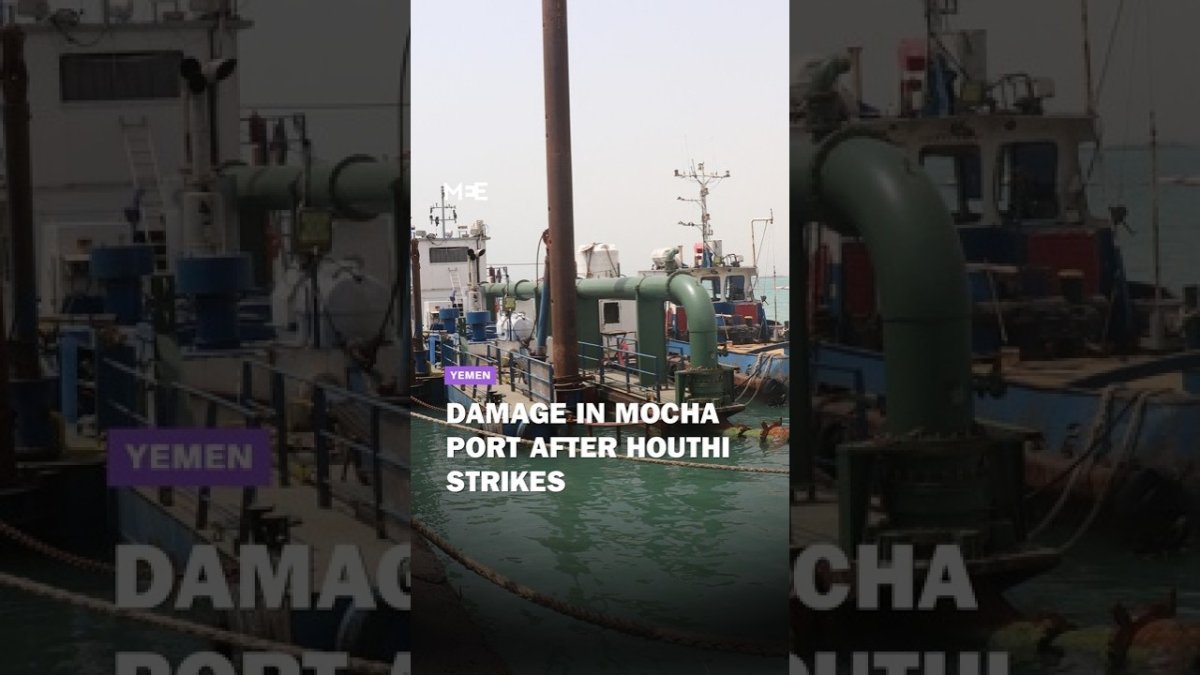
In a recent Middle East Eye report, footage from Yemen's Mocha port on the Red Sea captured the aftermath of Houthi missile strikes that killed three workers and left the facility's dock, cargo ships and goods in ruins. The attack on Friday, 14 August, marked a dramatic escalation in a conflict that had been largely quiet since a 2022 truce, and it has now forced the suspension of all commercial and maritime operations at one of Yemen's most strategically vital ports.
In a recent Middle East Eye report, footage from Yemen's Mocha port on the Red Sea captured the aftermath of Houthi missile strikes that killed three workers and left the facility's dock, cargo ships and goods in ruins. The attack on Friday, 14 August, marked a dramatic escalation in a conflict that had been largely quiet since a 2022 truce, and it has now forced the suspension of all commercial and maritime operations at one of Yemen's most strategically vital ports.
Houthi strikes on Yemen's Mocha port kill workers, halt operations and deepen a humanitarian crisis as a fragile truce collapses
MOCHA, Yemen — The port director, Abdulmalik al-Sharabi, told a news conference in the Red Sea port city on Saturday that repeated Houthi missile and drone attacks had forced the suspension of commercial and maritime operations at Mocha port, causing an estimated $16 million in damage, according to Yemen's state-run Saba news agency. The attacks, which began on 9 August, have killed seven people — four security personnel and three port employees — and struck the facility with more than 25 missiles, the first attacks on the port since the 2022 truce between Yemen's internationally recognised government and the Houthis.
A port under siege: The human cost of a strategic target
Mocha, known historically as al-Makha, is a Red Sea port in south-western Taiz province, situated near the Bab al-Mandab Strait, a critical chokepoint for global shipping. The port has long been a lifeline for the region, serving as a gateway for food, fuel and humanitarian aid to millions of Yemenis. Its location, however, has also made it a target in the broader regional conflict that has drawn in the Houthis, Iran, Saudi Arabia and the United States.
Al-Sharabi said the damage included six wooden vessels and a dredger used in the port's expansion project, a multi-million-dollar initiative aimed at modernising the facility and increasing its capacity. The suspension of operations has deprived 1,300 workers of their livelihoods, many of whom are now left without income in a country already grappling with one of the world's worst humanitarian and economic crises. Local residents described scenes of panic as missiles struck near residential areas, with several fishing boats set ablaze in the harbour.
Escalation after a fragile truce
The attacks on Mocha come amid escalating tensions between the Houthis and Yemen's internationally recognised government, following the collapse of a years-long truce that had largely held since April 2022. The truce, brokered by the United Nations, brought a relative calm to the country after years of devastating conflict between government forces and the Houthis, who have controlled the capital, Sanaa, and other areas since September 2014. But the wider US-Israel war on Iran has reshaped the region, with the Houthis emerging as a key front in that conflict, launching missiles and drones at targets in Saudi Arabia, Israel and international shipping lanes.
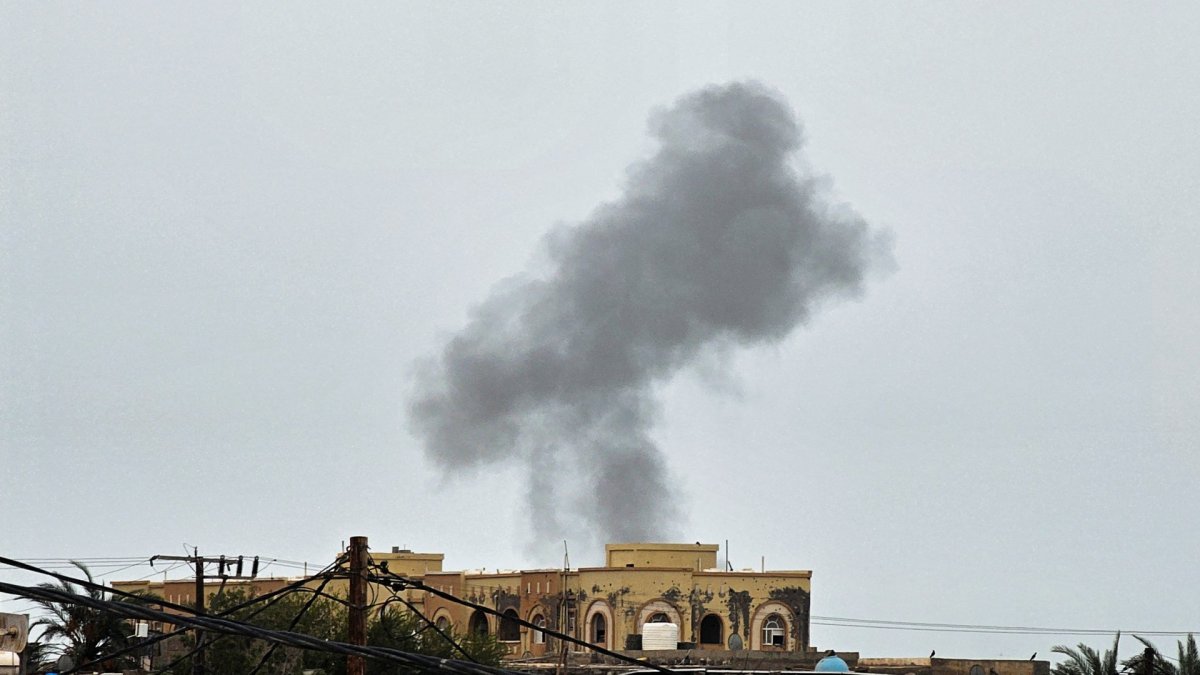
Yemen's internationally recognised government said the Houthis fired six ballistic missiles at Mocha on Friday, killing at least four civilians. An unnamed Yemeni military official told AFP that the strike killed at least eight people, including two security personnel. The government-aligned National Resistance Forces said the Houthis launched 40 ballistic missiles, 46 drones and explosive-laden boats targeting Mocha, its port and civilian sites in recent days. The Houthis, for their part, said they targeted military gatherings, weapons depots and military boats in the Mocha area. The claims could not be independently verified.
A $130 million project in ruins
The attacks coincided with a project to rehabilitate, expand and operate the port, costing more than $130 million. The project, which was seen as a cornerstone of the government's efforts to revive the local economy and attract investment, has now been dealt a severe blow. The dredger that was damaged in the strikes was a key piece of equipment for the expansion, and its loss is expected to delay the project by months, if not longer.
Port officials said the damage to the dock, cargo ships and goods in the port was extensive, with cranes and loading equipment also affected. The estimated $16 million in damage does not include the long-term economic impact of the suspension, which has halted the flow of goods to Taiz and neighbouring provinces. Local traders said they were unable to move essential supplies, including wheat, cooking oil and medicine, and warned of shortages in the coming weeks.
Political fallout and warnings of humanitarian catastrophe
Presidential Leadership Council Chairman Rashad al-Alimi warned that targeting the port threatened shipping traffic and food and fuel supplies, with serious humanitarian and economic consequences. His statement echoed concerns from international aid agencies, which have long warned that the collapse of Yemen's ports would push millions deeper into hunger and poverty. The United Nations has described Yemen as facing one of the world's worst humanitarian crises, with more than 20 million people in need of assistance.
The attacks have also reignited fears of a broader regional conflagration. In a separate development, the Houthis claimed a drone attack on an Aramco facility in the Saudi city of Najran, providing no details on casualties or damage. The claim, if confirmed, would mark a significant escalation in the Houthis' campaign against Saudi Arabia, which leads the Coalition to Restore Legitimacy in support of Yemen's internationally recognised government. Iran is accused of backing the Houthis, a charge Tehran denies.
Fighting intensifies across multiple provinces
The strikes on Mocha are part of a broader escalation that has seen fighting intensify in recent weeks in several provinces, including Marib, Al-Jawf, Al-Dhalea and Taiz. In Marib, the government's last northern stronghold, clashes have displaced hundreds of families, while in Taiz, the country's third-largest city, shelling has killed and wounded civilians. The renewed violence has shattered the relative calm that had allowed some Yemenis to return to their homes and businesses, and has raised fears of a return to full-scale civil war.
For the people of Mocha, the attacks have brought back memories of the darkest days of the conflict, when the port was a frontline between government forces and the Houthis. The city, which was once a thriving coffee-exporting hub, has struggled to rebuild, and the recent strikes have set back years of progress. Residents said they were fearful of what comes next, with no clear end to the violence in sight.
The strategic importance of Mocha and the Bab al-Mandab Strait
Mocha's location near the Bab al-Mandab Strait, a narrow waterway connecting the Red Sea to the Gulf of Aden, makes it a critical chokepoint for global shipping. An estimated 10% of global trade passes through the strait, including oil and gas shipments from the Gulf to Europe and North America. The Houthis have repeatedly threatened to disrupt shipping in the area, and their attacks on Mocha are seen as part of a broader strategy to exert pressure on the international community and the Saudi-led coalition.
The port's rehabilitation project was seen as a way to strengthen Yemen's position in the region and provide an alternative to the larger port of Hodeidah, which is under Houthi control. The damage to Mocha is therefore not just a local tragedy but a strategic setback for the internationally recognised government and its allies. Analysts say the attacks are likely to complicate efforts to revive the peace process and could lead to further international intervention in the conflict.
A community in limbo
For the 1,300 workers who have lost their livelihoods, the suspension of port operations is a devastating blow. Many of them are the sole breadwinners for their families, and with no income, they face an uncertain future. Local aid workers said they were already seeing signs of distress, with families cutting back on meals and children being pulled out of school. The port's closure has also disrupted the supply of goods to the wider region, with prices for basic commodities expected to rise in the coming weeks.
The international community has condemned the attacks, with the United Nations calling for an immediate cessation of hostilities and a return to the negotiating table. But so far, there has been no indication that either side is willing to back down. The Houthis have vowed to continue their campaign until their demands are met, while the government has said it will not negotiate under fire. As the conflict enters a new and more dangerous phase, the people of Mocha and Yemen as a whole are left to bear the consequences of a war that shows no signs of ending.
The attacks on Mocha are a stark reminder of the fragility of peace in Yemen and the human cost of a conflict that has already claimed hundreds of thousands of lives. The port, once a symbol of hope for the region's recovery, now stands as a monument to the failure of diplomacy and the enduring power of violence. For the workers, the traders and the families who depend on the port, the future is uncertain, and the immediate outlook is bleak.
By Fatima Al-Rashid, Staff Writer
This article was produced with AI-assisted research and editorial support. Reporting is based on sources cited in the article.
What's Your Reaction?
 Like
0
Like
0
 Dislike
0
Dislike
0
 Love
0
Love
0
 Funny
0
Funny
0
 Wow
0
Wow
0
 Sad
0
Sad
0
 Angry
0
Angry
0

Gulf/MENA Correspondent at Global1.News. Based in Doha, covering Gulf politics, energy markets, diplomacy, and development across the Middle East and North Africa. Tracks the economic transformation of the Gulf states.












Comments (0)