
Russia Extends Jet Fuel Export Ban to March as Refining Falls to a 20-Year Low
Russia extended its ban on jet fuel exports to 31 March 2027, with refining volumes at a 20-year low and oil output at its weakest since 2008. Moscow cites domestic fuel-market stability; Ukrainian drone strikes on refineries are the backdrop.
Russia Extends Jet Fuel Export Ban to March as Refining Falls to a 20-Year Low
Moscow, Russia — The decree is short, signed by Prime Minister Mikhail Mishustin, and it locks in place a measure that was supposed to lapse on Monday.
What Resolution 1586 Does
Resolution No. 1586, dated 26 November and published by the government on Friday morning, bans the export of jet engine fuel from 1 December 2026 through 31 March 2027 inclusive. It explicitly covers fuel bought through exchange trading, which closes the obvious route around it. The previous ban, ordered in June, runs out on 30 November. The government's own announcement gives one reason: the decision was taken "to maintain a stable situation on the domestic fuel market," and the cabinet "continues work on maintaining reliable and uninterrupted fuel supplies for the domestic market." Read that twice. There is no mention of drones, no mention of war. Moscow has not publicly tied the ban to the strikes, and this article does not either. The decree exempts supplies under international intergovernmental agreements, humanitarian aid, deliveries to the Russian military, the Baikonur spaceport in Kazakhstan and Russian operations in Norway's Svalbard archipelago. Three further exemptions are marked "for official use."
More Than 110 Strikes on Refineries This Year
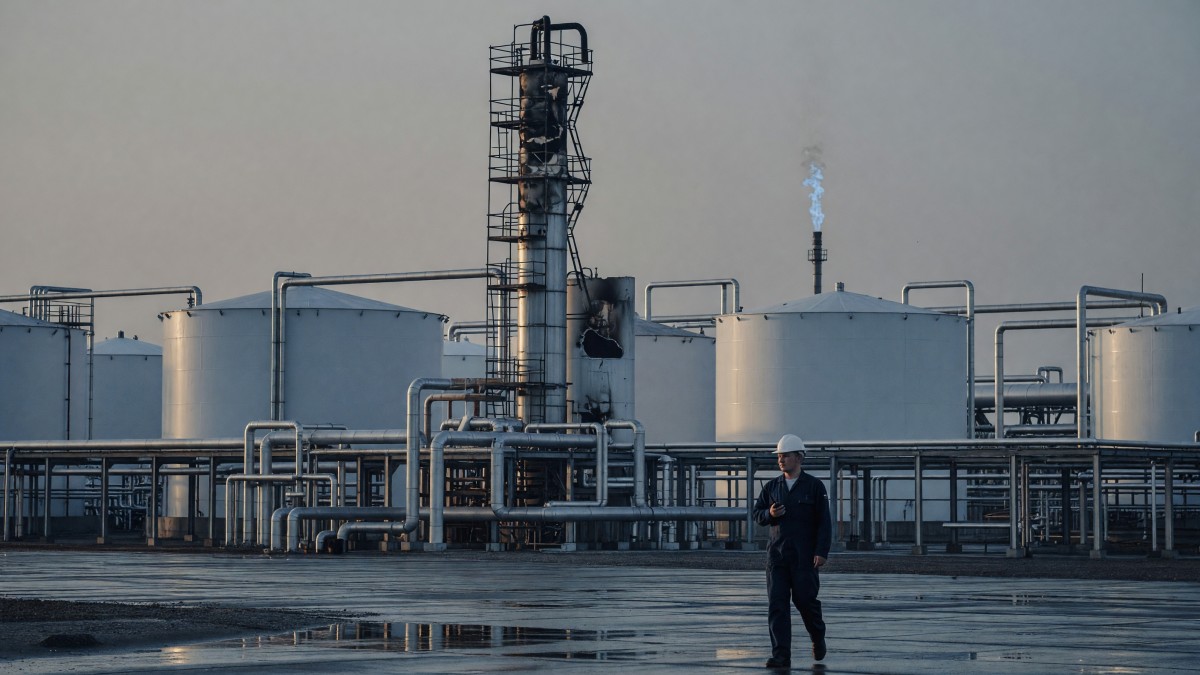
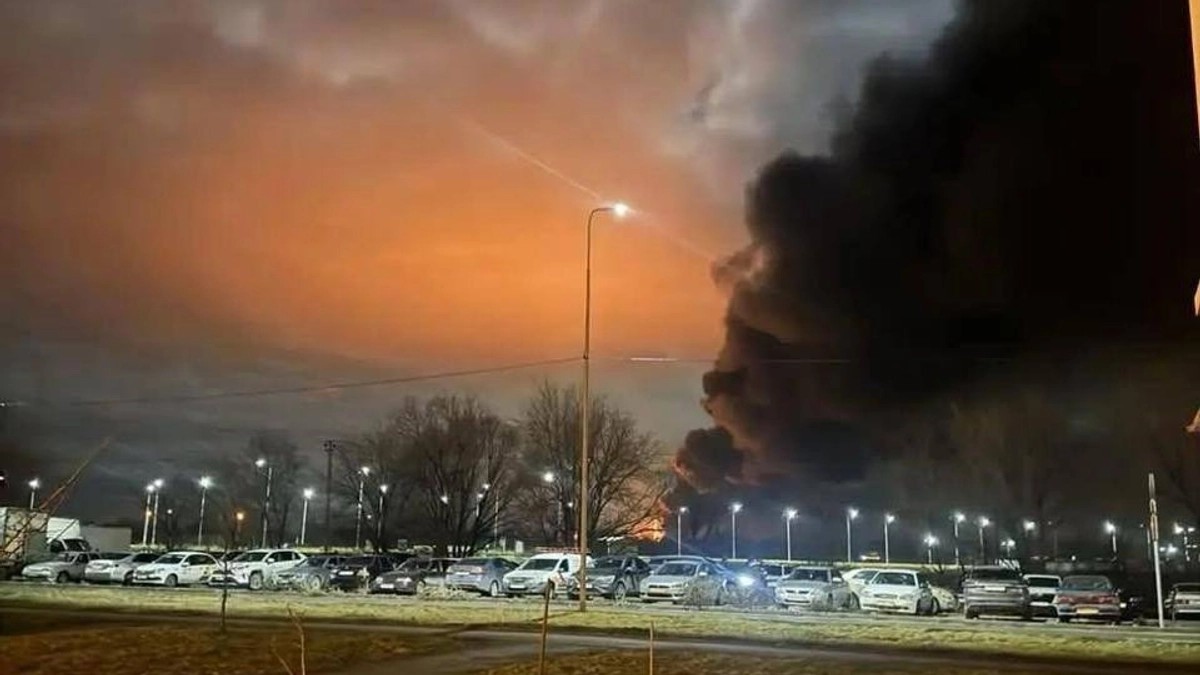
The context behind the paperwork is documented in detail. The Moscow Times reports that Ukrainian drones have attacked Russian refineries more than 110 times since the start of 2026, and that only a few plants in Eastern Siberia and the Far East sit outside drone range. Bloomberg estimates at least 18 refineries have been hit since late October alone. In the first half of November, a run of strikes shut down three major refineries that supply fuel to Moscow city and the surrounding oblast. On 25 November, Ukrainian forces struck two Rosneft refineries in Samara. Two days earlier, a fire at the Novoshakhtinsk plant was visible from space, according to Ukraine's General Staff. On the night of 26-27 November, drones reached Saint Petersburg and the Leningrad region, with explosions heard in at least eight districts, and a strike in Novorossiysk injured three people, the city's mayor said. President Volodymyr Zelensky said on 15 November that Ukrainian forces had stopped 55 per cent of Russia's oil refining capacity. That is a battlefield claim, not an audited figure — but the direction matches what Russian officials now say out loud.
'There's Definitely a Deficit'
Novak's remarks on Wednesday were the clearest acknowledgement yet from inside the government. The domestic fuel market, he said, remains "quite tense" because several major refineries are under repair. Then the sentence that matters: "There's definitely a deficit, which is being covered by external supplies." A country whose budget runs on oil exports — roughly $120 billion a year — is importing fuel from what Novak described as neighboring and distant countries. He did not name them. He also said the cabinet will decide next month whether to keep importing gasoline in 2027 and whether to extend current gasoline export restrictions, which expire in January. The test, in his words, will be "the ability to process [fuel] and supply the domestic market." That is a striking thing for a petro-state to put on a calendar. It also explains why this ban keeps getting extended rather than allowed to expire: the underlying repair schedule has not recovered, and the repair schedule is not in Moscow's hands.
The Airports Started Rationing in June
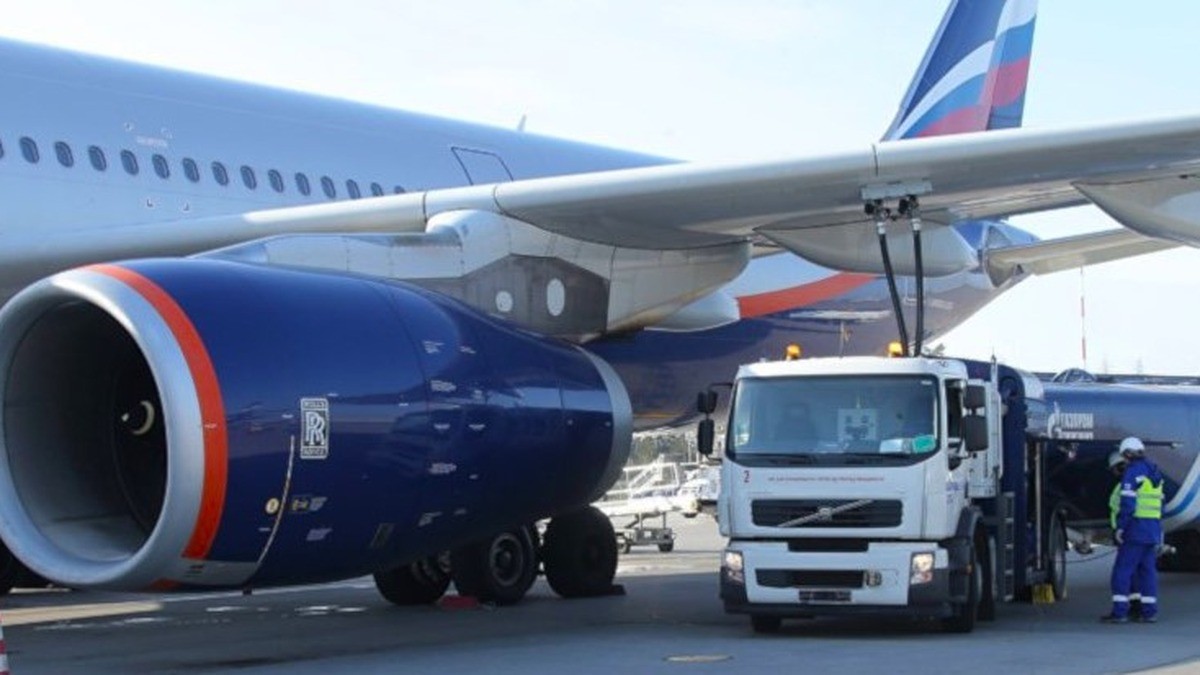
The jet fuel restriction is not abstract. Russian airports began limiting aircraft refueling on 12 June, eleven days after the first ban took effect. By September, at least 26 major airports — including Saint Petersburg's Pulkovo and Kaliningrad's Khrabrovo — had imposed refueling limits, and Verstka reported at the time that some aircraft were allowed only enough fuel for a single flight. Restrictions at Pulkovo are reported to run into March 2027, which is precisely the window this new decree covers. The official denials started early too. At the end of June, Azimuth Airlines reportedly warned of a critical kerosene situation; Transport Minister Andrei Nikitin maintained that Russia was not experiencing an aviation-fuel shortage. Both statements are on the record, and they cannot both be right. What is not in dispute is the arithmetic of supply: Russia's airlines burn over 10 million tonnes of jet fuel a year, or roughly 800,000 to 850,000 tonnes a month, against domestic output that has been falling.
Processing at a Twenty-Year Low
Bloomberg reported this week that refining volumes at Russian plants have fallen to their lowest level in more than 20 years. Analysts cited by the Russian business press put average daily production capacity for all grades of kerosene at 48,800 tonnes in October 2026, down 33.3 per cent from the 2025 average of 72,000 tonnes a day — itself already below the 74,800 tonnes a day of 2024. Russia used to produce 11.4 to 11.5 million tonnes of jet fuel a year, keep about 10 million tonnes at home and export the surplus. After the June ban, roughly 140,000 tonnes were imported from Belarus, with an agreement struck to bring in supplies from India. There is a second squeeze coming with the cold. Kerosene can be blended into cold-resistant diesel, so the same barrels get fought over twice in winter. Maxim Shaposhnikov, an adviser at the Industrial Code fund, argues the export ban does not mean Russia already faces an acute kerosene shortage — that the country generally has enough fuel even with the damage. That may be true. It is also the kind of sentence you write when you are down to managing margins.
Four Hundred Ninety-Four Million Tonnes
The bigger number is the one Novak volunteered this week. Russia will produce about 494 million tonnes of oil in 2026 — the lowest since 2008, when it pumped 488 million. Against last year's 511.5 million tonnes that is a fall of 3.4 per cent. Against 2024's 516 million it is 4.3 per cent. Against 2023's 530 million, 7.2 per cent. Against 2022's 535 million, 8.2 per cent. From the 2022 level, annual output is down 66 million tonnes, or 12 per cent. Even in the pandemic year, when producers were forced to shut wells, production was 512.7 million tonnes. The government first forecast 525 million tonnes for this year, then cut the estimate to 511 million, and still missed. UBS analyst Giovanni Staunovo points to the drone campaign, refinery shutdowns that pushed processing to a 20-year low, and an inability to export the surplus crude — which forces companies to cap production rather than store it. Soviet-era fields were already depleting before the war. Both things are true at once.
What the Ban Actually Moves
Here is the part that will surprise people who assume this is a global energy shock. Russia is not a big jet fuel exporter. Bloomberg, citing Vortexa, puts Russia's 2025 jet fuel exports at an average of 30,000 barrels a day — less than 2 per cent of world supplies. Pre-ban volumes were in the range of 80,000 to 110,000 tonnes a month by sea through the Baltic and Black Seas, mostly to Turkey and the Middle East, plus 30,000 to 40,000 tonnes a month by rail to Central Asia and Mongolia, according to Argus. Russian customs statistics are closed, so nobody outside the government can price the ban precisely. The shock is domestic, and it is already showing up at the pump and on the tarmac. Aviation fuel on the Saint Petersburg exchange cost 119,755 roubles a tonne on 6 November. The state pays carriers 65 per cent of the gap between the export price and a notional domestic price. Aeroflot's group cost of sales rose 12.2 per cent in the first nine months of 2026, with about two-thirds of the increase tied to kerosene.
A Country Putting Walls Around Its Own Market
Look at the whole week, not just the jet fuel decree. On the same Friday, the government imposed a six-month ban on buckwheat exports, running from Saturday to 28 May 2027, citing stability on the domestic food market — exemptions for Eurasian Economic Union members, Abkhazia, South Ossetia and humanitarian aid. Russia sold $65 million of buckwheat abroad in the first ten months of 2026; China bought 157,000 tonnes of it. Stockpiles are down nearly 30 per cent in a year. The same day, the cabinet scrapped a 5 per cent export duty on peas, chickpeas and lentils. This is not improvisation. Russia restricted gasoline exports in December 2025 and again from April 2026. Occupied Crimea capped A-95 gasoline at 20 liters per person a day from 30 May. Diesel restrictions remain in force. Jet fuel has now been under an export ban for six months and will be for four more. Each measure is defensible on its own. Stacked together, they describe a government managing scarcity at home while its export machine stalls.
The Week the Politics Turned
The economics landed in the middle of a diplomatic week that cut against it. On Thursday, President Donald Trump said on Truth Social that he had asked Vladimir Putin, during their meeting in China, "to pull back all Military aggression against territories throughout Europe," in the hope that "a Deal can be made between Russia and Ukraine, and made quickly." The statement did not say which territories, and did not specifically include Ukraine. A day earlier, Trump and NATO chief Mark Rutte said in a joint statement that they had discussed the importance of Russia avoiding any actions that "intentionally, or unintentionally, expand the war." Notably, Trump made no matching call for Kyiv to stop striking deep inside Russia. In a BBC interview aired Friday, Zelensky called Trump's repeated description of Putin as his "friend" strange. "He is an aggressor, and a killer," Zelensky said. "He can't be a friend. Just cannot be. It's the same that somebody says about Hitler during the Second World War, that he's a good friend."
What Happens on December 1
Three dates now matter. On 1 December the ban begins. In December the cabinet decides whether to keep importing gasoline through 2027 and whether to extend the gasoline export curbs that expire in January. At the end of March the jet fuel measure expires — unless it is extended again, which is what just happened. Watch the repair schedule rather than the rhetoric. Watch whether Aeroflot's promise to hold ticket prices survives a winter in which kerosene is also being pulled into diesel blending. Watch whether Russia names the countries selling it fuel; Novak has so far declined to. And watch the production curve, because the government's own worst-case scenario has Russia pumping 171 million tonnes a year by 2050 — three times less than now, with nothing left to export. That is not an outside analyst's doom-casting. That is the Russian government's own spreadsheet. The resolution signed on 26 November is what it looks like when a country reads that spreadsheet and reaches for the export valve.
By Jessica Ali, Staff Writer
This article was produced with AI-assisted research and editorial support. Sources: The Moscow Times; Reuters via SEDaily; Bloomberg via RBC-Ukraine; Ukrainska Pravda; Kyiv Post; AFP; BBC via RNZ and RTE; AK&M; AeroTime; fl360aero; nemoskva.net. Photographs: Olga Maltseva/AFP via Kyiv Post; Ukrainska Pravda; fl360aero.
What's Your Reaction?
 Like
0
 Dislike
0
 Love
0
 Funny
0
 Wow
0
 Sad
0
 Angry
0

Editor-in-Chief at Global1.News. Atlanta-based journalist who cuts through the BS and tells it like it is. Lead anchor, host, and the voice you hear when the spin stops and the truth starts.













Comments (0)