
Ghost strikes: the new drone superpowers raining death from above
The surge of inexpensive armed drones is reshaping the conduct of warfare, turning once‑visible battlefields into arenas of invisible, remote‑controlled violence.
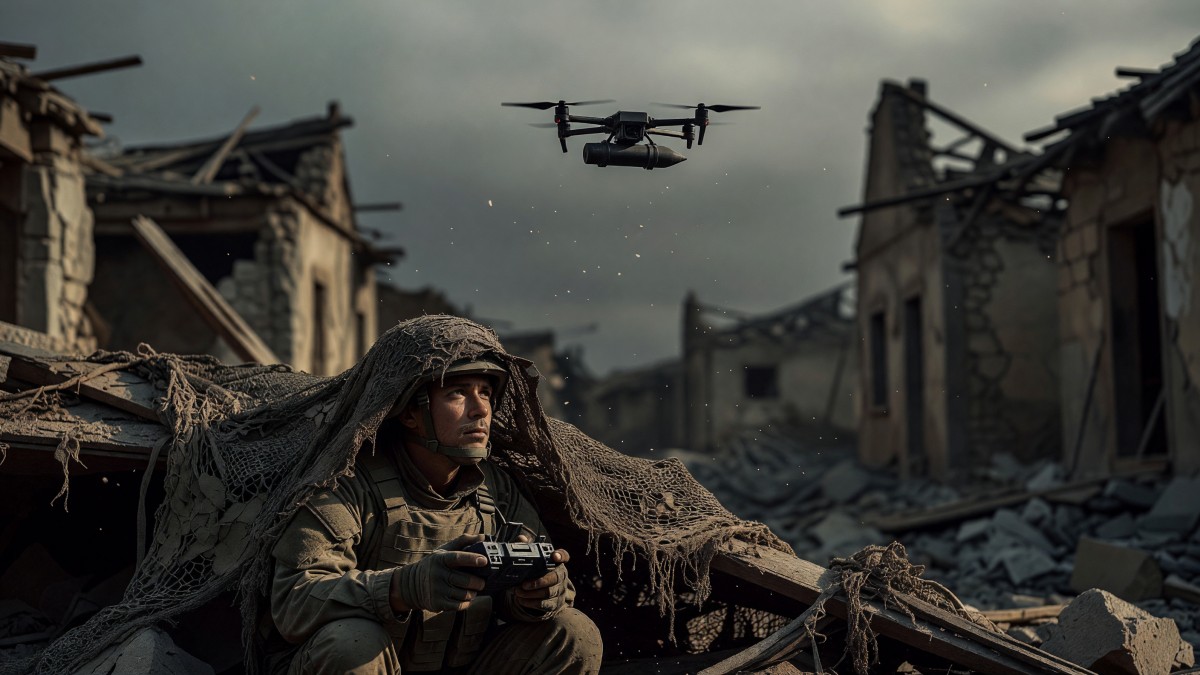
The surge of inexpensive armed drones is reshaping the conduct of warfare, turning once‑visible battlefields into arenas of invisible, remote‑controlled violence. In the Horn of Africa, where a tangled web of state and non‑state actors already fuels chronic instability, the phenomenon has taken on a particularly grim character. The story of Mohamed, a Somali nomad whose family was killed in a “ghost strike” on 21 May, illustrates how the diffusion of low‑cost drones erodes accountability, amplifies civilian vulnerability, and complicates the strategic calculus of every power that fields them.
The rise of “ghost strikes” in Somalia
Somalia’s skies have become a crowded arena for unmanned aircraft operated by a diverse set of actors. According to the article, the United States, the United Arab Emirates, Turkey and the Somali government all conduct drone patrols in search of Islamic State militants. The multiplicity of operators means that when a strike occurs, victims often cannot identify the responsible party. Locals refer to these attacks as “ghost strikes” because the killer remains a phantom, leaving families like Mohamed’s with no knowledge of who ordered the bombing or under what authority.
The lack of transparency is compounded by the scarcity of official data. Few countries publish detailed records of where their drones are employed, and the information that does surface is often incomplete. In many cases, the only clues are fragments of bomb casings or the inference that a particular state or group is active in the area. For Mohamed, determining the source of the strike would require tracing the remnants of the weapon back to its country of manufacture and then identifying the purchaser—a task rendered nearly impossible by the opacity of the market.
Proliferation of cheap armed drones
The Guardian report highlights a dramatic shift in the economics of air power. Traditional platforms such as fighter jets cost between $80 million and $300 million, a price range that historically limited air supremacy to affluent nations. By contrast, Turkish‑made medium‑altitude long‑endurance (MALE) drones capable of carrying roughly 130 kg of explosives can be purchased for $2 million to $5 million per unit. Even more striking, ultra‑cheap kamikaze drones are available for as little as $200, and hundreds of startups have entered the market, spurred in part by demand generated by the Russia‑Ukraine war.
This cost reduction has lowered the barrier to entry for a wide array of actors. Since Turkey began fielding predator‑style drones in the mid‑2010s and China followed in the 2020s, both have been described as “drone superpowers,” supplying dozens of new customers. The data cited from Drone Wars indicates that more than 55 countries now operate large, armed, predator‑style drones, with an additional seven poised to acquire them. The report cautions that this figure likely underestimates the true scale because it excludes the proliferation of one‑way kamikaze models and covert acquisitions.
Impact on civilian protection
The humanitarian consequences of this diffusion are stark. In Sudan’s ongoing civil war, drones have overtaken ground troops as the leading cause of civilian deaths in the current year. Similarly, in Ethiopia’s Tigray region, dozens of civilians were killed in drone strikes carried out by Tigrayan, Ethiopian and Eritrean forces, none of which claimed responsibility. The pattern repeats across Yemen, Iran, Myanmar and other multiparty conflicts, where “ghost strikes” have become a common feature of the battlefield.
Abdullahi Halakhe, a security expert on the Horn of Africa, warns that the proliferation of cheap drones makes accountability “really, really difficult.” When multiple state and non‑state actors possess the capability to launch lethal strikes from the sky, the prospect of attributing responsibility—essential for any form of legal or diplomatic redress—diminishes sharply. This erosion of accountability threatens to erode the protective norms that have traditionally constrained the use of force against civilians.
The strategic calculus of drone‑using powers
For the United States and its allies, the availability of low‑cost drones offers a tempting means to conduct counter‑terrorism operations without committing troops on the ground. The ability to loiter for more than 24 hours and deliver a payload of up to 130 kg enables persistent surveillance and strike capability over remote regions. However, the very attributes that make these systems attractive—remote operation, deniability, and low financial outlay—also generate strategic risks. When multiple actors operate in the same airspace, the likelihood of misidentification, de‑confliction failures and inadvertent escalation rises.
China’s entry into the market further complicates the strategic environment. By supplying affordable drones to a broad client base, Beijing expands its influence among states that may lack traditional Western defense ties. This creates a parallel network of aerial capability that can be leveraged for political alignment, arms sales revenue, and the shaping of regional security architectures. The United Arab Emirates, already a user of drones in Somalia, exemplifies how Gulf states are integrating unmanned systems into their security portfolios, thereby extending their reach into African theatres.
The human story behind the statistics
Mohamed’s ordeal underscores the personal tragedy concealed behind abstract data. After the strike that killed his wife Saynab and their children, he lay among the blood‑stained remains, barely conscious. He later recounted that his children’s bodies were “unrecognisable” and “burned and black, ripped to pieces.” Even as he lost consciousness a second time, he was certain of their identity because of the size of the fragments. His account illustrates the brutal immediacy of drone‑borne violence: a sudden, precise explosion that leaves no warning, no trial, and no avenue for redress.
When Mohamed finally managed to crawl toward the nearest mobile phone mast—located roughly five kilometres away—a local resident, Abdullahi Omar, received a call reporting the incident. Omar quickly mobilised a team of thirty‑six men from the coastal town of Buruc to investigate, trekking approximately nineteen miles to the site. The response, though swift, could not reverse the loss, and the survivors were left to grapple with the knowledge that “the same planes who massacred this family were now watching us.” This poignant testimony highlights the psychological terror inflicted by invisible aerial forces, a factor that extends beyond physical casualties to erode community cohesion and trust in state protection.
Implications for international law and policy
The diffusion of cheap armed drones challenges existing frameworks of international humanitarian law. Traditional doctrines of distinction and proportionality rely on the ability to identify combatants and assess collateral damage, tasks that become more complex when strikes are executed by remote operators with limited situational awareness. The lack of transparent reporting mechanisms further hampers verification and accountability, potentially creating a de‑facto norm of impunity for “ghost strikes.”
Policymakers in both donor and recipient states face a dilemma. Restricting the export of armed drones could limit the spread of lethal capability but may also drive interested parties toward illicit markets, where oversight is even weaker. Conversely, embracing export controls without robust end‑use verification risks alienating strategic partners who view drone procurement as essential to their security. The emerging reality suggests a need for multilateral dialogue on drone proliferation, perhaps under the auspices of existing arms‑control regimes, to develop norms that balance legitimate security needs against the imperative to protect civilians.
Strategic outlook and the path forward
The trajectory of drone proliferation indicates that “ghost strikes” will become an increasingly common feature of modern conflicts, especially in regions where multiple actors operate in overlapping theatres. As the cost barrier continues to fall, non‑state actors—including terrorist groups, militias and drug cartels—will acquire armed drones, further blurring the lines between conventional warfare and asymmetric violence. This trend amplifies the strategic importance of attribution capabilities, such as forensic analysis of bomb fragments, satellite monitoring of drone flight paths, and intelligence sharing among affected states.
For the international community, the challenge lies in crafting a response that curtails the most egregious abuses without stifling legitimate defensive uses. Strengthening transparency requirements, encouraging responsible export practices, and developing cooperative mechanisms for incident investigation could mitigate the worst humanitarian impacts. At the same time, affected states must invest in civil‑defence measures and early‑warning systems to protect vulnerable populations from sudden aerial attacks.
Ultimately, the story of Mohamed and countless other victims serves as a stark reminder that the evolution of warfare technology is not merely a technical development; it reshapes the very relationship between state power and civilian security. How the global order adapts to the rise of cheap, ubiquitous drones will determine whether “ghost strikes” remain an aberration or become an accepted, albeit troubling, facet of 21st‑century conflict.
This article was produced with AI-assisted research and editorial support. Reporting is based on the source material cited below. Sources: The Guardian China; theguardian.com; Global1.News (29 November 2026).
By Prof. Marcus Chen, Staff Writer
What's Your Reaction?
 Like
0
 Dislike
0
 Love
0
 Funny
0
 Wow
0
 Sad
0
 Angry
0

World Politics Analyst at Global1.News. Based in Beijing, covering US-China relations, global trade, and geopolitical strategy. Brings deep analytical perspective to the power dynamics shaping international affairs.















Comments (0)