
Ghana's Tallest Man Dies at 33, Leaving a Legacy of Warmth
Tamale, Ghana — When Sulemana Abdul Samed walked through the streets of northern Ghana, people did not just see a very tall man. They saw Awuche — "Let's Go" in Hausa — a gentle giant whose height made him a local celebrity and whose kindness made him beloved.

Ghana's Tallest Man Dies at 33, Leaving a Legacy of Warmth
Tamale, Ghana — When Sulemana Abdul Samed walked through the streets of northern Ghana, people did not just see a very tall man. They saw Awuche — "Let's Go" in Hausa — a gentle giant whose height made him a local celebrity and whose kindness made him beloved. On Monday morning, at just 33 years old, Ghana's tallest man died in a Tamale hospital, and from his home village of Gambaga to the capital, Accra, the grief has been as outsized as the life it honours.
The 33-year-old had been admitted to hospital in the northern city of Tamale, about 160km (100 miles) south of his home village of Gambaga, after sores on his legs became infected. Doctors said he had been responding well to treatment. His sudden death on Monday morning has left his community in shock.
A Life That Towered Over Northern Ghana
Sulemana Abdul Samed stood 7ft 4in (223cm) tall when the BBC measured him in December 2022, and it is likely he had grown even taller before his death. Diagnosed with gigantism in his 20s, he had long struggled with complications of Marfan syndrome, the genetic disorder that gave him his extraordinarily long limbs. Yet those who knew him say the condition never defined the man people remember.
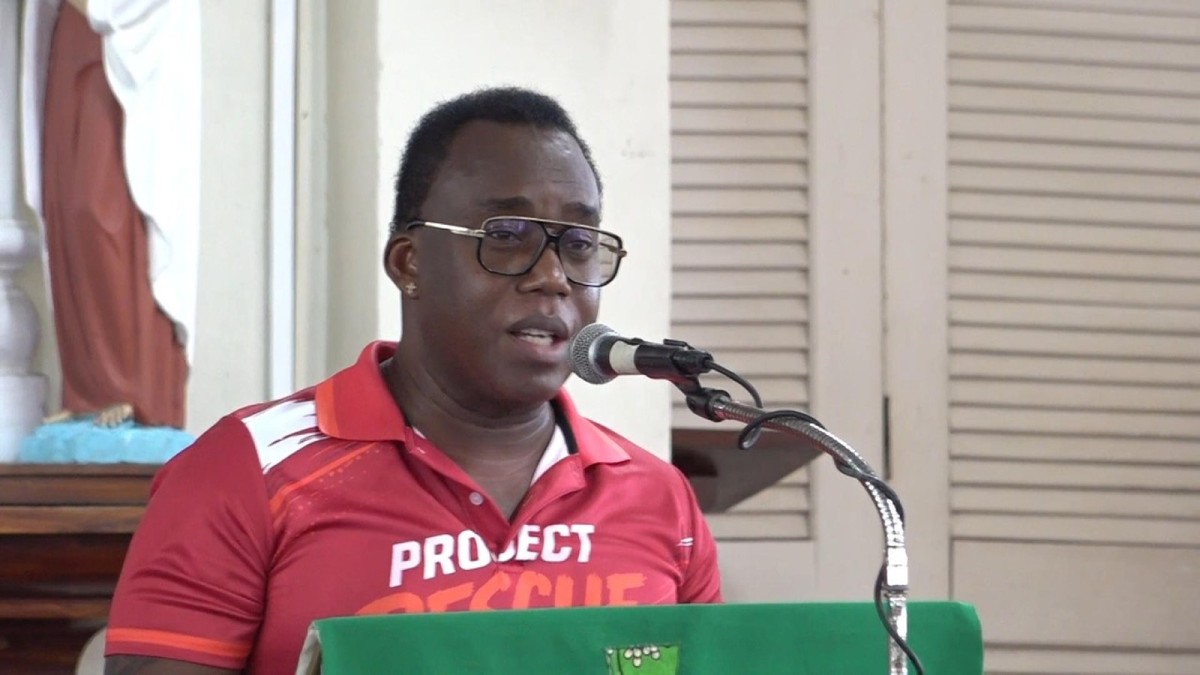
"Everyone knew how generous and kind he was. From when he died until now a lot of people are still coming to the house to find out what exactly happened," his relative, Sulemana Abdul Kudus, told the BBC. The steady stream of mourners making their way to the family home in Gambaga is a measure of the place Awuche held in the hearts of northern Ghanaians.
The Boy From Gambaga Who Became 'Awuche'
Awuche had not always been unusually tall. It was at the age of 22 that his body began to change faster than his peers. He was working at a butcher's shop in Ghana's capital, Accra, when he first noticed something was wrong. "I realised my tongue had expanded in my mouth to the extent that I could not breath [properly]," he told the BBC. Days later, he realised every other part of his body had started increasing in size.
His height carried a name with it. The nickname Awuche, meaning "Let's Go" in the Hausa language, became a kind of calling card across the north. "Anywhere he found himself in the country and they asked him, he would say he is from Gambaga and people knew that was where the tallest man was from. It gave the community identity, and he was popular as well," Kudus said.
Living With Marfan Syndrome
Marfan syndrome affects the body's connective tissues, and in Awuche's case it caused his spine to become abnormally curved. Nine years ago, his height forced him to give up his dreams of becoming a driver and return to Gambaga. The condition also reshaped his daily life in ways that were hard to bear for a young man who had once been athletic.
"I used to play football like every other young man, I was athletic but now I cannot even walk short distances," he said at the time of the BBC's 2022 report. Marfan syndrome, he acknowledged, had curtailed his social life. Kudus said the sores on Awuche's legs were not directly caused by Marfan syndrome, but were likely a complication of his condition — a reminder of how the disorder could quietly compound itself.
Marfan syndrome is a genetic condition that affects the body's connective tissue, which supports the skin, bones, blood vessels and organs. People with the condition are often unusually tall with long limbs and fingers, but the more serious risks are internal: the aorta and other blood vessels can weaken and stretch, and the eyes, spine and lungs can be affected. With regular monitoring and treatment, many people with Marfan syndrome live full lives — which is why Awuche's story resonates beyond its tragedy. His struggle was not simply with the condition itself, but with the cost of managing it in a country where specialist care is concentrated in the cities and out-of-pocket expenses can be crippling.
A Community's Pride and a Nation's Grief
In Gambaga, a town in Ghana's northeast, Awuche was more than a curiosity. He was a source of identity and pride, proof that a small community could produce someone the whole country talked about. His death has hit the town hard. "Everyone is just sad," Kudus said, adding that residents of Gambaga were shocked by his sudden departure.
Across West Africa, towns like Gambaga carry their famous sons and daughters with a quiet, fierce pride. The Hausa name that stuck to Awuche is itself a reminder of the deep cultural threads that bind northern Ghana to the wider Sahel — a region of traders, scholars and travellers whose communities stretch across borders. In that world, a man's nickname often tells his story better than his given name, and "Let's Go" captured the spirit of a man who, whatever his body could no longer do, was always ready to move forward.
The decision by the family to bury Awuche in Tamale rather than Gambaga speaks to the scale of the mourning. The village, they said, would have been overwhelmed with mourners. It is a rare problem for any family to face, but it reflects the reach of a man whose fame was built not on achievement alone, but on generosity and a positive outlook that friends say never wavered.
The Cost of Care and a Kind Benefactor
For years, Awuche struggled to pay his medical bills — a familiar burden for many Ghanaians navigating serious illness without deep pockets. His situation changed when he found a benefactor in Ibrahim Mahama, a successful businessman and the brother of Ghana's President, John Mahama. Ibrahim Mahama, who also met the giant of Gambaga, had offered to cover his medical bills at the Tamale Teaching Hospital, and earlier this month gave an update on the planned treatment.
The support came at a critical time and offered hope that the complications of his condition could be managed. That he died despite doctors saying he was responding well to treatment has made the loss feel even more sudden to those who had begun to believe a way forward had been found.
A Legacy Measured in More Than Height
Despite the complications caused by his condition, Awuche seemed to maintain a positive outlook on life. He enjoyed his celebrity status, meeting visitors with warmth and humour, and carried the name of his hometown with him wherever he went. In a country where disability and chronic illness are often met with stigma or silence, his openness about his body and his condition was itself a quiet act of courage.
His life also holds a lesson for the continent about the cost of care. Marfan syndrome is a manageable condition with the right treatment, and Awuche's story underscores how access to quality healthcare — and the generosity of those able to help — can change the course of a life. For every Ibrahim Mahama who steps forward, there are countless others across Africa whose conditions go untreated for lack of funds.
As Gambaga mourns and Ghana remembers, the tallest man in the country leaves behind a legacy that has nothing to do with height. He was a man who gave his community an identity, who faced a body that betrayed him with dignity, and who — right up to the end — was known first and foremost for being generous and kind. In the words of his relative, everyone is just sad. And everyone who knew Awuche knows exactly why.
By Amara Diop, Staff Writer
This article was produced with AI-assisted research and editorial support. Reporting is based on sources cited in the article.
What's Your Reaction?
 Like
0
Like
0
 Dislike
0
Dislike
0
 Love
0
Love
0
 Funny
0
Funny
0
 Wow
0
Wow
0
 Sad
0
Sad
0
 Angry
0
Angry
0

West Africa/Sahel Correspondent at Global1.News. Dakar-based journalist covering politics, security, climate, and development across Francophone and Anglophone West Africa. Tells the stories of a region undergoing profound transformation.











Comments (0)