
Gaza's Children Pay the Price as Medical System Collapses Under Blockade and War
In a recent Middle East Eye report published on 16 August 2026, American orthopedic surgeon Dr Mark Perlmutter recounts the harrowing reality of treating wounded children in Gaza amid severe medical shortages and relentless bombardment.
In a recent Middle East Eye report published on 16 August 2026, American orthopedic surgeon Dr Mark Perlmutter recounts the harrowing reality of treating wounded children in Gaza amid severe medical shortages and relentless bombardment. The video captures the North Carolina-based physician describing a moment that has come to define his volunteer service: amputating the leg of a five-year-old girl without anesthesia because supplies had simply run out. "I did a leg amputation on a five-year-old girl, and the only anesthesia that we had was the anesthesia doctor singing to her," Perlmutter says in the report. "She didn't faint. We were praying for her to faint. She stayed awake the whole amputation."
Gaza's Children Pay the Price as Medical System Collapses Under Blockade and War
Gaza City, Gaza Strip – Monday — The testimony comes as Gaza's health system teeters on the brink of total collapse, with Palestinian officials warning of an unprecedented catastrophe. The five-year-old girl's name, her fate after surgery, and her current status are not available, but her story has become a symbol of the broader suffering endured by thousands of children in the enclave. Perlmutter, a Jewish orthopedic surgeon who volunteered in Gaza in 2024 and 2025 through the World Health Organization, previously served in crisis zones in Syria, Haiti and Ukraine. His account, featured in the new documentary "American Doctor," offers a rare window into the conditions inside Gaza, where foreign journalists remain barred from independent entry since the 2023 Hamas attack.
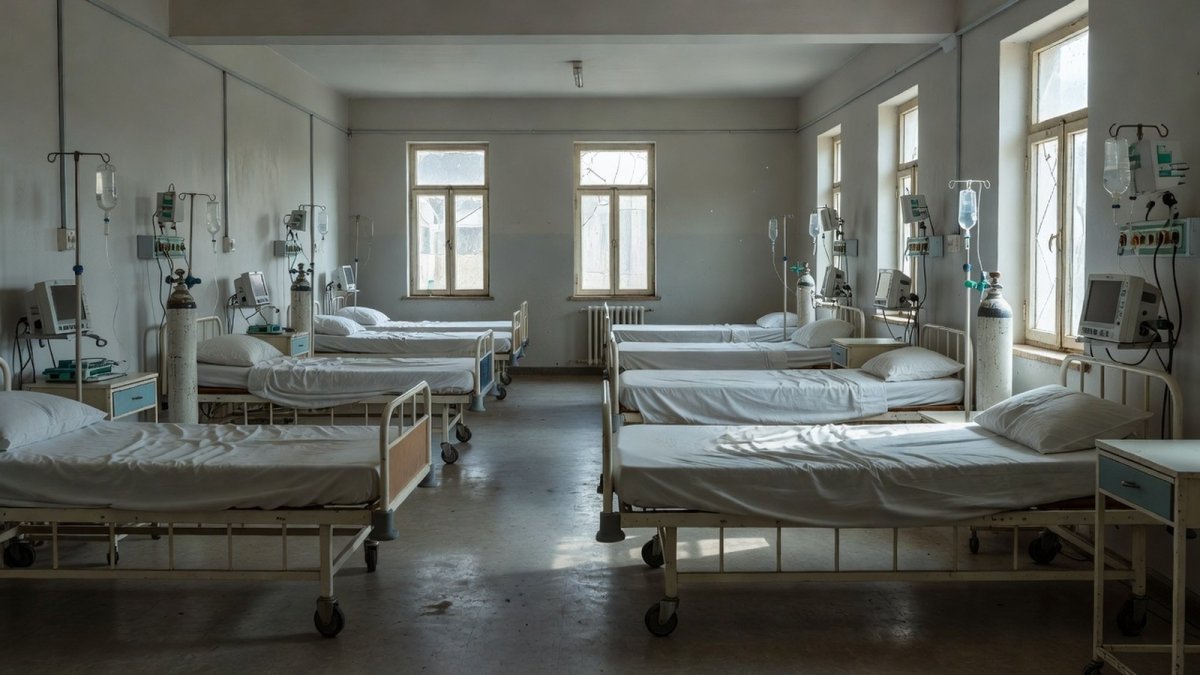
A Doctor's Reckoning with What He Saw
Perlmutter's journey to Gaza began with a profound admission of ignorance. "As a Jewish physician, I knew nothing about Gaza. Like most Americans, I thought everybody out here were nothing but terrorists, because that's what I was told," he says in the documentary. That perception shattered upon his arrival, replaced by a grim education in the realities of modern warfare. "What surprised me most was how the carnage was focused on journalists, healthcare workers and children," he recounts.
The documentary "American Doctor," directed by Malaysia-born, New York-based journalist Poh Si Teng, follows three US physicians who volunteered in Gaza: Perlmutter, Dr Thaer Ahmad, a Palestinian American emergency physician from Chicago, and Dr Feroze Sidhwa, a trauma surgeon from California whose Zoroastrian parents emigrated from Pakistan. The film, which runs 93 minutes, won the Audience Award at the Hot Docs International Film Festival in April 2026 and premiered at Sundance. It opened in select theatres including TIFF Lightbox in Toronto on 14 August 2026, drawing attention from critics and audiences alike.
In the film's opening scene, Perlmutter argues with the director, insisting on showing photographs of children killed in an Israeli missile strike. He calls softening the brutal reality "journalistic malpractice," a stance that reflects his broader frustration with how the conflict is portrayed. His colleague Sidhwa describes the impossible choices facing medical teams: "Three surgeons all working on one little girl, for what? Two-and-a-half hours? And she's probably going to lose her right leg, left leg and her left arm."
The Collapse of Gaza's Health Infrastructure
The warnings from medical professionals on the ground are echoed by official Palestinian sources. According to the WAFA news agency, medical sources in Gaza warned on 15 August 2026 of an unprecedented health catastrophe as only 12 of the 34 oxygen-generation stations in the enclave remain operational. The blockade and Israeli restrictions on medical supplies to hospitals have pushed the remaining stations beyond maximum capacity, endangering patients who depend on oxygen for survival.
The Palestinian Ministry of Health reports that 50 percent of dialysis machines in Gaza have stopped working completely due to an ongoing shortage of sodium bicarbonate, a critical component for treating kidney failure. The number of hospitals equipped to handle kidney failure patients has been reduced to four from seven. Before the war, about 1,200 patients received regular dialysis; that number has dropped to approximately 700, with more than 470 deaths attributed to missed dialysis sessions and lack of essential medications, according to the Palestinian Centre for Human Rights.
Perlmutter's own experience in Gaza hospitals included witnessing the aftermath of strikes on medical facilities. "There was a 15-year-old kid ready for discharge that was incinerated," he says, referring to a hospital strike. Palestinian health authorities report that Israeli attacks have killed about 1,700 healthcare workers in Gaza since October 2023, and medics on the ground say hospitals have been hit repeatedly.

A Generation of Child Amputees
The human toll on Gaza's youngest residents is staggering. The United Nations estimates that since October 2023, around 42,000 people in Gaza have suffered life-changing injuries, with a quarter of them children. The World Health Organization figures include approximately 6,000 amputations or severe limb and spinal injuries. According to the UN, Gaza now holds the tragic world record for the highest number of child amputees relative to its population.
UNICEF reports that more than 300 children have been killed in Israeli attacks during the 300 days of the ceasefire that came into effect in October 2025. The ceasefire, while reducing the intensity of fighting, has not brought an end to violence. On 16 August 2026, an Israeli strike hit a tent in a camp for displaced Palestinians near al-Aqsa University in Khan Younis. The same day, a 14-year-old boy, Suhail Shalouf, was shot and killed by Israeli forces on the outskirts of Khan Younis; the Palestinian Red Crescent recovered his remains.
Amid this devastation, efforts to restore some semblance of childhood have emerged. Heal Palestine, led by Steve Sosebee, runs swimming classes in a small pool in Khan Younis for amputee and orphaned children. The program, which began in late July, serves 90 children. Coach Tantish, who has taught children in Gaza to swim for more than 20 years, describes the pool as a refuge. "The water is the only place where these children are free," he says.
The Blockade and the Fight for Medical Supplies
The restrictions on medical supplies entering Gaza remain a central obstacle to treating the wounded. Médecins Sans Frontières (MSF) says Israel blocks engine oil and spare parts needed for hospital generators, ambulances, and water pumps, crippling even basic infrastructure. The blockade, in place since the 2023 Hamas attack, has created a persistent shortage of everything from anesthesia to surgical instruments.
Perlmutter's account of operating without anesthesia is not an isolated incident but a symptom of a broader systemic failure. Health workers inside Gaza have become an important source of information about conditions on the ground, as Israel has banned foreign journalists from entering the strip independently. The documentary "American Doctor" thus serves a dual purpose: it documents the medical crisis and provides a rare independent record of the war's impact on civilians.
The international community has taken note. On 6 August 2026, foreign ministers of eight Arab and Muslim countries strongly denounced Israeli violations and attacks on Gaza's hospitals. The statement, while symbolic, reflects growing concern over the targeting of medical infrastructure and personnel.
Analysis and Implications
The testimony of doctors like Perlmutter, Ahmad, and Sidhwa challenges the narrative that has dominated international discourse about Gaza. Their accounts, grounded in direct experience, document a pattern of harm directed at civilians, particularly children and healthcare workers. The fact that a Jewish American surgeon felt compelled to confront his own preconceptions underscores the depth of the information gap that has persisted throughout the conflict.
The collapse of Gaza's health system has long-term implications that extend beyond the immediate humanitarian crisis. The generation of children who have suffered amputations, traumatic injuries, and the loss of family members will require decades of rehabilitation and psychological support. The destruction of medical infrastructure, including oxygen stations and dialysis units, will take years to rebuild even if the blockade is lifted.
The Israeli army continues to occupy more than 50% of Gaza, according to a report by EL PAIS published on 14 August 2026. This ongoing occupation, combined with the blockade, creates a cycle of deprivation that makes recovery nearly impossible. The ceasefire, while halting the worst of the violence, has not addressed the underlying conditions that led to the current crisis.
For the children of Gaza, the future remains uncertain. The swimming classes in Khan Younis offer a brief respite, a moment of joy in a landscape of loss. But as Perlmutter's testimony makes clear, the cost of this conflict is measured not in statistics but in the lived experience of children who endure unimaginable pain without the most basic medical care. The world, he suggests, has a moral obligation to look at what is happening and to act.
The documentary "American Doctor" and the Middle East Eye report serve as essential records of this moment. They document not only the suffering but also the resilience of those who continue to care for the wounded against impossible odds. As Perlmutter's story spreads, it may prompt a reckoning with the realities of war and the price paid by the most vulnerable.
By Fatima Al-Rashid, Staff Writer
This article was produced with AI-assisted research and editorial support. Reporting is based on sources cited in the article.
What's Your Reaction?
 Like
0
Like
0
 Dislike
0
Dislike
0
 Love
0
Love
0
 Funny
0
Funny
0
 Wow
0
Wow
0
 Sad
0
Sad
0
 Angry
0
Angry
0
Gulf/MENA Correspondent at Global1.News. Based in Doha, covering Gulf politics, energy markets, diplomacy, and development across the Middle East and North Africa. Tracks the economic transformation of the Gulf states.













Comments (0)