
Fat, Sugar, Salt Warnings In Red Boxes: Regulator's Latest Weapon Against Unhealthy Foods
In a significant reversal of policy, India's food regulator has formally proposed mandatory front-of-pack warning labels for packaged foods and beverages high in fat, sugar, or salt. The Food Safety and Standards Authority of India (FSSAI) filed the proposal in the Supreme Court on Friday, 28 August 2026, marking a decisive shift after a decade of regulatory delay and mounting pressure from the judiciary, public health experts, and consumer groups.
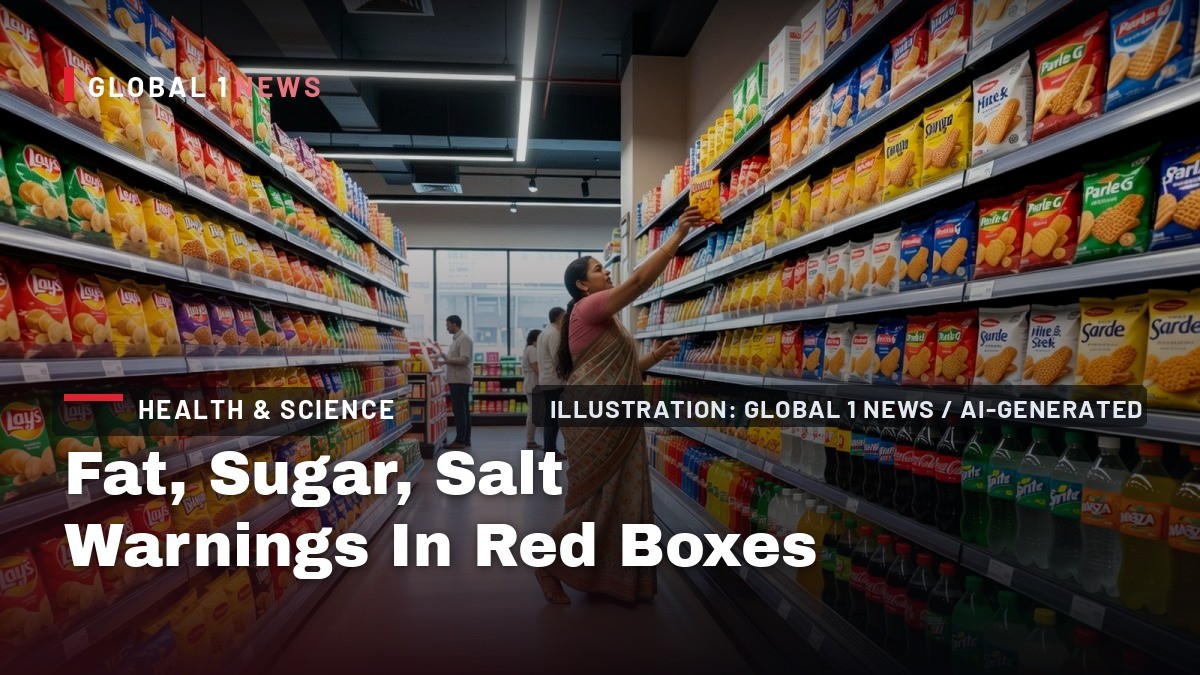
In a significant reversal of policy, India's food regulator has formally proposed mandatory front-of-pack warning labels for packaged foods and beverages high in fat, sugar, or salt. The Food Safety and Standards Authority of India (FSSAI) filed the proposal in the Supreme Court on Friday, 28 August 2026, marking a decisive shift after a decade of regulatory delay and mounting pressure from the judiciary, public health experts, and consumer groups. The move, if finalised, would require products to display prominent red hexagonal warnings reading 'HIGH SUGAR', 'HIGH SALT', or 'HIGH FAT' — a format modelled on global best practices that have demonstrated measurable public health benefits.
The Supreme Court's Ultimatum and the Regulatory Reversal
The proposal comes after the Supreme Court issued a stark warning to the Centre and FSSAI, giving them two weeks to place their final decision on record. A bench comprising Justices JB Pardiwala and K Vinod Chandran cautioned: "This is your last chance. Next time we will dictate the judgement," according to a Hindustan Times report. The court's frustration was evident in its 10 February 2026 order, where it stated that its direction on warning labels was "not merely advisory." In August, the bench expressed dissatisfaction with FSSAI's earlier preference for number-heavy nutrition tables on the back of packs, which it said were difficult for consumers to interpret.
The affidavit filed by FSSAI, seen by NDTV Profit, outlines a bold red hexagonal warning symbol for products found high in any two or more of three nutrients — saturated fat, sugar, and salt. A separate warning, 'HIGHLY SWEETENED BEVERAGE', is envisaged for applicable drinks. This represents a complete reversal from the regulator's earlier stance, which had favoured the back-of-pack nutrition information panels that public health groups have long criticised as ineffective. The proposal, once finalised, would still go through a draft notification and public comment process before implementation on food packs sold across India.
India's Disease Burden: The Case for Action
The regulatory shift is grounded in alarming public health data. According to the Indian Council of Medical Research - National Institute of Nutrition (ICMR-NIN) Dietary Guidelines for Indians, 56.4% of India's total disease burden is attributed to unhealthy diets. This statistic underscores the scale of the challenge facing the country's healthcare system, which is already grappling with a rising tide of non-communicable diseases (NCDs) including type 2 diabetes, hypertension, and cardiovascular conditions.
A recent study cited by Hindustan Times projects that around 450 million Indians could be obese or overweight by 2050. This projection, if realised, would place an unprecedented strain on India's public health infrastructure and economy. The economic implications are substantial — obesity-related healthcare costs, lost productivity, and premature mortality would collectively run into hundreds of billions of dollars annually. For a country still developing its universal health coverage framework, the preventive potential of front-of-pack labelling cannot be overstated.
Global Evidence: Chile's Trailblazing Experiment
The FSSAI's proposal draws directly on international evidence, most notably from Chile's 2016 law introducing black octagonal front-of-pack warnings. Chile's experience has become the gold standard for such regulatory interventions. Studies show that Chileans bought less sugar, salt, saturated fat, and calories after the law took effect. More significantly, a 2026 Lancet study found that Phase 1 of Chile's labelling and advertising law plausibly caused a measurable decrease in excess weight among young school children.
This evidence is crucial for Indian policymakers. It demonstrates that front-of-pack warnings do not merely inform consumers — they actively change purchasing behaviour and, ultimately, health outcomes. The Lancet study's findings on school children are particularly relevant for India, where childhood obesity rates have been rising steadily in urban and semi-urban areas. The red hexagonal format proposed by FSSAI is a direct adaptation of the Chilean model, albeit with a different shape, reflecting the regulator's intent to leverage proven international frameworks while tailoring them to the Indian context.
Industry Resistance and the Battle Over Consumer Choice
Unsurprisingly, the proposal has met with resistance from major food and beverage corporations. Big Food companies including Nestle, PepsiCo, and Coca-Cola have opposed mandatory warnings over sales concerns. The International Food and Beverage Alliance (IFBA), which represents companies including PepsiCo, has argued that current proposals might lead to 'high sugar' warning labels on coconut water packs that contain only natural sugar. This argument, while technically valid, obscures the broader public health rationale — the distinction between naturally occurring and added sugars is precisely the kind of nuance that confuses consumers and undermines informed choice.
Nestle has publicly stated it "welcomes consumers being curious" while backing clearer labelling, a position that public health advocates view as carefully calibrated to appear cooperative while resisting the most impactful measures. The industry's resistance is understandable from a commercial perspective — front-of-pack warnings have been shown to reduce sales of targeted products in Chile and other jurisdictions. However, this commercial interest must be weighed against the 56.4% disease burden attributable to unhealthy diets in India, a figure that represents not just individual suffering but a systemic drag on national development.
A Decade of Delay and the Parliamentary Push
FSSAI's front-of-pack labelling effort has faced a decade-long delay, a timeline that reflects the intense lobbying pressure exerted by the packaged food industry. The regulator held a national consultation in August 2025 after 29 public health organisations issued a consensus statement proposing warning labels for foods high in fat, sugar, or salt (HFSS). Public health groups have long argued that nutrition information hidden in small print on the back of packs fails to inform consumers, particularly in a country where literacy rates and nutrition awareness vary widely across regions and socioeconomic strata.
A parliamentary panel has urged the regulator to finalise the rules without delay, adding legislative pressure to the judicial mandate. The Supreme Court's intervention has proven decisive, effectively forcing FSSAI to abandon its cautious, consultative approach in favour of a definitive proposal. The court's framing of its direction as "not merely advisory" signals that the judiciary views this as a fundamental consumer protection issue, not a matter of regulatory discretion.
What This Means for Indian Consumers and the Packaged Food Market
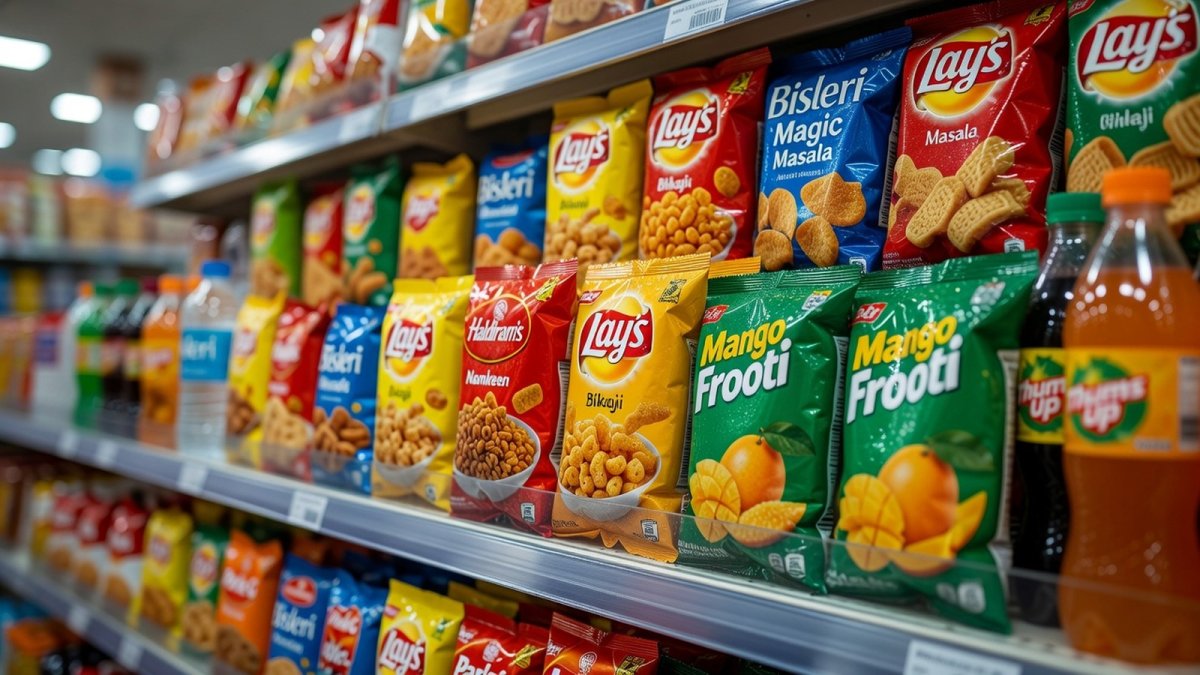
For Indian consumers, the implementation of front-of-pack warnings would represent a transformative shift in how nutritional information is presented. The current system, which relies on back-of-pack nutrition tables, requires consumers to navigate complex numerical data on serving sizes, percentages, and daily values — a task that even nutritionists find challenging. The proposed red hexagonal warnings would provide an immediate, intuitive signal that a product is high in nutrients of public health concern, enabling consumers to make informed choices at the point of purchase.
The impact on the packaged food market could be substantial. In Chile, the introduction of warning labels led to significant product reformulation by manufacturers seeking to avoid the labels. A similar dynamic could unfold in India, where the packaged food market has been growing rapidly, driven by urbanisation, rising disposable incomes, and changing dietary patterns. Companies may choose to reformulate products to reduce fat, sugar, and salt content, or they may accept the warnings and risk losing health-conscious consumers. Either outcome would represent a public health victory, though the reformulation pathway would be preferable for both industry and consumers.
The Road Ahead: Implementation Challenges and Opportunities
The proposal's journey is far from complete. After the Supreme Court filing, the rules must go through a draft notification and public comment process before implementation. This process provides an opportunity for stakeholders to refine the proposal, but it also creates space for industry pushback and potential dilution. The Supreme Court's vigilance will be crucial in ensuring that the final rules retain their public health integrity.
Implementation challenges loom large. India's vast and diverse food market, with its millions of small and medium enterprises, will require a robust compliance and enforcement framework. The FSSAI will need to develop clear testing protocols, establish thresholds for the three nutrients, and create a monitoring system to ensure compliance across the supply chain. The regulator's capacity to enforce these rules will be tested, particularly in the informal sector where packaged food regulation has historically been weak.
For India, this proposal represents more than a regulatory change — it is a statement of intent about the country's approach to public health in an era of rapid dietary transition. The 56.4% disease burden attributable to unhealthy diets is not an immutable statistic; it is a measure of the consequences of policy choices made over decades. The Supreme Court's intervention and FSSAI's reversal signal a recognition that the status quo is no longer acceptable. The red hexagonal warnings, if implemented effectively, could become as familiar to Indian consumers as the statutory warnings on tobacco products — a constant, visible reminder that what we eat matters, and that the state has a role in protecting its citizens from the commercial determinants of health.
By Raj Patel, Staff Writer
This article was produced with AI-assisted research and editorial support. Sources: Reuters, Hindustan Times, NDTV Profit, India Today, The Lancet.
What's Your Reaction?
 Like
0
Like
0
 Dislike
0
Dislike
0
 Love
0
Love
0
 Funny
0
Funny
0
 Wow
0
Wow
0
 Sad
0
Sad
0
 Angry
0
Angry
0

India/South Asia Correspondent at Global1.News. Analytical voice with a background in science and health journalism. Based in New Delhi, covering Indian politics, education, healthcare, technology, and policy. Breaks down complex data into clear, actionable reporting.















Comments (0)