
French activist files complaint alleging torture during 2025 Gaza flotilla
French political scientist and activist Thomas Guenole announced on Wednesday that he has lodged a formal complaint in France, accusing Israeli officials of torture during the 2025 Global Sumud Flotilla that attempted to bring humanitarian aid to Gaza.
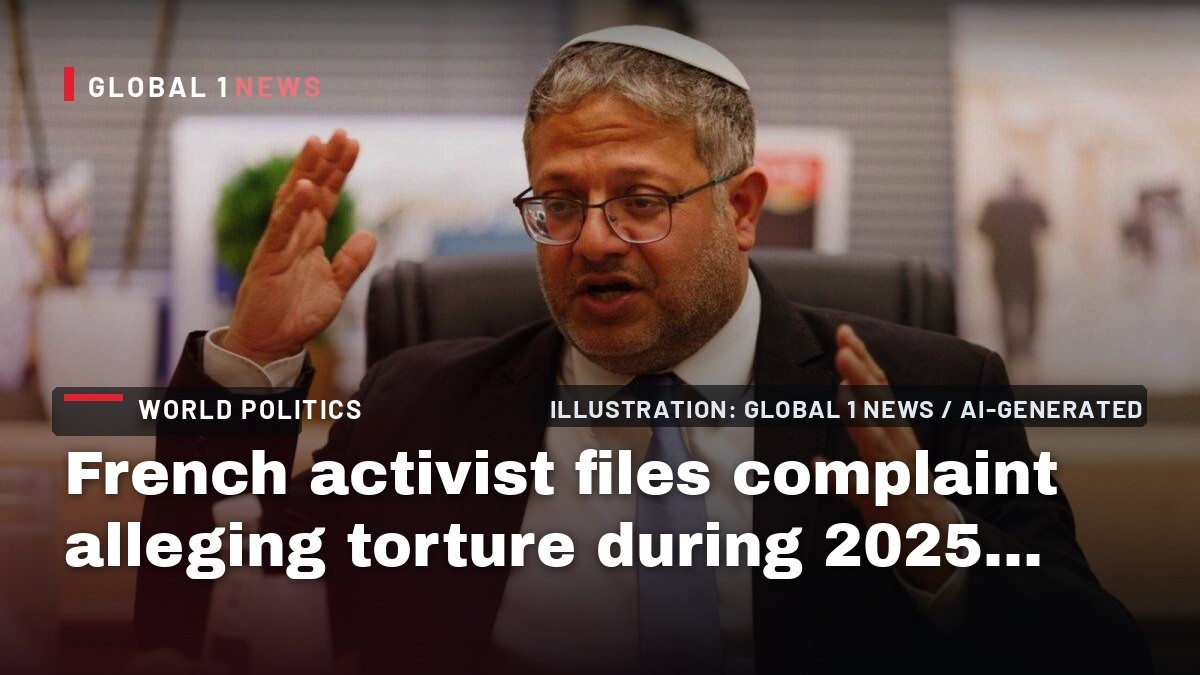
French political scientist and activist Thomas Guenole announced on Wednesday that he has lodged a formal complaint in France, accusing Israeli officials of torture during the 2025 Global Sumud Flotilla that attempted to bring humanitarian aid to Gaza. Speaking on the US social‑media platform X, Guenole said the grievance was submitted to France’s Central Office for the Fight Against Crimes Against Humanity, and he praised the French gendarmes who received his filing for their “remarkable professionalism.” His statement underscores a growing wave of legal challenges that seek to hold Israeli actors accountable for alleged violations of international law during maritime interdictions of aid flotillas.
Background to the Global Sumud Flotilla
The Global Sumud Flotilla of 2025 was organized by a coalition of international activists and humanitarian groups aiming to deliver essential supplies to the besieged population of Gaza. Participants, including Guenole, boarded vessels that set sail in October 2025, navigating international waters with the intention of reaching Gaza’s coastline. The flotilla’s mission reflected a broader civil‑society effort to confront the blockade imposed on Gaza and to draw attention to the humanitarian crisis unfolding there.
During the voyage, Israeli authorities intercepted the flotilla in international waters, detaining activists aboard the vessels. The interception was reported as part of a broader pattern of Israeli enforcement actions against similar aid missions, a practice that has drawn criticism from various international actors for its impact on humanitarian access and the rights of activists.
The Complaint Filed in France
Guenole’s complaint alleges that Israeli individuals, including the nation’s national security minister Itamar Ben Gvir, personally participated in the kidnapping and mistreatment of activists aboard the flotilla. He described the acts as “torture,” a term that carries specific legal weight under international human‑rights conventions. By filing the complaint with the Central Office for the Fight Against Crimes Against Humanity, Guenole seeks to trigger a formal investigation under French jurisdiction, which can pursue cases of alleged torture and crimes against humanity committed abroad.
The activist also urged other French participants of the 2025 and 2026 flotillas to submit similar complaints, suggesting a coordinated effort to document alleged abuses and to press for accountability through the French legal system. His call reflects a broader strategy among civil‑society actors to use national courts as venues for pursuing redress when international mechanisms appear stalled.
Legal Context and International Law
Under the United Nations Convention Against Torture, to which France is a party, torture is defined as any act causing severe pain or suffering, whether physical or mental, inflicted for purposes such as intimidation or punishment. The convention obliges signatories to investigate allegations of torture, prosecute perpetrators, and provide remedies to victims. By invoking torture, Guenole is positioning his complaint within this legal framework, seeking to hold Israeli officials accountable for violations that breach both customary international law and treaty obligations.
The involvement of a high‑ranking minister, if substantiated, could raise questions about state responsibility and command‑responsibility doctrines. International jurisprudence has held that senior officials may be liable for crimes committed by subordinates if they ordered, knew of, or failed to prevent the acts. Guenole’s allegation that Ben Gvir was directly involved intensifies the legal stakes, potentially expanding the scope of liability beyond individual soldiers to the political leadership.
French Authorities’ Response
Guenole’s acknowledgment of the “remarkable professionalism” of the French gendarmes who received his filing indicates an initial procedural acceptance of the complaint. The Central Office for the Fight Against Crimes Against Humanity, tasked with investigating serious violations of international law, will now determine whether the allegations merit a formal inquiry. While the source does not detail the office’s next steps, the acknowledgment suggests that the complaint has entered the official investigative pipeline.
France’s legal system permits the prosecution of alleged crimes against humanity committed abroad, provided there is sufficient evidence and jurisdictional basis. The filing of Guenole’s complaint adds to a growing docket of cases that French authorities have taken up in recent years, reflecting a willingness to confront alleged violations of human rights beyond its borders.
Human Impact of the Detention
Beyond the legal dimensions, Guenole’s testimony highlights the personal trauma endured by activists detained during the flotilla operation. He described being kidnapped and subjected to mistreatment, language that conveys both the physical and psychological toll of such encounters. For many participants, the experience of being seized in international waters—far from any national jurisdiction—exacerbates feelings of vulnerability and injustice.
The broader community of activists, many of whom are motivated by humanitarian concerns, faces heightened risk when engaging in similar missions. Guenole’s call for others to file complaints underscores a collective desire to document these experiences, ensuring that the human cost of interdictions is recorded and acknowledged in any future legal or historical assessments.
International Reactions and Diplomatic Tensions
The source material notes a statement from the French foreign minister, who criticized Israeli policies as jeopardizing the country’s security. While the exact wording is not reproduced, the inclusion of this remark signals that the French government is publicly scrutinizing Israel’s security measures, especially when they intersect with humanitarian operations. Such diplomatic commentary adds a layer of political pressure to the legal proceedings, as states navigate the balance between security concerns and human‑rights obligations.
These tensions are part of a broader pattern of international debate over the legality of blockades, the right to humanitarian aid, and the permissible scope of security actions at sea. The filing of a torture complaint by a French activist contributes to this discourse, potentially influencing how other nations and international bodies view Israel’s maritime enforcement practices.
Looking Ahead: Prospects for Accountability
Guenole’s filing marks a concrete step toward seeking accountability for alleged torture during the 2025 Global Sumud Flotilla. As the French Central Office reviews the complaint, the outcome could set a precedent for how European jurisdictions address alleged human‑rights violations committed by foreign officials in international waters. If the investigation proceeds, it may involve gathering testimonies, medical evidence, and documentary proof of the detention and mistreatment.
Beyond the immediate legal process, the case may inspire further activism and legal action by other flotilla participants, amplifying calls for transparent investigations and reparations. The human‑rights community will be watching closely, as the pursuit of justice for Guenole and his fellow activists could shape future humanitarian missions and the international legal landscape governing state conduct at sea.
This article was produced with AI-assisted research and editorial support. Reporting is based on the source material cited below. Sources: Middle East Monitor; middleeastmonitor.com; Global1.News (24 September 2026).
By Fatima Al-Rashid, Staff Writer
What's Your Reaction?
 Like
0
Like
0
 Dislike
0
Dislike
0
 Love
0
Love
0
 Funny
0
Funny
0
 Wow
0
Wow
0
 Sad
0
Sad
0
 Angry
0
Angry
0

Gulf/MENA Correspondent at Global1.News. Based in Doha, covering Gulf politics, energy markets, diplomacy, and development across the Middle East and North Africa. Tracks the economic transformation of the Gulf states.











Comments (0)