
France Imposes Landmark Levy on Ultra-Fast Fashion Giants Shein and Temu, Fees to Reach €20 by 2030
France has begun enforcing a pioneering environmental levy on "ultra-fast fashion" items, a move that directly targets Chinese-founded e-commerce giants Shein, Temu, and AliExpress.
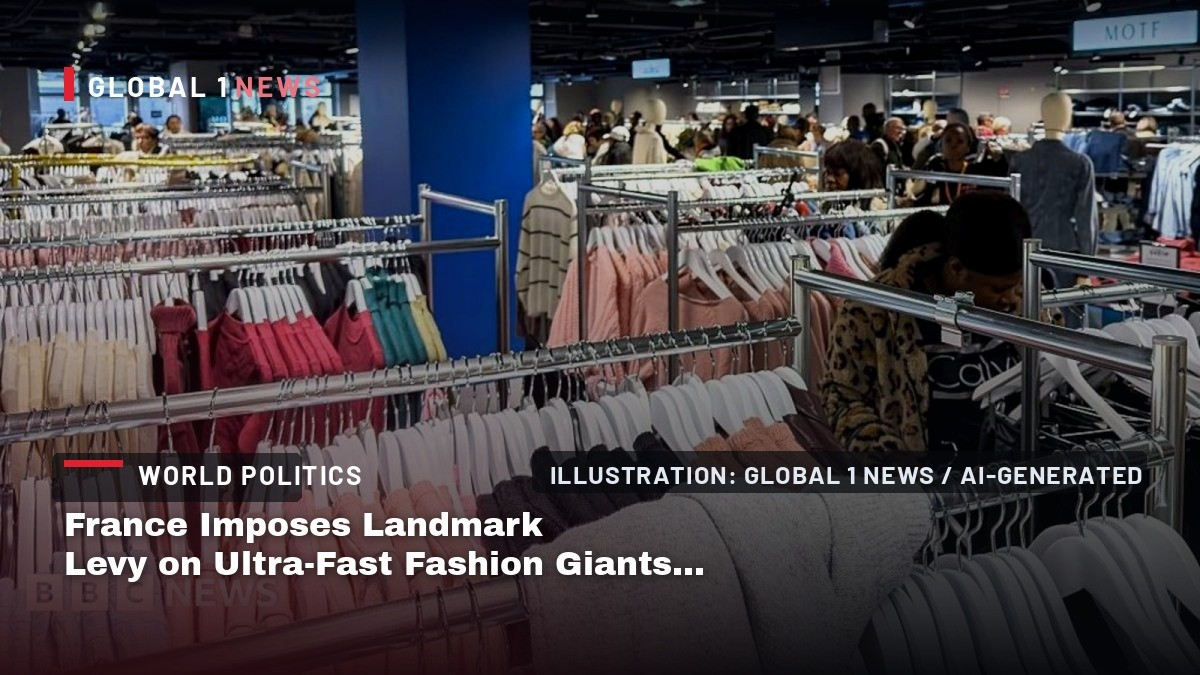
France has begun enforcing a pioneering environmental levy on "ultra-fast fashion" items, a move that directly targets Chinese-founded e-commerce giants Shein, Temu, and AliExpress. The fee, which came into force on Tuesday, is part of a broader legislative push to curb the environmental and economic impact of cheap, high-volume apparel. Under the new law, passed in June, per-garment charges could escalate to nearly €20 by 2030, marking one of the most aggressive regulatory actions against the sector globally.
The measure has already triggered a sharp diplomatic response from Beijing. China's Ministry of Commerce (MOFCOM) has publicly described the French law as discriminatory and a trade barrier, arguing that it potentially violates core World Trade Organization (WTO) principles. This development places the levy at the center of an escalating trade friction between the European Union and China, with significant implications for global e-commerce and textile supply chains.

The Mechanics of the New French Levy
The French legislation, championed by Minister Mathieu Lefevre, establishes a complex scoring system to determine which companies qualify as "ultra-fast fashion" operators. The classification hinges on two primary factors: the sheer volume of clothing placed on the French market and the cost of repairing a garment relative to its purchase price. This dual-criteria approach is designed to penalize business models that prioritize disposability over durability.
For the current year, 2026, the charges are structured on a sliding scale. Consumers and retailers face a €0.50 levy on underwear, rising to €2 for T-shirts, €9 for jeans, and a substantial €12 for jackets. The fee structure is set to intensify dramatically over the next four years. By 2030, the per-item levy could reach up to €19.50, though the law includes a safeguard cap ensuring the fee never exceeds 50% of a product's pre-tax price. This cap is intended to prevent the levy from becoming a de facto import ban, though its practical effect on low-cost items remains significant.
Minister Lefevre stated that the "harmful effects of ultra-fast fashion" on both the environment and the economy are "well known." His office has framed the levy not merely as a tax but as a corrective mechanism to internalize the external costs of textile waste, carbon emissions, and the erosion of local European manufacturing.
Selective Application and the European Exemption Controversy
A critical point of contention surrounding the new law is its selective application. In July, Lefevre's office explicitly confirmed that the levy would not apply to established European retailers such as H&M or Zara. This clarification has fueled accusations that the measure is protectionist, designed to shield European fast-fashion incumbents from Asian competition while imposing punitive costs on their rivals.
Critics argue that the exemption undermines the environmental rationale of the law. If the goal is purely ecological, they contend, the volume of production and waste generated by H&M and Zara should also be subject to scrutiny. The decision to spare these companies suggests a strategic industrial policy objective: protecting the European textile sector from the disruptive pricing power of Chinese-owned platforms. This selective enforcement is likely to be a central pillar of any WTO challenge brought by Beijing.
Beijing's Response: A Charge of Discrimination
China's Ministry of Commerce has reacted swiftly and firmly. MOFCOM officials have labeled the French law as discriminatory, asserting that it creates an uneven playing field that specifically disadvantages Chinese e-commerce platforms. The ministry has signaled that the measure could constitute a technical barrier to trade, potentially breaching WTO non-discrimination and most-favored-nation principles.
The diplomatic language from Beijing is notably sharp, reflecting the strategic importance of these platforms to China's digital export economy. Shein, despite being headquartered in Singapore, is widely perceived as a Chinese-founded enterprise, while Temu and AliExpress are directly owned by Chinese tech conglomerates PDD Holdings and Alibaba, respectively. For Beijing, this levy represents a direct assault on its "new three" export sectors—solar, EVs, and now, digital retail platforms—which are central to its economic growth strategy.
The dispute adds another layer to the already complex EU-China trade relationship, which has been strained by ongoing investigations into Chinese electric vehicle subsidies and market access issues. The French levy could serve as a test case for how the EU balances its green transition goals against its WTO commitments.
Shein's Market Debut and Valuation Context
The timing of the French levy is particularly poignant given Shein's recent financial trajectory. The fast-fashion retailer, founded in China and now headquartered in Singapore, was valued at $26.2 billion on its first day of public trading on the Hong Kong Stock Exchange. This valuation represents a dramatic decline from earlier private funding rounds, where the company was once estimated to be worth nearly $100 billion.
This valuation gap underscores the intense pressures facing the company. Shein has navigated heated competition from rivals like Temu, persistent trade tensions between Washington and Beijing, and ongoing questions regarding the ethics of its supply chain, particularly concerning labor practices in Chinese manufacturing hubs. The French levy adds a regulatory headwind to an already challenging operating environment, potentially impacting investor confidence and the company's ability to sustain its aggressive growth model.
The Hong Kong listing was seen as a strategic move to diversify funding sources and signal resilience. However, the European regulatory landscape is becoming increasingly hostile, forcing Shein to reconsider its market strategies in the West.
Corporate Responses and Consumer Impact
The targeted companies have offered divergent responses to the French legislation. Shein has previously communicated to the BBC that the impact of such legislation would "worsen the purchasing power of French consumers, at a time when they are already feeling the impact of the cost-of-living crisis." This argument frames the levy as a regressive tax that hurts the most economically vulnerable consumers, who rely on affordable clothing options.
Temu, a Chinese-owned e-commerce marketplace, has adopted a more conciliatory tone. A spokesperson previously told the BBC that the brand "acknowledges the important environmental concerns addressed by the proposed French legislation." However, Temu has also argued that it does not operate as a fast fashion company, contending that because it functions as a marketplace rather than a manufacturer, it should not be subject to the same obligations as brands that design and produce their own garments. This legal distinction is likely to be tested in French courts.
The BBC has contacted Shein, Temu, and AliExpress for further comment on the levy's implementation, but no additional statements were provided at the time of writing.
Strategic Analysis: The Geopolitical Calculus
The French levy represents a sophisticated intersection of environmental policy and industrial strategy. From Paris's perspective, the measure serves multiple objectives: it addresses legitimate concerns about textile waste and carbon footprints, it protects the domestic fashion industry from low-cost competition, and it establishes France as a leader in the "green protectionism" movement gaining traction across the EU.
For Beijing, the stakes are equally high. The e-commerce platforms targeted by this law are not merely commercial entities; they are instruments of Chinese soft power and economic reach. They facilitate the export of Chinese manufacturing capacity directly to global consumers, bypassing traditional retail intermediaries. A successful French levy could inspire similar legislation in other EU member states, creating a domino effect that would severely constrain the growth prospects of these platforms in one of the world's wealthiest consumer markets.
The WTO dimension adds further complexity. While China has threatened to challenge the law, such disputes are notoriously slow and politically fraught. The EU has increasingly shown a willingness to use trade defense instruments, and a WTO case could take years to resolve, during which time the levy would remain in force. This temporal asymmetry favors France, which can bank the environmental and fiscal benefits of the levy while the legal challenges grind through international arbitration.

Implications for the Global South and WTO Framework
The French levy also has significant implications for the Global South. Many developing countries rely on the export of second-hand clothing or low-cost textiles to European markets. While the levy targets e-commerce platforms specifically, it signals a broader shift in European consumer policy toward sustainability that could eventually encompass all textile imports. This trend could disadvantage developing economies that lack the capacity to transition to high-end, sustainable production models.
Furthermore, the selective application of the law raises fundamental questions about the future of the WTO's rule-based trading system. If major economies begin implementing environmental measures that disproportionately target specific nations' industries, the credibility of the multilateral framework is undermined. The EU has positioned itself as a champion of the WTO, yet actions like the French levy suggest a willingness to prioritize domestic industrial policy over strict adherence to international trade norms.
The coming months will be critical. France will monitor the levy's revenue and environmental impact, while China will likely escalate its diplomatic protests and prepare legal challenges. For the e-commerce giants, the immediate priority is compliance and mitigation, but the long-term strategic question is whether their business models can adapt to a world where environmental externalities are increasingly priced into consumer goods.
By Prof. Marcus Chen, Staff Writer
This article was produced with AI-assisted research and editorial support. Sources: BBC News (World).
What's Your Reaction?
 Like
0
Like
0
 Dislike
0
Dislike
0
 Love
0
Love
0
 Funny
0
Funny
0
 Wow
0
Wow
0
 Sad
0
Sad
0
 Angry
0
Angry
0

World Politics Analyst at Global1.News. Based in Beijing, covering US-China relations, global trade, and geopolitical strategy. Brings deep analytical perspective to the power dynamics shaping international affairs.













Comments (0)