
Face-Offs at India-China Border Are Continuing at Multiple Points, ITBP Chief Confirms
From Civil‑Society Alerts to Official Confirmation Since June, local organisations in Arunachal Pradesh have warned of a gradual but steady PLA presence in areas traditionally used by tribal communities.
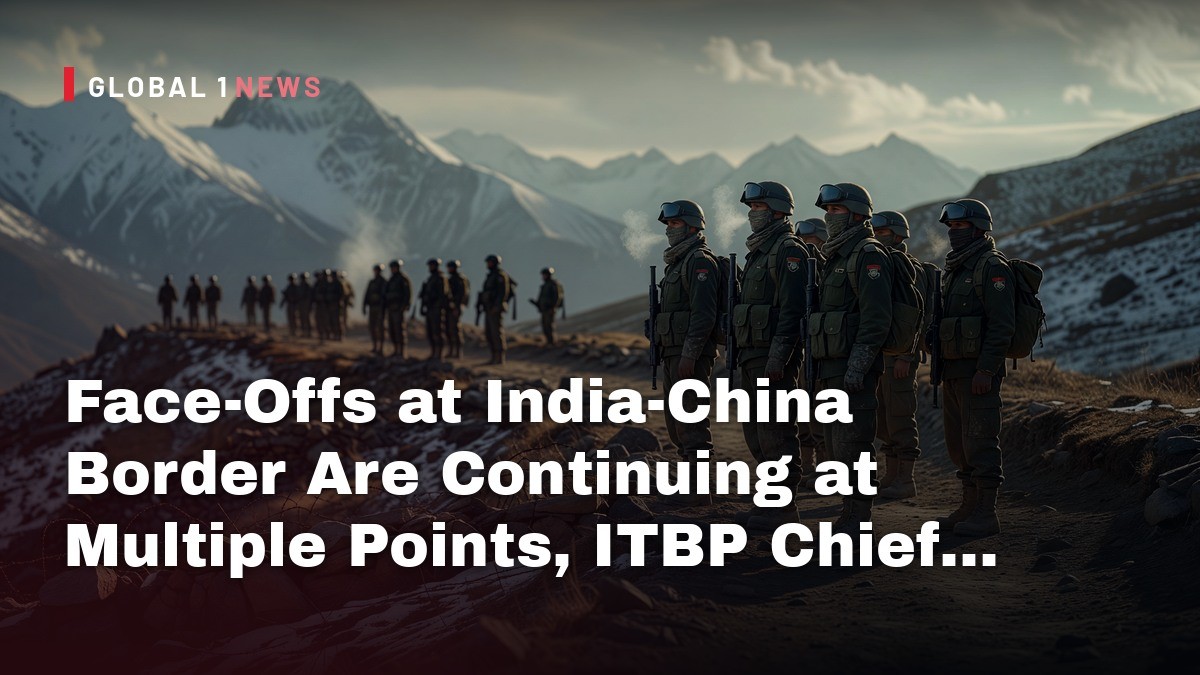
In late October, the head of India’s Indo‑Tibetan Border Police (ITBP), Director General Shatrujeet Kapur, publicly confirmed that “face‑offs are happening between Indian and Chinese forces at several locations in Arunachal and it still continues.” This admission marks the first official acknowledgment of ongoing confrontations along the contested eastern sector of the Line of Actual Control (LAC), a development that follows months of civil‑society alerts, disputed media reports and a series of high‑level diplomatic exchanges that have, until now, failed to halt the incursions.
From Civil‑Society Alerts to Official Confirmation
Since June, local organisations in Arunachal Pradesh have warned of a gradual but steady PLA presence in areas traditionally used by tribal communities. In a letter dated 26 June 2026, the Nah Welfare Society (NWS) detailed alleged PLA occupation of Taksing and surrounding locales such as Oying, Paniar, Marpan, Portrang Lake and Tingdingtang. The society described the construction of roads, bridges and military camps that have supplanted grazing grounds, hunting routes and forest‑product collection sites, and expressed “deep grief” over what it called a “gradual occupation” that has intensified since 2020.
Initial responses from New Delhi were dismissive. The Indian Army labelled the reports “incorrect and without any basis,” while the Press Information Bureau’s Fact‑Check unit called related videos “fake,” asserting they did not pertain to the border. Even Arunachal Pradesh’s Home Minister Mama Natung dismissed the claims as “just rumors.” Nonetheless, the persistence of local testimony, combined with video footage suggesting PLA advances of 50‑60 km, kept the issue in the public eye and set the stage for Kapur’s later confirmation.
Chronology of Recent Skirmishes
July saw the first reported “skirmishes” in the Taksing Circle, with confrontations lasting nearly a week before senior commanders from both sides intervened to de‑escalate. Although the Indian government framed the episode as a temporary flare‑up, the recurrence of such incidents underscores a pattern of PLA activity in the eastern sector. The subsequent Corps Commander‑level meeting on 6 September 2026 at the Vacha‑Damai Border Personnel Meeting Point—held in Arunachal itself—demonstrated a willingness at the military level to engage directly, yet the face‑offs persisted.
These incidents are not isolated. Historical flashpoints such as Samdurong Chu (1986‑87), Doklam (2017) and Galwan (June 2020) illustrate a long‑standing volatility along the LAC. The recent confrontations, however, are distinct in that they involve multiple points across Arunachal Pradesh rather than a single, isolated clash, suggesting a broader strategic posture by the PLA in the region.
Diplomatic Engagements Amidst Tension
Parallel to the on‑ground developments, India and China have maintained a busy diplomatic calendar. The 36th Working Mechanism meeting on 6 August 2026 in New Delhi, the Special Representatives’ talks on 26 August 2026 in Beijing, and the bilateral meeting between Prime Minister Narendra Modi and President Xi Jinping at the SCO Summit in Bishkek (31 August 2026) all reflect an active dialogue track. Yet the continuity of PLA incursions indicates that these mechanisms have limited leverage over field‑level actions.
Prime Minister Modi’s public posture—characterised by repeated denials of any PLA presence in Indian‑controlled territory—contrasts sharply with the on‑ground reality now confirmed by the ITBP chief. The Modi administration’s emphasis on projecting a strong domestic image, particularly in the wake of large‑scale protests in the capital, appears to have shaped its diplomatic calculus, favouring denial over acknowledgement of the border challenge.
The Strategic Significance of Arunachal Pradesh
Arunachal Pradesh, referred to by Beijing as “Zangnan” or “South Tibet,” occupies a sensitive place in China’s strategic outlook. A 2025 Pentagon assessment listed the state among China’s “core interests,” reflecting its importance in Beijing’s broader regional ambitions. Since the 1962 war, when the PLA briefly occupied the area before withdrawing, China’s claims have fluctuated. The mid‑1980s marked a renewed push to assert sovereignty, manifested through diplomatic pressure, visa restrictions on Arunachal residents, and the imposition of Chinese place‑names.
From India’s perspective, the region is not only a territorial flashpoint but also a cultural frontier inhabited by distinct tribal groups. The encroachment of infrastructure—roads, bridges and camps—into traditional lands threatens both the livelihoods of local communities and the broader narrative of Indian sovereignty over the state.
Domestic Politics and the ITBP Deployment
One striking development highlighted by the source material is the redeployment of ITBP personnel from the border to Delhi. Since June‑July, massive anti‑government protests have shaken the Modi administration, prompting the use of border forces for internal security duties. This shift has reduced the ITBP’s presence along the LAC at a time when confrontations are intensifying, raising questions about the prioritisation of domestic stability over border defence.
The decision underscores a broader tension within the Modi government: balancing a hard‑line image for domestic supporters with the practical demands of frontier security. By diverting a key border‑guarding force to quell civilian unrest, the administration may have inadvertently weakened its bargaining position in India‑China talks, as a robust on‑ground posture is a critical lever in diplomatic negotiations.
Implications for Future India‑China Relations
The confirmation of multiple face‑offs in Arunachal Pradesh signals that the eastern sector of the LAC remains a volatile arena despite ongoing diplomatic channels. The pattern of PLA infrastructure development and the Indian government’s denial strategy suggest a strategic impasse in which each side seeks to advance its claims while avoiding full‑scale conflict.
For India, the challenge is twofold: reinforcing border forces to deter further PLA advances, and managing domestic political pressures that may divert security resources. Strengthening the ITBP’s operational capacity in the region, alongside clear communication of on‑ground realities, could enhance India’s leverage in future talks.
For China, the continued presence of PLA units and the construction of logistical assets in Arunachal reinforce its long‑term objective of solidifying claims over “South Tibet.” The incremental nature of these moves indicates a calculated approach, avoiding overt escalation while steadily altering facts on the ground.
Overall, the October 2026 admission by Director General Kapur underscores a turning point: the Indian government can no longer dismiss civil‑society reports as mere rumors. How New Delhi translates this acknowledgment into concrete policy—whether through increased border deployments, renewed diplomatic pressure, or a combination of both—will shape the trajectory of India‑China relations in the coming years.
This article was produced with AI-assisted research and editorial support. Reporting is based on the source material cited below. Sources: The Diplomat; thediplomat.com; Global1.News (28 October 2026).
By Kenji Tanaka, Staff Writer
What's Your Reaction?
 Like
0
 Dislike
0
 Love
0
 Funny
0
 Wow
0
 Sad
0
 Angry
0

Japan Correspondent at Global1.News. Tokyo-based voice covering Japanese politics, technology, economy, and culture. Tracks the intersection of tradition and innovation in one of the world's most dynamic societies.













Comments (0)