
FAA Probes Marine One Near-Miss With Passenger Jet at Reagan National
FAA probes Marine One near-miss with Envoy Air jet at Reagan National, exposing ongoing ATC communication and congestion issues after the 2025 crash that killed 67.
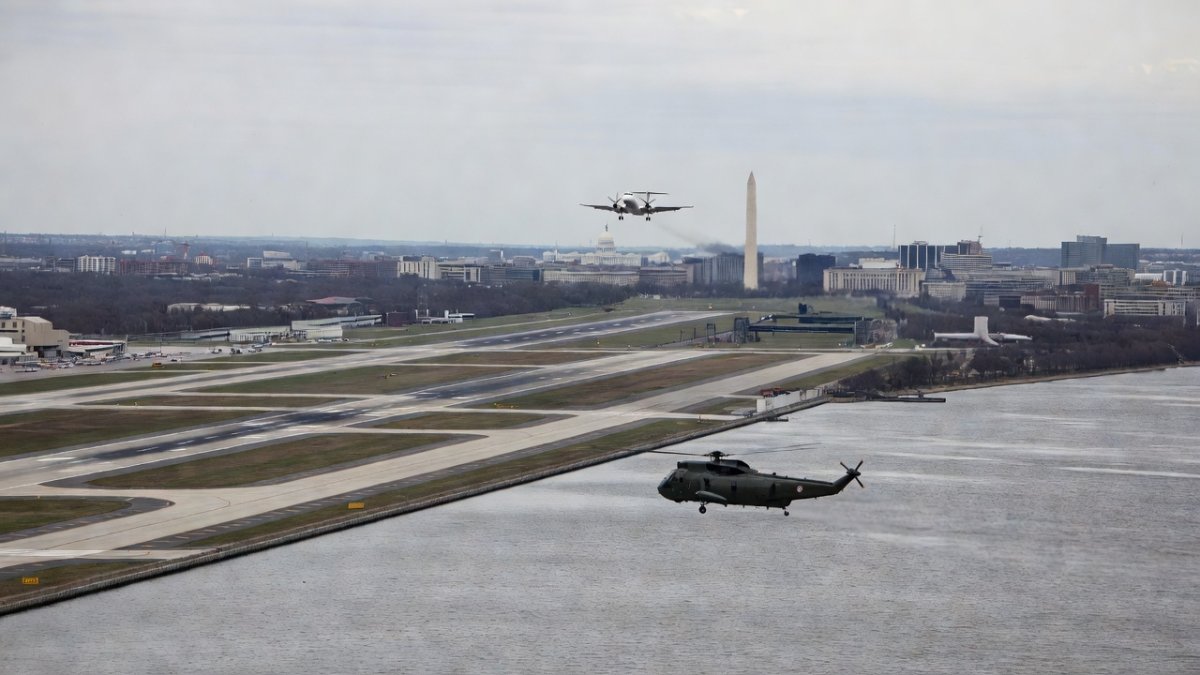
The Moment Everything Nearly Collided
Picture this: Tuesday around 2:33 p.m., Marine One rises from near the White House and heads toward Joint Base Andrews. One minute later, Envoy Air Flight 3742, an Embraer E170 bound for Pensacola, pushes back from Reagan National. In the tight Washington airspace, the two aircraft end up less than a mile apart. FAA rules demand 1.5 miles of horizontal separation and at least 500 feet vertically near airports. They came up short on both counts.
The Embraer E170 is a standard regional jet in the American Airlines network, typically carrying 70 to 80 passengers on short-haul routes like the one to Pensacola. That one-minute gap between the helicopter lift-off and the jet’s departure left almost no buffer in an airspace where every second counts. Loss of separation in plain language means the two aircraft slipped inside the minimum distances controllers are required to maintain, turning what should have been routine movements into a shared slice of sky that demanded immediate correction.
Both aircraft landed safely with no injuries reported. That part is good news. Yet the fact that a presidential helicopter and a scheduled passenger jet got that close in the first place tells you the system is still running hot and thin.
Radio Silence From the Tower
Air-traffic control audio tells a frustrating story. Marine One pilots radioed the Reagan National tower controller at least three times to say they were preparing to take off. No response came back. Traffic at the airport kept moving anyway. Then the helicopter crew came back with a direct “Tower, do you copy.” Still nothing clear on the other end.
When a controller misses repeated calls, standard FAA phraseology requires the pilot to escalate with clearer requests or switch frequencies, yet the lack of any reply here allowed normal departures to continue. Unanswered calls from a presidential movement are rare because those flights usually trigger special handling, making the silence stand out as a procedural breakdown rather than routine workload.
When the controller finally engages, the window for safe separation has already narrowed. This is not a minor hiccup. This is the exact kind of communication breakdown that turns routine departures into headline risks.
FAA phraseology rules call for pilots to use specific language when attempting contact, and repeated unanswered calls from a high-priority flight like Marine One are supposed to trigger immediate escalation or frequency changes. The fact that the controller remained silent through multiple attempts stands out because presidential movements typically receive priority handling and dedicated attention from the tower.
The Shadow of the 2025 Crash Still Looms
Everyone in aviation remembers January 29, 2025. An American Airlines regional jet collided with an Army Black Hawk over the Potomac near Reagan National, killing 67 people. Investigators traced part of the problem to years of controllers mixing helicopter and airplane traffic in the same narrow corridors. After that disaster, the FAA tightened helicopter routes and created a traffic-hold procedure so Marine One normally gets the airport to itself while commercial flights wait.
The 67 victims represented the deadliest U.S. airline accident in more than two decades, with families still pressing for accountability and procedural reforms long after the NTSB wrapped its initial findings. Those findings highlighted how routine mixing of helicopter and fixed-wing traffic had become normalized, leaving little margin when timing slipped even slightly.
Tuesday’s incident shows those safeguards did not fully kick in. The presidential helicopter should have had clear airspace. Instead it shared the sky with a scheduled jet. That is the part that keeps safety experts up at night.
The loss of 67 lives in that January 2025 collision left families and communities across the country demanding lasting changes to prevent similar tragedies. A memorial along the Potomac now honors those victims, serving as a constant reminder that the skies over Reagan National carry real human stakes beyond the daily operational pressures.
Reagan National’s Congestion Problem Is Not New
Reagan National sits in one of the busiest and most restricted airspaces in the country. Short runways, river approaches, and constant helicopter traffic create a pressure cooker. Tuesday’s event is the latest in a string of near misses that have piled up in recent years. The airport keeps running at high volume because demand never slows, yet the infrastructure and procedures have not kept pace.
The airport’s geography forces pilots onto tight Potomac River approaches with strict curfew and perimeter rules that limit long-haul flights and keep operations compressed into narrow time windows. Pilots and unions have repeatedly flagged the resulting workload as unsustainable, noting that even small deviations in timing can cascade into separation losses when multiple aircraft types share the same corridors.
Every time a commercial flight and a VIP helicopter share the same slice of sky, the margin for error shrinks. Tuesday proved the margin can disappear in seconds.
Reagan National's location forces all operations into a narrow corridor along the Potomac River, with short runways that limit aircraft types and a strict perimeter rule capping nonstop flights at 1,250 miles. These constraints compress traffic into tight windows, making any overlap between helicopters and jets especially risky in an already constrained environment.
What the FAA Is Saying and What It Is Not
The FAA released a statement that it is investigating the incident involving Marine One. Officials added that it did not appear to be a dangerous close call and the aircraft were not apparently converging. Two sources told Reuters the agency plans to convene a Safety Review Team. The New York Times reported the event raised new concerns about air traffic control in the congested area.
American Airlines, through its Envoy Air subsidiary, has not commented yet. That silence leaves passengers wondering who is actually watching the details.
Air Traffic Control Staffing and Training Gaps
Controllers at Reagan National handle a relentless mix of commercial jets, general aviation, and frequent helicopter flights. The post-2025 restrictions were meant to reduce that mix, especially when Marine One is moving. Tuesday showed the procedures can still break down when radio calls go unanswered and traffic keeps flowing.
The national ATC staffing shortage has left many facilities, including complex ones like Reagan National, operating with reduced margins during peak periods. Controller fatigue and training gaps have been documented across the system, with the FAA’s ongoing hiring push still struggling to replace retirees and keep pace with retirements at high-workload towers.
Staffing shortages and training shortfalls have been flagged for years across the national airspace system. When a controller misses multiple calls from a presidential flight, the question becomes whether the workload or the handoff process itself needs fixing. The Safety Review Team will have to answer that directly.
What Happens Next in the Investigation
The FAA will pull radar data, voice recordings, and controller statements. The Safety Review Team will examine whether the traffic-hold procedure was properly activated and why the tower did not respond to Marine One’s repeated calls. Any findings could lead to new restrictions or changes in how presidential movements are coordinated with commercial departures.
The team’s scope will likely include reviewing staffing levels at the time, communication protocols, and whether existing post-2025 procedures were followed. Possible outcomes range from updated traffic-hold triggers to targeted staffing increases or enforcement actions, with a timeline that could stretch several months before public recommendations emerge. The NTSB may also open a parallel review given the presidential aircraft involvement.
Both the helicopter and the jet landed without incident, which is the only reason this story is not a tragedy. That fact does not erase the need for fixes. The agency has already shown it can act after the 2025 crash. The question is whether it will move faster this time.
What This Means for Air Travel Right Now
Travelers heading through Reagan National should expect possible schedule adjustments or added holds during future presidential movements as the FAA reviews its procedures. The ripple effects could reach other busy airports that share similar helicopter and jet mixes, prompting carriers to build extra buffer time into connections out of DCA.
Beyond Washington, the incident underscores how quickly a single communication lapse can affect passenger confidence across the network. Airlines and regulators will face renewed pressure to demonstrate that the fixes implemented after 2025 are holding up under real-world conditions rather than just on paper.
Passengers on Envoy Air Flight 3742 had no idea how close they came to sharing headlines with a presidential aircraft. That is how these incidents often play out until something goes wrong. Reagan National remains one of the most complex airports in the system, and the string of near misses shows the pressure has not eased.
Until the FAA and the airlines close the gaps in communication and separation, every takeoff from that airport carries an extra layer of risk that should not exist. Tuesday was a warning shot. The system needs to treat it like one.
By Jessica Ali, Staff Writer
This article was produced with AI-assisted research and editorial support. Reporting is based on sources cited in the article.
What's Your Reaction?
 Like
0
Like
0
 Dislike
0
Dislike
0
 Love
0
Love
0
 Funny
0
Funny
0
 Wow
0
Wow
0
 Sad
0
Sad
0
 Angry
0
Angry
0

Editor-in-Chief at Global1.News. Atlanta-based journalist who cuts through the BS and tells it like it is. Lead anchor, host, and the voice you hear when the spin stops and the truth starts.














Comments (0)