
Food delivery e-riders face ‘dehumanising’ work conditions as some earn R50 a day
When you hear the roar of a delivery bike weaving through traffic in Cape Town or Johannesburg, it’s easy to picture a side‑hustle that offers freedom and a quick buck.
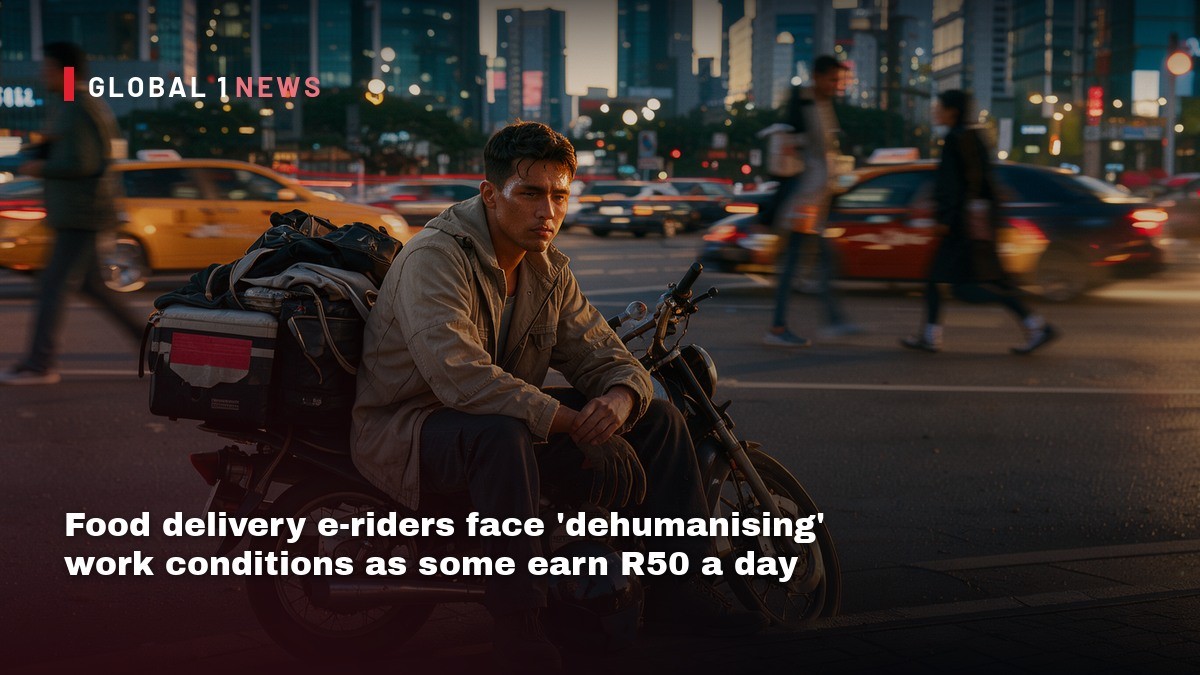
When you hear the roar of a delivery bike weaving through traffic in Cape Town or Johannesburg, it’s easy to picture a side‑hustle that offers freedom and a quick buck. Yet a fresh investigation by the International Labour Research and Information Group (ILRIG) shatters that myth, exposing a grim reality that reads more like a full‑time grind than a gig. The study, conducted between July and September 2026, interviewed 60 e‑riders and uncovered a world of razor‑thin margins, relentless hours and a digital overseer that treats riders more like data points than workers.
The numbers behind the grind
ILRIG’s findings paint a stark picture: some riders are pulling in as little as R50 a day. Even when they manage to secure five orders, the pay per order hovers around R20, translating to a modest R100 daily. In the Western Cape, a handful of riders reported only two to three orders per shift, leaving them with barely R60 – or in the worst cases, the R50 figure that headlines the report.
These earnings are not a supplement; the study shows that 98.3 % of respondents treat delivery work as their sole source of income, with most having stayed on the job for more than two years. The notion of gig work as a flexible side gig evaporates when you consider that riders are clocking up to 12 hours a day, seven days a week, for pay that is strictly per delivery and offers no compensation for waiting time.
Cost of living on two wheels
Even the meagre earnings are quickly eaten away by unavoidable expenses. Riders face weekly outlays that can reach R800 for bike rental and R700 for fuel. On a monthly basis, data costs sit around R200, while shared accommodation can drain another R1 500. Add food and other essentials, and the net take‑home shrinks dramatically, often leaving riders with less than the legal minimum wage after costs.
Compounding the financial squeeze, platforms levy penalties for rejecting orders. On stricter platforms, a rider who turns down a delivery can be fined or suspended for two weeks, a sanction that forces many to accept low‑pay or hazardous assignments just to keep their algorithmic scores intact.
Algorithmic control and the illusion of independence
Although classified as independent contractors, riders are subject to a suite of digital controls that resemble traditional employment oversight. The study notes that platforms impose roster, rating and clocking systems, all governed by opaque algorithms. Riders with a rating below 75 % risk immediate dismissal, a pressure that fuels a culture of compliance and self‑censorship.
Danmore Chuma, author of the ILRIG paper, describes the management style as “authoritarian algorithmic management,” highlighting how the technology not only tracks performance but also enforces punitive measures for non‑compliance. This digital surveillance strips riders of bargaining power and reinforces a hierarchy where the platform holds all the cards.
Safety on the streets: a daily gamble
The financial strain is matched by a constant threat to personal safety. Riders navigate crime hotspots, with areas such as Bellville, Kensington, Elsies River, Cravenby and Belhar in Cape Town flagged as particularly dangerous. Encounters with robbery, hijacking and road accidents are commonplace, and the majority of interviewed riders have either survived an accident or lost a colleague on the road.
Beyond crime, migrant riders face xenophobia and hate speech from customers, restaurant staff, security guards and motorists. The hostile environment adds a psychological toll, turning each delivery into a test of resilience as much as a job.
When things go wrong, support is scarce
Platforms offer little safety net when riders are injured or their bikes are damaged. One rider who suffered a fractured leg reported receiving no assistance, despite having contributed to the Road Accident Fund (RAF). Montgoma notes that some riders are paying the RAF at R235.25 a week, yet struggle to claim compensation after an accident. In several cases, riders were told their RAF claims would not be honoured, leaving them to shoulder medical costs alone.
Furthermore, riders who speak out about conditions risk account deactivation, a threat that silences dissent and perpetuates the status quo. The fear of losing access to the platform—effectively their livelihood—creates a climate where grievances are buried rather than addressed.
Calls for policy reform and the road ahead
ILRIG argues that South Africa urgently needs a policy framework to protect digital platform workers. While food‑delivery platforms undeniably create employment opportunities, the study stresses that without meaningful reform, riders will continue to endure dehumanising conditions, unsafe work environments and inadequate pay.
The organization urges legislators to consider extending basic labour protections—such as minimum wage guarantees, occupational health and safety standards, and transparent algorithmic oversight—to the gig economy. Such measures would align the sector with broader South African labour standards and help ensure that the promise of gig work does not become a trap for the most vulnerable.
What this means for South African sport and society
Beyond the headlines, the plight of e‑riders resonates with broader themes in South African sport: the fight for fair treatment, the battle against systemic inequities and the role of community support. Just as rugby’s transformation agenda seeks to level the playing field, the e‑rider crisis calls for a level‑setting of labour rights in the digital age.
Fans of Bafana Bafana or the Springboks know the power of collective action—players striking for better contracts or communities rallying around grassroots clubs. The same spirit can be harnessed to champion the rights of gig workers, ensuring that the same values of fairness and dignity that underpin our sports culture extend to every corner of the economy. As the nation watches the next World Cup qualifier, let’s also keep an eye on the riders who keep our food hot and our streets alive, demanding that they, too, receive the respect and protection they deserve.
This article was produced with AI-assisted research and editorial support. Reporting is based on the source material cited below. Sources: The South African; thesouthafrican.com; Global1.News (15 November 2026).
By Dante Williams, Staff Writer
What's Your Reaction?
 Like
0
 Dislike
0
 Love
0
 Funny
0
 Wow
0
 Sad
0
 Angry
0

Breaking News and Investigations Correspondent at Global1.News. Based in London, covering global breaking news, security, and investigative stories. Known for digging deeper and connecting the dots across continents.














Comments (0)