
North Korea Signals Military Buildup in Response to Japan's Missile Capabilities
Kim Yo Jong's August 5 statement marks a sharp escalation in Pyongyang's rhetoric toward Tokyo, directly linking Japan's recent weapons tests to potential new North Korean countermeasures. The warning arrives amid accelerating regional militarization that directly implicates South Korean security calculations. Observers in Seoul now face renewed questions about how inter-Korean dynamics will shift under this added pressure.
Kim Yo Jong's August 5 statement marks a sharp escalation in Pyongyang's rhetoric toward Tokyo, directly linking Japan's recent weapons tests to potential new North Korean countermeasures. The warning arrives amid accelerating regional militarization that directly implicates South Korean security calculations. Observers in Seoul now face renewed questions about how inter-Korean dynamics will shift under this added pressure.
Kim Yo Jong Warns of DPRK Options After Japan Test
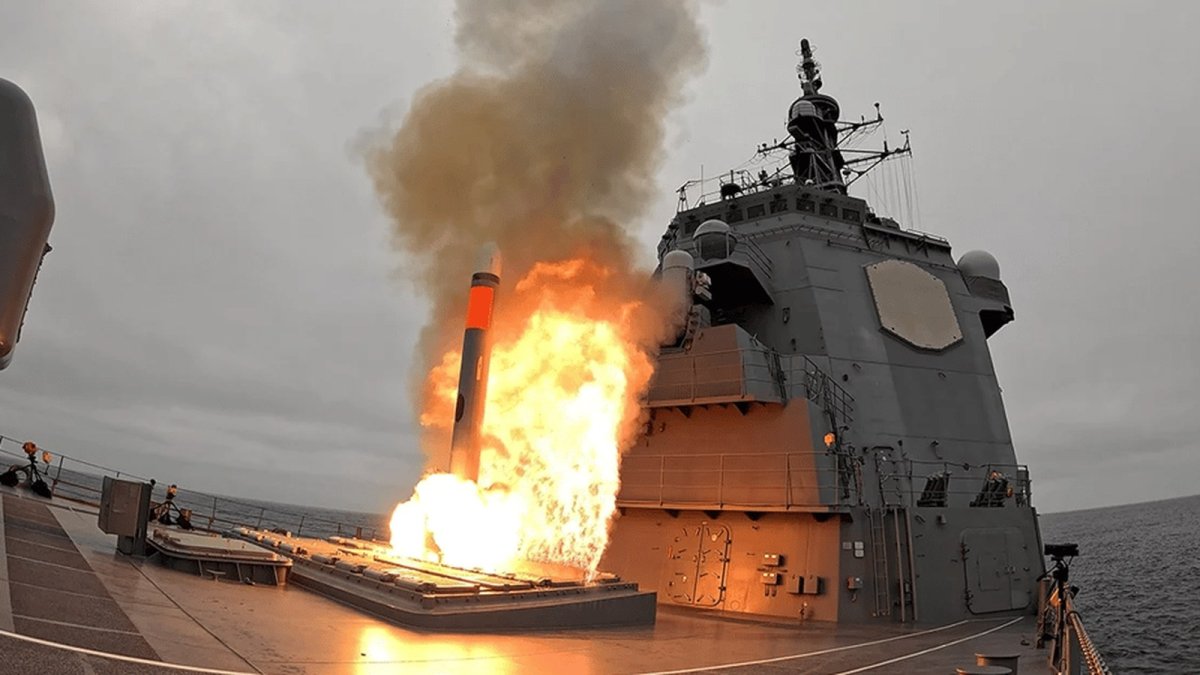
Seoul, South Korea — On August 5, Kim Yo Jong, sister of North Korean leader Kim Jong Un, announced that Pyongyang would develop additional military options against Japan following Tokyo's first live-fire test of a U.S.-supplied Tomahawk cruise missile. The test occurred on July 29 when the Japanese navy launched the missile from the Aegis destroyer Chokai in the Pacific Ocean. Kim's statement, carried by the Korean Central News Agency, framed these developments as evidence that Japan has moved from planning to implementation of preemptive strike capabilities.
Kim Yo Jong's Warning
Kim Yo Jong described Japan's actions as accelerating its transformation into a war state amid intensifying global geopolitical conflicts. She specifically cited the Tomahawk test and Japan's participation in a U.S.-led joint military drill in the Philippines in May as proof that Tokyo's preemptive strike push has entered the stage of the actual act. The statement concluded with an explicit authorization: the armed forces of the DPRK and the military leadership will set up additional military options which are obviously due to Japan's transformation of these days.
This language signals Pyongyang's intent to respond symmetrically to Japan's expanding reach. North Korean officials have historically used such statements to justify subsequent weapons demonstrations, often timed to influence diplomatic calendars in Seoul and Washington. The absence of specific details about the new options leaves room for interpretation but maintains pressure on regional actors.
Pyongyang has long employed KCNA statements as calibrated diplomatic signals within Northeast Asia's security architecture, allowing North Korean leadership to convey resolve while preserving operational flexibility. By framing Japan's actions as a direct catalyst for new countermeasures, Kim Yo Jong's August 5 remarks position the DPRK as a reactive yet vigilant actor, seeking to shape perceptions in Seoul and Washington without committing to immediate escalation. This approach sustains pressure on regional capitals while inviting external mediation to constrain Japanese capabilities.
The deliberate omission of specifics regarding the promised military options is itself a strategic choice, maintaining ambiguity that complicates adversary planning while preserving Pyongyang's freedom to calibrate the scale and timing of any response. For allied intelligence communities, this posture sustains uncertainty about whether the next North Korean demonstration will target Japan directly or unfold closer to the peninsula, a calculation that will shape early-warning and consultation procedures in Seoul and Tokyo in the months ahead.
Japan's Counterstrike Shift
Japan's pursuit of long-range strike weapons traces to December 2022, when Tokyo revised three key security documents to adopt counterstrike capability. This marked a departure from its decades-old policy of maintaining a strictly defensive military. The revision opened the way for the purchase of 400 Tomahawk missiles from the United States, with deliveries beginning this year.
Japanese officials justify the buildup by citing the most severe and complex security environment since the end of World War II. North Korea's military activities feature prominently in Japan's latest defense white paper as posing an even more grave and imminent threat to Japan's national security than ever before. This mutual justification cycle now drives parallel modernization programs in both capitals.
The Tomahawk Test
The July 29 launch from the Chokai represented Japan's first operational demonstration of the Tomahawk system. The test occurred in the Pacific Ocean and followed extensive remodeling of the destroyer to accommodate the missiles. North Korea views this event not as an isolated exercise but as confirmation that Japan's long-range capabilities have reached operational status.
For South Korean defense planners, the test underscores the speed at which Japan is integrating U.S. strike systems into its fleet. Seoul must now assess whether its own missile programs, including the Hyunmoo series, require accelerated deployment schedules to maintain parity on the peninsula.
For neighboring defense establishments, the demonstration alters the conventional balance across the Sea of Japan and the East China Sea. By showing operational readiness of U.S.-supplied Tomahawks from an Aegis destroyer, Tokyo signals an expanded ability to project power beyond its immediate littoral zones, compelling states in the region to recalibrate assessments of maritime denial capabilities and response timelines in potential contingencies.
For extended deterrence debates in Seoul and Tokyo, the test underscores questions about reliance on American strike assets versus indigenous programs. South Korean planners must evaluate whether alliance-provided systems sufficiently offset North Korean missile threats, while Japanese officials cite the same environment to justify further acquisitions. The resulting dynamic compresses decision windows during crises, as neither capital can assume the other will match its pace of capability development.
Constitutional and Legal Dimensions
Kim Yo Jong argued that Japan's moves to formulate the possession of the capability for preemptive attack were contrary to international law and its constitution, which disallowed the possession of war potentials, the right to participate in a war and the right to belligerency. She further warned that the mass possession of different kinds of long-range strike means with an unexpectedness of preemptive attack and a drastic increase in the radius of their operation make Japan reorganize its overall armed forces as a formation of preemptive attack and overseas aggression.
These legal critiques resonate in South Korea, where constitutional debates over military posture have also surfaced during past defense reforms. Pyongyang's invocation of Japan's postwar constraints serves to delegitimize Tokyo's current trajectory while appealing to audiences wary of historical revisionism.
Japan's Article 9 has anchored postwar security policy by prohibiting war potential and the right of belligerency, yet the 2022 security document revisions introduced counterstrike language that South Korean scholars interpret as a substantive reinterpretation rather than a formal amendment. Analysts in Seoul note that these changes enable acquisition of long-range systems while preserving constitutional ambiguity, allowing Tokyo to expand operational reach without triggering domestic legal thresholds. This evolution raises concerns about precedent for other regional actors facing similar security pressures.
South Korean policymakers have viewed the revisions as evidence of Japan's gradual normalization of military posture, prompting internal discussions on whether analogous adjustments to Seoul's own defense framework are warranted. The emphasis on preemptive framing in the documents has been cited by Korean academics as shifting the burden of proof onto neighbors to demonstrate threat levels, thereby influencing alliance consultations and regional arms control dialogues.
The View From Washington
Kim Yo Jong placed direct responsibility on the United States, stating that it is not a secret that the U.S. has handed over Tomahawk long-range cruise missiles to Japan, remodeled a warship to be used in its operation, and provided all conditions and environment for its test-fire including the place of launch. This framing positions Washington as the enabler of Japan's military evolution.
From Seoul's perspective, U.S. support for Japanese capabilities creates a triangular dynamic that complicates South Korea's traditional reliance on American extended deterrence. Policymakers must now weigh whether closer trilateral coordination with Tokyo strengthens or dilutes Korean influence within the alliance structure.
Regional Security Implications
The exchange highlights how Northeast Asian security is shifting from reactive postures to proactive capability acquisition. Japan's decision to acquire Tomahawks and North Korea's pledge of additional options both reflect calculations that deterrence requires visible, long-range systems rather than declaratory policy alone.
South Korea's position between these two trajectories carries particular weight. Any North Korean response that increases missile activity near the peninsula could trigger corresponding Japanese deployments, further compressing the strategic space available to Seoul.
The trajectory of trilateral U.S.-Japan-South Korea coordination has gained momentum through joint exercises and intelligence sharing, yet the Japan-North Korea dynamic introduces friction that tests the cohesion of this framework. Pyongyang's response to Japanese capabilities risks polarizing alliance priorities, as Seoul seeks to avoid entanglement in Tokyo's bilateral disputes while maintaining unified deterrence against DPRK threats. This tension complicates progress on integrated missile defense architectures spanning the peninsula and archipelago, where divergent threat perceptions require sustained trilateral coordination.
Inter-Korean relations face additional strain when North Korean statements link Japanese military evolution to potential actions affecting the DMZ corridor. Seoul's preference for calibrated alliance consultations may be complicated by any visible North Korean adjustments in artillery or missile posture, as such moves would reinforce conservative critiques at home and narrow the room for confidence-building measures between the two Koreas amid heightened regional militarization.
What This Means for the Korean Peninsula
Kim Yo Jong's warning that we will never remain a passive onlooker to the military evolution of Japan which may pose a grave threat to the security of the Democratic People's Republic of Korea directly implicates South Korean territory as a potential corridor or target in future contingencies. Historical precedents show that North Korean statements of this nature often precede adjustments in artillery or missile deployments along the DMZ.
Seoul's response will likely emphasize alliance consultations while avoiding direct entanglement in the Japan-North Korea rhetorical spiral. Yet the episode underscores how Japan's military normalization and North Korea's countermeasures now shape the peninsula's threat environment more than at any point since the end of the Cold War.
By Prof. David Park, Staff Writer
This article was produced with AI-assisted research and editorial support. Reporting is based on sources cited in the article.
What's Your Reaction?
 Like
0
Like
0
 Dislike
0
Dislike
0
 Love
0
Love
0
 Funny
0
Funny
0
 Wow
0
Wow
0
 Sad
0
Sad
0
 Angry
0
Angry
0

East Asia/Technology Correspondent at Global1.News. Seoul-based voice covering Korean politics, technology, business, and culture. Analyzes how technology and geopolitics intersect across East Asia.















Comments (0)