
Eye Haïdara Makes History Hosting Cannes 2026 Ceremonies
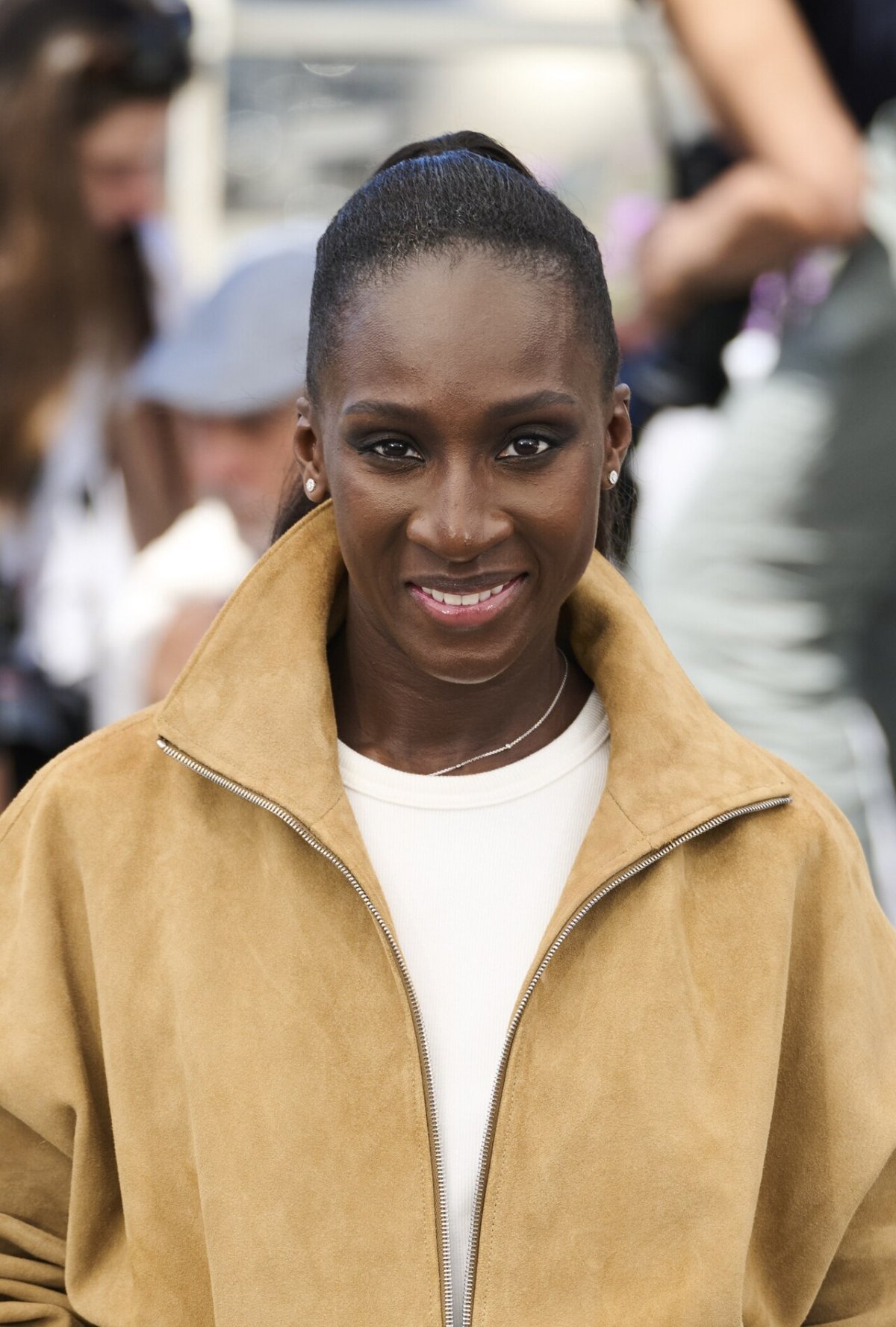
Eye Haïdara walked into the Grand Théâtre Lumière on the evening of 12 May 2026 and made history before saying a word. As mistress of ceremonies for the 79th Cannes Film Festival, the 43-year-old French-Malian actress became the first Black woman ever to host the festival's opening and closing ceremonies — a milestone that resonated far beyond the Croisette and across the African continent that raised her family.
Eye Haïdara walked into the Grand Théâtre Lumière on the evening of 12 May 2026 and made history before saying a word. As mistress of ceremonies for the 79th Cannes Film Festival, the 43-year-old French-Malian actress became the first Black woman ever to host the festival's opening and closing ceremonies — a milestone that resonated far beyond the Croisette and across the African continent that raised her family.
Eye Haïdara Makes History Hosting Cannes 2026 Ceremonies
Cannes, France — When France Télévisions announced in late March that Eye Haïdara would succeed Laurent Lafitte as maîtresse de cérémonie, the news landed like a thunderclap in the worlds of French and African cinema. By the time she closed the festival on 23 May, the actress had not only lived up to the appointment — she had turned it into one of the most acclaimed hosting performances in the event's recent history, saluted by critics, colleagues and audiences across the continent.
A Historic First on the Croisette
The role of mistress of ceremonies at Cannes is no small honour. It means commanding the world's most watched film stage twice — once to open the festival, once to close it — with millions of eyes on the Grand Théâtre Lumière and millions more watching broadcasts from Dakar to Jakarta. For 79 editions, that role had been held by a parade of celebrated French performers, but never once by a Black woman. Eye Haïdara changed that on the evening of 12 May 2026, and the weight of the moment was not lost on her.
Her predecessors set a formidable bar. Laurent Lafitte hosted the 2025 edition with his signature wit, while Camille Cottin, Chiara Mastroianni and Virginie Efira had each brought their own elegance to the podium in recent years. Haïdara's appointment, confirmed by France Télévisions in late March 2026, was met with immediate enthusiasm in French cultural circles and with something closer to jubilation across West Africa, where her name carries deep recognition.
The significance goes beyond symbolism. Cannes remains the planet's most influential film marketplace, and the person who hosts its ceremonies shapes the tone of the entire event. For a French-Malian actress to hold that position signals a genuine shift in how French cinema sees itself — no longer as a monocultural institution but as a space where the children of immigration stand at the very centre of the stage.
French film critics noted that Haïdara's appointment came at a moment when the industry is finally reckoning with questions of representation that activists have raised for decades. The actress herself has never shied from those conversations, and her presence on the Cannes stage in 2026 felt less like a concession and more like a natural evolution.
For African audiences, the milestone carried particular resonance. From the balconies of Dakar's cinemas to the living rooms of Bamako where families gathered to watch the broadcast, there was a shared sense that something fundamental had shifted. A daughter of Mali was now the face of the world's most prestigious film festival.
From Bamako Roots to Paris Stages
Eye Haïdara's journey to the Cannes podium began on 7 March 1983 in Boulogne-Billancourt, a suburb west of Paris, where she was born to Malian parents — her father also of Moroccan origin. Though she entered the world in France, her family's roots ran deep in West Africa, and her parents eventually returned to live in the south of Bamako, Mali's bustling capital, keeping the young Eye connected to her heritage from an early age.
She grew up in Paris's 17th arrondissement, in the Batignolles district near Boulevard Bessières, a neighbourhood of modest apartment buildings and lively street markets. It was there that a primary school teacher noticed something special in the young girl and encouraged her to perform on stage — a piece of guidance that would redirect her entire life. Before that moment, Haïdara had dreamed of becoming a children's judge, drawn to the idea of protecting the vulnerable.
The theatre bug proved irresistible. She took her baccalauréat with a theatre option at Lycée Racine in Paris in 2001, then pursued a DEUG in Performing Arts at Université Sorbonne Nouvelle, which she completed in 2003. Her training continued at Acting International under the tutelage of Robert Cordier, and later at the Académie de théâtre de Lorient under Éric Vigner, where she honed the craft that would define her career.
Throughout her rise in film and television, the theatre remained her anchor. She has appeared in dozens of stage productions, from classical French repertoire to contemporary works, building a reputation as an actress of remarkable range and emotional depth. That stage discipline was evident in her Cannes hosting — every gesture measured, every pause perfectly timed.
Her dual identity — French by birth, Malian by blood — has always been central to her public persona. She speaks openly about her family's ties to Bamako and the cultural richness she draws from both worlds. In interviews, she has described herself as a bridge between two cultures, and her career has embodied that role with grace and conviction.
Godard, Nakache and the Road to Stardom
Haïdara's film career began modestly with a debut in Audrey Estrougo's "Regarde-moi" in 2007, but her trajectory accelerated rapidly. In 2010, she appeared in Jean-Luc Godard's "Film Socialisme," which was presented in the Un Certain Regard section at Cannes — her first taste of the festival she would one day host. Godard, ever the eccentric, gave her the camera from her character as a gift, a memento she treasures to this day.
The breakthrough came in 2017 with "Le Sens de la fête" (released internationally as "C'est la vie!"), directed by Éric Toledano and Olivier Nakache, the duo behind "The Intouchables." Opposite the late Jean-Pierre Bacri, Haïdara delivered a performance that drew more than 3 million admissions in France alone and catapulted her into the national spotlight. The role earned her a César nomination for Most Promising Actress in 2018, along with a Lumière Award nomination.
Television expanded her reach further. She appeared in "En Thérapie" on Arte, the acclaimed French adaptation of the Israeli series, and took on roles in "Patriot" (2018) and the action series "Furies" (2024). Each project showcased a different facet of her talent, from psychological drama to physical intensity.
In 2025, she starred in "Six Days in Spring" by Belgian director Joachim Lafosse, which premiered at the San Sebastián Film Festival to strong reviews. The role demonstrated her ability to carry a film with quiet power, and it positioned her as one of the most versatile actresses of her generation in French-language cinema.
Her philosophy, repeated in interviews throughout her career, is simple and profound: "Quand on joue, il n'y a pas de barrières" — "When we act, there are no barriers." It is a credo that has guided her through an industry that has not always been welcoming to actresses of African descent, and it was on full display during her Cannes hosting duties.
An Opening Night to Remember
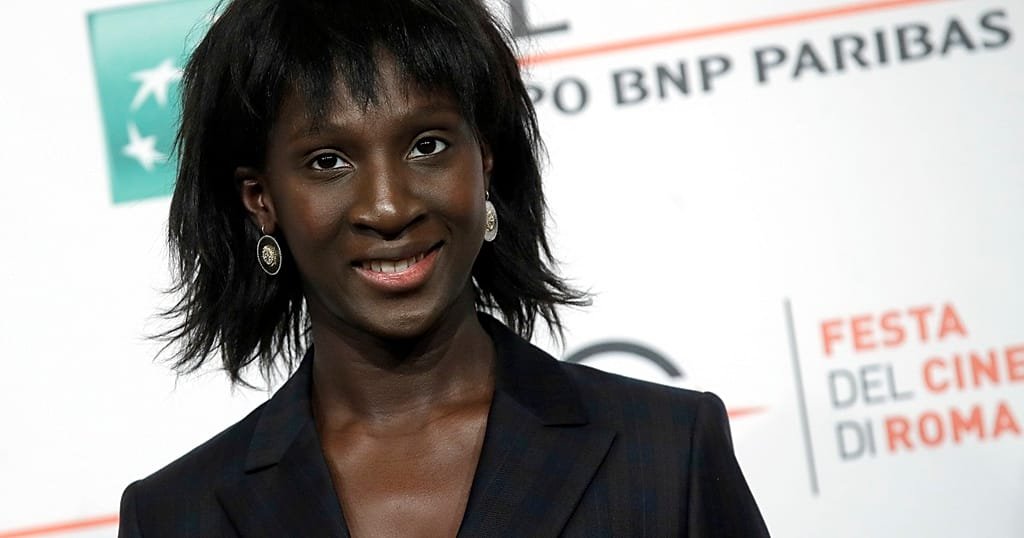
The opening ceremony on 12 May 2026 at the Grand Théâtre Lumière was, by all accounts, a triumph. Haïdara held the stage for several minutes with a performance that French critics unanimously described as "magistrale" — masterful. She alternated between emotion, humour and references to her personal cinematic pantheon, name-checking "Taxi Driver," "Notting Hill," "Un homme et une femme" and "Un Prophète" with the ease of a true cinephile.
One of the evening's most moving moments came when she paid tribute to French actress Nathalie Baye, who had died on 17 April 2026 at the age of 77. Haïdara described her as "a woman of immense elegance, of infinite delicacy toward others," and the room fell silent as she honoured a legend of French cinema. The tribute was widely praised as the emotional high point of the ceremony.
She also addressed "those who try to resist here and elsewhere" — a phrase that many interpreted as a nod to the political and social struggles of our time, delivered with the subtlety that has become her trademark. Light digs at film critics drew laughter from the room, showing her ability to balance gravitas with playfulness.
The standing ovation that followed her opening remarks set the tone for a festival that would be remembered as one of the strongest in recent years. South Korean director Park Chan-wook presided over the jury, and the Palme d'Or ultimately went to Romanian director Cristian Mungiu's "Fjord" — his second Palme after "4 Months, 3 Weeks and 2 Days" in 2007. Honorary Palmes were awarded to Peter Jackson, John Travolta and Barbra Streisand, adding to the festival's sense of occasion.
By the time she closed the festival on 23 May, Haïdara had delivered two ceremonies that will be studied for years. She managed the rare feat of being both the warm presence that welcomed the world to Cannes and the sharp, intelligent voice that framed the festival's significance.
A Milestone for African and Black Cinema
The deeper meaning of Haïdara's appointment extends far beyond her individual achievement. In 2018, she walked the Cannes steps with 15 other French actresses as part of the collective "Noire n'est pas mon métier" ("Black Is Not My Profession"), which denounced racism against Black women in the French film industry. Eight years later, she stood alone at the top of those same steps as the face of the festival — a transformation that speaks volumes about how much has changed, and how much work remains.
The milestone connects to a broader African presence at Cannes 2026. Nigerian twin brothers Arie and Chuko Esiri presented "Clarissa" in the Directors' Fortnight, while Senegal's Ramata-Toulaye Sy made history as the youngest African director ever in competition. The Women in Cinema gala honoured African actresses, and the festival's programming reflected a continent in creative ferment.
For young African actresses from Dakar to Lagos to Bamako, Haïdara's success offers a powerful message: the top of the global film industry is no longer out of reach. Her journey from the Batignolles district to the Cannes podium is proof that talent, determination and craft can overcome even the most entrenched barriers.
The French-Malian identity she carries publicly — born in France to Malian parents, with family ties to Bamako — makes her a bridge between two cultures. She embodies the possibility of holding multiple identities without dilution, of being fully French and fully African at once. That duality, once seen as a liability, is now recognised as a strength.
Her presence at Cannes also reflects a broader shift in European cinema, where stories by and about people of African descent are finally receiving the attention they deserve. The festival's 2026 edition featured more African and diaspora filmmakers than ever before, and Haïdara's hosting role crowned that trend with symbolic power.
What to Watch For
Haïdara shows no signs of slowing down. Her upcoming projects include "Mata" by Rachel Lang, a spy thriller released on 27 May 2026, just days after the Cannes closing ceremony. She is also set to appear in "L'Objet du délit" by Agnès Jaoui alongside Daniel Auteuil, and in "La Maison des femmes" by Mélisa Godet with Karin Viard. Each role promises to stretch her range further.
The question now is whether the Cannes hosting role will open new international doors. Hollywood has taken notice of her performance, and industry insiders speculate that offers from American and British productions may follow. Her ability to command a global stage has been proven, and the international film community is watching.
The growing African presence in global film festivals — from FESPACO in Ouagadougou to the Durban International Film Festival and the Carthage Film Days — suggests that this moment is part of a larger movement. African cinema is no longer a niche interest but a vital force in world culture, and Haïdara's success is both a symptom and a cause of that transformation.
Her example says something profound about representation in European cinema. When a Black woman can host the world's most prestigious film festival and be judged purely on her performance, the industry has taken a meaningful step forward. But Haïdara herself would be the first to say that one milestone is not enough — the work of opening doors must continue.
For African creatives, the message is clear and hopeful. The barriers that once seemed insurmountable are falling, one by one. From the stages of Paris to the screens of Ouagadougou, a new generation is claiming its place in world culture. And as Eye Haïdara proved on the Cannes stage in May 2026, the top of the global film industry is no longer out of reach.
As the sun sets over the Croisette and the festival lights dim for another year, one image lingers: a French-Malian woman, standing at the centre of the world's most famous film stage, her voice carrying across continents. From Dakar to Bamako to Paris, that image will inspire for years to come. The continent's cultural dynamism has found a new ambassador, and she has only just begun.
By Amara Diop, Staff Writer
This article was produced with AI-assisted research and editorial support. Reporting is based on sources cited in the article.
What's Your Reaction?
 Like
0
Like
0
 Dislike
0
Dislike
0
 Love
0
Love
0
 Funny
0
Funny
0
 Wow
0
Wow
0
 Sad
0
Sad
0
 Angry
0
Angry
0

West Africa/Sahel Correspondent at Global1.News. Dakar-based journalist covering politics, security, climate, and development across Francophone and Anglophone West Africa. Tells the stories of a region undergoing profound transformation.











Comments (0)