
Ex-DPWH Chief Bonoan Tells Sandiganbayan: All Senators Got P500M to P1B 'Leadership Fund' in 2025 Budget
Former DPWH Secretary Manuel Bonoan told the Sandiganbayan that all senators received P500 million to P1 billion 'leadership fund' allocations in the 2025 national budget. Senators Zubiri, Go, and Imee Marcos denied the claims.
In a recent ANC 24/7 report on The World Tonight, former Department of Public Works and Highways (DPWH) Secretary Manuel Bonoan dropped a bombshell before the Sandiganbayan: every single senator received a "leadership fund" allocation of at least P500 million — and up to P1 billion for those chairing major committees — under the 2025 national budget. For ordinary Filipinos watching from flood-prone barangays in Bulacan to crowded streets in Manila, this testimony raises a familiar and painful question: were our tax pesos used to protect communities from floods, or to accommodate political convenience?
Ex-DPWH Chief Bonoan Tells Sandiganbayan: All Senators Got P500M to P1B 'Leadership Fund' in 2025 Budget
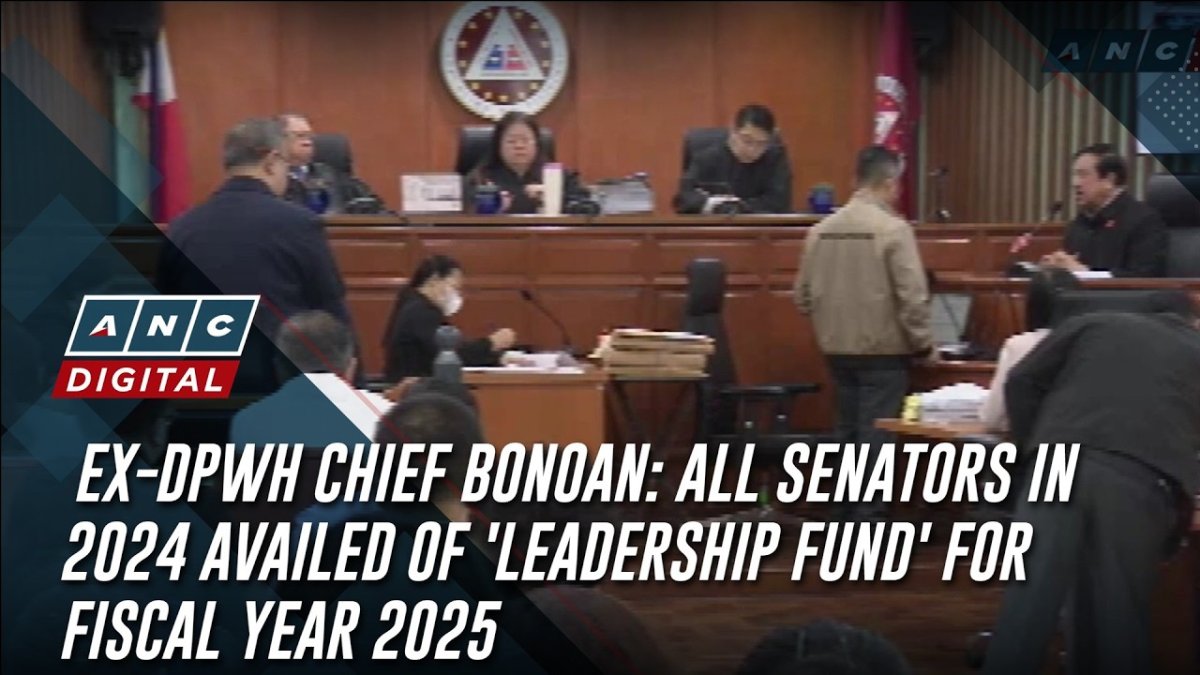
Manila, Philippines – August 12, 2026 — Former DPWH Secretary Manuel Bonoan testified on Wednesday before the Sandiganbayan Third Division that all senators received allocations ranging from P500 million to P1 billion each through a so-called "leadership fund" embedded in the 2025 national budget. The testimony came during the malversation trial of former Senator Ramon "Bong" Revilla Jr., who faces charges over an alleged P92.8 million ghost flood control project in Pandi, Bulacan.
The Testimony — How the Leadership Fund Worked
Bonoan told the anti-graft court that the leadership fund amounted to P24 billion, with then-Senate President Juan Miguel "Migz" Zubiri holding the discretion to hike individual allocations. The former DPWH chief explained that the fund emerged during budget deliberations in 2024 as an "ad hoc allocation" after the department's core programs were "reduced drastically" by cuts in the 2023 General Appropriations Act.
"To avoid the repetition of these cuts, we thought it would be better if we included the priority projects of the Senate in the budget of the department," Bonoan told the court, describing a process that bypassed formal mechanisms entirely. There was no documented procedure for senators to avail themselves of the fund; instead, priority projects were communicated informally through DPWH officials.
Bonoan specifically named former DPWH Undersecretary Roberto Bernardo as the conduit who personally submitted project lists for several senators, including Revilla, Senator Bong Go, Senator Jinggoy Estrada, and Senator Robin Padilla. He described Bernardo and Revilla as "mag-kumpare" — a term that carries deep cultural weight in the Philippines, where compadrazgo relationships often blur the lines between personal loyalty and official duty.
Once submitted, the project lists were forwarded to the office of the late DPWH Undersecretary Cathy Cabral for final vetting by the department's planning division. Bonoan said Cabral's office later reported that all senators availed themselves of leadership fund allocations for the 2025 national budget.
Revilla's P1 Billion Allocation and the Errata Process
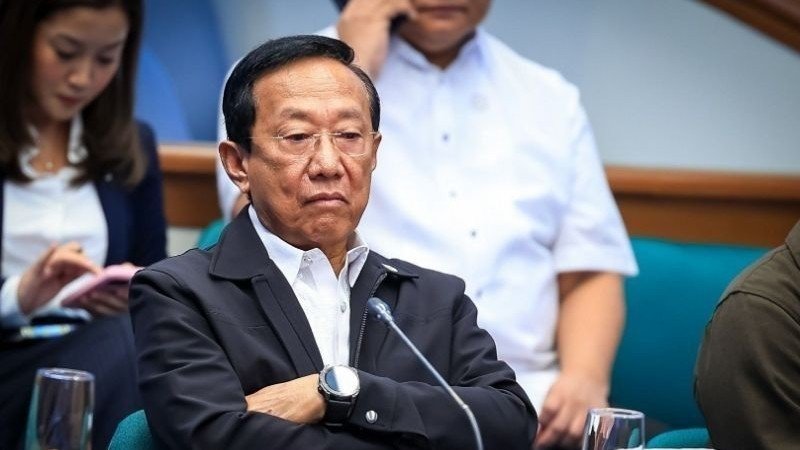
Bonoan testified that Revilla was among those entitled to the higher amount of P1 billion because he chaired the Senate Committee on Public Works — on top of Revilla's P7.4 billion in congressional insertions. The former DPWH chief also claimed that Senators Bong Go and Robin Padilla submitted project lists, and that Padilla and Senator Imee Marcos thanked him for his "assistance."
Bonoan stressed there was nothing inherently illegal about senators availing themselves of the allocations. But his testimony took a sharper turn when he discussed an "errata" process — a correction mechanism that allowed projects to be added to the budget through the House Committee on Appropriations. The P92.8 million alleged ghost project at the center of Revilla's case was inserted through this errata process, Bonoan told the court.
This was Bonoan's first testimony in a Sandiganbayan case linked to the multibillion-peso flood control controversy. The former DPWH chief himself faces separate plunder and graft charges before the anti-graft court's Second and Fifth Divisions, making his testimony a delicate balancing act between cooperating with the court and defending his own record.
Philippine Context — The Flood Control Controversy and Political Accountability
The flood control controversy has become one of the most significant corruption scandals of the decade, involving billions of pesos in infrastructure funds meant to protect vulnerable communities from devastating typhoons and rising waters. The Senate Blue Ribbon committee has held multiple hearings on the matter, and the issue has become a rallying point for civil society groups demanding greater transparency in the budget process.
Bonoan's testimony cuts to the heart of how the Philippine budget actually works — a system where formal processes coexist with informal arrangements, where "leadership funds" and "errata" mechanisms can move billions of pesos with minimal oversight. For a country where the Commission on Audit regularly flags questionable expenditures, this testimony provides a rare insider's view of how allocations are actually made.
The timing is significant. On the same day as Bonoan's testimony, the Supreme Court dismissed a petition filed in March by lawyers Elridge Marvin Aceron, Sikini Labastilla, and Purificacion Bartolome-Bernabe seeking to compel the Senate Blue Ribbon committee to release its draft partial report on the flood control scandal. The dismissal means the public may have to wait longer for the committee's findings.
Impact on Filipinos — Taxpayers, Flood-Prone Communities, and the Cost of Corruption
For residents of Pandi, Bulacan — the site of the alleged ghost project — this testimony is not abstract. They live in a municipality that experiences regular flooding, where infrastructure projects are supposed to mean safer homes and protected livelihoods. When projects are inserted through errata processes and funded through informal leadership arrangements, the risk of ghost projects and substandard work increases dramatically.
Every peso allocated through these informal channels is a peso that could have gone to a properly vetted project. The P24 billion leadership fund represents a significant portion of the DPWH budget — money that could have been used for flood control in Marikina, drainage systems in Metro Manila, or road repairs in typhoon-ravaged provinces. Instead, it was distributed based on political position and personal relationships.
For the average Filipino taxpayer, this testimony reinforces a painful reality: the budget process is not always the transparent, needs-based system envisioned in the Constitution. It is often a negotiation where political power determines who gets what, and where the poorest communities — those most vulnerable to flooding and infrastructure neglect — are often the last to benefit.
Reactions and Responses — Senators Deny, Questions Remain
Senator Migz Zubiri, who served as Senate President of the 19th Congress until his resignation on May 20, 2024, denied the allegations in a statement. "For the record, as Senate President, I never requested, held, or handled any list of project requests from senators. I refused to handle any such list," Zubiri said, adding that no proposed budget amendments passed through his office.
Zubiri said all requests were coursed through the Senate Committee on Finance, then chaired by Sonny Angara, now the Education Secretary. He said he saw nothing wrong with institutional amendments "as long as these are requested and approved by the implementing agency, properly carried out and free from any interference driven by personal interests or corruption" — and as long as there are no ghost or substandard projects.
Senator Bong Go denied the claims, saying: "Mahirap mag-react sa isang isyu na hindi natin alam kung ano ang pinagbabasihan at ano ang motibo. Mabuting ibalik ang tanong sa nagbanggit nito." (It is difficult to react to an issue when we don't know the basis or the motive. Better to direct the question back to the person who mentioned it.) Go added: "Siya ang akusado (He's the one accused). It would be best that he focuses his defense on proving his innocence rather than dragging our work as legislators into their mess." Go also said he did not submit any list of projects to Bernardo.
Senator Imee Marcos said she was not aware of Bonoan's claims: "Parati naman akong nagpapasalamat sa lahat ng department kung mayroon silang gagawin sa Ilocos Norte. Kababayan ko si Secretary Bonoan. Hindi ko alam kung anong pasasalamat ang tinutukoy diyan." (I always express my gratitude to all departments whenever they carry out projects in Ilocos Norte. Secretary Bonoan is my provincemate. I don't know what specific expression of thanks is being referred to there.)
Other senators mentioned in Bonoan's testimony had yet to respond as of posting time.
What to Watch For
The Sandiganbayan trial of Revilla will continue, with Bonoan's testimony potentially opening the door for further examination of how the leadership fund operated. The former DPWH chief's own cases before the Second and Fifth Divisions may also benefit from his cooperation in this trial, though the court will ultimately determine the weight of his testimony.
The Supreme Court's dismissal of the petition to compel the Blue Ribbon committee to release its draft report means the public's access to the committee's findings remains limited. However, the flood control controversy is unlikely to fade from public attention — especially with the 2025 elections approaching and infrastructure spending remaining a key issue for voters.
For now, the question that lingers is not whether the leadership fund existed — Bonoan's testimony provides detailed accounts of how it operated — but whether any of the senators who availed themselves of these allocations will face consequences. The Philippine legal system has a history of high-profile corruption cases that drag on for years, and the Revilla trial is no exception.
What is clear is that Bonoan's testimony has pulled back the curtain on a budget process that many Filipinos suspected but few could prove. Whether this leads to genuine reform or becomes just another chapter in the country's long history of unpunished corruption remains to be seen. For the residents of Pandi, Bulacan, and countless other flood-prone communities across the archipelago, the stakes could not be higher.
By Bella Reyes, Staff Writer
This article was produced with AI-assisted research and editorial support. Reporting is based on sources cited in the article.
What's Your Reaction?
 Like
0
Like
0
 Dislike
0
Dislike
0
 Love
0
Love
0
 Funny
0
Funny
0
 Wow
0
Wow
0
 Sad
0
Sad
0
 Angry
0
Angry
0

Philippines/Southeast Asia Correspondent at Global1.News. Manila-based journalist covering Philippine politics, environment, maritime security, and social issues. Passionate about marine conservation and the communities protecting the Philippines' natural heritage.











Comments (0)