
Zhu Rongji, Architect of China's Economic Rise, Dies at 97
Zhu Rongji, the former Chinese premier who led the country into the WTO and overhauled its state industry, died Wednesday in Beijing aged 97. His reforms reshaped China's economy and left a contested legacy of growth, inequality and property dependence.
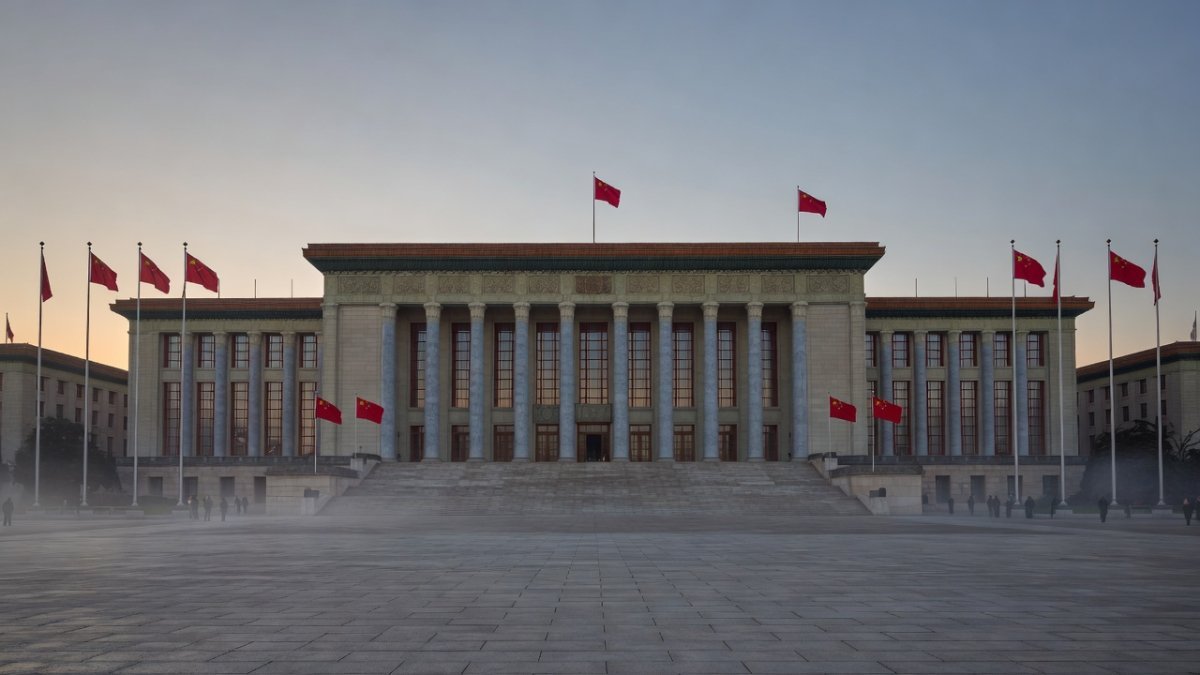
The 'Iron-Faced' Reformer Who Remade China's Economy
Zhu Rongji, the former Chinese premier who steered the country into the World Trade Organization and forced through the most painful economic overhaul of the post-Mao era, died Wednesday in Beijing after an unspecified illness. He was 97. State news agency Xinhua announced the death, saying medical treatment had failed to save him, and released an official obituary describing Zhu as "an outstanding member of the Communist Party, a long-tested and loyal Communist fighter, an outstanding proletarian revolutionary and statesman."
Zhu served as premier from 1998 to 2003 after six years as vice-premier in charge of the economy, a period in which China absorbed the 1997 Asian financial crisis, dismantled much of its state-owned industrial sector and joined the global trading system. His blunt, confrontational style earned him the nicknames "iron-face Zhu" and "no-nonsense leader" — and made him one of the few Chinese officials whose name was instantly recognisable in corporate boardrooms from Tokyo to Washington.
WTO Accession: The Gamble That Reshaped Global Trade
Zhu's defining achievement was China's entry into the World Trade Organization in December 2001, ending 15 years of on-off negotiations that he said had turned his "black hair to grey." In April 1999 he became the first Chinese premier to visit the United States in 15 years, travelling to Washington to close the deal. US president Bill Clinton declined to finalise the agreement during that visit, and the bilateral accord was not signed until November of that year, but Zhu pressed on despite criticism inside China over the concessions offered to foreign companies.
The result transformed both China and the global economy. Accession turned the country into the world's leading manufacturing hub and underpinned two decades of double-digit growth. Zhang Zhiwei, president and chief economist at Pinpoint Asset Management, said the WTO deal "wouldn't have happened without his strong endorsement," calling it "a game changer for China and the global economy." For Japan, the accession deepened a manufacturing supply chain that had been moving into China since the 1980s — Japanese automakers and electronics firms were among the biggest corporate beneficiaries of the new trading rules Zhu negotiated.
Breaking the State: SOE Reform and the '100 Coffins' Threat
At home, Zhu's signature policy was the restructuring of China's state-owned enterprises, which had accumulated massive losses through the 1990s. As premier he centralised fiscal control, closed or privatised failing factories, separated government functions from business operations and pushed workers off the state payroll by the tens of millions. At his first press conference in 1998, he delivered the line that defined his tenure: "I'll have 100 coffins prepared. Ninety-nine are for corrupt officials and the last one is for myself."
The anti-corruption pledge was more than rhetoric. Paul Triolo, a partner at DGA-Albright Stonebridge Group who met Zhu while at the US embassy in Beijing, said Zhu was "the first leader to recognise and spotlight the massive corruption within the PLA that was distorting the Chinese economy" — a politically dangerous confrontation with the military's business empire that analysts say kept reform moving. Wang Dan, China director at Eurasia Group, called Zhu "the real founder of China's socialist market economy," noting that subsequent policies have largely been "reinforcements of the reforms he spearheaded in the 1990s."
The Asian Financial Crisis and the Hong Kong Guarantee
Zhu's crisis management was tested almost immediately. When the 1997 Asian financial crisis swept through the region, Beijing held the renminbi's exchange rate steady even as neighbouring currencies collapsed — a decision Lawrence Lau, former vice-chancellor of the Chinese University of Hong Kong, said showed Zhu understood devaluation "would not only not improve the situation for China but would make things worse for everyone else." Zhu also declared Beijing would defend Hong Kong's US dollar peg "at all costs" and made three guarantees: minimum GDP growth of 8 per cent, inflation under 3 per cent and no renminbi devaluation.
The stance helped stabilise Asian currencies and burnished Zhu's standing in Hong Kong, which he visited four times in different official capacities. Hong Kong Chief Executive John Lee expressed condolences Wednesday, thanking Zhu for supporting the city "in staying united and striving to leverage its strengths amid such challenges as the Asian financial crisis." Pascal Lamy, WTO director general from 2005 to 2013, said Zhu's handling of China's accession "was a masterful lesson in geopolitics and geoeconomics."
From Rightist to Economic Tsar: A Career Forged in Punishment
Zhu's rise to the top of China's economic establishment was anything but linear. Born in 1928 in Changsha, Hunan, he graduated from Tsinghua University with a degree in electrical engineering in 1951 and joined the party in 1949, the year Mao Zedong founded the People's Republic. In 1958 he was branded a "rightist" for criticising Great Leap Forward projects as unrealistic, expelled from the party and demoted; during the Cultural Revolution he worked in obscurity or labour camps. He was rehabilitated after Deng Xiaoping's return to power and rejoined the party in 1978.
As mayor of Shanghai from 1988, Zhu built the reputation for efficiency and clean governance that carried him to Beijing, overseeing the transformation of the Pudong New Area into a financial district modelled on Manhattan and London. Shi Yinhong, a distinguished professor at Renmin University, said Zhu and his successor Wen Jiabao were "strong premiers just because the party top leaders allowed them to do so" — a reminder that even China's most forceful reformer operated inside the party's permission structure.
A Complicated Legacy: Inequality, Layoffs and Property Dependence
Economists are careful to note that Zhu's reforms carried heavy costs that still shape China's economy today. The priority given to export industries from 1994 widened the rural-urban divide, and the SOE restructuring dismantled the housing, healthcare and welfare benefits that state enterprises had provided, throwing millions of workers into insecurity. Ho-fung Hung, a professor at Johns Hopkins University, said the reforms "led to the explosion of inequality and social insecurity and, hence, lagging domestic consumption, which is haunting the Chinese economy today."
The tax-sharing system and the privatisation of home ownership also left local governments dependent on land and property revenue — a model that drove growth for years before the current property slump. Denis Simon, former vice-chancellor of Duke Kunshan University, captured the dilemma: "China today may need Zhu's candour, technical competence and willingness to confront vested interests, but it cannot simply reproduce his late-1990s strategy."
What to Watch For: Zhu's Shadow Over Beijing's Economic Struggle
Zhu's death removes the last towering figure of the reform generation that built China's open economy. In Japan, where his October 2000 Tokyo visit — the first by a Chinese premier in two years — and his October 2001 meeting with then-prime minister Junichiro Koizumi bookended a period of intense trade friction, his passing is being read as the close of an era in which economic integration repeatedly trumped political tension. The 2001 dispute over Japanese farm-import curbs, which drew 100 per cent Chinese tariffs on Japanese cars, air conditioners and mobile phones, ended in a negotiated truce precisely because both sides had too much supply-chain exposure to walk away.
For Xi Jinping's leadership, the question is whether anyone can revive Zhu's appetite for painful structural change. Beijing is grappling with weak household demand, excess capacity and local-government debt — the very imbalances Zhu's critics trace to his own reforms. As Tokyo and the region watch, the bet is whether China's current leadership can find a reformer with Zhu's technical competence and willingness to confront vested interests, or whether his brand of blunt, market-opening statecraft dies with him. Zhu is survived by his wife Lao An, daughter Zhu Yanlai and son Zhu Yunlai.
By Kenji Tanaka, Staff Writer
This article was produced with AI-assisted research and editorial support. Sources: South China Morning Post, Xinhua, Reuters, Bloomberg, The New York Times, Associated Press.
What's Your Reaction?
 Like
0
Like
0
 Dislike
0
Dislike
0
 Love
0
Love
0
 Funny
0
Funny
0
 Wow
0
Wow
0
 Sad
0
Sad
0
 Angry
0
Angry
0
Japan Correspondent at Global1.News. Tokyo-based voice covering Japanese politics, technology, economy, and culture. Tracks the intersection of tradition and innovation in one of the world's most dynamic societies.













Comments (0)