
DBM: P27.9 Billion Disaster Funds for Luis, Maymay, and Habagat
DBM confirms P27.93 billion available in disaster funds as Luis, Maymay, and habagat affect 3.15 million Filipinos, with P2.1B infrastructure damage and 1,265 classrooms destroyed.
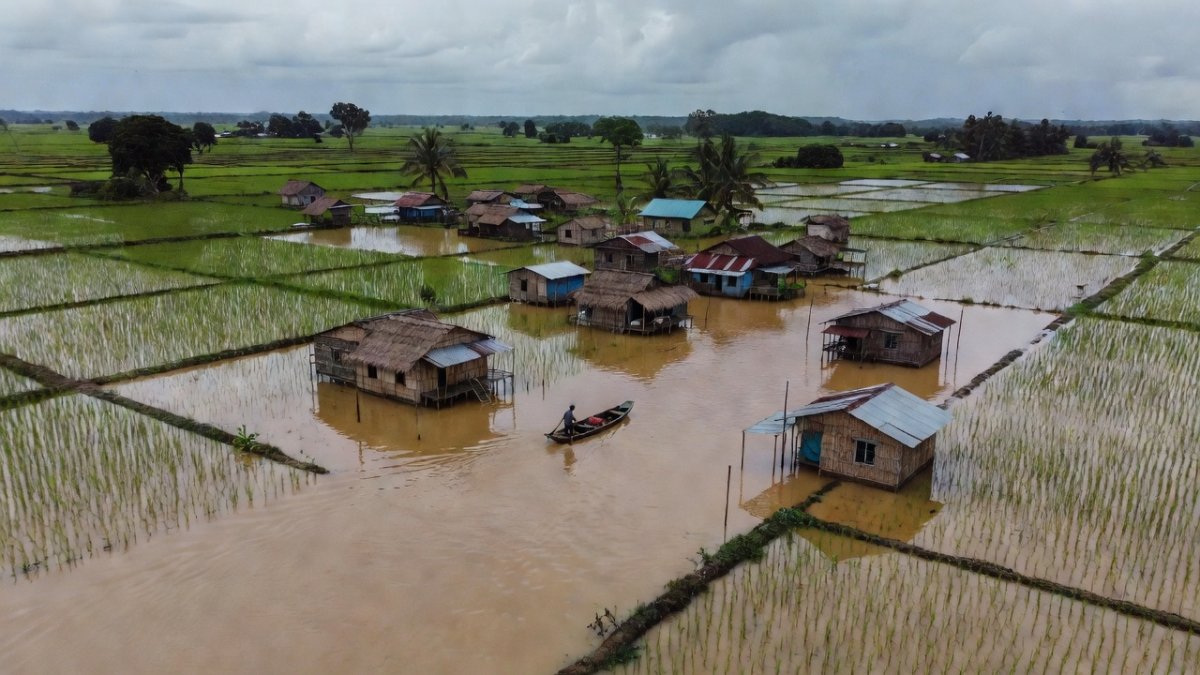
DBM: P27.9 Billion Disaster Funds for Luis, Maymay, and Habagat
The numbers are staggering, but behind each figure is a story of a family wading through chest-deep floodwater in Bulacan, a farmer in Isabela staring at ruined rice paddies, and a student in Bicol whose classroom is now a pile of debris. As tropical cyclones Luis and Maymay, enhanced by the southwest monsoon or habagat, continue to batter the country, the Department of Budget and Management (DBM) has confirmed that the national government has the financial firepower to respond. In a statement sent to The STAR, the DBM reported that the National Disaster Risk Reduction and Management Fund (NDRRMF) has an available balance of P27.93 billion as of Aug. 7. This is a significant lifeline for the millions of Filipinos grappling with the aftermath of relentless rains.
The announcement comes at a critical juncture. The National Disaster Risk Reduction and Management Council (NDRRMC) reports that 3.15 million people are affected nationwide. This is not just a statistic; it represents families in evacuation centers, workers unable to report for duty, and communities cut off from basic services. The DBM’s assurance that resources are available is meant to signal to local government units (LGUs) and national agencies that the funding pipeline is open. “Based on the latest available figures, the government continues to have resources that may be tapped to support ongoing disaster response, relief, rehabilitation and other urgent requirements arising from the continued rains and other calamities,” the DBM said.
The Fund’s Available Balance: A Deep Well for Emergencies
The P27.93 billion available balance in the NDRRMF is a substantial war chest. This fund was originally allotted P39.82 billion under the 2026 General Appropriations Act (GAA). The difference between the allotted amount and the available balance reflects funds that have already been obligated or released for previous disasters and ongoing projects. The fact that nearly P28 billion remains untapped provides the national government with considerable flexibility to address the current crisis without immediately needing to request supplemental appropriations from Congress.
This fund is the primary source for disaster mitigation, preparedness, response, and rehabilitation. It is the financial backbone of the government’s promise to help communities rebuild. For ordinary Filipinos, this means that the Department of Social Welfare and Development (DSWD) can procure family food packs, the Department of Public Works and Highways (DPWH) can deploy equipment to clear landslides, and the Department of Health (DOH) can ensure that evacuation centers have access to medical supplies. The availability of these funds is a crucial buffer against the economic shock that follows any major calamity, especially for those who have lost their homes and livelihoods.
However, the existence of the fund is only half the battle. The speed at which these resources are released and converted into tangible aid on the ground is what truly matters to a mother in a cramped evacuation center in Pampanga or a fisherman in Quezon whose boat was destroyed. The DBM’s role is to ensure that the release of funds is swift and that implementing agencies have the necessary cash to operate. The P27.93 billion figure provides a measure of assurance that the government is not financially paralyzed in the face of this disaster.
Quick Response Funds: The Frontline Financial Lifeline
Beyond the main NDRRMF, the DBM also highlighted the availability of P14.59 billion in Quick Response Funds (QRF) across various implementing agencies. These figures are based on obligations reported as of June 30 and allotment releases as of Aug. 7. QRFs are standby funds designed for immediate use by agencies to assist areas hit by calamities and crises. They are the first line of financial defense, allowing agencies like the Department of Agriculture (DA) and the Department of Education (DepEd) to act without waiting for lengthy bureaucratic processes.
For instance, the DA can use its QRF to purchase seeds and fertilizers for farmers whose crops were destroyed, aiming to get them back on their feet as soon as possible. The DepEd can tap its QRF to begin the immediate repair or replacement of learning materials and temporary learning spaces. This is particularly urgent given that the Department of Education reported that around 1,265 classrooms have been destroyed as of 8 a.m. yesterday. These classrooms are not just structures; they are the centers of learning for Filipino children, and their destruction disrupts the education of thousands of students just as the school year is ramping up.
The distinction between the NDRRMF and QRF is important for understanding how aid flows. The NDRRMF is for larger, more comprehensive rehabilitation and recovery efforts, while QRFs are for immediate, on-the-ground response. The P14.59 billion in available QRFs means that agencies have the authority to start spending on emergency repairs and relief goods right now. This is the money that buys the tarpaulins for temporary classrooms, the fuel for rescue boats, and the medicine for evacuation centers. It is the financial equivalent of the bayanihan spirit, mobilized through the national budget.
The Scale of the Damage: Infrastructure, Agriculture, and Homes
The need for these funds is starkly illustrated by the rising damage figures. As of the latest reports, estimated damage to infrastructure has reached more than P2.109 billion. This includes damaged roads, bridges, flood control structures, and public buildings. In provinces like Ilocos Norte and Cagayan, the destruction of critical infrastructure can isolate entire towns, making rescue and relief efforts even more challenging. The repair of these structures is not just about restoring concrete and steel; it is about reconnecting communities and restoring access to markets, hospitals, and schools.
Agricultural losses are also mounting, with damages involving crops, livestock, and poultry exceeding P196.8 million. This is a devastating blow to the agricultural sector, which employs a significant portion of the Filipino workforce. For farmers, a single typhoon can wipe out an entire season’s income, plunging families into debt and food insecurity. The P196.8 million figure represents lost harvests of rice, corn, and high-value crops, as well as the death of livestock that serve as both livelihood and savings for rural families. The DBM’s funds are essential for providing cash assistance and production support to these farmers, helping them to replant and recover.
Furthermore, the disaster has damaged 972 houses in affected provinces. For many Filipino families, their home is their most valuable asset. The destruction of these homes means displacement, often forcing families to stay with relatives or in crowded evacuation centers. The government’s housing assistance programs, funded through the NDRRMF, will be crucial in helping these families rebuild. The number of affected houses, while significant, may still rise as floodwaters recede and assessments are completed in more remote barangays.
How Funds Reach Affected Communities: The Bureaucratic Bridge
The journey of these funds from the national treasury to the hands of a displaced family in a coastal barangay is a complex process involving multiple layers of government. The DBM releases the funds to implementing agencies like the DSWD, DPWH, and DA. These agencies then either implement projects directly or transfer funds to regional offices and LGUs. The role of the local government unit is pivotal, as they are the first responders and are responsible for the actual distribution of relief goods and the implementation of local recovery projects.
For the funds to be effective, coordination is key. The NDRRMC, led by the Office of Civil Defense, serves as the coordinating body, ensuring that the response is unified and that resources are allocated where they are needed most. The process involves damage assessment, validation of needs, and the submission of requests for funding. While the system is designed to be responsive, the sheer scale of the disaster—affecting 3.15 million people—can strain the capacity of LGUs to process and distribute aid quickly. This is where the barangay captain and local volunteers become the unsung heroes, ensuring that the last mile of aid delivery is completed.
Transparency and accountability are also critical. The Commission on Audit (COA) will eventually scrutinize the use of these funds, and the public expects that every peso is spent wisely. The DBM’s announcement is not just a statement of financial capacity; it is a commitment to ensure that the resources are managed properly. For the ordinary Filipino, this means hoping that the aid arrives without undue delay and that it reaches those who need it most, not just those with political connections.
What Happens Next: Monitoring Nangka and Preparing for the Long Haul
The crisis is far from over. State weather forecasters are now monitoring Tropical Storm Nangka, which could potentially bring more rains to an already saturated country. The DBM’s assurance of available funds is a proactive measure, signaling that the government is prepared for a prolonged response. The focus now shifts to rehabilitation and recovery, which will require sustained funding and effort long after the floodwaters have receded.
For the national government, the next steps involve a thorough assessment of the damage to determine the total cost of rehabilitation. The P27.93 billion available balance may be sufficient for immediate needs, but the full reconstruction of damaged infrastructure and the restoration of livelihoods could require additional resources. The government may need to consider supplemental budgets or re-aligning existing appropriations to meet the growing needs. The Department of Budget and Management, under the leadership of the Secretary, will play a central role in these fiscal maneuvers.
For the Filipino people, this is a time for resilience and unity. The bayanihan spirit is once again being tested. While the government provides the financial framework, it is the collective effort of communities, non-government organizations, and the private sector that will truly drive recovery. The funds are a crucial tool, but they are not a substitute for the compassion and solidarity that define the Filipino character. As we monitor the path of Nangka, the hope is that the government’s resources, combined with the people’s resolve, will be enough to weather this storm and rebuild stronger.
This article was produced with AI-assisted research and editorial support. Sources: Philstar.com
By Bella Reyes, Staff Writer
What's Your Reaction?
 Like
0
Like
0
 Dislike
0
Dislike
0
 Love
0
Love
0
 Funny
0
Funny
0
 Wow
0
Wow
0
 Sad
0
Sad
0
 Angry
0
Angry
0

Philippines/Southeast Asia Correspondent at Global1.News. Manila-based journalist covering Philippine politics, environment, maritime security, and social issues. Passionate about marine conservation and the communities protecting the Philippines' natural heritage.












Comments (0)