
Erdogan to Israel: Peace, but Turkey Will Fight if Attacked
Erdogan tells Israel Turkey wants peace but will not hesitate to fight if attacked, as the Mecca Defence Pact with Saudi Arabia and Pakistan reshapes the region and Israel heads to October elections.
In a recent i24NEWS English report, Turkish President Recep Tayyip Erdogan delivered a carefully calibrated message to Israel, declaring that Ankara "will not hesitate to fight" if attacked while simultaneously insisting that Turkey seeks peace, not war, with the Jewish state. The remarks, broadcast by Turkish state outlet TRT Haber, come at a moment of acute regional tension, with the Mecca pact uniting Turkey, Saudi Arabia, and Pakistan in a mutual defense arrangement that Israeli strategists view with growing alarm.
Erdogan's Dual Message: Peace Overtures Amid Military Threats Toward Israel
Jerusalem, Israel - Turkish President Recep Tayyip Erdogan on Monday sought to walk a razor-thin line between bellicosity and diplomacy, telling reporters that Turkey "will not hesitate to fight" if attacked while insisting that Ankara's posture toward Israel remains fundamentally peaceful. The comments, reported by Turkish state broadcaster TRT Haber, mark the latest chapter in a relationship that has deteriorated sharply since the Gaza war and Israel's April 2025 strikes on Syrian airbases.
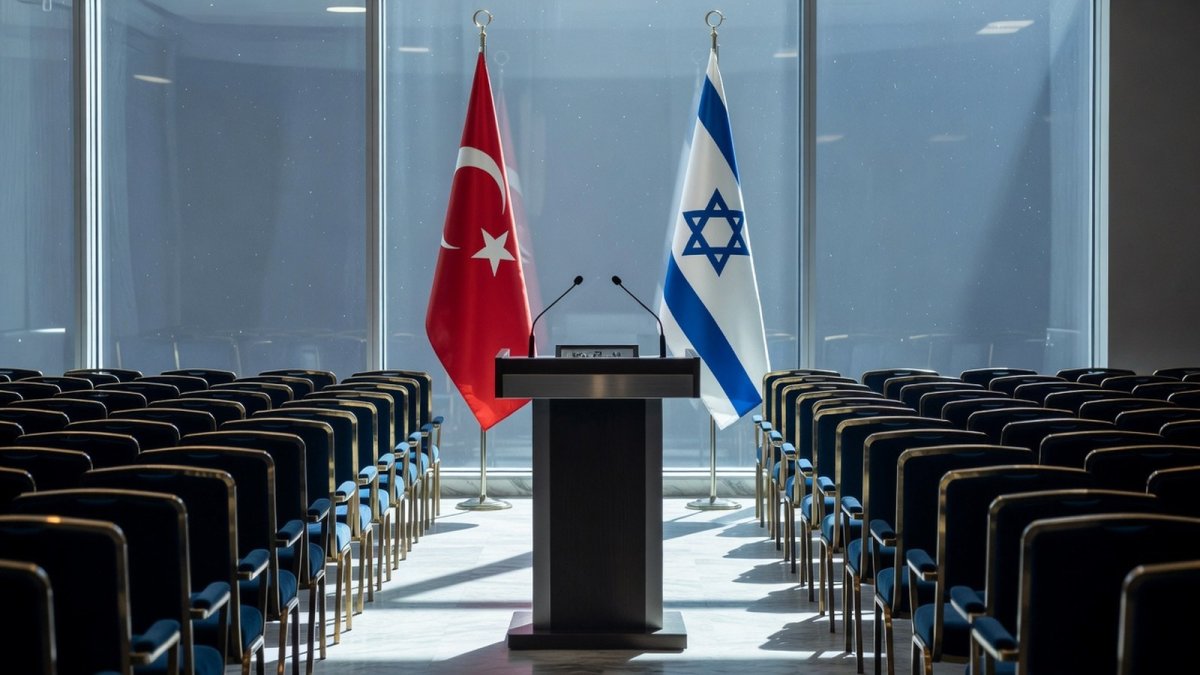
"We are not talking about war, we are talking about peace. But if someone attacks Turkey with the intention of war and not peace, Turkey will not hesitate to fight and will not run from the battle," Erdogan said, according to the i24NEWS report. He further accused Israel's government of having "become addicted to wars," a phrase that Israeli officials in Jerusalem dismissed as rhetorical posturing from a leader who has repeatedly threatened military action against the Jewish state.
On the Ground: Erdogan's Remarks and Turkey's Position
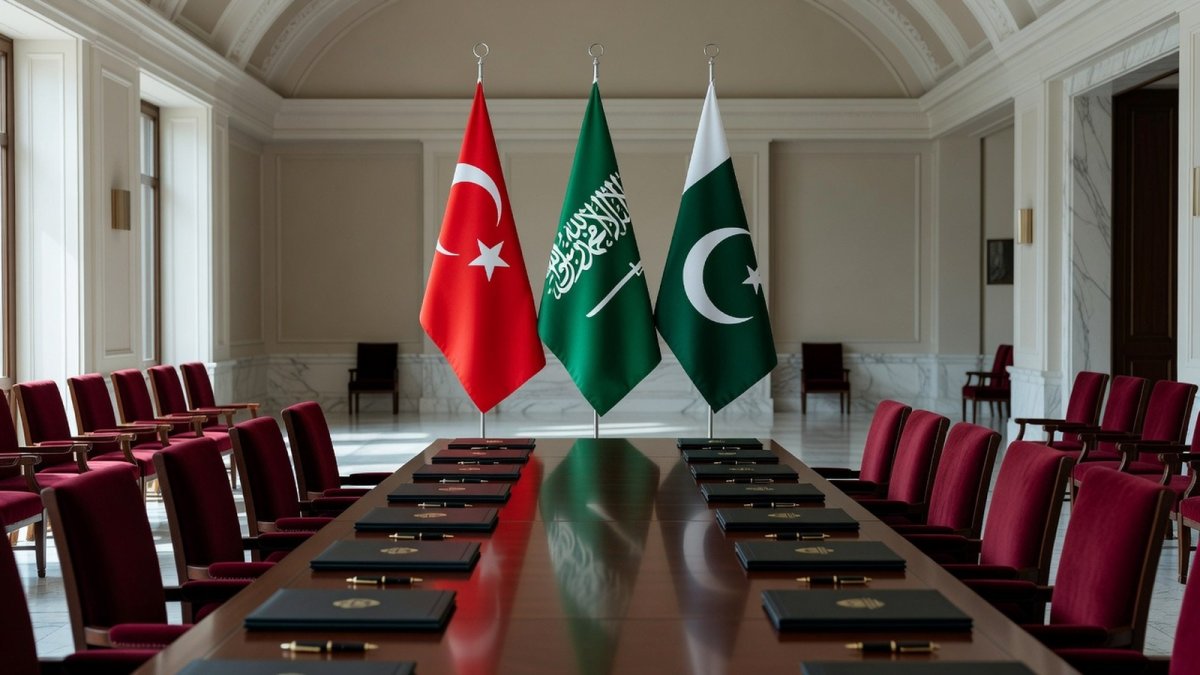
Erdogan's latest statements were delivered against the backdrop of an interview with Al Jazeera, reported on August 16-17, in which the Turkish president expanded on the implications of the Mecca Joint Defence Agreement. Signed in Mecca on August 7, 2026, by Turkey, Saudi Arabia, and Pakistan, the pact stipulates that an armed attack against any of the three signatories is regarded as an attack on all. Erdogan told Al Jazeera that "if any problem arises or an attack occurs, the three states of the Mecca pact will be able to take the necessary steps together. This could be aggression against Turkey, Saudi Arabia, or Pakistan - regardless of which country is attacked."
The agreement, which builds on the September 17, 2025 Pakistan-Saudi Strategic Mutual Defence Agreement, unites a major oil exporter, a NATO member, and a nuclear-armed power in a configuration that Israeli defense officials have been analyzing since its signing. Erdogan has signaled the pact is open to further members, telling Al Jazeera on August 15 that Egypt could join, a prospect that would dramatically expand the bloc's geographic and military reach across the eastern Mediterranean and Red Sea.
Turkish Foreign Minister Hakan Fidan has sought to frame Ankara's position as defensive rather than offensive, telling reporters that Israel "cannot live without an enemy" after Iran, and that the Netanyahu government and some opposition figures are seeking to declare Turkey a "new enemy." Fidan insisted that Ankara's position is to avoid being dragged into war, a message that Israeli analysts view with skepticism given Erdogan's track record of intervention in Libya, Nagorno-Karabakh, and Syria.
Regional Context: The Mecca Pact, Syria, and Gaza
The Mecca pact's formation cannot be separated from the broader regional realignment triggered by the ongoing US-Israeli conflict with Iran and the Strait of Hormuz crisis. For Israel, the most immediate concern is the pact's potential impact on Syria, where Turkish military forces have established a significant presence and where the Nagel Committee - established by Prime Minister Benjamin Netanyahu in January 2025 - has explicitly warned of the risks.
The Nagel Committee's strategic assessment defined Turkey as a new and significant strategic threat, warning that if Syria became in practice a Turkish proxy, it could "increase the risk of a direct Turkish-Israeli confrontation." Israel's April 2025 attack on Syrian airbases that the Turkish military had assessed for possible use was an early example of the friction that the committee anticipated. That strike, which targeted infrastructure near the Turkish border, was widely interpreted in Ankara as a direct message to Erdogan's expanding military footprint in Syria.
Erdogan's rhetoric has escalated in parallel. In April 2026, he threatened military action against Israel, saying, "Just as we entered Karabakh, just as we entered Libya, we can do the same with Israel," drawing a sharp response from Prime Minister Netanyahu. In June 2026, Erdogan said Israel's attacks on Syria and Lebanon had reached a point where they also threaten Turkey, prompting Netanyahu to state that Israel takes Erdogan's rhetoric "very seriously." Israeli Heritage Minister Amichai Eliyahu accused Erdogan of hypocrisy, citing Turkey's occupation of Northern Cyprus and the Armenian genocide allegations.
Meanwhile, Gaza ceasefire efforts remain focused on moving to a second phase of the peace process, with Turkish, Egyptian, and Qatari involvement. Erdogan's Monday phone call with US President Donald Trump addressed this directly, with the Turkish leader telling Trump that at a time when the goal is to move to the second phase of the peace process, there has been an increase in actions by the Israeli government targeting Palestinians. Erdogan said Turkey will continue to support lasting peace and the reconstruction of Gaza, a position that places Ankara at odds with Jerusalem's stated security requirements in the Strip.
Diplomatic and International Reactions: The Trump Call and Normalization Questions
Erdogan's Monday phone call with President Trump, reported by Turkiye's Communications Directorate and Anadolu Agency, covered bilateral ties, Iran tensions, and Gaza. Erdogan told Trump that making maximum use of diplomacy amid US-Iran tensions is "important," expressing hope that negotiations continue. He described the Mecca pact as demonstrating "a strong stance in ensuring regional stability and security," a framing that Washington has not publicly endorsed.
Trump visited Turkey in July 2026 ahead of the 36th NATO summit in Ankara, a visit that underscored the complexity of US-Turkey relations. Turkey remains a NATO member, and the alliance's Article 5 mutual defense commitment technically applies to Turkey, but the Mecca pact introduces a parallel security framework that could complicate NATO decision-making in a crisis involving Israel. Israeli officials have noted that the United States has not publicly objected to the pact, but the quiet diplomatic channels between Washington and Jerusalem on this issue are believed to be active.
The pact's implications for Saudi-Israeli normalization are a subject of intense debate in Jerusalem. Dr. Yoel Guzansky, a senior researcher at the Institute for National Security Studies (INSS), told the Jerusalem Post on August 9 that the Mecca pact "doesn't shut the door completely on normalization" between Riyadh and Jerusalem but complicates it. Guzansky assessed that Saudi Arabia likely joined the pact to have more leverage as trust in Washington wanes, but he expressed concern that "the Turks and Pakistanis have a really anti-Israel stance that might affect Saudi Arabia."
Pakistan's Defense Minister Khawaja Asif has been explicit about his country's position, calling for "a united military front" against Israel, which he described as a "threat to the entire Muslim world." That rhetoric, combined with Pakistan's nuclear arsenal, elevates the stakes of any potential confrontation. Former Israeli prime minister Naftali Bennett has called Turkey "the next target after Iran," a formulation that reflects the growing consensus in Israeli security circles that Ankara's ambitions extend far beyond rhetoric.
Analysis and What This Means for Israel
The convergence of the Mecca pact, Erdogan's escalating rhetoric, and Israel's ongoing conflict with Iran creates a strategic environment that Israeli planners have not faced since the 1973 Yom Kippur War. The Nagel Committee's warning about a direct Turkish-Israeli confrontation is no longer a theoretical scenario but a planning assumption that shapes IDF deployments and intelligence priorities.
For Israel, the immediate concern is Syria. The Turkish military has established air defense systems and drone capabilities in northwestern Syria that could challenge Israeli freedom of operation in the region. The April 2025 strike on Syrian airbases was a clear signal that Israel will not tolerate a Turkish military infrastructure that could threaten Israeli aircraft or ground forces. But the Mecca pact raises the cost of any future Israeli action against Turkish assets, as it could trigger a coordinated response from Saudi Arabia and Pakistan.
The domestic political dimension is equally significant. Israel is heading toward general elections on October 27, 2026, and security issues are expected to dominate the campaign. Prime Minister Netanyahu's handling of the Turkish threat and the broader Iran conflict will be a central issue, with opposition figures likely to argue that the government's policies have isolated Israel and empowered its adversaries. The Nagel Committee's findings, which were partially declassified, have already become a political football, with critics noting that the committee's warnings about Turkey were not fully heeded.
The Gaza dimension adds another layer of complexity. Erdogan's insistence on supporting the second phase of the peace process and the reconstruction of Gaza positions Turkey as a key player in any post-war arrangement. Israeli officials have privately expressed concern that Turkish involvement in Gaza reconstruction could translate into a permanent Turkish security presence in the Strip, a red line for Jerusalem. The phone call with Trump suggests that Erdogan is seeking to use the US relationship to moderate Israeli behavior, but the effectiveness of that approach remains unclear.
Dr. Guzansky's assessment that the Mecca pact complicates but does not foreclose Saudi-Israeli normalization is shared by many Israeli analysts, but the timeline for any such breakthrough has lengthened considerably. Saudi Arabia's decision to join a pact with Turkey and Pakistan, both of which have explicitly hostile positions toward Israel, signals that Riyadh is prioritizing regional security arrangements over the Abraham Accords framework. The trust deficit with Washington, exacerbated by the ongoing Iran crisis, has pushed Saudi Arabia toward alternative security structures.
The Strait of Hormuz crisis and the US-Israeli conflict with Iran remain the immediate flashpoints, but the Mecca pact introduces a new variable that could escalate any localized confrontation into a broader regional war. If Israel were to strike Iranian nuclear facilities and Iran retaliated through its proxies, the question of whether Turkey, Saudi Arabia, or Pakistan would interpret such actions as an attack requiring a coordinated response would become critical. Erdogan's statement that the pact covers "aggression against Turkey, Saudi Arabia, or Pakistan - regardless of which country is attacked" suggests a broad interpretation that could be triggered by events far from the signatories' borders.
Israeli defense officials have noted that the pact's operational mechanisms remain untested and that the three signatories have divergent strategic interests. Turkey's NATO membership, Saudi Arabia's dependence on US security guarantees, and Pakistan's focus on India all create potential friction points within the alliance. But the very existence of the pact changes the calculus in Jerusalem, where planners must now account for the possibility of a coordinated response from three major military powers.
Erdogan's Monday phone call with Trump, in which he emphasized the importance of diplomacy amid US-Iran tensions, suggests that Ankara is seeking to avoid a direct confrontation while maintaining maximum pressure on Israel. The Turkish president's rhetoric about peace with Israel, however, is contradicted by his government's actions, including the continued presence of Turkish forces in Syria and the hosting of Hamas leaders in Istanbul. Israeli officials have noted this discrepancy, pointing to the continued presence of Turkish forces in Syria and Ankara's support for Hamas-aligned positions in Gaza.
As Israel approaches its October elections, the Turkish threat will likely feature prominently in the campaign. The Nagel Committee's warning that Turkey could become a direct military threat if Syria becomes a Turkish proxy has not been rescinded, and the Mecca pact has only strengthened that assessment. The question for Israeli voters is whether the current government's policies have adequately addressed this threat or whether a change in leadership is needed to navigate the increasingly complex regional landscape.
The coming months will test whether Erdogan's dual message of peace and military readiness is genuine or merely a tactical maneuver designed to buy time while Turkey consolidates its regional position. For Israel, the answer will determine whether the eastern Mediterranean becomes a new front in an already crowded conflict theater or whether diplomacy can prevail. The Mecca pact, the Gaza peace process, and the Iran crisis are all converging in a way that demands careful statecraft from Jerusalem, Ankara, and Washington alike.
By Hannah Berg, Staff Writer
This article was produced with AI-assisted research and editorial support. Reporting is based on sources cited in the article.
What's Your Reaction?
 Like
0
Like
0
 Dislike
0
Dislike
0
 Love
0
Love
0
 Funny
0
Funny
0
 Wow
0
Wow
0
 Sad
0
Sad
0
 Angry
0
Angry
0
Israel Correspondent at Global1.News. Based in Tel Aviv, covering Israeli politics, security, technology, and society. Provides balanced, deeply-sourced reporting on one of the most closely-watched regions in the world.












Comments (0)