
Drone Strike on Tigray School Deepens Fears of Return to Full-Scale War
The brittle peace that has held northern Ethiopia together since 2022 is facing its most severe test yet. A drone strike by the Ethiopian military has hit a secondary school in the Tigray region, damaging the building and causing casualties, multiple sources told BBC Tigrinya. The attack, which occurred during a holiday break, has sent shockwaves through the community and reignited fears that the devastating 2020-2022 civil war could resume in full.
The brittle peace that has held northern Ethiopia together since 2022 is facing its most severe test yet. A drone strike by the Ethiopian military has hit a secondary school in the Tigray region, damaging the building and causing casualties, multiple sources told BBC Tigrinya. The attack, which occurred during a holiday break, has sent shockwaves through the community and reignited fears that the devastating 2020-2022 civil war could resume in full.
The strike targeted Merewa Secondary School in the Raya Alamata district, a facility that was empty of students at the time of the attack. "It is winter and so there is no school now," one source told the BBC, underscoring the tragic irony that a place meant for learning became a target during its quietest period. The incident has left local residents in a state of panic, with the strike reportedly causing widespread alarm in Merewa, a town located 50 km (31 miles) west of Alamata town.
Conflicting Accounts of Casualties
As is often the case in conflict zones, the casualty figures from Monday's attack are disputed, with different sources providing starkly different accounts of the human toll. Tigrayan military sources told the BBC that three of their fighters died instantly in the strike, with seven others taken to hospital for treatment. These sources confirmed that Tigrayan forces were stationed at the secondary school, a detail that raises complex questions about the use of civilian infrastructure for military purposes.
However, district governor Daniel Tamrat offered a different version of events, stating that one civilian was killed and four others were wounded in the attack. The governor also reported that a nearby river, where local people regularly fetched water, was hit in the same strike. This discrepancy in reporting is not unusual in the fog of war, but it highlights the urgent need for independent verification of events on the ground. The Ethiopian army has not responded to a BBC request for comment, leaving a significant gap in the official record.
The Fragile Pretoria Agreement Unravels
To understand the gravity of this latest incident, one must look at the broader political context that has been deteriorating throughout the year. The 2022 Pretoria Agreement, which ended the brutal two-year civil war that claimed hundreds of thousands of lives, was supposed to usher in a new era of peace and reconciliation. Instead, both sides now accuse each other of failing to implement the deal's key provisions, creating a dangerous vacuum of trust.
The situation took a dramatic turn when the region's main party, the Tigray People's Liberation Front (TPLF), removed the interim administration that had been set up under the peace accord and reinstated its pre-war council. This unilateral move was seen by many observers as a direct challenge to the authority of the federal government in Addis Ababa and a signal that the TPLF was preparing to reassert its dominance over the region. The federal government, for its part, has viewed this as a fundamental breach of the agreement's spirit and letter.
Regional Geopolitics and Shifting Alliances
The conflict in Tigray has never been purely an internal Ethiopian affair, and the regional dynamics continue to complicate any path to lasting peace. Eritrea, which was heavily involved in the war and fought alongside the Ethiopian military, has now been accused of changing its allegiance to Tigray. This alleged shift has introduced a new layer of unpredictability into an already volatile situation, with regional powers seemingly repositioning themselves for a possible new phase of confrontation.
Last month, Ethiopian Prime Minister Abiy Ahmed made a dramatic statement to parliament, claiming that the TPLF was preparing for war in collaboration with Eritrea. The Eritrean government has categorically denied this allegation, but the very fact that such claims are being made at the highest levels of government indicates the depth of mistrust that now exists. The accusation also serves to further isolate the TPLF, painting them as a force willing to ally with a former enemy to achieve their political goals.
The Human Cost of a Forgotten War
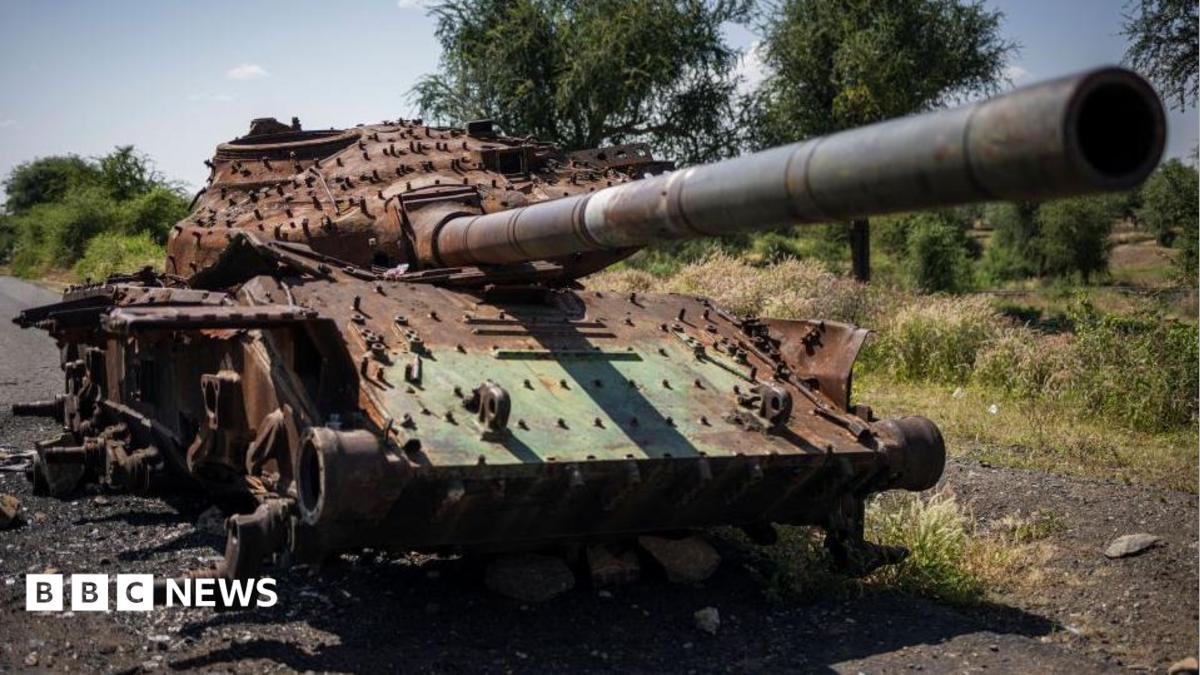
For the people of Tigray, the memories of the 2020-2022 war are still raw and painful. The conflict was marked by reports of widespread atrocities, including mass killings, sexual violence, and a man-made famine that pushed hundreds of thousands to the brink of starvation. The remnants of that war remain visible across the region, from destroyed infrastructure to the psychological scars carried by survivors. The young women who fought in Ethiopia's last civil war have spoken publicly about their desperate desire not to see another one, their voices a poignant reminder of what is at stake.
The latest drone strike on Merewa Secondary School is particularly troubling because it targets a civilian institution, even if military forces were reportedly present. International humanitarian law requires all parties to a conflict to distinguish between military objectives and civilian objects, and schools are afforded special protection. The fact that the school was on holiday break may have reduced the potential for mass casualties, but it does not diminish the symbolic weight of the attack or its implications for the rules of war.
Fighting on Multiple Fronts
The situation on the ground remains fluid and dangerous. Fighting that broke out in western Tigray on 1 August between federal forces and Tigrayan forces has subsided, according to reports, but there is a palpable fear that it could reignite on other fronts. Local officials have alleged that heavy weapons attacks have repeatedly struck the plain area, especially near Waja at the Tigray-Amhara regional border. This suggests that the conflict is not confined to a single location but has the potential to spread across multiple flashpoints.
The attack on Merewa is claimed to have involved Turkish drones carrying 12 bombs, according to a source who spoke to the BBC. If confirmed, this would represent a significant escalation in the sophistication and lethality of the weapons being deployed. The use of drone technology in the region has been a growing concern for human rights organizations, as it often leads to civilian casualties and makes it harder to establish accountability for attacks.
What Renewed Conflict Means for Africa
The potential resumption of full-scale war in Tigray is not just an Ethiopian tragedy; it carries profound implications for the entire African continent. Ethiopia is often described as the linchpin of the Horn of Africa, a country whose stability has ripple effects across the region and beyond. A return to civil war would not only undo the fragile gains made since 2022 but could also destabilize neighboring countries, exacerbate refugee flows, and create a power vacuum that extremist groups might exploit.
For the African Union, which played a role in supporting the peace process, a collapse of the Pretoria Agreement would be a major setback. The continent has been striving to silence the guns and promote peaceful conflict resolution, as articulated in the AU's Agenda 2063. The situation in Tigray serves as a stark reminder that these aspirations remain fragile and that the underlying drivers of conflict—political exclusion, resource competition, and historical grievances—must be addressed with sincerity and urgency.
A Call for Restraint and Dialogue
As the international community watches with bated breath, the immediate priority must be de-escalation. Both the Ethiopian federal government and the TPLF have a responsibility to protect civilians and to refrain from actions that could trigger a wider conflagration. The drone strike on a school, regardless of the presence of military personnel, is precisely the kind of incident that can spiral out of control and harden positions on both sides.
The people of Tigray have already endured unimaginable suffering. They deserve a future free from the fear of aerial bombardment and the trauma of displacement. The young women who fought in the last war and now plead for peace speak for an entire generation that has known little but conflict. Their voices must be heard above the rhetoric of political leaders and the noise of war machines.
The path forward is clear, even if it is difficult. Both sides must return to the negotiating table and genuinely commit to implementing the Pretoria Agreement in its entirety. This includes disarmament, the return of displaced persons, and the establishment of a credible transitional justice mechanism. The international community, including the African Union and the United Nations, must intensify its engagement and apply sustained pressure on all parties to choose peace over war.
The drone strike on Merewa Secondary School is a warning sign that cannot be ignored. It is a reminder that peace is not a static condition but a continuous process that requires constant nurturing and vigilance. For the sake of Tigray, for Ethiopia, and for the entire African continent, that process must be revived before it is too late.
By Amara Diop, Staff Writer
This article was produced with AI-assisted research and editorial support. Sources: BBC News Africa.
What's Your Reaction?
 Like
0
Like
0
 Dislike
0
Dislike
0
 Love
0
Love
0
 Funny
0
Funny
0
 Wow
0
Wow
0
 Sad
0
Sad
0
 Angry
0
Angry
0

West Africa/Sahel Correspondent at Global1.News. Dakar-based journalist covering politics, security, climate, and development across Francophone and Anglophone West Africa. Tells the stories of a region undergoing profound transformation.














Comments (0)