
India's Drunk-Driving Toll Claims a Future Doctor
Dr Priyanka Kanike, a PG medical student, died after an alleged drunk-driving hit-and-run in Rajahmundry. India recorded 1,83,382 road deaths in 2025 - 21 every hour.
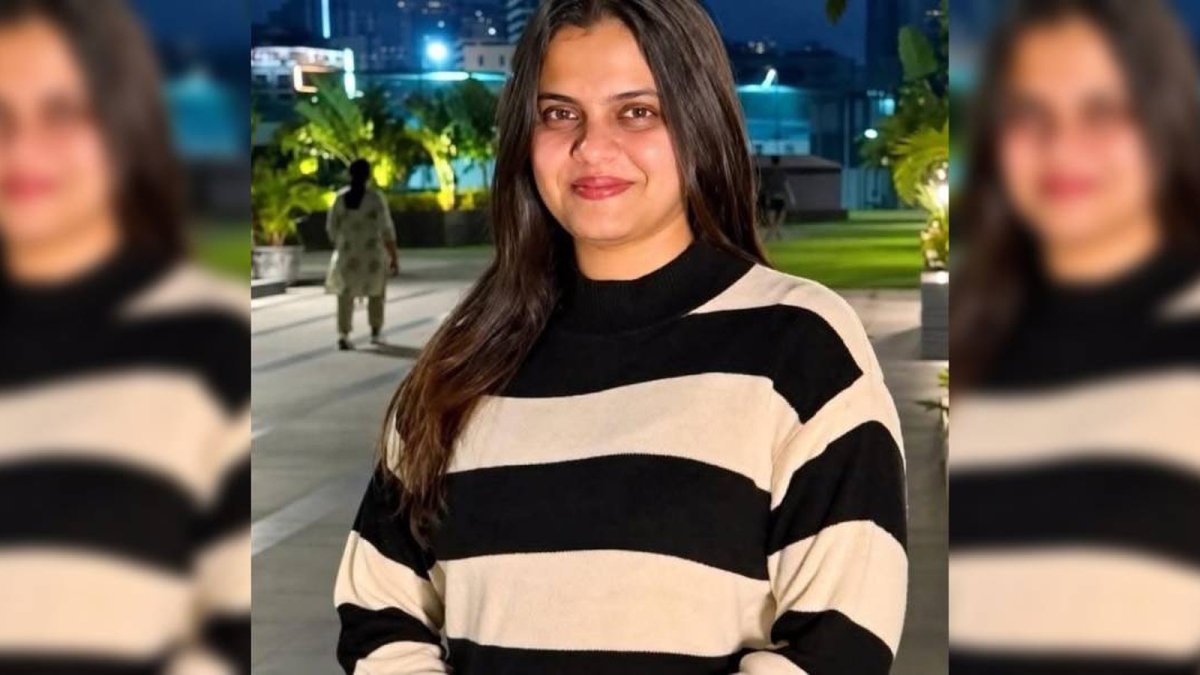
The death of a promising young doctor-in-training has laid bare the human cost of India's worsening road safety crisis, where a single drunk-driving hit-and-run extinguished years of medical education and public investment. With 21 lives lost every hour on Indian roads, the tragedy of Dr Priyanka Kanike underscores how enforcement gaps continue to claim future healthcare professionals at a time when the nation struggles to meet its doctor-patient needs.
India's Drunk-Driving Toll Claims a Future Doctor
New Delhi, India – 9 August 2026 — The fatal hit-and-run outside Prasaditya Mall in Rajahmundry has claimed the life of Dr Priyanka Kanike, a first-year postgraduate dermatology student whose death highlights the direct impact of drunk-driving enforcement failures on India's healthcare pipeline.
The Crash Outside Prasaditya Mall
Dr Priyanka Kanike, a first-year Dermatology postgraduate student at GSL Medical College in Rajanagaram, East Godavari district, was riding pillion on a scooter with fellow student Sai Umesh on the night of the incident. The pair had just left Prasaditya Mall on AVA Road in Rajahmundry when a car driven by S Dasvanth struck their scooter three times from behind. Dasvanth and associate Andrew Joseph Edwards had been denied entry to the mall cinema after a breathalyser test confirmed intoxication. They then assaulted security staff before reaching the parking area. The impact threw both riders to the ground. The car sped away without stopping. Police later seized the vehicle and registered a case after initial medical confirmation of fracture injuries. The sequence of events outside Prasaditya Mall on AVA Road demonstrates a pattern of repeated impact rather than an isolated error. Breathalyser testing at the mall cinema had already established intoxication, leading to denial of entry and an assault on security staff before the vehicle reached the parking area. This timeline shows that impairment was documented prior to the collision.
A Week on a Ventilator: From Rajahmundry to Secunderabad
Priyanka received initial treatment at Swantantra Hospital in Rajahmundry before transfer to KIMS Hospital in Secunderabad. Doctors placed her on mechanical ventilation due to a poor Glasgow Coma Scale response. On Saturday, 8 August 2026, hospital staff declared her brain dead. She died the following day, Sunday, 9 August 2026. India's trauma pathway for road-crash victims relies on the golden-hour principle, requiring intervention within the first 60 minutes to optimise outcomes in severe head injury. Transfer from a district hospital to a tertiary centre such as KIMS Secunderabad follows established protocol when advanced neurosurgical support is needed. The Glasgow Coma Scale scores eye, verbal and motor responses on a 3-to-15 range; low scores signal critical brain dysfunction that necessitates ventilation. Brain-death certification adheres to a rigorous, multi-specialist protocol mandated under Indian law. The case reveals ongoing shortfalls in emergency networks, especially for night-time crashes in tier-2 cities where rapid access to specialised care remains inconsistent. Priyanka, a native of Kurnool, had been pursuing her postgraduate training at GSL Medical College. The case was initially treated as causing grievous injury until her death altered the legal classification. The declaration of brain death in such cases opens a defined window for organ donation under the Transplantation of Human Organs Act, allowing potential benefit to multiple recipients when families consent.
India's Road Death Epidemic in Numbers
India recorded more than 5.13 lakh road accidents in 2025, a 5.30 per cent increase from the previous year. These incidents caused 1,83,382 deaths, up 3.5 per cent from 1,77,175 in 2024. Union Road Transport Minister Nitin Gadkari informed the Lok Sabha on 23 July 2026 that the country experiences an average of 21 deaths and 59 accidents every hour. Two-wheeler riders account for roughly 44 per cent of all road crash deaths according to MoRTH trend data. World Bank and WHO estimates place the economic cost of road crashes at around 3 per cent of GDP. Night-time conditions compound risks for scooter users, where helmet use and vehicle visibility directly influence survival rates in collisions involving impaired drivers.
What the Law Says: BNS Section 106 and Enforcement Gaps
Bharatiya Nyaya Sanhita Section 106(1) prescribes up to five years imprisonment and fine for causing death by a rash or negligent act not amounting to culpable homicide. Section 106(2) raises the maximum to ten years imprisonment and fine when the act occurs under the influence of alcohol or narcotics. The Motor Vehicles (Amendment) Act 2019 increased drunk-driving fines to a maximum of Rs 10,000, yet conviction rates remain low relative to the statutory maxima. The accused, identified as engineering students from Namavaram, evaded arrest for several days before detention and production before a court. They received 14 days of judicial custody. Charging under BNS 106(2) rather than lesser traffic provisions requires prosecutors to establish impairment as a direct factor in the death. Breathalyser-based checks at commercial venues, as applied at the mall cinema, offer a model for pre-emptive enforcement that could be scaled across urban entertainment districts.
Implications for Medical Education and Healthcare Workforce
The death of Dr Priyanka Kanike removes a trained medical professional from the healthcare workforce at a time when states like Andhra Pradesh continue to expand postgraduate medical seats at institutions such as GSL Medical College. Training a doctor in India requires years of MBBS followed by postgraduate study through competitive NEET-PG entry, supported by substantial family investment and public subsidy in government medical colleges. NITI Aayog data place the national doctor-patient ratio at roughly 1:834, which meets the WHO norm of 1:1000 but masks shortages in specialised fields such as dermatology.
Public Response and Accountability Questions
Medical students across the state have expressed anger and demanded strict action, highlighting gaps in women's safety on public roads. Priyanka's father Venkatesh questioned the silence of Home Minister Vangalapudi Anitha, Deputy Chief Minister Pawan Kalyan and Education Minister Nara Lokesh, noting their frequent visits to Hyderabad. Chief Minister N Chandrababu Naidu directed senior officials to monitor her condition and pursue strict action. The father's public questions underscore persistent weaknesses in accountability culture across Indian states, where family-led scrutiny often substitutes for automatic institutional oversight. Medical-student protests have repeatedly forced policy shifts, including mandatory hospital security upgrades after attacks on doctors in West Bengal and Maharashtra and strengthened protocols for women's safety in public spaces. Leadership responses typically intensify only after sustained outcry, reflecting a reactive pattern rather than routine preventive governance. Concrete measures such as fast-track prosecution for hit-and-run fatalities, formal witness-protection frameworks, and mandatory trauma-response time audits could narrow these gaps and rebuild confidence in state mechanisms.
The Bottom Line: Persistent Enforcement Failures
Road crashes continue to claim 21 lives every hour while legal provisions under BNS Section 106 remain inconsistently applied. The death of a first-year postgraduate student from Kurnool after a hit-and-run in Rajahmundry reveals how enforcement failures directly erode the return on public investment in medical education. Families continue to question accountability from state leadership. Data from 2025 shows the trend is worsening, not improving, despite existing statutes and institutional frameworks. Drunk driving extends reaction times and increases the likelihood of repeated impacts, yet despite repeated safety campaigns, the annual death toll has continued to rise.
This article was produced with AI-assisted research and editorial support. Sources: South First, Telangana Today, ETV Bharat, NDTV, PTI, Ministry of Road Transport and Highways (Lok Sabha reply), Bharatiya Nyaya Sanhita 2023, NITI Aayog.
— By Dr. Raj Patel, Staff WriterWhat's Your Reaction?
 Like
0
Like
0
 Dislike
0
Dislike
0
 Love
0
Love
0
 Funny
0
Funny
0
 Wow
0
Wow
0
 Sad
0
Sad
0
 Angry
0
Angry
0

India/South Asia Correspondent at Global1.News. Analytical voice with a background in science and health journalism. Based in New Delhi, covering Indian politics, education, healthcare, technology, and policy. Breaks down complex data into clear, actionable reporting.














Comments (0)