
Why the King's Caribbean tour could be 'biggest risk of his reign'
King Charles III embarks on a nine‑day Caribbean tour that will take him from the turquoise waters of the Bahamas to the rain‑soaked streets of Guyana and finally to Antigua and Barbuda for the Commonwealth Heads of Government Meeting (CHOGM).
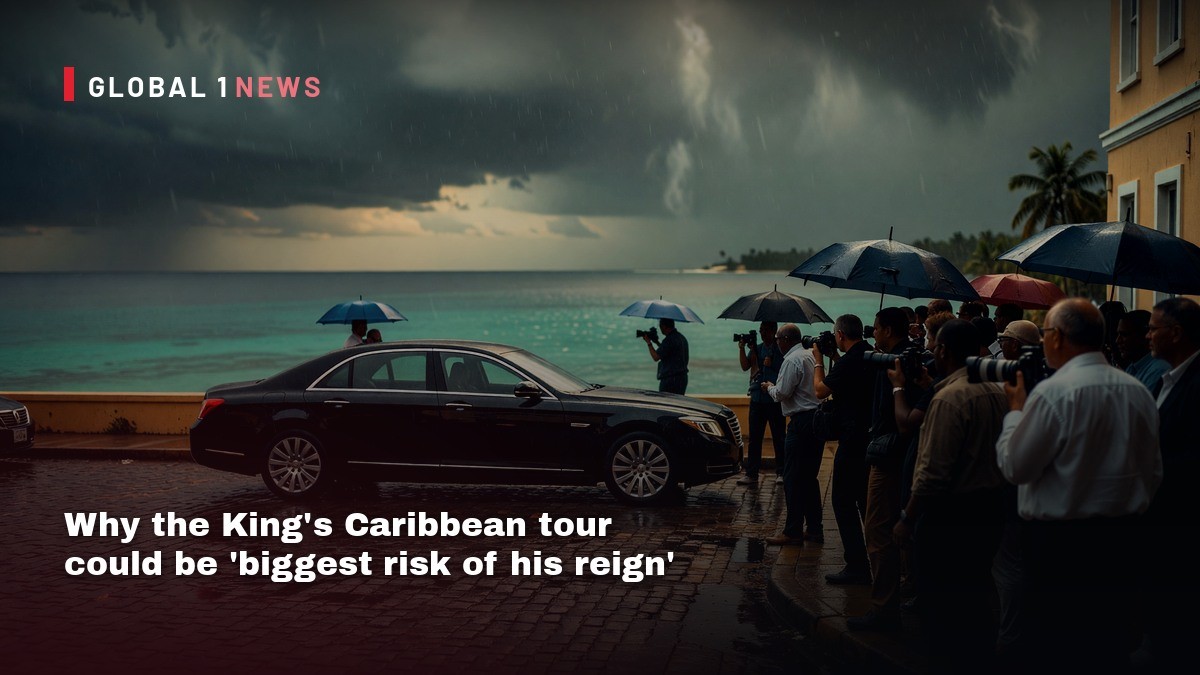
King Charles III embarks on a nine‑day Caribbean tour that will take him from the turquoise waters of the Bahamas to the rain‑soaked streets of Guyana and finally to Antigua and Barbuda for the Commonwealth Heads of Government Meeting (CHOGM). The itinerary, meticulously plotted over months and even years, is more than a diplomatic courtesy; it lands the monarch squarely in the region’s most contentious debates about slavery, reparations and the future of the Commonwealth. As the King approaches his 78th birthday, the journey is being billed as a test of his personal stamina, his moral authority and the resilience of a monarchy that has already been stretched thin by family scandals and a lingering cancer diagnosis.
From the Bahamas to Guyana: A diplomatic sprint
The first leg of the tour lands in the Bahamas, where the King will be welcomed as head of state. Local leaders plan to highlight his work on rainforest protection, cultural ties and trade, while also using the visit to underscore the island’s growing republican sentiment. The Bahamas, along with Antigua and Barbuda, still retain the monarch as ceremonial head, but elected officials no longer swear allegiance—a shift that marks the end of a four‑decade tradition of loyalty oaths.
From there, the itinerary jumps to Guyana, a nation whose ties to the Crown are more recent and whose population includes many with familial links to the United Kingdom. Former Foreign Secretary David Lammy, whose own parents migrated from what was then British Guiana, will accompany the King. Lammy notes that a state visit “is huge” for a small country, yet he also cautions that “there will be some dissent” in these lively democracies. The King’s presence is expected to be overwhelmingly positive, but the shadow of protest over reparations looms large.
The reparations question: Moral integrity on trial
At the heart of the Caribbean tour lies the debate over reparations for the transatlantic slave trade. While the current Burnham administration in Guyana, like its predecessors, has ruled out paying reparations, the leaders of the three visited nations have publicly voiced support for “reparatory justice.” The King will make three significant speeches, each designed to acknowledge the “darkest days of our past” without issuing an official apology—a stance dictated by Buckingham Palace, which insists that apologies and reparations are matters for the British government, not the monarch.
Historian Sir Anthony Seldon warns that this is “the biggest risk of his reign so far,” because the moral integrity of the monarchy is being questioned. The King’s refusal to apologise directly could be seen as a missed opportunity to address an “indelible stain” on history, especially as activists across the Caribbean are poised to use the visit as a platform for protest. The royal household acknowledges the risk, preparing security for demonstrations while framing the protests as part of an “open debate” in the region.
Learning from past missteps
The 2022 Caribbean tour by the Duke and Duchess of Cambridge ended in a media frenzy after images showed the couple reaching through a wire fence to touch the outstretched hands of Jamaican children. Critics called the gesture clumsy and the engagements outdated, and protests forced the cancellation of part of the schedule. Those missteps have informed the planning of the 2026 tour, with security teams and protocol advisers keen to avoid similar optics.
Royal planners have therefore emphasized the King’s willingness to confront “the darkest days of our past,” while ensuring that any symbolic gestures are carefully choreographed. The presence of Queen Camilla on the Antigua and Barbuda leg, focusing on literacy and violence‑prevention initiatives, is also a calculated move to balance ceremonial duties with tangible social concerns, thereby softening the image of a distant monarchy.
Royal family turbulence back home
While the King prepares to cross the Atlantic, the British royal family is wrestling with its own dramas. The surprise return of the Duke and Duchess of Sussex to the UK has reignited media frenzy, and allegations surrounding Meghan’s father have added a layer of legal complexity involving global police forces. Meanwhile, Prince Harry’s memoir, Swan Song, criticises the King’s response to Princess Diana’s death, prompting a strong pushback from the Palace.
These internal conflicts risk diverting attention from the Caribbean engagements. As the King’s youngest son, Prince Andrew, has yet to meet his father in person, the family’s public image remains fragmented. Yet the palace insists the monarch is on a “positive trajectory” despite his ongoing cancer treatment, a statement meant to reassure both domestic and overseas audiences of his fitness for duty.
The Commonwealth at a crossroads
CHOGM in Antigua and Barbuda will be the tour’s culminating event, bringing together leaders from across the former empire. The meeting offers the King a chance to reaffirm the relevance of the Commonwealth at a time when republican sentiment is rising in several member states. In the Bahamas and Antigua and Barbuda, the conversation about becoming a republic enjoys “significant support,” reflecting a broader regional trend toward redefining ties with the Crown.
Sir Anthony Seldon argues that a successful handling of the Caribbean trip could be “an enormous success” for the monarchy and the Commonwealth. By navigating the delicate balance between acknowledging historical wrongs and avoiding a formal apology, the King may preserve the symbolic unity of the Commonwealth while allowing individual nations to pursue their own paths toward republicanism.
Security, logistics and the human toll
The logistical challenge of a transatlantic flight, three countries and roughly 36 engagements in nine days is formidable, especially for a monarch approaching his late seventies and undergoing regular cancer treatment. Security preparations have accounted for potential protests, and the royal household has accepted the inevitability of dissent as part of the “open debate” in the region. The King’s schedule is intense, and Queen Camilla’s presence on the final leg reflects both a desire for continuity and an acknowledgement of the physical demands placed on the royal couple.
Beyond the political calculus, the tour also carries a human dimension. The King’s engagements on rainforest conservation, cultural exchange and trade are intended to resonate with local populations who see the monarchy as both a relic of colonial rule and a conduit for development assistance. Whether these gestures will translate into lasting goodwill remains uncertain, but they underscore the monarchy’s attempt to stay relevant in a region that is increasingly skeptical of foreign influence.
What the Caribbean tour means for the future
If the King can steer the Caribbean visit without a major diplomatic incident, the tour could serve as a turning point for his reign. A smooth performance would demonstrate his capacity to engage with complex historical legacies while maintaining the ceremonial dignity of the Crown. Conversely, a misstep—whether a protest that escalates, a perceived insensitivity, or a health crisis—could amplify calls for republicanism and deepen the moral questions surrounding the monarchy’s place in the modern world.
As the world watches the King’s nine‑day journey across the Caribbean, the stakes are high. The tour is not merely a series of photo‑ops; it is a litmus test for a monarchy trying to reconcile its past with a future that may no longer include a hereditary head of state. The outcome will reverberate far beyond the beaches of the Bahamas, the streets of Georgetown, and the conference rooms of Antigua and Barbuda, shaping the narrative of the British Crown in the 21st‑century Atlantic world.
This article was produced with AI-assisted research and editorial support. Reporting is based on the source material cited below. Sources: BBC News Latin America; bbc.co.uk; Global1.News (27 October 2026).
By Elena Vasquez, Staff Writer
What's Your Reaction?
 Like
0
 Dislike
0
 Love
0
 Funny
0
 Wow
0
 Sad
0
 Angry
0

Latin America Correspondent at Global1.News. Based in Mexico City, covering politics, economics, energy, and culture across the region. Brings an on-the-ground perspective to stories spanning from the Rio Grande to Patagonia.











Comments (0)