
Colombian ex-foreign minister charged over nanny's lie detector test
Former Colombian foreign minister Laura Sarabia finds herself at the centre of a scandal that has reignited debate over the abuse of political power in the country.
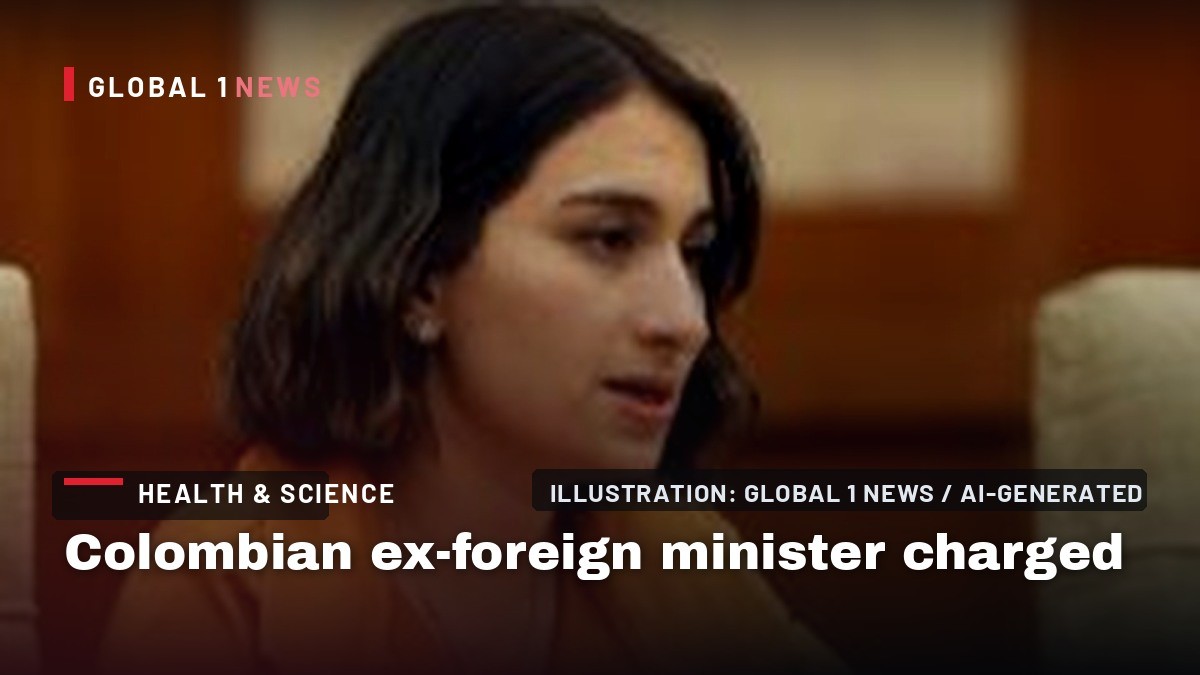
Former Colombian foreign minister Laura Sarabia finds herself at the centre of a scandal that has reignited debate over the abuse of political power in the country. Prosecutors allege that she ordered police to interrogate her nanny, Marelbys Meza, using a lie‑detector test after a sum of cash allegedly vanished from Sarabia’s flat. The case, which first emerged in 2023, now threatens to tarnish the legacy of President Gustavo Petro’s administration and raises unsettling questions about how state resources are deployed for personal matters.
From chief of staff to foreign minister: a rapid rise
Laura Sarabia’s political trajectory has been nothing short of meteoric. She first entered the national spotlight as chief of staff to President Gustavo Petro, Colombia’s first left‑wing president, whose term began in 2022. When the scandal broke, Sarabia was still serving in that capacity, a position that placed her at the heart of the president’s inner circle.
In June 2023, amid the growing controversy, Sarabia resigned from the chief‑of‑staff role. Yet her departure from the presidential office was brief. She was subsequently appointed foreign minister, a post that carried significant diplomatic weight. After stepping down from that ministry, she was named Colombia’s ambassador to the United Kingdom. Each promotion, however, was shadowed by the lingering accusations that she misused her authority for personal concerns.
The alleged theft and the polygraph episode
The controversy ignited when Semana, a Colombian weekly, reported that a substantial amount of cash—described as “several thousands of dollars”—had disappeared from Sarabia’s flat. The report claimed that Sarabia, believing the money had been stolen, ordered police to interrogate her nanny, Marelbys Meza, using a polygraph machine.
According to the testimony gathered by Semana, Meza was taken by Sarabia’s driver to an official building opposite the presidential palace. She described the experience as feeling like “a kidnapping.” There, police officers attached her to a lie‑detector and questioned her about the missing cash. Meza consistently denied any involvement, both during the polygraph test and in subsequent media interviews.
Legal accusations: abuse of power and misappropriation of state resources
Prosecutors have framed Sarabia’s actions as a clear abuse of her position. They argue that, as chief of staff, she leveraged state resources—specifically police forces—to investigate a personal matter that fell outside the scope of her official duties. The charge centres on the notion that a public official should not divert law‑enforcement tools for private disputes.
In a hearing, Sarabia rejected the accusations but offered no detailed defence, opting instead to refer to her legal team. Earlier, she had posted on social media that she trusted the judicial process and that her lawyers were handling the case. The prosecutors’ narrative, however, underscores a broader concern: the potential for political elites to exploit state mechanisms for personal protection.
The human dimension: Marelbys Meza’s perspective
Beyond the political fallout, the episode casts a stark light on the lived experience of domestic workers in Colombia. Meza, a nanny employed to look after Sarabia’s son, found herself thrust into a high‑stakes interrogation that she likened to a kidnapping. Her description of being taken to a government building and subjected to a polygraph underscores the power imbalance that can exist between employers and household staff.
Meza’s steadfast denial of any wrongdoing, maintained across multiple media appearances, suggests a resolve to protect her reputation despite the pressure of a state‑run investigation. Her case illustrates how ordinary Colombians can become entangled in the machinations of political elites, often bearing the brunt of public scrutiny without recourse.
Political implications for the Petro administration
President Gustavo Petro’s tenure has been marked by ambitious reforms and a push to distance Colombia from right‑wing policies of previous governments. Yet the Sarabia affair threatens to undermine that narrative by exposing potential cracks in the administration’s internal discipline.
The fact that a close adviser could be accused of misusing police resources raises questions about oversight within Petro’s inner circle. Critics may seize on this episode to argue that the left‑wing government has not sufficiently curbed the concentration of power among its loyalists, while supporters might contend that the legal process itself demonstrates a functioning democratic system willing to hold even high‑ranking officials accountable.
Public reaction and media scrutiny
The scandal has resonated across Colombian media, with Semana’s initial report sparking a cascade of commentary. Social media users have expressed a mix of outrage over the alleged abuse of power and sympathy for Meza, the nanny caught in the crossfire. The narrative of a powerful official ordering a polygraph on a domestic worker taps into longstanding concerns about inequality and the treatment of the working class.
International observers have also taken note, given Sarabia’s later role as ambassador to the United Kingdom. The episode serves as a reminder that diplomatic appointments can be shadowed by domestic controversies, potentially affecting Colombia’s image abroad. Yet the ongoing judicial process underscores the country’s commitment to legal scrutiny, even when high‑profile figures are involved.
Looking ahead: legal outcomes and broader lessons
The case remains unresolved, with prosecutors pressing charges of power abuse and the defence awaiting further hearings. The outcome will likely set a precedent for how Colombian authorities handle allegations of state resource misappropriation by senior officials.
Beyond the courtroom, the incident invites a deeper reflection on the relationship between political power and everyday citizens. It highlights the vulnerability of domestic workers who, despite being essential to the daily lives of the elite, can be thrust into the spotlight without consent. As Colombia continues to grapple with its social and economic disparities, the Sarabia affair may become a touchstone for discussions about accountability, the protection of workers’ rights, and the limits of political privilege.
This article was produced with AI-assisted research and editorial support. Reporting is based on the source material cited below. Sources: BBC News Latin America; bbc.co.uk; Global1.News (17 September 2026).
By Elena Vasquez, Staff Writer
What's Your Reaction?
 Like
0
Like
0
 Dislike
0
Dislike
0
 Love
0
Love
0
 Funny
0
Funny
0
 Wow
0
Wow
0
 Sad
0
Sad
0
 Angry
0
Angry
0

Latin America Correspondent at Global1.News. Based in Mexico City, covering politics, economics, energy, and culture across the region. Brings an on-the-ground perspective to stories spanning from the Rio Grande to Patagonia.














Comments (0)