
China expels a record number from Communist party amid Xi’s intensified purges of top officials
The fifth plenum of the Chinese Communist Party (CCP) this week has laid bare the scale of President Xi Jinping’s latest wave of internal purges, with a record 33 members expelled and more than a quarter of the Central Committee absent.
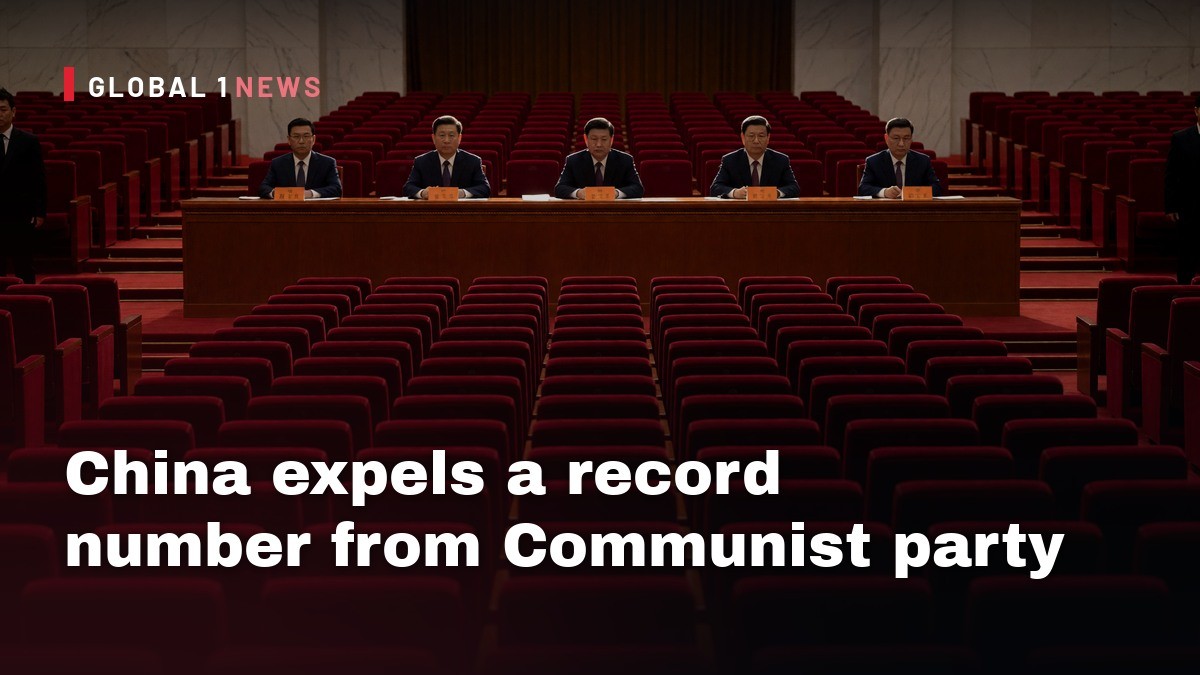
The fifth plenum of the Chinese Communist Party (CCP) this week has laid bare the scale of President Xi Jinping’s latest wave of internal purges, with a record 33 members expelled and more than a quarter of the Central Committee absent. The visual of empty seats in the hall where the nation’s top cadres gather is more than a symbolic tableau; it signals a deepening consolidation of power around Xi and a tightening of the party’s disciplinary apparatus. In the context of China’s long‑term political trajectory, the purge marks a pivotal moment that will shape the composition of the leadership slated for the 21st Party Congress in 2027 and, by extension, the strategic direction of Beijing’s domestic and foreign policy.
Scale of the Fifth Plenum Expulsions
The most striking feature of this week’s plenum was the unprecedented number of vacant chairs. Of the 376 individuals originally named to the Central Committee in 2022, only 279 were present, meaning that more than 25 % of the cohort were absent. The Guardian reports that a record 33 members were formally expelled during the session, underscoring the breadth of the current purge.
Among the confirmed expulsions were Zhang Youxia, formerly the second‑in‑command to Xi within the military hierarchy, and Ma Xingrui, the former party secretary for Xinjiang. Their removal from the party’s ranks illustrates that the purge is not confined to civilian officials but extends deep into the PLA’s senior leadership, further eroding the already diminished Central Military Commission.
Historical Context of Xi’s Anti‑Corruption Campaign
Since ascending to power in 2012, Xi has framed anti‑corruption as the cornerstone of his governance philosophy. Early in his tenure, the campaign was presented as a means to cleanse the party of graft and restore public confidence. Over the past decade, however, the campaign has evolved into a broader instrument of political control, increasingly targeting high‑ranking officials and senior military officers.
The Guardian notes that the current wave of purges has “gutted” the seven‑member Central Military Commission, leaving only Xi and Zhang Shengmin, the party’s anti‑graft czar, as its remaining members. This concentration of authority within a narrow circle signals a shift from a collective leadership model toward a more personalized command structure centered on Xi.
Motivations Behind the Recent Purge
Analysts cited in the source attribute Xi’s intensified crackdown to a perceived erosion of discipline within the party. Earlier this year, Xi warned that the party must uproot “sick trees,” portraying dissent or laxity as a disease threatening the party’s vitality. The Guardian quotes a senior Asia Society fellow who interprets the empty seats as a visual affirmation of Xi’s emphasis on “strict internal discipline.”
Beyond the rhetoric of moral rectitude, the purge may also serve pragmatic political purposes. By removing officials who could pose rival power bases—particularly within the military—Xi reduces the risk of factional challenges. The removal of Zhang Youxia, a former second‑in‑command, and Ma Xingrui, a former regional party secretary, removes potential alternative centers of influence that could contest Xi’s authority.
Implications for the Central Military Commission
The decimation of the Central Military Commission (CMC) is perhaps the most consequential outcome of the plenum. With only two members remaining—Xi himself and Zhang Shengmin—the CMC’s collective decision‑making capacity has been dramatically narrowed. This concentration of power may streamline command but also raises questions about the balance of civil‑military relations within the CCP.
Notably, Zhang Shengmin’s promotion to the Politburo this week makes him the sole military representative on the party’s highest ruling body. This elevation consolidates the anti‑graft faction’s influence within the senior leadership, ensuring that military affairs are tightly aligned with Xi’s disciplinary agenda. The absence of other senior generals from the CMC could limit the PLA’s internal debate and reduce the likelihood of dissenting strategic viewpoints.
Preparation for the 21st Party Congress
The fifth plenum also served as a preparatory platform for the 21st Party Congress, scheduled for the second half of 2027. The Guardian highlights that the congress, held every five years, will be the venue where Xi is expected to secure a fourth term as party leader, cementing his status as the longest‑ruling Communist leader since Mao Zedong.
Given the scale of the current purges, the pool of senior officials eligible for promotion to the Politburo and Central Committee is markedly reduced. Analysts referenced in the source argue that the breadth of the expulsions has left “few suitable candidates” for elevation, suggesting that the upcoming congress will likely see a leadership roster heavily weighted toward loyalists and anti‑graft figures.
Strategic Implications for Domestic Governance
The intensified purge signals a tightening of internal party discipline that will likely translate into more centralized decision‑making across policy domains. With dissenting voices removed, Xi’s policy agenda—whether concerning economic reform, social stability, or ideological conformity—can be pursued with fewer internal obstacles.
However, the purge also carries risks. The removal of experienced officials, particularly from the military and regional leadership, may create gaps in governance expertise. The concentration of authority in a narrow circle could exacerbate policy blind spots, especially if loyalty is prioritized over competence. Such dynamics could affect the implementation of long‑term initiatives like the Belt & Road and domestic economic restructuring.
Geopolitical Ramifications
From an international perspective, the purge underscores Beijing’s internal consolidation at a time when external pressures are intensifying. The United States and its allies continue to scrutinize China’s assertive behavior in the Indo‑Pacific, while economic frictions persist. A more disciplined, centrally controlled CCP is likely to adopt a firmer stance in foreign policy, reducing the scope for diplomatic flexibility.
The reduction of senior military figures who might have advocated for a more calibrated security posture suggests that Beijing’s strategic calculus will be closely aligned with Xi’s vision. This could manifest in a more assertive posture in contested regions, a tighter grip on domestic security, and a heightened emphasis on projecting internal unity to external audiences. As the 21st Party Congress approaches, the world will watch how these internal dynamics shape China’s engagement with the global order.
This article was produced with AI-assisted research and editorial support. Reporting is based on the source material cited below. Sources: The Guardian China; theguardian.com; Global1.News (31 October 2026).
By Prof. Marcus Chen, Staff Writer
What's Your Reaction?
 Like
0
 Dislike
0
 Love
0
 Funny
0
 Wow
0
 Sad
0
 Angry
0
World Politics Analyst at Global1.News. Based in Beijing, covering US-China relations, global trade, and geopolitical strategy. Brings deep analytical perspective to the power dynamics shaping international affairs.














Comments (0)