
Philippines, France conduct bilateral maritime exercise
The third bilateral maritime cooperative activity between the Philippines and France unfolded in the Sulu Sea from November 20 to 22, 2026, under the watchful eye of the Armed Forces of the Philippines (AFP) and its Naval Command Western Mindanao (NCWM).
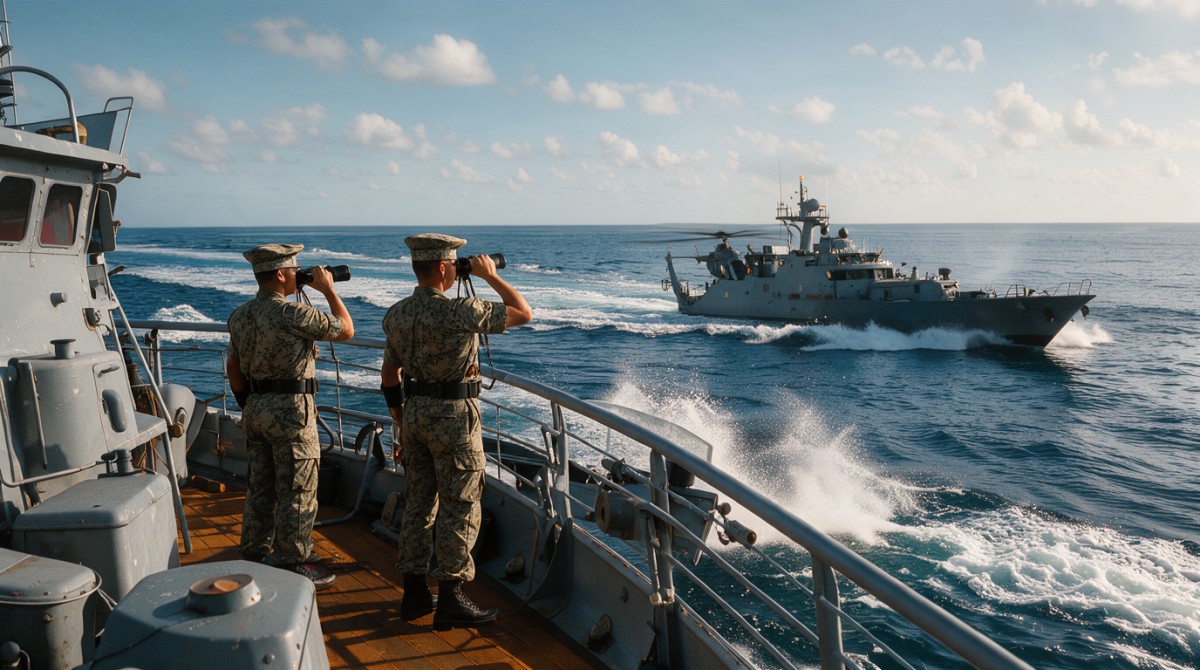
The third bilateral maritime cooperative activity between the Philippines and France unfolded in the Sulu Sea from November 20 to 22, 2026, under the watchful eye of the Armed Forces of the Philippines (AFP) and its Naval Command Western Mindanao (NCWM). While the headlines highlighted sleek frigates and high‑tech helicopters, the true story lies in how this exercise strengthens the safety of our coastal barangays, supports the livelihood of fishermen, and reinforces the nation’s resolve to protect our seas against piracy, illegal fishing and other maritime threats.
Setting the stage: why the Sulu Sea matters to ordinary Filipinos
The Sulu Sea, a bustling corridor that links the Visayas, Mindanao and the wider Pacific, is more than a strategic waterway for the AFP. It is the lifeline of countless coastal communities whose daily catch fuels the tables of sari‑sari stores and the markets of provincial towns. In recent years, the sea has faced mounting pressure from illegal, unreported and unregulated (IUU) fishing, as well as the lingering specter of piracy that threatens the safety of local fishermen and the security of our maritime borders.
By conducting the bilateral exercise in this very region, the Philippines and France signaled a shared commitment to safeguarding the waters that sustain so many Filipino families. The presence of advanced naval assets, such as the Philippine Navy’s BRP Diego Silang and the French frigate FS Vendémiaire, serves not only as a deterrent to transnational threats but also as a reassurance to barangay captains that the government is actively protecting their shores.
What the exercise entailed: a snapshot of joint operations
The three‑day activity featured a blend of communications drills, personnel exchanges, and tactical maneuvers. Philippine forces deployed the BRP Diego Silang, supported by an AW109 helicopter and additional air assets from the Philippine Air Force, including a C‑208B transport plane and S‑70i Blackhawk helicopters. The French side contributed the Floréal‑class frigate FS Vendémiaire and an AS365 Dauphin helicopter.
Key components of the drill included cross‑deck vertical replenishment—where supplies are transferred between ships via helicopter—division tactics, officer‑of‑the‑watch maneuvers, and a “Visit, Board, Search, and Seizure” (VBSS) exercise. These activities are designed to hone the ability of both navies to conduct coordinated interdiction operations, a skill set directly relevant to curbing illegal fishing and smuggling that affect Filipino coastal economies.
Building interoperability: lessons for our own forces
Rear Admiral Constancio Arturo Reyes Jr., commander of the NCWM, emphasized that the successful conduct of the BMCA demonstrated “the growing operational cooperation between the two countries and their ability to work together in addressing shared maritime security challenges.” For the AFP, the exercise offered a practical laboratory to test and refine joint communication protocols, a critical factor when coordinating with civilian agencies such as the Philippine Coast Guard (PCG) and local law‑enforcement units.
Through personnel exchanges, Filipino sailors and officers observed French naval procedures, gaining exposure to different tactical doctrines and maintenance practices. Such knowledge transfer can translate into more efficient patrols of our own waters, enabling PCG vessels like the BRP Sarangani to respond faster and more effectively to incidents that jeopardize the safety of fishermen and the integrity of marine resources.
Connecting the BMCA to broader AFP initiatives
The BMCA was not an isolated event. It ran concurrently with the AFP’s 10‑day joint exercise DAGIT‑PA, held from November 17 to 27 across Northern Luzon and Palawan. On November 19, the AFP tested its air and missile defense capabilities at Camp Cape Bojeador in Burgos, Ilocos Norte, demonstrating the ability to detect, track and intercept simulated airborne threats using coordinated air and surface assets.
DAGIT‑PA—an acronym for dagat, langit, lupa (sea, air, land)—brings together the Army, Air Force, Navy and Marine Corps, as well as the Reserve Force, to enhance interoperability across all domains of warfare. The simultaneous execution of the BMCA and DAGIT‑PA underscores a holistic approach: while the bilateral exercise sharpens maritime interdiction skills, the larger joint drill hones the AFP’s capacity to integrate sea, air and land operations, a synergy that ultimately benefits local security on the ground and at sea.
Implications for local communities: safety and livelihood
For residents of coastal barangays, the presence of allied navies conducting joint drills translates into tangible benefits. Enhanced maritime security reduces the risk of pirate attacks that have, in past years, forced some fishermen to abandon their boats or to seek alternative, less profitable livelihoods. Moreover, the ability to conduct VBSS operations means that illegal vessels can be boarded and seized more efficiently, protecting the marine ecosystem that sustains fish stocks.
Beyond immediate security, the exercise fosters a sense of solidarity that can inspire community‑based initiatives. Local volunteers, often organized through bayanihan groups, may feel empowered to cooperate with PCG patrols, reporting suspicious activities and supporting coastal monitoring efforts. Such grassroots participation complements the high‑tech capabilities showcased during the BMCA, creating a layered defense that safeguards both the people and the environment.
Strategic significance: deepening the Philippines‑France defense partnership
The joint activity highlights a growing defense partnership between Manila and Paris. Both nations share a commitment to a “secure, stable, and rules‑based maritime environment,” as noted by the AFP. France’s participation brings not only advanced naval platforms but also a strategic perspective rooted in its own extensive maritime domain, which includes territories in the Indo‑Pacific region.
By aligning with France, the Philippines diversifies its security ties beyond traditional allies, opening avenues for future cooperation in areas such as maritime domain awareness, joint training programs, and technology transfer. For Filipino policymakers, this partnership offers leverage in diplomatic negotiations, reinforcing the Philippines’ standing in regional security forums and ensuring that the concerns of ordinary Filipinos—like safe fishing grounds and protected coastlines—remain on the agenda.
Looking ahead: sustaining momentum for maritime security
As the BMCA concluded, the AFP and PCG returned to their routine patrols, now equipped with fresh insights from the French navy. The next steps involve institutionalizing the lessons learned: updating standard operating procedures, conducting regular joint drills, and expanding the scope of cooperation to include other maritime stakeholders such as the Department of Agriculture’s Bureau of Fisheries and Aquatic Resources and local fisherfolk associations.
For the Filipino people, the hope is that these high‑profile exercises translate into everyday peace of mind—knowing that the navy’s sleek frigates and the coast guard’s vigilant cutters are working hand‑in‑hand with international partners to keep our seas safe. In a country where the ocean is both a source of sustenance and a gateway to the world, strengthening maritime security is not merely a military objective; it is a promise to protect the livelihoods of millions of Filipinos who depend on the sea.
This article was produced with AI-assisted research and editorial support. Reporting is based on the source material cited below. Sources: Philstar.com; Global1.News (23 November 2026).
By Bella Reyes, Staff Writer
What's Your Reaction?
 Like
0
 Dislike
0
 Love
0
 Funny
0
 Wow
0
 Sad
0
 Angry
0

Philippines/Southeast Asia Correspondent at Global1.News. Manila-based journalist covering Philippine politics, environment, maritime security, and social issues. Passionate about marine conservation and the communities protecting the Philippines' natural heritage.














Comments (0)