
Carney Studied the Risk of a U.S. Invasion. Hours Later, Trump Said Canada Is 'Destroying Itself.'
Mark Carney told The New York Times he examined the possibility of U.S.-led military action against Canada, calling it an extreme tail risk rather than a base case. Hours later, President Donald Trump posted that Canada is destroying itself, as the two leaders attended the same UN summit and did not meet.
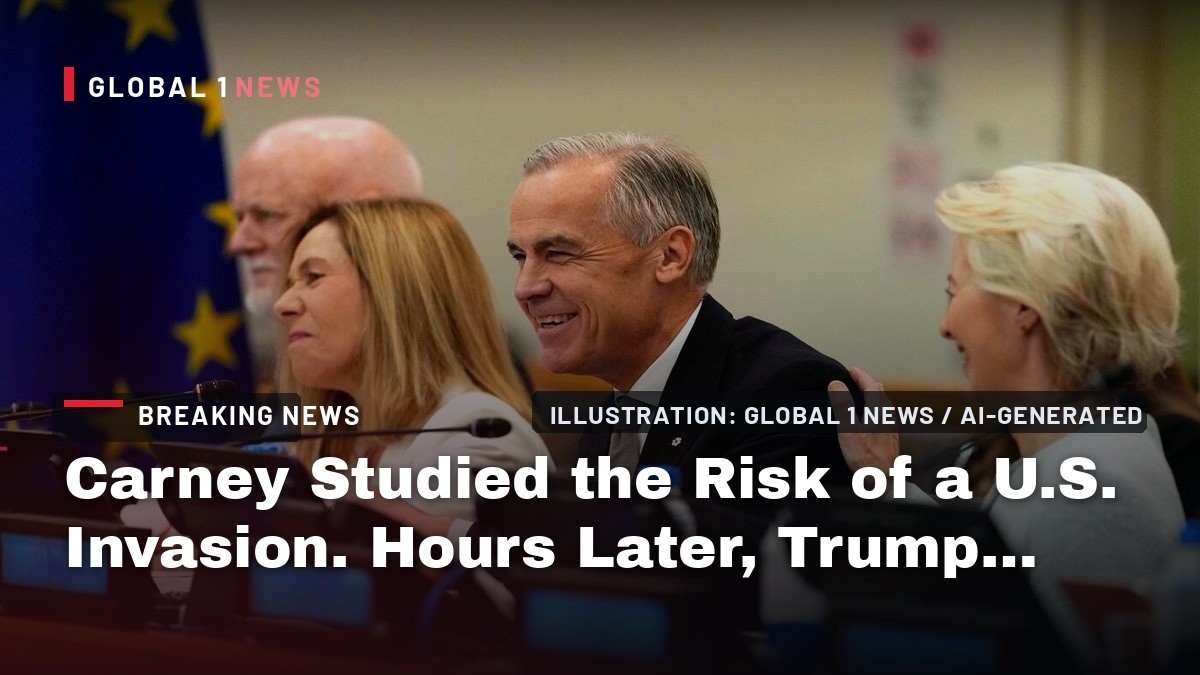
Mark Carney says he has examined the possibility that the United States could take military action against Canada — a scenario he calls an "extreme tail risk," and one he says it would be irresponsible not to study. The remark landed in a lengthy New York Times interview published on Wednesday 23 September 2026. Within hours, President Donald Trump posted that Canada is "destroying itself." The two leaders were in the same city this week and did not meet.
Carney Studied the Risk of a U.S. Invasion. Hours Later, Trump Said Canada Is 'Destroying Itself.'
OTTAWA, Canada — Prime Minister Mark Carney has confirmed that his government examined the possibility of U.S.-led military action against Canada, telling The New York Times in an interview published Wednesday that the exercise was a matter of duty rather than forecast. "I think you have a responsibility in these roles to look at extreme tail risk," Carney told the newspaper. "That's just risk management. That's not a base case, but it would be irresponsible not to (prepare)." He declined to discuss in detail what that examination involved.
The Interview That Put It on the Record
Carney's comments were published on Wednesday in a long-form interview with The New York Times, and were carried by The Canadian Press and syndicated across Canadian outlets including CP24, CTV News, 650 CKOM in Saskatoon, the Winnipeg Free Press, the Lethbridge Herald and the Brandon Sun. The prime minister framed the exercise in the language of probability rather than alarm — an "extreme tail risk" being an event that would cause enormous damage but is unlikely enough to be overlooked in ordinary planning.
He did not say what the examination found, and he did not describe any specific intelligence or scenario. What he put on the record is narrower and, for an allied leader, more striking: that the question was asked at all. Trump has repeatedly mused about turning Canada into the 51st state. He ruled out using military force to annex Canada in January 2025, but has said he would consider using "economic force" to bring the country into the United States.
What 'Extreme Tail Risk' Actually Means
The phrase is drawn from finance and insurance, and Carney — a former governor of the Bank of Canada and of the Bank of England — used it precisely. A tail risk is an outcome so far from the centre of the distribution that standard models assign it negligible odds, while its consequences are severe enough to justify preparing anyway.
In Carney's framing, the preparation is not a prediction. "That's not a base case," he said, before adding that failing to plan for it "would be irresponsible." The distinction matters: a prime minister describing contingency planning is not the same as a prime minister describing a threat assessment, and Carney drew that line himself. The Times also reported that Carney disclosed he and Trump speak "frequently," even since trade negotiations collapsed last month — a detail Carney has repeated in public in recent weeks.
Twelve Hours Later, a Truth Social Post
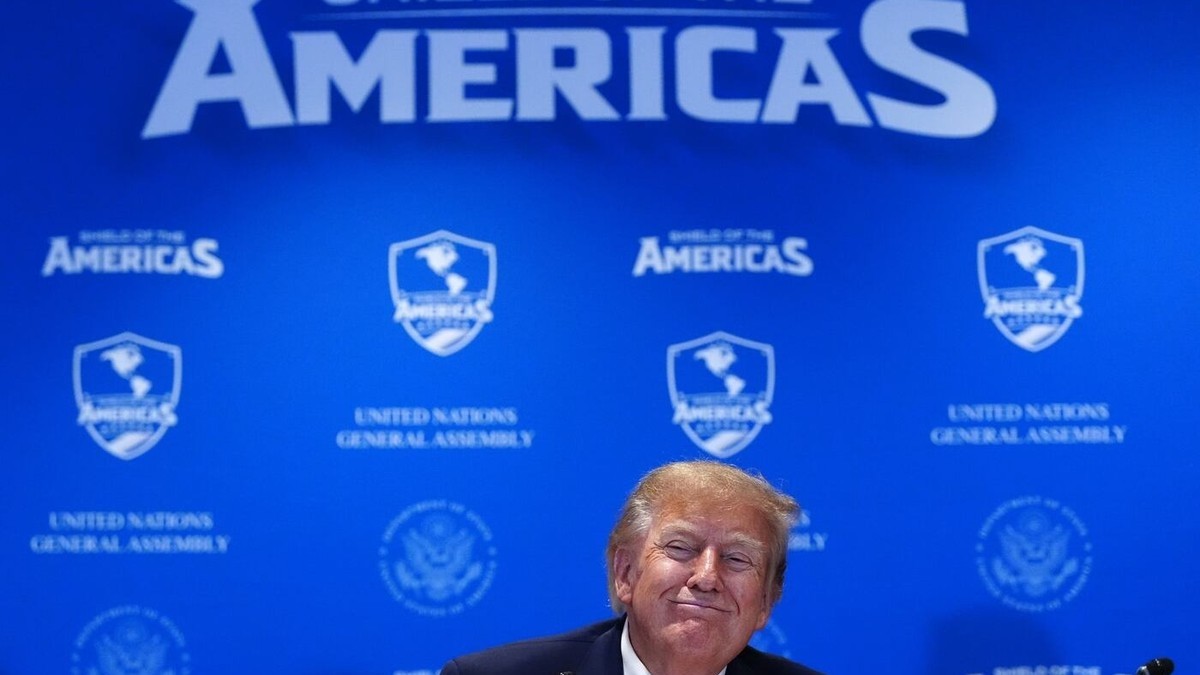
On the same day the interview appeared, Trump posted on Truth Social that Canada "is destroying itself by allowing millions and millions of people into the Country," describing arrivals as "essentially unchecked and unvetted." He added: "It is a Liberal takeover that will end up very badly. Already showing up in their numbers. Big unemployment."
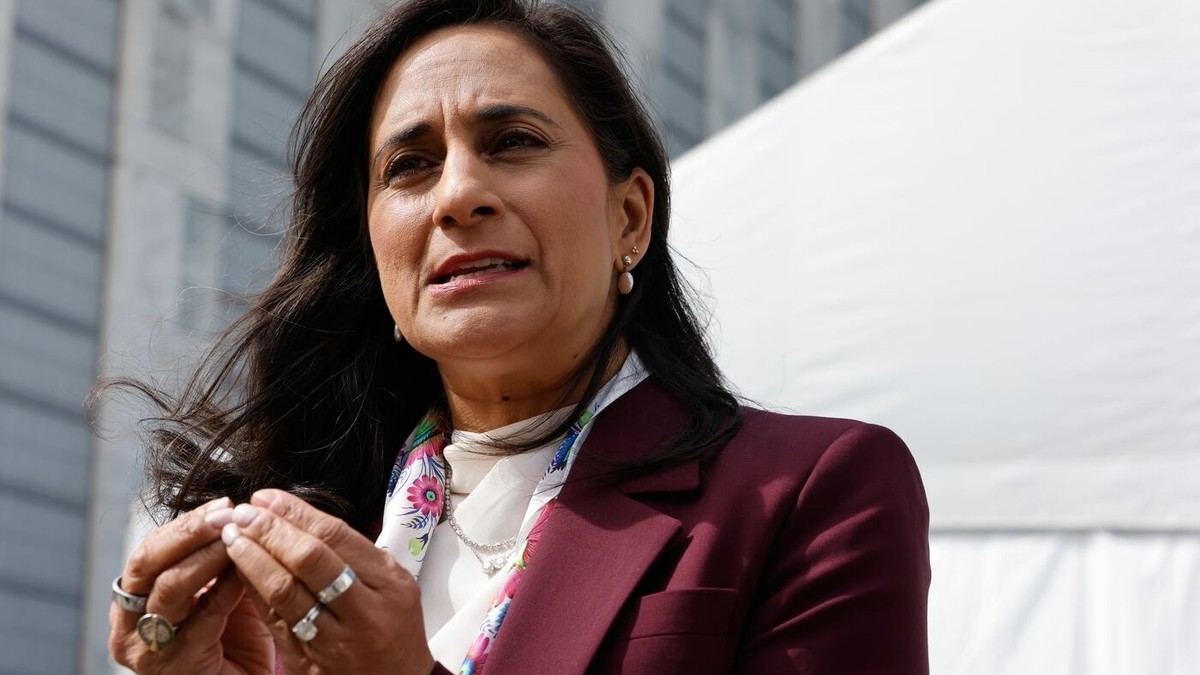
Foreign Affairs Minister Anita Anand responded that immigration overall has improved "Canadian prosperity," and that the federal government reduced intake in 2024. "We are stabilizing immigration levels," she said on Wednesday. Ottawa plans to reduce temporary resident volumes to five per cent of the population by the end of 2027, with permanent resident admissions projected to stabilize at 380,000 from 2026 to 2028 — with preference for migrants already in Canada who have what the government calls needed skills and experience.
The Numbers Trump Did Not Cite
Canada's unemployment rate was 6.4 per cent in August, according to Statistics Canada's most recent labour survey, released on 4 September. The comparable U.S. figure was 4.1 per cent. The two countries do not measure unemployment the same way — Canada counts people who are not working because of family responsibilities as unemployed, while the United States does not — a methodological difference Statistics Canada publishes.
On immigration, the data points the other way from the post. Statistics Canada reported on Tuesday that Canada's population rose slightly, by 0.2 per cent, in the second quarter, while immigration fell 4.2 per cent year over year and the number of non-permanent residents dropped 0.7 per cent. Permanent resident admissions hit a record 483,640 in 2024 and fell to about 393,500 in 2025 — the trend line the post describes as unchecked. Statistics Canada has also recorded accelerated employment losses in trade-dependent industries following the tariffs Trump imposed on Canadian goods, and a TD study released in the fall of 2025 projected the unemployment rate would have been at least one percentage point higher had population growth not slowed.
The Fight Over 72 Fighter Jets
Carney also used the interview to reopen Canada's fighter-jet decision. In 2023 Ottawa chose Lockheed Martin's F-35 to replace its aging CF-18 fleet, committing to 88 aircraft. The first 16 were locked in and are in production. Carney ordered a review of the contract for the remaining 72 in March 2025, and eighteen months later it has not concluded.
Defence Minister David McGuinty has declined to rule out a mixed fleet. Sweden's Saab is pitching its JAS 39 Gripen E, and chief executive Micael Johansson says an order of roughly 40 aircraft would justify assembling complete fighters in Canada — the first Gripen production line outside Sweden — while insisting the company is not asking Ottawa to abandon the F-35. "We're not trying to replace F-35," he told The Globe and Mail. "It's both." Saab has promised up to 10,000 manufacturing and research jobs. The review is politically loaded: Washington has reportedly pressed Canada to complete the full buy, while Defence Department figures from the 2021 competition scored the F-35 at 95 per cent for military capability against 33 per cent for the Gripen. Canada's auditor general now puts the acquisition at 27.7 billion Canadian dollars, up from 19 billion.
Starlink, China and Slow Decoupling
The interview also covered the technological side of the rupture. According to The Canadian Press, Carney discussed plans to reduce Canada's reliance on Elon Musk's Starlink satellite internet service, and said Canada is looking into expanding its economic ties with China while cutting both military and technological dependence on the United States.
He framed the divergence as temporary. With a different U.S. president in office, Carney told the Times, "we will be a better partner for the U.S. because of what we are doing." It is a line that will be read two ways in Washington — as an olive branch, or as a statement that Canada is now building the capacity to need one less. Carney has already said publicly that "the days of our military sending 70 cents of every dollar to the United States are over," and in May Ottawa selected Saab as preferred supplier for airborne early-warning aircraft, negotiating separately for six GlobalEye planes.
Brussels First, Washington Second
Carney spent Wednesday in New York, co-hosting a pledging event for OceanEye, an ocean-observation alliance funded largely by the European Union, alongside European Commission President Ursula von der Leyen. Canada is committing 82 million dollars to the programme; the European Commission has put the associated market at up to 32 billion Canadian dollars, set inside an ecosystem it values at 40 to 90 billion euros.
He announced autonomous underwater gliders on months-long missions beneath the Arctic ice and a plan to expand protected lands and waters to two million square kilometres by the end of the decade. "We can't protect what we can't see," he said. He did not mention the United States in his opening remarks, and he described the gathering as being in the same spirit as his trip to Strasbourg the previous week, where talk of Canada's associate EU membership made headlines worldwide.
A Street Sign in Ottawa
The temperature in the relationship is also being taken at municipal level. Ottawa city council voted unanimously to begin the process of renaming Trump Avenue, a street in the capital's Central Park neighbourhood. Trump Avenue is one of several streets there named after New York City locations, alongside Madison Park, Manhattan Crescent, Bloomingdale Street and Staten Street. At the time the neighbourhood was developed, Trump was a real estate developer; his presidency has renewed calls to strip his name from street signs in the capital.
The Trade War Underneath Everything
All of this sits on top of an unresolved trade war. Talks between Ottawa and Washington collapsed on 21 August. The following day, Trump imposed 50 per cent duties on 28 billion dollars of Canadian goods, according to The Canadian Press. Canada retaliated in early September with tariffs covering about 20 billion dollars of American products — roughly six per cent of the 333.6 billion dollars the United States exported to Canada last year — at rates of 15, 25 or 50 per cent on hundreds of items including steel, aluminum, cheese, appliances, clothing, cosmetics and farm equipment.
Canada starts at a disadvantage: the U.S. economy is about 13 times larger, and more than 70 per cent of Canadian exports go south. But Washington has dependencies too — American refineries rely on four million barrels a day of Canadian oil, and U.S. farmers depend heavily on Canadian potash, of which Carney says Canada supplies 40 per cent of the world's supply. The Associated Press reported that the outcome could resonate far beyond North America, showing other governments whether a smaller U.S. ally can withstand American economic pressure.
What Comes Next
Carney and Trump were both at the 81st United Nations General Assembly this week and did not meet. It was Carney's first trip to the United States since trade negotiations fell apart in August. The prime minister's office has confirmed Indian Prime Minister Narendra Modi will visit Canada in December to sign a trade deal, and Canada's defence procurement review remains open.
What Carney has put on the record is a contingency he declines to describe, a dependency he is trying to shed, and a relationship he still expects to repair with a future president. What he has not done is name the risk he was planning for. He did not have to. The question he studied — whether the United States might one day use force against Canada — is now part of the public record of the alliance, and both capitals know it.
By Jessica Ali, Staff Writer
This article was produced with AI-assisted research and editorial support. Sources: The New York Times, The Canadian Press, CP24 and CTV News, The Globe and Mail, Statistics Canada, the Associated Press, 650 CKOM, the Winnipeg Free Press, Reuters and the European Commission.
What's Your Reaction?
 Like
0
Like
0
 Dislike
0
Dislike
0
 Love
0
Love
0
 Funny
0
Funny
0
 Wow
0
Wow
0
 Sad
0
Sad
0
 Angry
0
Angry
0

Editor-in-Chief at Global1.News. Atlanta-based journalist who cuts through the BS and tells it like it is. Lead anchor, host, and the voice you hear when the spin stops and the truth starts.












Comments (0)