
Caribbean infrastructure challenge is bankability not capital
At the recent Caribbean Infrastructure Forum, a clear message rang out across the conference hall: the region is brimming with ideas for new ports, airports, hospitals and renewable‑energy schemes, yet the real bottleneck is not a lack of capital but a shortage of bankable projects.
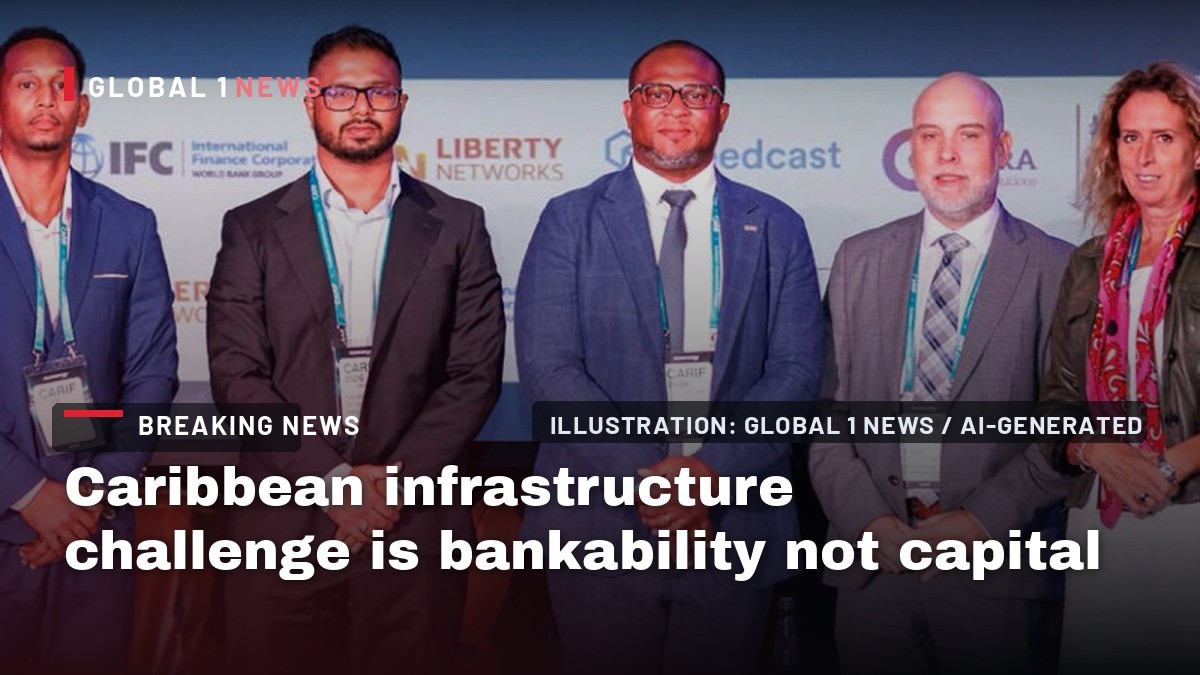
At the recent Caribbean Infrastructure Forum, a clear message rang out across the conference hall: the region is brimming with ideas for new ports, airports, hospitals and renewable‑energy schemes, yet the real bottleneck is not a lack of capital but a shortage of bankable projects. As Kemar Polius, senior director of corporate banking and sustainable finance at CIBC Caribbean, put it, “capital follows confidence – confidence in sponsors, cash flows, regulatory frameworks and contracting.” In a climate where the cost of living in Trinidad and the rest of the islands is tightening household budgets, the stakes for getting that confidence right have never been higher.
Why “bankability” matters more than money
Polius reminded the audience that CIBC Caribbean has been involved in more than $1.5 billion of infrastructure transactions over the past decade, supporting critical assets from ports to hospitals. Yet he warned that many projects stall long before they ever reach a bank for a term sheet. The culprits, he said, are often incomplete feasibility studies, missing regulatory permits and gaps in the very frameworks that give investors the assurance they need.
In the Caribbean, where political cycles can be short and administrations change every few years, the need for durable contracts is especially acute. Polius warned against designing infrastructure around the life‑cycle of a single government, noting that “infrastructure assets, by their definition, are long‑lived assets.” Without contracts that survive political transitions, even the most well‑funded projects can lose momentum, leaving citizens without the promised improvements.
The preparation puzzle: from ideas to bankable proposals
The panel, which also featured deal‑advisors from KPMG and a public‑private partnership specialist from the Inter‑American Development Bank (IDB), repeatedly stressed that preparation is the foundation of confidence. Investors want to see not just a wish list of roads or ports, but a clear, prioritised pipeline of projects that have undergone rigorous feasibility work, have secured the necessary permits and are backed by credible sponsors.
Roger Kirton of KPMG highlighted the need for governments to move beyond ambition and present “adequate preparation, clear procurement and regulatory frameworks and a visible pipeline.” When investors can map out when and where capital will be needed, they can plan their own deployment more efficiently, reducing the risk of idle funds or stalled construction.
Political continuity: the secret sauce of successful projects
Polius cited the $300 million redevelopment of Prince George Wharf in The Bahamas as a textbook example of how continuity can cement investor confidence. The project, he noted, kept its momentum across multiple administrations and even continued construction during the COVID‑19 pandemic, a period that saw Caribbean tourism – a major revenue source – severely disrupted. The presence of three Bahamian prime ministers at the opening ceremony underscored the political consensus that helped the project stay on track.
Pablo Pereira dos Santos of the IDB echoed this point, reminding the audience that a complex infrastructure venture can take three to six years just to prepare before it reaches the market, and the resulting agreement may span 30 years. Such long horizons demand that the contractual and regulatory environment be stable enough to survive several election cycles, otherwise the project’s financial model can crumble.
Blended finance: an accelerator, not a substitute
Both Polius and Pereira dos Santos agreed that concessional financing and multilateral guarantees can act as “accelerators” for project preparation. However, they cautioned that development finance should complement, not replace, commercial capital. Polius outlined three key tests for any concessional support: additionality (is the aid truly needed?), targeting (does it address a specific risk?) and proportionality (is the level of support appropriate?).
The panel warned that blended finance is most effective when it is used to cover residual risks after a project has already been properly structured. “The finance cannot remedy all the original sins that the project has. That’s a recipe for failure,” Pereira dos Santos warned, underscoring that poor preparation cannot be fixed after the fact by throwing money at it.
Scaling up through aggregation and repeatable pipelines
One of the recurring challenges highlighted was the small size of many individual Caribbean projects, especially in renewable energy. Kirton suggested that aggregation – bundling several smaller projects into a larger, more attractive package – could help overcome this hurdle. By creating repeatable pipelines, governments can provide investors with the scale needed to justify larger financing commitments.
This approach aligns with the growing interest in renewable energy, water, climate‑resilient infrastructure and digital networks that the panel identified as emerging sectors. By standardising procurement processes and creating a series of ready‑to‑finance projects, Caribbean states can tap into the appetite of global investors looking for sustainable, long‑term returns.
The role of regulatory certainty and risk allocation
Across the discussion, the importance of clear, predictable regulatory environments was a constant refrain. Investors need assurance that the rules of the game will not change overnight, and that any risks are allocated to the party best equipped to manage them. This means governments must craft contracts that clearly delineate responsibilities, performance guarantees and dispute‑resolution mechanisms.
When risk is fairly allocated, private capital is more likely to flow. The panel noted that public‑private partnerships (PPPs) can be an effective vehicle for this, provided the partnership is built on a solid foundation of preparation and regulatory clarity. In such arrangements, the public sector can leverage private expertise and financing while retaining oversight of essential services.
Looking ahead: building a bankable future for the Caribbean
As the forum wrapped up, the consensus was clear: the Caribbean must shift its focus from merely identifying infrastructure needs to consistently delivering projects that meet the stringent criteria of bankability. This means investing in feasibility studies, securing permits early, establishing durable contractual frameworks and ensuring political continuity.
For the everyday Caribbean citizen feeling the pinch of rising living costs, the payoff is tangible – from smoother ports that lower freight costs to reliable renewable‑energy supply that can stabilise electricity prices. By mastering the mechanics of bankable projects, the region can unlock the private capital needed to modernise its infrastructure, bolster resilience against climate shocks and lay the groundwork for a more prosperous future.
This article was produced with AI-assisted research and editorial support. Reporting is based on the source material cited below. Sources: Barbados Today; barbadostoday.bb; Global1.News (20 September 2026).
By Sharon Sahatoo, Staff Writer
What's Your Reaction?
 Like
0
Like
0
 Dislike
0
Dislike
0
 Love
0
Love
0
 Funny
0
Funny
0
 Wow
0
Wow
0
 Sad
0
Sad
0
 Angry
0
Angry
0

Caribbean Correspondent at Global1.News. Based in Port of Spain, Trinidad, covering Caribbean politics, economy, energy, climate, and culture. Amplifying the voices and stories of the Caribbean region.














Comments (0)