
By Any Means: The Mobster, the FBI Agent and the Fight for Mississippi's Soul
On September 4, a film that refuses to let America's civil-rights past rest quietly in the history books arrived in theatres across the United States. By Any Means, the new historical crime thriller from Elegance Bratton, throws an FBI agent and a Mafia hitman together in Mississippi's Klan country — and asks whether justice ever arrives
On September 4, a film that refuses to let America's civil-rights past rest quietly in the history books arrived in theatres across the United States. By Any Means, the new historical crime thriller from Elegance Bratton, throws an FBI agent and a Mafia hitman together in Mississippi's Klan country — and asks whether justice ever arrives with clean hands. For African readers who know the freedom struggle as their own story, that question lands close to home.
By Any Means: The Mobster, the FBI Agent and the Fight for Mississippi's Soul
Dakar, Senegal — Hollywood has told the story of the American civil-rights movement many times, but rarely from this angle: a Brooklyn mobster as the weapon of justice. By Any Means, which opened across the United States this week, dramatizes the true story of how the FBI turned to Mafia enforcer Gregory Scarpa Sr. to hunt the Ku Klux Klan terrorists who murdered a Mississippi civil-rights leader — and how a Black FBI agent was ordered to work beside him.
Mississippi 1966: The Klan Killing That Wouldn't Stay Buried
The story begins with a man whose name deserves to ring across the Atlantic as loudly as it does in Hattiesburg, Mississippi. Vernon Dahmer was a local NAACP leader, a businessman who owned a sawmill and a grocery store, and a man who had grown tired of watching his neighbours turned away from the voting booth. In January 1966, after he announced that Black citizens would pay their poll taxes at his store and register to vote, the White Knights of the Ku Klux Klan decided he had to die.
In the early hours of January 10, 1966, Klansmen firebombed Dahmer's home while his wife and children slept inside. The family fought back as the house burned — Dahmer grabbed a shotgun and fired at the attackers while his wife, Ellie Jewell, and their children escaped through the flames. He died later that day from severe burns and smoke inhalation, but not before telling his wife, "I'll be all right, but look after the children." He was 58 years old, and he had paid the ultimate price for demanding the most basic right of a democracy.
The murder did not happen in a vacuum. Mississippi was still haunted by Freedom Summer 1964, when three civil-rights workers — James Chaney, Andrew Goodman and Michael Schwerner — were murdered by Klansmen near Philadelphia, their bodies found 44 days later in an earthen dam.
But Vernon Dahmer's killing was different. He was not an outside agitator; he was a respected local leader, a man who had lived in Hattiesburg his entire life. The national outrage was immediate, and President Lyndon B. Johnson, who had signed the Civil Rights Act of 1964 and the Voting Rights Act of 1965, pressed the FBI to make the Dahmer case a top priority. Yet even with the full weight of the federal government behind the investigation, justice moved at a glacial pace. The first trials ended in acquittals, as all-white juries refused to convict their Klan neighbours. It was not until 1998 — more than three decades after Dahmer's death — that Klan leader Sam Bowers, the Imperial Wizard of the White Knights, was finally convicted of ordering the murder. Bowers, tried and acquitted three times in the 1960s, was 73 when he was finally sentenced to life in prison.
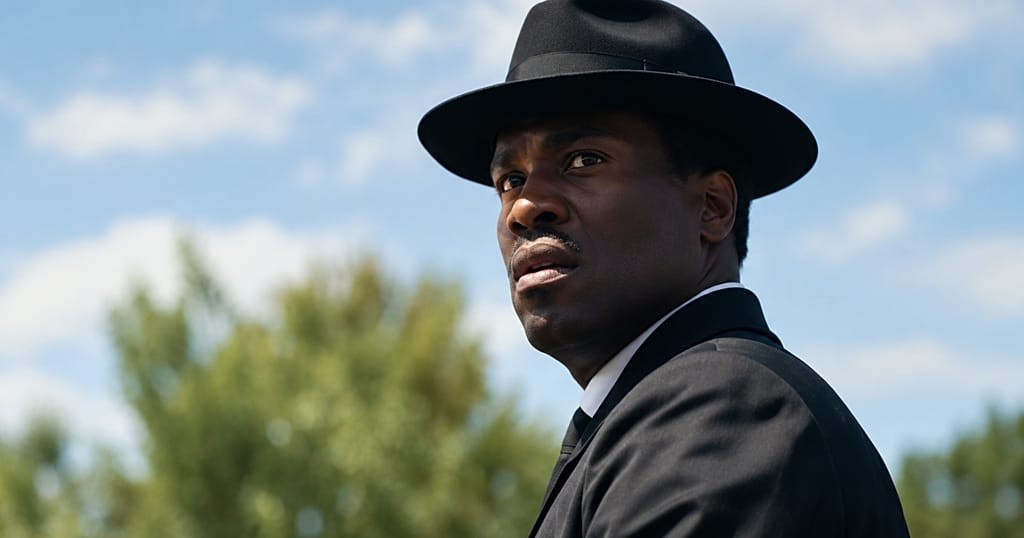
The Mobster and the FBI Agent: Justice With Unlikely Hands
This is where the story takes its strangest turn. Gregory Scarpa Sr. was a captain in the Colombo crime family, a Brooklyn Mafia figure so feared he was called "the Grim Reaper." He was also, secretly, an FBI informant who traded information on his associates for leniency and cash. When the bureau could not crack the Klan cases by conventional means, some agents made a Faustian bargain: use Scarpa's brutal methods to do what the courts could not.
In By Any Means, Mark Wahlberg plays Scarpa with a menacing charm, while Yahya Abdul-Mateen II stars as FBI agent Wayne Strider, a composite character based on several real agents who were ordered to work alongside the mobster. The FBI has never officially confirmed the Scarpa partnership, and the film acknowledges this ambiguity by building its central relationship on the tension between Strider's moral revulsion and his professional duty. Sascha Penn's screenplay began life on Hollywood's famous Black List, the annual survey of the industry's best unproduced scripts, before Bratton came aboard. The odd-couple pairing drives the film — a Black FBI agent and a white Mafia killer, both outsiders in Klan country, forced to trust each other while neither fully trusts the system they serve.
Bratton's argument is deliberately provocative: social change does not require perfect allies. In an interview with africanews this week, the director put it plainly: "There's no such thing as perfect allies. And these problems, all of us are implicated, whether victim or perpetrator. So we're gonna get ourselves out of this situation, you gotta look to your left and your right and decide that as long as we're focused on the same target, then perhaps the specifics of how we got here is unimportant until we win."
Abdul-Mateen, whose character carries the film's moral weight, told africanews that the story resonates beyond America's borders. "The least of us should be served just as well as the greatest of us. And so I think I wholeheartedly believe that," he said. His performance is anchored by Nicole Beharie as Strider's wife, a woman who sees the danger her husband is walking into, and David Strathairn as FBI supervisor Roy K. Moore — a real historical figure who oversaw the bureau's civil-rights investigations in Mississippi.
'By Any Means': A Phrase That Echoes Across Africa
The title is borrowed from Malcolm X, who popularized the phrase "by any means necessary" in the early 1960s. But the words did not stay in America. In 1964, Malcolm X made two extended trips to Africa, visiting Ghana, Nigeria, Egypt and other capitals, where he met with African leaders and addressed students and politicians. He returned transformed by the wave of decolonization sweeping the continent, and his language of self-determination found eager listeners on both sides of the Atlantic.
The debate that divided America — nonviolence versus self-defense, dialogue versus armed struggle — also shaped Africa's liberation movements. In South Africa, the African National Congress founded Umkhonto we Sizwe, the armed wing of the liberation struggle, after the 1960 Sharpeville massacre, when police killed 69 unarmed protesters. In Kenya, the Mau Mau uprising against British colonial rule had begun in the 1950s, a bloody rebellion that forced London to acknowledge that its empire was crumbling. Across Lusophone Africa — in Angola, Mozambique and Guinea-Bissau — wars of independence raged through the 1960s and 1970s.
Amilcar Cabral, the revolutionary thinker who led Guinea-Bissau's liberation struggle, framed armed resistance as the only language colonialism understood. His writings on "class suicide" and national liberation influenced liberation movements from Algiers to Havana, and his assassination in 1973 — just months before Guinea-Bissau declared independence — remains one of the continent's great tragedies. Cabral's argument was simple: when the oppressor holds all the legal power, the oppressed must find other means.
Senegal took a different path. Under Leopold Sedar Senghor, the poet-president who led the country to independence in 1960, Senegal championed dialogue, Negritude and a philosophy of cultural pride that sought to win freedom through words as much as through weapons. Senghor's vision was not universally accepted — many younger Africans saw it as too accommodationist — but it demonstrated that the continent has never spoken with one voice on how freedom is won. That diversity of strategy is precisely what By Any Means dramatizes: the messy, often contradictory choices that liberation requires.
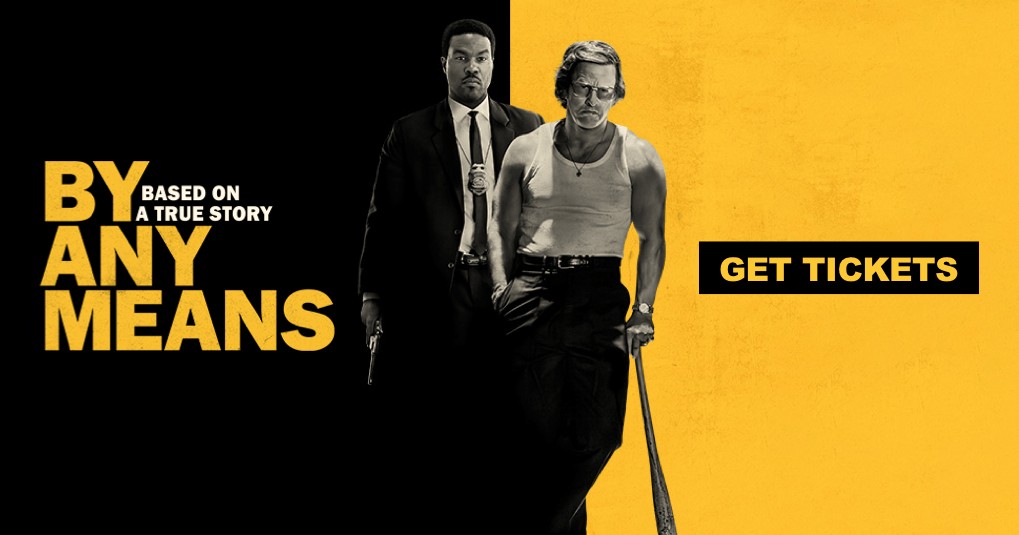
Elegance Bratton: From the Streets to a Paramount Stage
To understand why Bratton was the right filmmaker for this material, one must understand the road he travelled to get here. He was kicked out of his New Jersey home at 16 for being gay, and spent about a decade homeless in New York City, finding community on the Christopher Street Pier in Greenwich Village — a gathering place for LGBTQ youth who had been rejected by their families.
In his mid-20s, Bratton made a decision that would change his life: he enlisted in the United States Marines. He served six years as a combat camera specialist, documenting military operations and learning the craft of visual storytelling in the most demanding conditions imaginable. After leaving the Marines, he studied African American studies at Columbia University, then earned a Master of Fine Arts at NYU's Tisch School of the Arts.
His documentary Pier Kids (2019), about homeless LGBTQ youth in New York, won the Independent Spirit Truer Than Fiction Award and established him as a filmmaker with a unique voice. His autobiographical debut feature The Inspection (2022), starring Jeremy Pope as a gay man navigating boot camp, premiered at the Toronto International Film Festival and was released by A24 to critical acclaim. In 2025, his documentary Move Ya Body: The Birth of House premiered at the Sundance Film Festival, tracing the origins of house music in Chicago's Black and LGBTQ communities.
Bratton's biography matters because it informs his filmmaking philosophy. He told The Guardian this week: "My film is not history. My film is using history in a way to comment on the contemporary condition." This is not a filmmaker interested in dusty period pieces; he is using the past as a mirror for the present, asking audiences to see their own struggles in the battles of 1966.
For young African creatives, Bratton's trajectory — from homeless teenager to a Paramount release — is proof that a filmmaker's origin does not set the ceiling on their destination.
Jazz, Memory and a Hollywood Ensemble With Deep Roots
The score of By Any Means is by Terence Blanchard, the Grammy-winning jazz trumpeter and composer who has scored more than two dozen Spike Lee films and whose opera Fire Shut Up in My Bones opened the Metropolitan Opera's season in 2021 — the first work by a Black composer in that institution's history. Blanchard's music is not decoration; it is a character in the film, a through-line of Black American memory and resistance that connects the jazz clubs of New Orleans to the churches of Mississippi.
Blanchard's score draws on jazz's deep roots in Black American memory, weaving blues, gospel and free jazz into a soundscape that honours the film's historical setting while speaking to contemporary ears.
The ensemble cast brings remarkable depth to the story. Giancarlo Esposito — Gus Fring to younger audiences — brings quiet dignity to Vernon Dahmer, investing the character with the moral authority of a man who knew he was risking everything. Josh Lucas, Ethan Embry, LisaGay Hamilton and LaChanze round out an ensemble spanning generations of talent.
The film was shot in Georgia, wrapping production in June 2025 before Paramount Pictures acquired U.S. rights in April 2026 for a Labor Day opening. The timing was deliberate: Labor Day weekend marks the unofficial end of summer in America, a moment when studios often release films they believe will generate awards-season buzz. Weeks earlier, africanews reported that Angélique Kidjo, the Beninese singer-songwriter, had become the first Black African to receive a star on the Hollywood Walk of Fame, unveiled on August 19. Kidjo's honour, alongside Bratton's film, signals a moment when African and African-diaspora stories are finally receiving the recognition they deserve.
What to Watch For
By Any Means is now playing in theatres across the United States, released by Paramount Pictures on September 4. It runs 107 minutes and is rated R for violence and language — a rating that reflects the brutal realities of the era it depicts. Reviews are mixed: Variety called it "a bluntly drawn historical thriller," The Guardian found it "grimly effective," and The New Yorker praised its "principled cynicism." Some reviewers argue the film glamorizes mob violence; Bratton responds that his intent is to show the moral compromises justice sometimes requires.
For African viewers, the question is when and how the film reaches international and streaming audiences. Paramount has not yet announced a release date for African markets, but the film's themes — justice, liberation, the cost of freedom — are universal. When it arrives, whether in Dakar cinemas or on a streaming platform, it will find an audience that understands its subject intimately.
What should African viewers take from By Any Means? First, that the argument over how to win freedom is unfinished everywhere — the debates that divided Mississippi in 1966 are the same debates shaping politics across Africa today. Second, that history is not a distant relic but a living force still shaping our present.
African filmmakers have long understood this. Ousmane Sembene, the Senegalese "father of African cinema," used history to indict colonialism in films like Camp de Thiaroye, which dramatized the 1944 massacre of African soldiers by French forces. The new generation showing work at FESPACO, the pan-African film festival in Ouagadougou, continues this tradition, using history to comment on the present in exactly the way Bratton names. From Sembene to Bratton, from Dakar to Hollywood, the method is the same: look at the past to understand who we are and who we might become.
As By Any Means opens in American theatres, it carries a message that resonates far beyond Mississippi. The struggle for justice is never clean, never simple, never finished. But as Vernon Dahmer's life and death remind us, the fight itself is the point. Africa's cultural dynamism — from Dakar's music scene to Lagos's film industry to the continent's growing presence on global stages — is proof that our stories, told on our own terms, are finding their audience. The means may vary, but the end remains the same: freedom, by any means necessary.
This article was produced with AI-assisted research and editorial support. Sources: africanews, Variety, The Guardian, The New Yorker, RogerEbert.com, Paramount Pictures.
By Amara Diop, Staff Writer
What's Your Reaction?
 Like
0
Like
0
 Dislike
0
Dislike
0
 Love
0
Love
0
 Funny
0
Funny
0
 Wow
0
Wow
0
 Sad
0
Sad
0
 Angry
0
Angry
0

West Africa/Sahel Correspondent at Global1.News. Dakar-based journalist covering politics, security, climate, and development across Francophone and Anglophone West Africa. Tells the stories of a region undergoing profound transformation.













Comments (0)