
Burnham Vows to End 'Long-Running Injustice' of Indefinite Sentences
The prime minister has pledged to resolve the "long-running injustice" of Imprisonment for Public Protection (IPP) sentences, in a move that could free thousands of prison places and allow ministers to block the early release of the most serious offenders, including the killers of PC Andrew Harper.
Burnham Vows to End 'Long-Running Injustice' of Indefinite Sentences
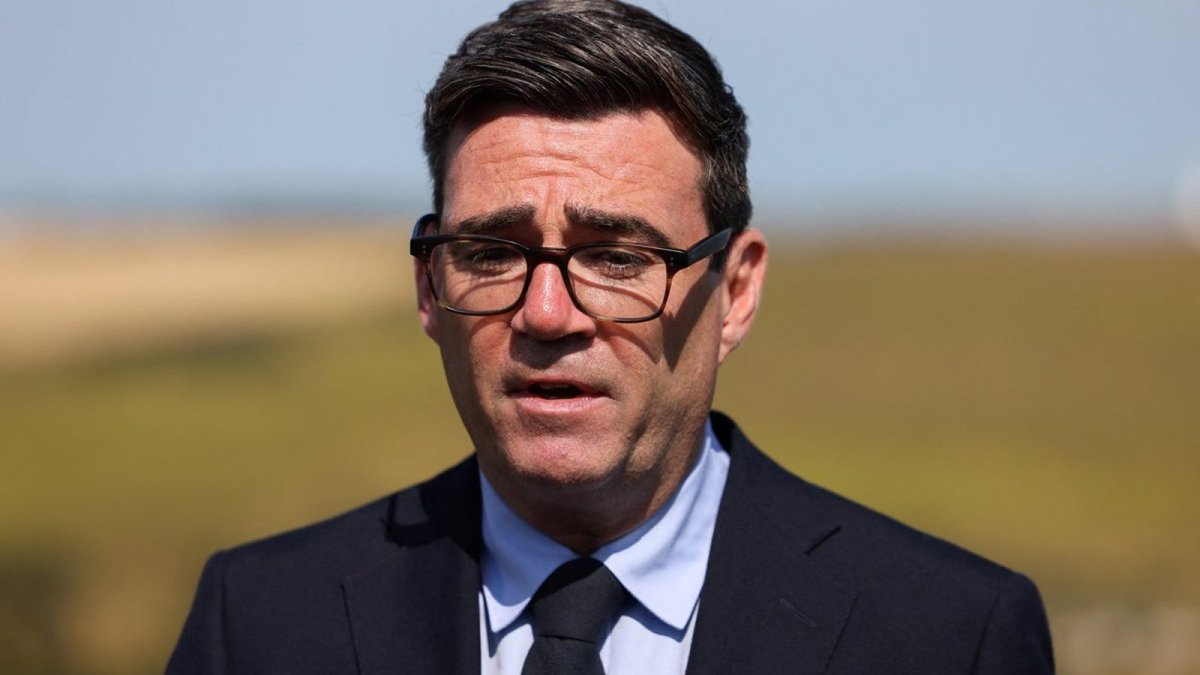
The prime minister has pledged to resolve the "long-running injustice" of Imprisonment for Public Protection (IPP) sentences, in a move that could free thousands of prison places and allow ministers to block the early release of the most serious offenders, including the killers of PC Andrew Harper. Speaking on Tuesday, Andy Burnham said he is "increasingly confident" that a focused strategy can create sufficient headroom in the prison estate to curb the automatic early release of certain violent criminals.
The announcement marks a significant shift in tone from Downing Street, which has faced mounting legal and political pressure over the scandal of indefinite jail terms. In a statement issued via social media, Mr Burnham confirmed he has instructed the justice secretary, Alex Norris, to fast-track a plan to expand capacity across the prison system. The strategy, he said, would be built "on a range of options" including the accelerated removal of foreign national offenders, greater use of the female estate for male prisoners, and—crucially—a review of IPP sentences that could lead to the release of "lower risk" inmates.
"I am increasingly confident that a more focused approach along these lines will allow us to reduce the number of people released early and, in the case of the most serious offenders like those convicted of the killing of PC Harper, prevent their early release altogether," Mr Burnham said. The comments offer fresh hope for the nearly 2,300 individuals still trapped on the open-ended sentences, which were formally abolished in 2012 but not applied retrospectively, leaving thousands languishing without a fixed release date for years beyond their original tariff.
A Scandal Decades in the Making
The IPP sentence was introduced under Tony Blair's Labour government in 2005, championed by the then home secretary, Lord David Blunkett, who has since described it as his "biggest regret". Designed to detain dangerous offenders until they could prove they were no longer a risk, the sentence was intended for the most violent criminals. In practice, it was applied far more broadly, with some individuals receiving IPPs for relatively minor offences such as street robbery or handling stolen goods.
Once the tariff—the minimum term set by a judge—expires, prisoners must convince the Parole Board they are safe to release. But with limited access to rehabilitation programmes and a system that often demands proof of remorse that is difficult to evidence, many have remained incarcerated for years, sometimes decades, beyond their original punishment. The result, according to campaigners and cross-party MPs, has been a "cruel and unusual" regime that has driven at least 96 prisoners to take their own lives in custody after losing all hope of release.
In 2022, the cross-party justice committee concluded that the sentences were "irredeemably flawed" and called for all remaining IPP prisoners to be resentenced. Successive governments, however, have resisted wholesale reform, citing public safety concerns and the risk of releasing individuals who may still pose a danger. That resistance has now collided with a series of damning international rulings and a looming domestic legal challenge that could force the government's hand.
United Nations Condemnation
Last month, the United Nations Working Group on Arbitrary Detention issued a scathing legal opinion, finding that Britain is unlawfully detaining a number of over-tariff IPP prisoners. The UN body called on the UK to act urgently in relation to five named men, warning that their imprisonment long beyond their original tariffs amounts to arbitrary detention under international human rights law. The opinion stated that the men are entitled to compensation for the years they have spent behind bars without lawful justification.
In a separate development, the UN special rapporteur on torture has accused the government of perpetuating human rights abuses, warning that the IPP regime may amount to psychological torture. The findings have electrified the legal community and given fresh impetus to campaigners who have spent years fighting for justice on behalf of the forgotten prisoners.
Human rights lawyer Karen Todner, who is representing several of the men, said the UN's findings have rendered the IPP sentence "indefensible". Speaking this week, she added: "It's hugely significant and very damning for the UK government to receive such a condemnation of our justice system." Her comments came as lawyers yesterday sent the justice secretary a letter before action, preparing to submit a rare habeas corpus challenge to the High Court. If successful, the legal move will force the government to justify the continued incarceration of the five men to senior judges, potentially setting a precedent that could unravel the entire IPP regime.
The Men Behind the Statistics
The human cost of the IPP scandal is best understood through the individual cases now before the courts. Leroy Douglas, for example, has served almost 20 years without release for the street robbery of a mobile phone. Abdullahi Suleman remains in custody 20 years after he was handed an IPP for a laptop robbery. Wayne Williams has spent more than 19 years in prison without release for a 23-month jail term imposed for attempting to injure a police officer in a fight. And Shaun Lloyd, 39, was recently hauled back to prison for the fifth time, having already served more than 12 years for two street robberies.
Tragically, Joshua Mcrae never lived to see justice. He died in prison aged 34, having served more than 16 years for a four-year tariff for grievous bodily harm. His case, like so many others, illustrates the brutal reality of a system that has repeatedly failed to distinguish between genuine risk and the mere passage of time. Four of the five men condemned by the UN are still incarcerated, their cases now the subject of intense legal scrutiny.
The impact extends beyond those still inside. Many IPP prisoners who have been released find themselves trapped in a cycle of indefinite recall for minor breaches of strict licence conditions. A single missed appointment with a probation officer, or a change of address not reported in time, can result in a return to prison with no fixed end date. This revolving door has created a shadow population of former prisoners living in constant fear of being sent back, unable to rebuild their lives or reintegrate into society.
Political and Legal Pressure Mounts
This week, the chair of the Criminal Cases Review Commission (CCRC), Dame Vera Baird, joined the growing chorus of voices demanding "wholesale" action. Dame Vera, a former victims' commissioner, said the debate around the early release scheme had brought an urgency to solving the problem. "We are harming a lot of people with a leftover that international human rights institutions have condemned as torture," she said. Her intervention is significant, given the CCRC's role in investigating potential miscarriages of justice. Judges have recently quashed a string of indefinite sentences handed to children and young men, and the commission is reviewing hundreds more cases.
The legal landscape is shifting rapidly. The habeas corpus challenge, if granted, would be a landmark moment in British legal history. Habeas corpus—literally "you shall have the body"—is a centuries-old legal remedy that requires the state to justify any detention before a court. Its use in this context would force the government to explain, in open court, why men who have served far beyond their tariffs remain behind bars. Legal experts suggest that, given the UN's findings, the government would struggle to provide a satisfactory answer.
The timing is politically sensitive. Mr Burnham's announcement comes as the government faces intense scrutiny over its handling of the prison system, which is operating at crisis levels of overcrowding. The early release of prisoners—including, controversially, some violent offenders—has become a flashpoint in Westminster, with opposition parties accusing the government of prioritising political expediency over public safety. By linking the IPP review to the broader prison capacity crisis, Mr Burnham is attempting to square a difficult circle: addressing a historic injustice while simultaneously reassuring the public that the most dangerous offenders will not be released early.
What Happens Next
The prime minister's statement on Tuesday is a clear signal that the government is preparing to act, but the details remain thin. The justice secretary, Alex Norris, has been tasked with fast-tracking a plan, but no timeline has been given for when proposals might be brought forward. The options under consideration—including the release of lower-risk IPP prisoners—would require primary legislation, a parole board review process, or a combination of both. Each route carries significant political and legal risks.
For the nearly 2,300 prisoners still serving IPP sentences, the announcement offers a glimmer of hope after years of despair. But campaigners are cautious, noting that previous governments have made similar noises without delivering meaningful change. The difference this time, they argue, is the weight of international condemnation and the imminent threat of a successful habeas corpus challenge. If the High Court rules against the government, the pressure to act will become irresistible.
The broader implications for the UK justice system are profound. A wholesale review of IPP sentences would require the Parole Board to reassess hundreds of cases, a process that could take years and require significant additional resources. It would also raise difficult questions about compensation for those who have been unlawfully detained, potentially exposing the government to substantial financial liability. And it would force a wider conversation about the purpose of punishment in a system that has, for too long, prioritised public anger over evidence-based sentencing.
For the families of the 96 prisoners who took their own lives while trapped on IPP sentences, no reform can undo the damage. But for those still alive, still hoping, and still fighting, Mr Burnham's words offer the first real prospect of release in a generation. The question now is whether the government has the courage to follow through.
By Erica Thornton, Staff Writer
This article was produced with AI-assisted research and editorial support. Sources: The Independent, United Nations Working Group on Arbitrary Detention, Criminal Cases Review Commission.
What's Your Reaction?
 Like
0
Like
0
 Dislike
0
Dislike
0
 Love
0
Love
0
 Funny
0
Funny
0
 Wow
0
Wow
0
 Sad
0
Sad
0
 Angry
0
Angry
0

US Politics and Policy Correspondent at Global1.News. Based in Washington DC, covering American politics, policy, elections, and the courts. Knows how the system works and tells you what it actually means.















Comments (0)