
BTS V Reveals Years-Long Hearing Loss: Military Service and K-Pop's Health Toll
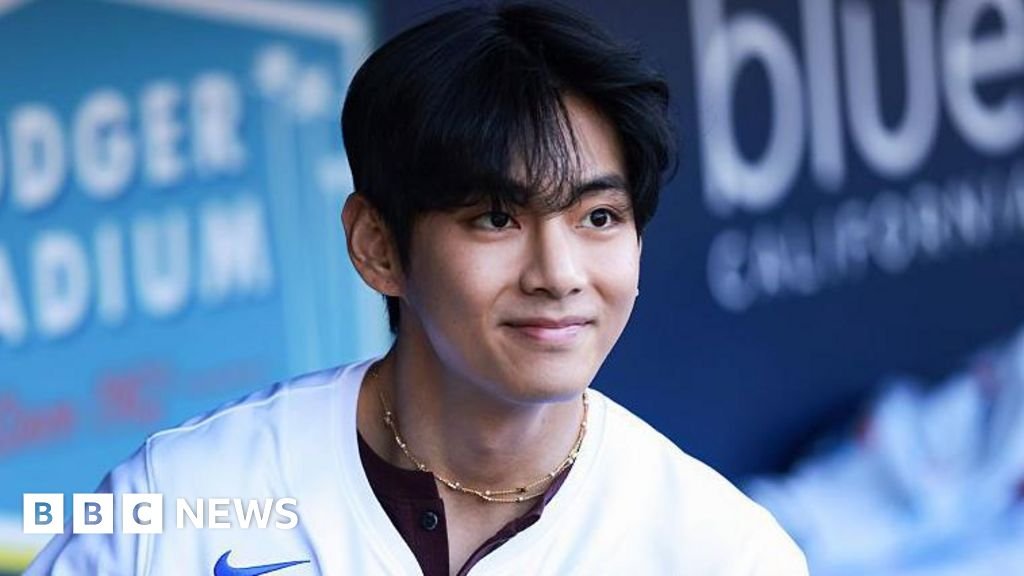
BTS member V (Kim Tae-hyung) has revealed he has been living with significant hearing loss in his right ear for approximately two and a half years, a disclosure that has reignited public discourse in South Korea about the health costs of mandatory military service and the grueling physical demands of the global K-pop industry.
BTS member V (Kim Tae-hyung) has revealed he has been living with significant hearing loss in his right ear for approximately two and a half years, a disclosure that has reignited public discourse in South Korea about the health costs of mandatory military service and the grueling physical demands of the global K-pop industry.
BTS V Reveals Years-Long Hearing Loss: Military Service and K-Pop's Health Toll
Seoul, South Korea – August 13, 2026 — The 30-year-old singer made the admission during a live broadcast on the fan platform Weverse on August 12, 2026, following the group's concerts at M&T Bank Stadium in Baltimore, Maryland. The Baltimore shows were part of the ARIRANG World Tour, which began in April 2026 in South Korea and marks the first full reunion of all seven BTS members since they completed their mandatory military service.
"If the hearing in my left ear is at 100, it's only about 30 in my right," V told viewers, according to translations from the livestream. He explained that he had never previously disclosed the condition to fans, known as ARMY, and that he is now taking medication consistently and visiting a hospital regularly for treatment.
A Condition Worsened by Military Service
V's disclosure carries particular weight given the timeline he provided. The hearing deterioration, he said, worsened during his approximately 18 months of service in the South Korean army. He enlisted on December 11, 2023, and was discharged on June 10, 2025, serving in the 2nd Corps military police special mission unit.
What makes his account especially poignant is his description of how the condition was initially dismissed. V stated that he initially believed the problem was "a matter of mental strength," a framing he said was reinforced by those around him in the military who were focused on physical training. He told viewers that he "brainwashed" himself into thinking the hearing issue was psychological rather than physiological.
This admission speaks to a broader cultural phenomenon within South Korea's conscription system. The Republic of Korea requires all able-bodied men to serve approximately 18 months of military service, and the institutional culture has historically emphasized mental toughness and physical endurance over the reporting of medical complaints. V's experience suggests that even a global superstar, with access to world-class healthcare, felt pressure to dismiss a genuine medical condition as a failure of mental fortitude.
The Occupational Hazards of K-Pop's Global Machine
V's hearing loss must also be understood within the specific occupational context of K-pop performance. Artists in the industry routinely perform with in-ear monitors (IEMs) at high volume levels, often for hours at a time during concerts that feature intense choreography and complex vocal arrangements. The cumulative noise exposure from years of performances, studio sessions, and world tours creates significant risk for noise-induced hearing loss.
The ARIRANG World Tour represents one of the most ambitious touring schedules in K-pop history. After the Baltimore concerts, upcoming stops include Los Angeles, Buenos Aires, Bangkok, Sydney, and Hong Kong. The tour's global reach is a testament to BTS's status as a cultural phenomenon, but it also underscores the physical toll such schedules exact on performers.
During the same livestream, bandmate Jungkook revealed that he is dealing with a shin injury and is "on the verge of developing a stress fracture" from the tour's demands. He stated that he would manage the injury to continue performing, a sentiment that reflects the industry's pervasive "the show must go on" ethos.
BTS and South Korea's Soft Power Calculus
The health disclosures come at a moment when BTS's role in South Korean cultural diplomacy has never been more pronounced. The ARIRANG World Tour is not merely a commercial enterprise; it functions as a soft-power milestone for the Republic of Korea. The group's global success has been credited with boosting Korean tourism, expanding the international market for Korean cultural products, and enhancing the country's image abroad.
This strategic significance creates a complex dynamic around health disclosures. On one hand, the members' willingness to speak openly about their physical struggles humanizes them and deepens their connection with fans. On the other hand, the pressure to maintain the tour schedule and fulfill the expectations of millions of fans worldwide may discourage more serious medical interventions that could require extended rest periods.
The South Korean government has long recognized BTS's diplomatic value. The group has addressed the United Nations, received presidential commendations, and been appointed as special presidential envoys for future generations and culture. Their military service was closely watched as a test of the country's conscription system, with debates about whether entertainers should receive exemptions. Ultimately, all members served, and their service was framed as a demonstration of national unity.
Military Healthcare and the "Mental Strength" Culture
V's account of being told that his hearing problem was a matter of mental strength raises uncomfortable questions about South Korea's military healthcare system. While the military has made efforts to modernize its medical infrastructure, the institutional culture remains one in which physical complaints are often met with skepticism or dismissed as psychological weakness.
This "mental strength" framing is not unique to the military. It reflects a broader Korean cultural tendency to valorize endurance and stoicism, particularly among men. The expectation that individuals should push through pain and discomfort without complaint is deeply embedded in Korean workplace culture, educational institutions, and family dynamics.
For soldiers, the stakes are particularly high. Reporting a medical issue can be perceived as shirking duty or seeking to avoid demanding assignments. The result, as V's experience illustrates, is that genuine health problems may go untreated or be actively suppressed. V's admission that he "brainwashed" himself into accepting the mental-strength narrative is a powerful illustration of how institutional culture can override individual self-preservation instincts.

A Broader Public Health Conversation
V's disclosure also contributes to a growing public health conversation in South Korea about hearing loss, noise exposure, and early detection. South Korea has one of the highest rates of smartphone and personal audio device usage in the world, and public health officials have expressed concern about the prevalence of noise-induced hearing loss among young people.
The World Health Organization has estimated that over one billion young people worldwide are at risk of hearing loss due to unsafe listening practices. In South Korea, where K-pop concerts, gaming culture, and high-volume social environments are ubiquitous, the risk profile is particularly acute.
V's willingness to discuss his condition openly may encourage young Koreans to take their hearing health more seriously. Early detection and intervention are critical for managing hearing loss, yet many individuals delay seeking help due to stigma, denial, or simply not recognizing the early signs. A beloved public figure discussing his own struggles with hearing loss could normalize the conversation and prompt more people to get their hearing checked.
Looking Ahead: The Tour Continues
As the ARIRANG World Tour proceeds to Los Angeles and beyond, questions remain about how V's condition and Jungkook's injury will affect the group's performance schedule. Neither member has indicated any intention to withdraw from upcoming shows. V stated that he is committed to his treatment regimen, and Jungkook expressed determination to manage his injury while continuing to perform.
The situation highlights a fundamental tension within the K-pop industry. The same work ethic and perfectionism that have propelled BTS to global superstardom also create conditions in which artists may push themselves beyond safe physical limits. The industry's infrastructure — from training academies to touring operations — is optimized for maximum output, not necessarily for the long-term health of its performers.
For South Korea, the BTS members' health disclosures serve as a reminder that the country's most visible cultural ambassadors are also human beings with physical limitations. The national pride associated with BTS's achievements is real and justified, but it should not come at the cost of the members' wellbeing.
The broader policy implications are significant. South Korea's military could examine whether its culture adequately encourages soldiers to report health concerns without fear of stigma. The entertainment industry could reconsider touring schedules and performance practices to reduce occupational health risks. And the public health system could invest more heavily in hearing health education and accessible screening programs.
V's decision to share his story was, by his own account, a difficult one. He had kept the condition private for two and a half years, even as he performed at sold-out stadiums around the world. His disclosure, and Jungkook's, offer a rare glimpse behind the polished facade of K-pop stardom — and a sobering reminder of the human cost of cultural phenomenon.
By Prof. David Park, Staff Writer
This article was produced with AI-assisted research and editorial support. Reporting is based on sources cited in the article.
What's Your Reaction?
 Like
0
Like
0
 Dislike
0
Dislike
0
 Love
0
Love
0
 Funny
0
Funny
0
 Wow
0
Wow
0
 Sad
0
Sad
0
 Angry
0
Angry
0

East Asia/Technology Correspondent at Global1.News. Seoul-based voice covering Korean politics, technology, business, and culture. Analyzes how technology and geopolitics intersect across East Asia.










Comments (0)