
Ayra Starr: The Unstoppable Rise of Afrobeats' Boldest Star
She is the Nigerian singer who teased Stevie Wonder, survived major surgery days before an album release, and is now carrying the hopes of a continent on her shoulders. Ayra Starr's third album, Starrgirl , arrives with the weight of expectation — and the confidence of an artist who refuses to be boxed in. Ayra Starr: Afrobeats' Fearless New Voice Lagos, Nigeria — There is resilience, and then there is Ayra Starr.
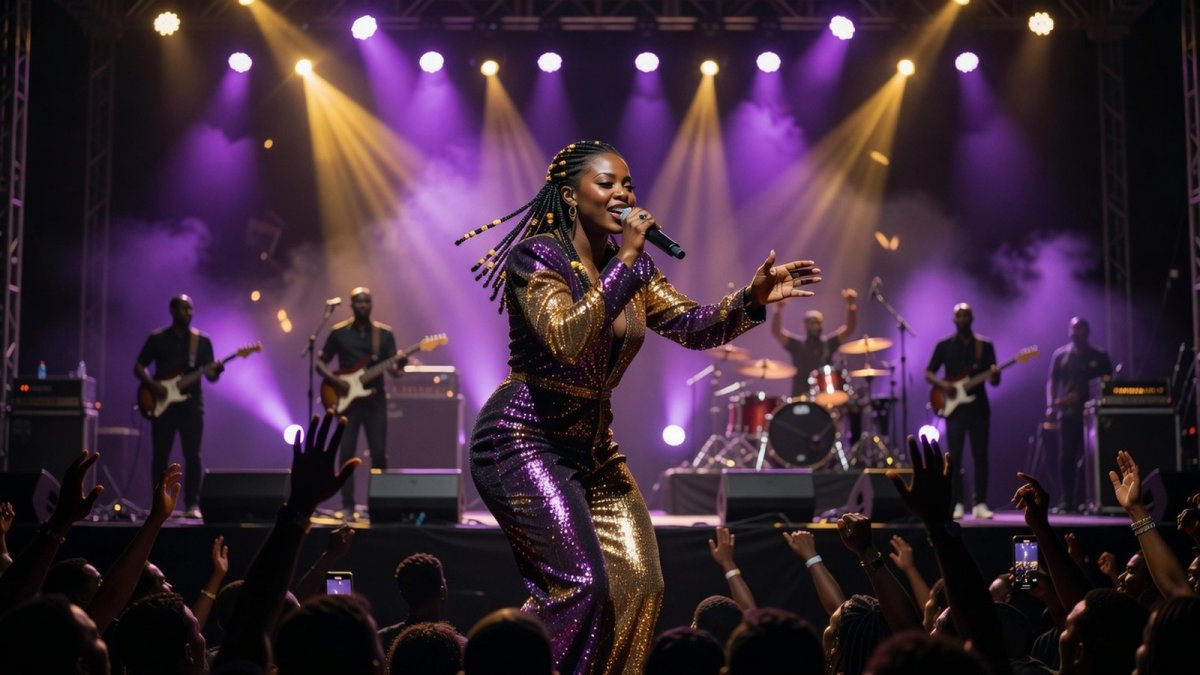
She is the Nigerian singer who teased Stevie Wonder, survived major surgery days before an album release, and is now carrying the hopes of a continent on her shoulders. Ayra Starr's third album, Starrgirl, arrives with the weight of expectation — and the confidence of an artist who refuses to be boxed in.
Ayra Starr: Afrobeats' Fearless New Voice
Lagos, Nigeria — There is resilience, and then there is Ayra Starr. Two weeks before the release of her new album, the multiple Grammy and Mobo Award nominee posted a photo from a hospital bed after undergoing "major surgery." She told fans the recovery was "more complicated than they expected," without disclosing the nature of the procedure. Within seven days, she was back in the dance studio, rehearsing with a large bandage strapped across her stomach. TV appearances, fan events and live performances followed.
"I'm healing," she told the US breakfast show Today. "I have strength today. I'm so happy I was able to even be here today and be able to do this."
A Star Born in Lagos, Raised on YouTube
Discovered singing covers on YouTube at just 18, Ayra Starr has since become a defining force in Afrobeats' global explosion. She made history as the first African woman to win Best International Act at the Mobo Awards, and the first Nigerian woman to surpass one billion video views on YouTube. In 2024, she became the first Afrobeats artist to play Glastonbury's Pyramid Stage — finishing her set with a bold declaration that she would return as a headliner.
Her rise mirrors the broader story of African music's conquest of the world stage. From Lagos to London to New York, the rhythms of the continent are no longer a niche interest — they are the soundtrack of a generation. Starr sits at the centre of this movement, carrying the torch alongside peers like Tyla, Rema and Wizkid, while blazing her own path with a sound that defies easy categorisation.
The Stevie Wonder Call That Almost Went Wrong
Starr's confidence is matched only by her sense of humour — so dry it could soak up a tsunami. When music legend Stevie Wonder phoned to congratulate her on a Grammy nomination, she did not respond with the usual reverence. Instead, she goaded him into a playful argument about zodiac signs.
"I was trying to one-up him every single time, and he was trying to one-up me. It was almost like a battle," she recalls. Starr eventually told Wonder, a Taurus, that "Tauruses ain't crap."
"I'm sure he was like, 'Who is this? What do you want from me?' But it was a very cute conversation. I respect it."
It is an unorthodox approach to making friends, but it seems to work. Starr was invited to support Coldplay on their Music of the Spheres tour, and Chris Martin gave feedback on songs from her second album, The Year I Turned 21. Her collaborators now read like a who's who of global pop: Coldplay, Tyla, David Guetta, Le Sserafim and Kelly Rowland from Destiny's Child.
New York, New Beginnings and a New Sound
Her new album, Starrgirl, is her first under a new management deal with Jay-Z's Roc Nation, and follows a relocation to New York. Leaving Lagos was a big upheaval, she confessed in an essay posted to her Substack last year.
"New York is basically a walk-in freezer with rent," she wrote. "It's so cold it feels like the city is actively trying to unalive my motivation… I'm not scared, I promise."
Behind the move was a desire to explore new influences and expand her sound. The result is a track like Where Do We Go, which marries a sashaying Afrobeats rhythm to a hypnotic electronic pulse.
"Like, the rebel I am, I love to juxtapose," she says. "I don't like being normal and boring. So the idea of writing a heartbreak song on a beat like that, where you can dance to it, was just very enticing. I love things like that."
A Secret Relationship and the Cost of Settling
The lyrics of Where Do We Go were inspired by a secretive relationship "that was stuck in a rut but I kept coming back to it." Starr admits the thought of starting over with someone else filled her with fear.
"You're back to square one, and somebody's asking for your favourite colour again. I'm like, 'Oh my God! Can we, like, not do that?'"
But the problem with staying in the relationship was the way it affected the rest of her life. "You keep accepting things lower than your standard, and that influences every single thing in your life — because when you let yourself go, romantically and emotionally, it affects you physically, and the music, and all of that. So even though I enjoyed [the romance] while it lasted, I picked my priorities and what was most important to me. And that relationship wasn't as important as the music... or anything else."
Breaking Free from Expectations
The story could act as a metaphor for the entire album. After the runaway success of her breakout single Rush and her second album, The Year I Turned 21, Starr was beginning to feel trapped by other people's expectations.
"Just like any other artist, you get put in a box," she has said. The new album boasts collaborations with Afrobeats legends Wizkid and Rema, as well as One Direction's Zayn Malik and rising R&B singer KWN. It is a statement of intent — a refusal to be defined by past successes or the narrow categories the global music industry tries to impose on African artists.
Starr's journey is emblematic of a broader shift in the creative economy across the continent. African artists are no longer just exporting their music — they are shaping the global conversation, setting trends, and building sustainable careers on their own terms. From Lagos to Dakar to Nairobi, a new generation of musicians, producers and entrepreneurs is proving that African creativity is not just a cultural force, but an economic one.
A Star Who Exists in Multitudes
Starr pitches up to interviews with a sort of celestial confidence. She is given to grand proclamations like "I'm unstoppable" or "I will exist in multitudes." But somehow, she never sounds arrogant or conceited. Perhaps that is because of the humour, the self-awareness, and the sheer hard work that underpins everything she does.
She is not just a musical prodigy — she studied for a degree in International Relations and Political Science at the age of 14. That intellectual grounding shows in the way she talks about her craft, her career and her place in the world.
As Starrgirl hits the airwaves, one thing is clear: Ayra Starr is not just riding the wave of Afrobeats' global rise. She is helping to shape where it goes next. And if her track record is anything to go by, she will not be satisfied until she is standing at the very top — headlining Glastonbury, collecting Grammys, and proving that a girl from Lagos can indeed exist in multitudes.
By Amara Diop, Staff Writer
This article was produced with AI-assisted research and editorial support. Sources: BBC News
What's Your Reaction?
 Like
0
Like
0
 Dislike
0
Dislike
0
 Love
0
Love
0
 Funny
0
Funny
0
 Wow
0
Wow
0
 Sad
0
Sad
0
 Angry
0
Angry
0

West Africa/Sahel Correspondent at Global1.News. Dakar-based journalist covering politics, security, climate, and development across Francophone and Anglophone West Africa. Tells the stories of a region undergoing profound transformation.














Comments (0)