
Zambia’s Unfinished Business: A Former President’s Unburied Body and a Nation at a Crossroads
More than eight million Zambians vote on 13 August as former President Edgar Lungu's unburied body fuels a bitter political dispute, complicating Hakainde Hichilema's re-election bid amid a cost-of-living crisis.
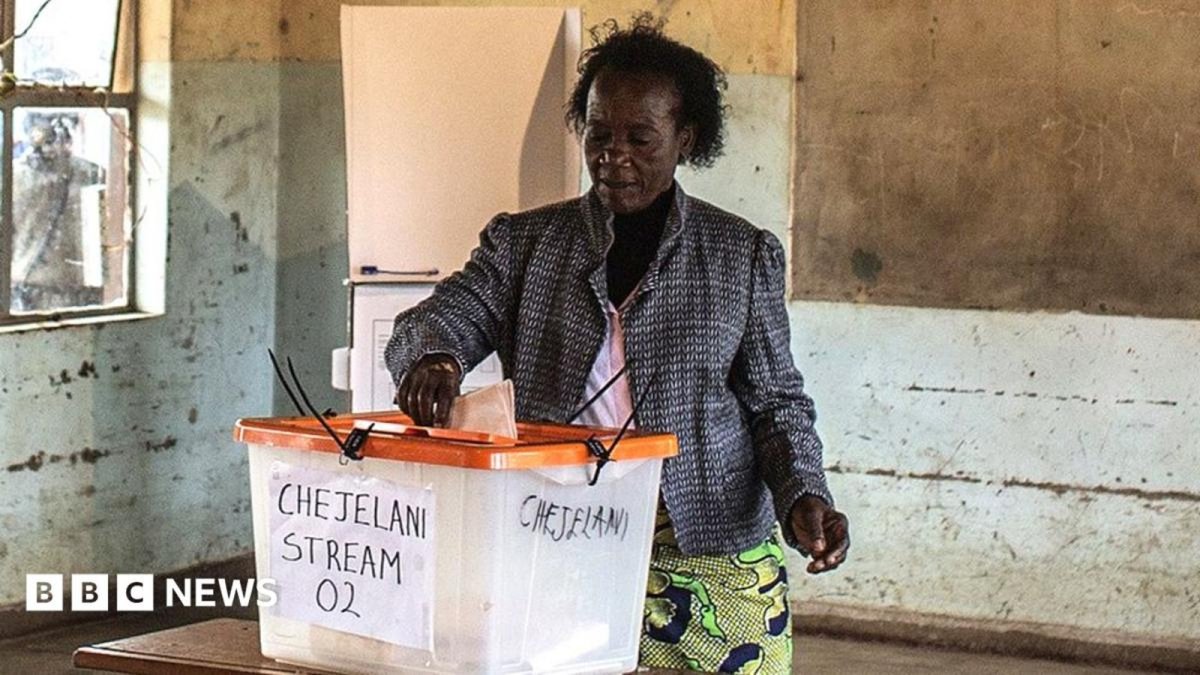
In the bustling markets of Lusaka, where campaign jingles compete with the hum of commerce, a sombre question hangs over the 2026 election season: where is the body of former President Edgar Lungu? More than a year after his death in South Africa, his remains lie unburied, a bitter family dispute that has become a potent political symbol, sharpening divisions and complicating President Hakainde Hichilema’s bid for a second term. As more than eight million registered voters prepare to deliver their verdict on 13 August, this is not merely a contest of policies, but a referendum on dignity, memory, and the very soul of Zambian democracy.
The Spectre of the Former President
The political landscape has been reshaped by the passing of Edgar Lungu on 5 June last year. The courts had ruled he could not seek a third term, but his death removed the opposition’s most recognisable figure, leaving a vacuum filled by a late surge of support for the opposition National Reconciliation Party for Unity and Prosperity (NRPUP). The unresolved dispute over Lungu’s burial—his family adamantly refusing President Hichilema’s involvement—has energised support for the opposition, particularly in the northern half of the country, the traditional stronghold of Lungu’s Patriotic Front (PF). The row has become a symbol of perceived disrespect, resonating in a culture where the veneration of elders and sacred burial rites are paramount — a sentiment familiar across West Africa, including Senegal.
This has complicated the second-term bid of Hichilema and his United Party for National Development (UPND), which draws its core support from the south, west and north-west. What many expected to be a straightforward contest has been transformed by Lungu’s death, the late surge of opposition challenger Brian Mundubile, persistent cost of living pressures and questions about electoral credibility. The battle plays out on the streets of Lusaka: campaign songs over the hum of busy markets, election posters on lamp posts and billboards.
The Weight of the Kwacha and the Cost of Living
The dominant conversation on street corners and in minibus taxis is not constitutional reform or foreign reserves, but the cost of living. Annual inflation has cooled to around 6.6%, its lowest in eight years, and the kwacha has strengthened, but for many households the relief remains theoretical. Given Kangwa, a 27-year-old flour-mill worker in Lusaka City Market, is paid about 3,000 kwacha ($157) a month, barely enough for food and rent. "The cost of living, I cannot say is okay," he says. Theresa Zulu, a street-food seller, adds, "Money has become so hard to come by. We are trying to stay strong to survive."
The statistics are stark: cooking oil has risen by more than 70% over the past five years. A severe drought in 2024-2025 slashed hydropower generation, creating power outages of up to 20 hours a day in parts of the country. The government has since ramped up costly electricity imports and accelerated solar projects, but the pain of the past two years is fresh in voters' minds. This economic anxiety is the backdrop against which all political promises are measured, a reality that connects Zambia to the wider continental struggle for a decent livelihood.
Hichilema’s Record: A Defence of Change
President Hichilema defends his record with the confidence of a man who inherited a nation in crisis. "We inherited a broken-down country… the economy was declining," he argues. When he took office in 2021, Zambia was in debt distress. The restructuring of more than $13bn in external debt has produced annual savings of roughly $1.9bn, according to the president, money going into investment expenditure such as free education. The free education policy covering primary and secondary levels has brought millions of children back into classrooms, a transformative achievement for a young continent.
Thousands of teachers and health workers have been hired. Constituency development funds have been sharply increased. Copper production has recovered strongly, foreign reserves have climbed to record levels and investor confidence has returned. Unemployment measured by the statistics agency has fallen from 13% to 11% over four years. Yet critics counter that the benefits have yet to reach enough families. There are also concerns from civil society groups that despite Hichilema's promises of a more open democracy, some opposition figures have been silenced after being convicted of hate speech, a worrying trend for those who see a vibrant opposition as democracy's lifeblood.
The Rise of Brian Mundubile and a Generational Pitch
The opposition’s hopes now rest on the shoulders of Brian Mundubile, a 55-year-old lawyer, accountant and former government chief whip under Lungu. In weeks from filing his nomination papers in May, Mundubile's popularity grew as presidential candidate of the Tonse-Pamodzi Alliance, running under the previously unknown NRPUP banner. His running mate is Makebi Zulu, a lawyer closely associated with the Lungu family. Mundubile’s pitch is generational and inclusive, a deliberate appeal to a nation where the median age is under 18. "We are moving the women and the youth from the margins to the centre of policy and economic transformation… I'm positioning myself as president as big brother to the youth," he says.
His message is resonating. Second-hand clothes seller Enock Mabenga backs Mundubile "because we want to improve our lives". The promise of a dignified burial for Lungu is a central pillar of his campaign, a pledge that carries immense weight in a society where the final journey of a leader is a matter of national honour. But not everyone is convinced. Edith Muntanga, in her late 30s, is cautious: "I wouldn't love to see them come back in the first place because we gave them a chance to rule the country and we saw what they did." This tension between the desire for change and the fear of repeating past mistakes is the crux of this election.
A New Constitutional Dawn for Representation
This election is the first under significant constitutional changes enacted in late 2025, a landmark reform aimed at boosting the voice of youth and women. A mixed-member system for the National Assembly has been introduced: most seats remain constituency-based, but some will now reflect the proportion of votes each party gets. Constituency seats expand from 156 to 226, plus 40 seats via proportional representation: 20 for women, 15 for youth (under 35) and five for persons with disabilities. It is a bold experiment in inclusive governance for a continent whose future depends on all its citizens.
However, the presidential race itself remains a male-dominated arena. Of the 14 presidential candidates cleared by the electoral commission, only one is a woman — independent Given Katuta. To win in the first round a candidate needs more than 50% of votes cast; a second round would be triggered within 37 days, a distinct possibility with such a fragmented field. The new system is a step forward, but the journey to full representation is far from over, a challenge that echoes across a continent where women's political participation lags behind their contributions.
Questions of Credibility and the Electoral Commission
Amidst the policy debates and campaign promises, a more fundamental question looms: can the election be trusted? Civil society has raised integrity concerns. Linda Kasonde, human rights activist and former president of the Law Association of Zambia, questioned the composition of the electoral commission, saying some members "are actually politically aligned to the incumbent ruling party and are not seen to be independent". It is a serious accusation at the heart of democratic legitimacy. The commission rejects the accusations, saying it operates strictly "within a constitutional mandate [and] adheres to principles of transparency and independence".
Zambia has a proud record of peaceful elections and democratic transfers of power, a history invoked by all sides. This legacy is a beacon of stability in a region that has seen its share of turmoil. The challenge for the commission is to ensure that this legacy is upheld, that the process is seen to be fair by all parties. The combination of a deeply emotional issue like Lungu’s burial, economic hardship, and questions about institutional neutrality has created a volatile mix that makes this contest harder to predict than any in recent memory.
A Verdict on 13 August
As the campaign enters its final days, the mood in Zambia is a complex tapestry of hope, anxiety, and determination. The unfinished story of a former president’s final resting place has become a metaphor for the nation's search for closure. The economic pressures are real, but so is the resilience of the Zambian people, their commitment to the democratic process, and their profound respect for the past even as they look to the future. On 13 August, Zambians will deliver their verdict. The choice is between two visions of how to honour the past, manage the present, and build a future worthy of the nation’s promise. The continent will be watching closely.
By Amara Diop, Staff Writer
This article was produced with AI-assisted research and editorial support. Sources: BBC Africa.
What's Your Reaction?
 Like
0
Like
0
 Dislike
0
Dislike
0
 Love
0
Love
0
 Funny
0
Funny
0
 Wow
0
Wow
0
 Sad
0
Sad
0
 Angry
0
Angry
0
West Africa/Sahel Correspondent at Global1.News. Dakar-based journalist covering politics, security, climate, and development across Francophone and Anglophone West Africa. Tells the stories of a region undergoing profound transformation.









Comments (0)