
Broken CCTVs at NAIA flagged
When the Manila International Airport Authority (MIAA) admitted that several closed‑circuit television (CCTV) cameras at Ninoy Aquino International Airport (NAIA) are out of order, the revelation struck a chord far beyond the terminal walls.
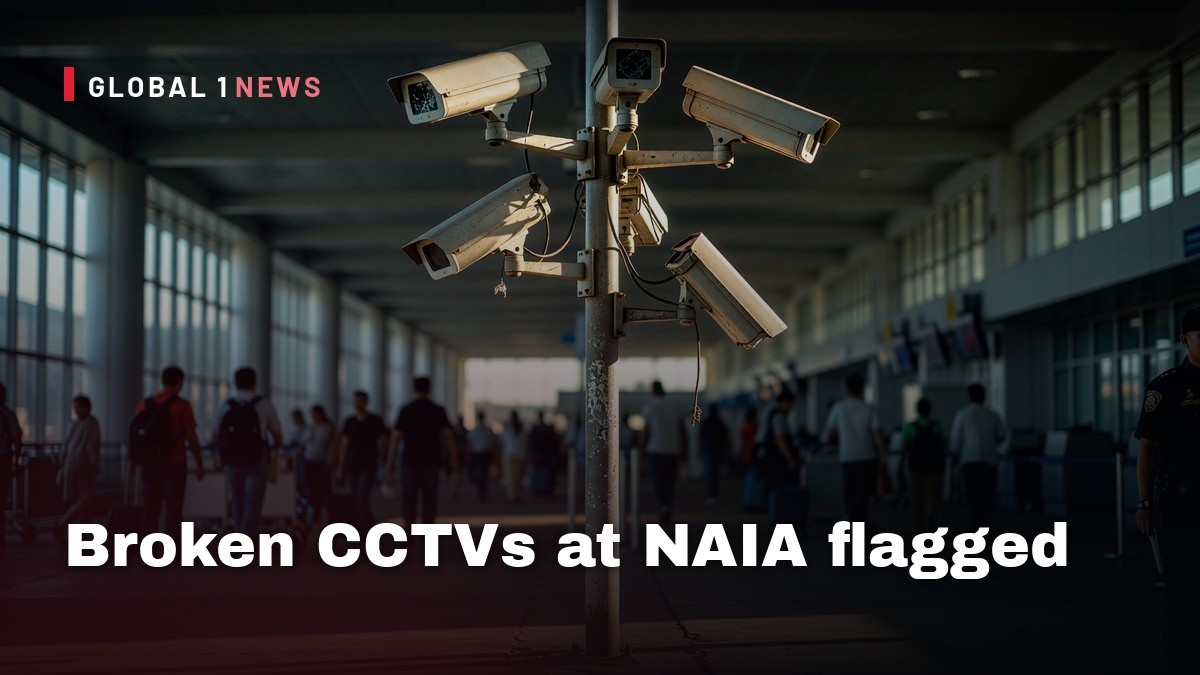
When the Manila International Airport Authority (MIAA) admitted that several closed‑circuit television (CCTV) cameras at Ninoy Aquino International Airport (NAIA) are out of order, the revelation struck a chord far beyond the terminal walls. The disclosure came during a Senate public services committee hearing, where the issue was linked to a high‑profile loss of three luxury watches worth millions of pesos. For ordinary Filipinos who rely on NAIA as the gateway to the world—whether as overseas Filipino workers (OFWs) heading home for Pasko, families traveling for work, or merchants moving goods across borders—the broken cameras raise unsettling questions about safety, accountability and the ongoing privatization of the nation’s busiest airport.
Broken cameras expose a blind spot in airport security
At the hearing, MIAA assistant general manager Antonio Mendoza confirmed that a number of CCTV units are not functioning. The cameras in question are located in the transport network vehicle service pick‑up area of Terminal 1, a zone that handles the constant flow of passengers boarding taxis, Grab cars and other ride‑hailing services. French national Anthony Claude Boukhors, who lost a luggage containing three luxury watches, testified that the area had “zero cameras.” His remarks underscored a stark contrast: a modern, five‑year‑old CCTV system that nonetheless leaves critical zones unmonitored.
The absence of surveillance in such a high‑traffic area is more than an inconvenience; it creates a security vacuum where theft and other crimes can occur unchecked. For travelers, especially those carrying valuable items or traveling with limited cash, the knowledge that a blind spot exists can erode confidence in the airport’s ability to protect them. In a country where many families depend on the remittances of OFWs, a single loss can ripple through households, turning a momentary inconvenience into a lasting hardship.
The Senate’s swift response and the 48‑hour ultimatum
Senator Raffy Tulfo, chair of the public services committee, responded to the revelations with a decisive 48‑hour ultimatum. He demanded that both MIAA and the New NAIA Infra Corp. (NNIC)—the private entity currently taking over portions of the airport’s infrastructure—submit a comprehensive status report on the CCTV system and ensure that all cameras are operational. Tulfo’s urgency reflects the anticipated surge in passenger traffic around All Saints’ Day and All Souls’ Day, holidays that traditionally see a spike in domestic travel as families visit relatives and attend religious observances.
The timing of the ultimatum is significant. With the holiday season approaching, the airport is expected to handle a higher volume of passengers, many of whom are traveling for family reunions or to attend mass in their hometowns. Any lapse in security during this period could exacerbate the already heavy burden on families who rely on safe and reliable travel. By pressing for an immediate report, the Senate is not only addressing a technical malfunction but also safeguarding the broader public interest during a peak travel window.
Privatization in transition: NNIC’s role and challenges
The hearing also highlighted the ongoing transition of NAIA’s operations to a private consortium. NNIC, the New NAIA Infra Corp., has begun taking over some of the airport’s equipment as part of the broader privatization plan approved by the government. While privatization promises upgraded facilities and modernized services, the current malfunction of CCTV cameras illustrates the growing pains of such a shift.
As NNIC assumes responsibility for critical infrastructure, its ability to promptly repair or replace broken cameras will be a litmus test for the privatization agenda. The public expects that private sector involvement will translate into better security, smoother passenger flow, and overall improved airport experience. Any delay or oversight, however, may fuel skepticism among commuters and stakeholders who fear that profit motives could outweigh public safety concerns.
From loss to recovery: Tulfo’s investigative push
Senator Tulfo’s involvement did not stop at the hearing. He leveraged his public service program to aid in the recovery of Boukhors’ stolen watches. According to the hearing record, a tipster helped authorities track down the suspect, identified as Raymond Sarmiento, who allegedly sold the three timepieces in Baclaran for a modest sum. The recovered watches, originally valued at a substantial amount, were reportedly reclaimed through Tulio’s efforts.
This episode underscores the power of investigative journalism and public service programming in bridging gaps left by institutional shortcomings. While the CCTV malfunction created a blind spot that enabled the theft, the subsequent tip and recovery illustrate how community vigilance and media involvement can compensate for systemic lapses. For ordinary Filipinos, such stories reinforce the belief that collective action—whether through barangay watch groups, tip lines, or citizen journalism—remains a vital safeguard against crime.
Impact on everyday travelers and the broader public
Beyond the high‑profile case of a foreign national’s lost watches, the broken cameras affect everyday Filipinos who navigate NAIA’s bustling terminals. Many passengers travel with limited luggage, often carrying essential documents, modest cash, or small but valuable items like smartphones and personal mementos. A malfunctioning surveillance system can make them vulnerable to petty theft, especially in congested pick‑up zones where crowds can obscure suspicious activity.
Moreover, the incident shines a light on the broader issue of airport infrastructure maintenance. If a five‑year‑old CCTV system already has blind spots, travelers may wonder about the condition of other critical facilities—runway lights, fire safety equipment, or even the cleanliness of restrooms. Such concerns can influence public perception of the airport’s overall readiness, potentially affecting tourism, business travel, and the confidence of overseas Filipinos planning to return home.
Calls for accountability and systemic improvement
The Senate’s demand for a status report is a step toward accountability, but civil society groups and commuter advocates are likely to push for more concrete measures. Stakeholders may call for regular audits of airport security equipment, transparent reporting of maintenance schedules, and a clear timeline for fixing identified deficiencies. In the Philippines, agencies such as the Department of Transportation (DOTr) and the Civil Aviation Authority of the Philippines (CAAP) could be urged to oversee compliance and ensure that privatization does not dilute safety standards.
Community‑based initiatives, such as barangay watch programs near airport perimeters or volunteer “eyes on the ground” campaigns, could also complement official efforts. By fostering a culture of collective vigilance, the public can help fill gaps while awaiting systematic upgrades. Such grassroots involvement aligns with the Filipino spirit of bayanihan—working together for the common good.
Looking ahead: Lessons for future airport upgrades
The broken CCTV episode offers a cautionary tale for upcoming infrastructure projects across the archipelago. As the government continues to modernize airports in Clark, Cebu, and Davao, ensuring that surveillance and security systems are fully functional from day one will be essential. Lessons learned from NAIA’s blind spots can inform procurement processes, maintenance contracts, and the integration of technology with on‑the‑ground personnel.
Ultimately, the incident reminds us that technology alone cannot guarantee safety; it must be paired with robust oversight, transparent reporting, and community involvement. For the millions of Filipinos who rely on air travel—whether to reunite with family, seek employment abroad, or conduct business—the assurance that every corner of an airport is monitored is a fundamental expectation. As the Senate monitors the MIAA and NNIC’s response, the hope is that swift action will restore confidence and set a higher standard for airport security nationwide.
This article was produced with AI-assisted research and editorial support. Reporting is based on the source material cited below. Sources: Philstar.com; Global1.News (29 October 2026).
By Bella Reyes, Staff Writer
What's Your Reaction?
 Like
0
 Dislike
0
 Love
0
 Funny
0
 Wow
0
 Sad
0
 Angry
0

Philippines/Southeast Asia Correspondent at Global1.News. Manila-based journalist covering Philippine politics, environment, maritime security, and social issues. Passionate about marine conservation and the communities protecting the Philippines' natural heritage.















Comments (0)