
Britain's Gulf Gambit: Can Saudi Arabia's Vision 2030 Offset the Brexit Drag?
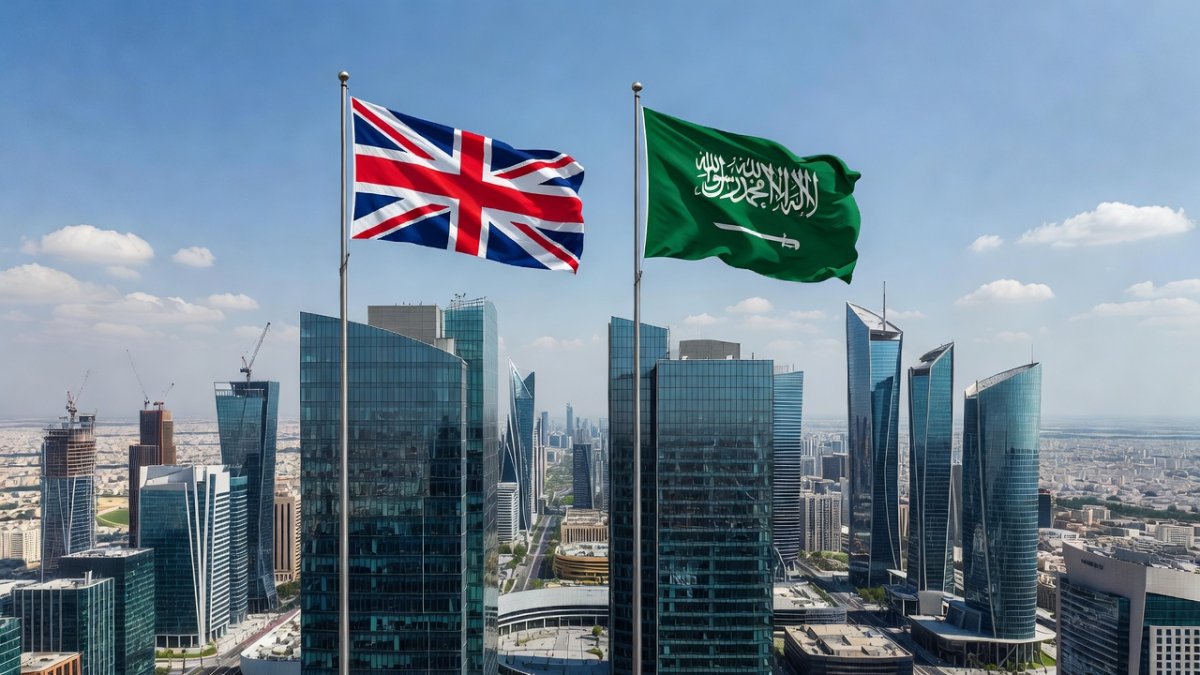
As Britain grapples with the persistent economic aftershocks of its 2016 decision to leave the European Union, a quiet but significant recalibration is underway in the Gulf. With new figures indicating that Brexit continues to cost the UK billions in lost exports, London is increasingly looking eastward—not toward Brussels, but toward Riyadh and the broader Gulf Cooperation Council (GCC).
As Britain grapples with the persistent economic aftershocks of its 2016 decision to leave the European Union, a quiet but significant recalibration is underway in the Gulf. With new figures indicating that Brexit continues to cost the UK billions in lost exports, London is increasingly looking eastward—not toward Brussels, but toward Riyadh and the broader Gulf Cooperation Council (GCC). The visit this week of UK Minister of State for Trade Lord Anas Sarwar to the Saudi capital underscores a strategic pivot that is as much about economic survival as it is about geopolitical repositioning in a region where the United States, China, and Europe are all vying for influence.
Britain’s Gulf Gambit: Can Saudi Arabia’s Vision 2030 Offset the Brexit Drag?
[Riyadh, Saudi Arabia - September 1, 2026] — Lord Anas Sarwar, the UK’s newly appointed Minister of State for Trade, spent his first full week in office on the road in Riyadh, meeting with Gulf Cooperation Council Secretary General Jasem Mohamed Albudaiwi and Saudi Minister of State for Foreign Affairs Adel Al-Jubeir. The itinerary was deliberate: Britain is seeking to convert a decade of political turbulence with Europe into a new era of commercial opportunity in the Gulf, and Saudi Arabia’s Vision 2030 economic transformation is the centerpiece of that ambition.
Geopolitical Context: Britain’s Post-Brexit Pivot to the Gulf
The economic arithmetic is stark. More than a decade after the UK voted to leave the European Union, new figures suggest Brexit is costing Britain billions of pounds in lost exports, with businesses continuing to face significant friction in trading with Europe. In this context, the Gulf has emerged as a critical alternative market. UK trade with the GCC bloc is currently worth approximately US$73 billion (about £57 billion) annually, making the bloc the UK’s seventh largest trading partner. But London believes the ceiling is far higher.
The centerpiece of this strategy is the landmark free trade agreement concluded in principle between the UK and the GCC on May 20, 2026—the first comprehensive FTA between the GCC and a G7 country. While the agreement is not yet signed or in force, the UK government estimates it could boost bilateral trade by around 16% and add US$2.1 billion to the British economy in the long term. For a country still nursing the wounds of Brexit, these figures represent a tangible lifeline.
Lord Sarwar’s visit, which included a meeting with GCC Secretary General Albudaiwi at GCC headquarters in Riyadh on August 31, was framed around the opportunities presented by Saudi Arabia’s rapidly diversifying economy. In an exclusive interview with Al Arabiya English from the British Embassy in Riyadh, Sarwar highlighted the Kingdom’s growing artificial intelligence and technology sector as a key area for greater investment between the two countries. The message from London is clear: the Gulf is not just a market for British goods, but a partner in building the industries of the future.
Historical Background: From Empire to Economic Partnership
The UK’s relationship with the Gulf is neither new nor superficial. From the era of the British protectorates in the Trucial States to the post-oil discovery alliances of the mid-20th century, Britain has maintained a deep, if evolving, footprint in the region. For decades, the Gulf was primarily important to London as a source of energy security and a market for arms sales. The UK’s historical ties with Saudi Arabia, in particular, have been characterized by a pragmatic partnership that has weathered political storms, from the Balfour Declaration’s regional aftershocks to the more recent controversies over arms exports to the Saudi-led coalition in Yemen.
However, the current phase of the relationship marks a departure from the transactional dynamics of the past. The UK’s departure from the EU forced a fundamental rethink of its trade policy, and the Gulf—with its vast sovereign wealth funds and ambitious infrastructure plans—has become a natural target. The May 2026 FTA, once implemented, would represent the most significant institutional upgrade in UK-Gulf economic relations in decades. It is a signal that London is willing to invest political capital in a region that was once seen as a secondary priority to the European single market.
Vision 2030: The Saudi Transformation
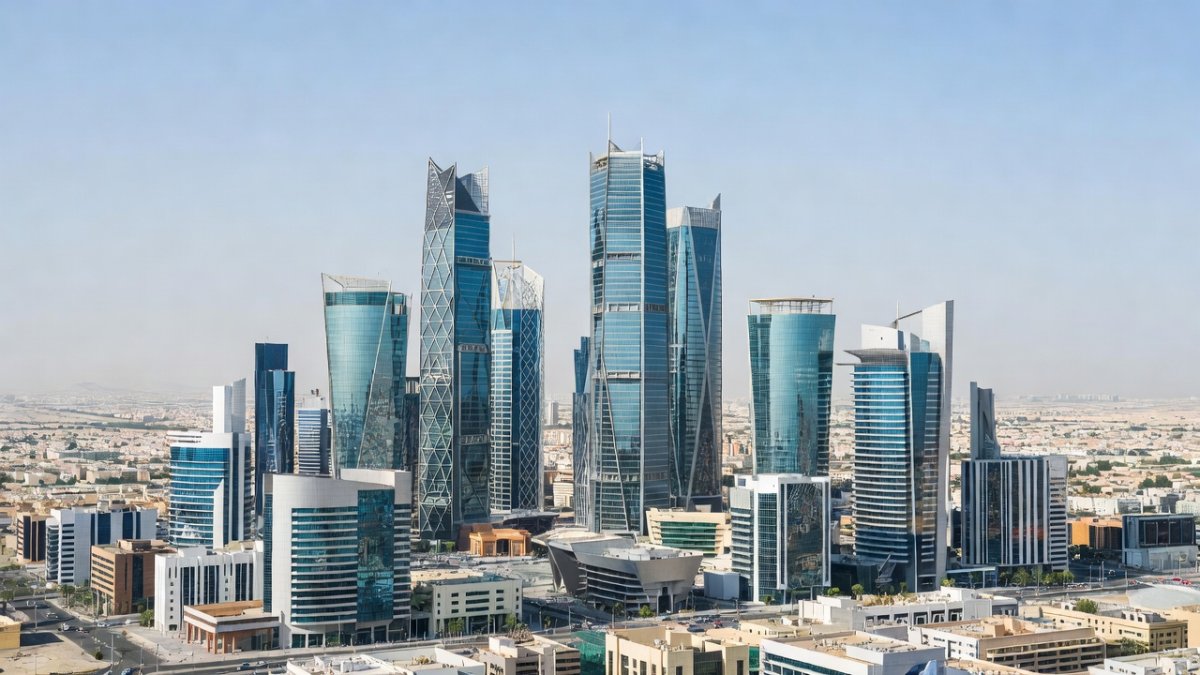
At the heart of this renewed partnership is Saudi Arabia’s Vision 2030, the ambitious national transformation plan launched by Crown Prince Mohammed bin Salman. The initiative, now in its second decade, aims to reduce the Kingdom’s dependence on oil, diversify its economy, and develop public service sectors including health, education, infrastructure, recreation, and tourism. The scale of the ambition is staggering: giga-projects like NEOM, the Red Sea development, and Qiddiya are reshaping the Saudi landscape, while the Kingdom is aggressively courting foreign investment in artificial intelligence, renewable energy, and advanced manufacturing.
For British businesses, the opportunities are manifold. Saudi Arabia’s AI and technology sector, in particular, is a focus of Lord Sarwar’s visit. The Kingdom has made no secret of its desire to become a regional hub for AI innovation, and British expertise in fintech, cybersecurity, and data analytics is highly complementary to Saudi ambitions. The UK government’s July 2026 announcement of more than £360 million in new joint UK-Saudi investment, creating hundreds of jobs on both sides, is a concrete indicator of the momentum. But the relationship is not one-sided. Riyadh wants more than just British goods; it wants British knowledge, technology transfer, and long-term partnership in building a post-oil economy.
Regional Dynamics: Great Power Competition in the Gulf
The UK’s push into the Gulf comes at a time of intense great power competition in the region. The United States, while still the dominant security guarantor, has shown signs of strategic retrenchment in the Middle East, focusing more on the Indo-Pacific. China, meanwhile, has deepened its economic engagement with the Gulf, particularly in energy and infrastructure, culminating in the China-GCC FTA negotiations that have been ongoing for years. Europe, led by France and Germany, has also sought to expand its footprint, though with less coherence than London’s current approach.
In this context, the UK-GCC FTA is more than a trade agreement; it is a strategic statement. By concluding the first comprehensive FTA between the GCC and a G7 country, London has positioned itself as a bridge between the West and the Gulf, offering a level of regulatory alignment and investment protection that Beijing and Brussels have yet to match. For Saudi Arabia, the FTA provides leverage in its own negotiations with other powers, signaling that the Kingdom can choose its partners based on merit rather than obligation. The timing is also significant: as the US re-evaluates its commitments and China faces its own economic headwinds, the Gulf is diversifying its partnerships, and Britain is eager to fill any vacuum.
Strategic Calculus: What Each Side Wants
Beneath the diplomatic pleasantries lies a hard-nosed strategic calculus. Britain wants access to Saudi Arabia’s vast capital reserves and its giga-project procurement pipeline. With the UK economy still struggling to find post-Brexit growth, Gulf investment is seen as a critical source of job creation and innovation. The £360 million joint investment package announced in July is a down payment on a much larger ambition. London also wants to position the UK as a gateway for Gulf investment into Europe, leveraging its financial services sector and legal system to attract Saudi and Emirati capital.
Saudi Arabia, for its part, wants more than just British goods. Riyadh is seeking a reliable Western partner that can provide technology, expertise, and political cover as it navigates a volatile region. The UK, with its permanent seat on the UN Security Council and its close ties to Washington, offers a degree of diplomatic heft that other European nations cannot match. Moreover, the FTA provides Saudi Arabia with a template for its own economic integration, helping to standardize regulations and attract foreign direct investment. The Kingdom is also keen to diversify its own investment portfolio, and British assets—from infrastructure to technology startups—offer attractive returns.
The second-order effects of this partnership are significant. A deeper UK-Saudi economic relationship could reshape the balance of power within the GCC, encouraging other member states to pursue similar agreements with Western partners. It could also accelerate the pace of Saudi economic reform, as the Kingdom seeks to meet the standards required by its new trading partners. For the region as a whole, the UK-GCC FTA represents a test case for whether Gulf states can successfully integrate into the global economy on their own terms, rather than as mere suppliers of energy.
Regional Implications: A Test Case for Gulf Economic Diplomacy
Looking forward, the UK-Saudi trade relationship is likely to be a bellwether for the broader Gulf’s economic diplomacy. If the FTA is signed and implemented as expected, it could pave the way for similar agreements with other major economies, including India, South Korea, and potentially even the United States. The Gulf states are increasingly confident in their ability to negotiate on equal footing with global powers, and the UK-GCC agreement is a testament to that confidence.
However, challenges remain. The FTA is still not in force, and the details of its implementation—particularly around services, digital trade, and intellectual property—will require careful negotiation. Moreover, the UK’s own political instability, which has seen four prime ministers in as many years, raises questions about the durability of its commitments. Yet, the momentum is undeniable. Lord Sarwar’s visit, coming just weeks after the UK government announced the £360 million investment package, suggests that London is serious about making the Gulf a cornerstone of its post-Brexit trade strategy.
For the Middle East, the implications are profound. A stronger UK-Gulf economic axis could provide a counterweight to Chinese and American influence, offering Gulf states more options in their foreign policy. It could also accelerate the region’s economic diversification, as British expertise in finance, technology, and professional services helps to build the non-oil sectors that Vision 2030 envisions. The road ahead is not without obstacles, but the direction of travel is clear: Britain and the Gulf are moving closer together, driven by mutual interest and a shared belief in the power of trade to transform economies.
By Malik Hassan, Staff Writer
This article was produced with AI-assisted research and editorial support. Reporting is based on sources cited in the article.
What's Your Reaction?
 Like
0
Like
0
 Dislike
0
Dislike
0
 Love
0
Love
0
 Funny
0
Funny
0
 Wow
0
Wow
0
 Sad
0
Sad
0
 Angry
0
Angry
0

Middle East Correspondent at Global1.News. Based in Beirut, covering politics, conflict, energy, and society across the Middle East. Brings context and depth to a region often reduced to headlines.













Comments (0)