
Ex-Israeli Officials Call West Bank Settler Violence 'Ethnic Cleansing'
Retired Israeli generals and security chiefs publicly condemn West Bank settler violence as 'ethnic cleansing,' accusing Netanyahu's government of complicity. The rebuke highlights accelerating Palestinian displacement and fractures within Israel's security establishment.
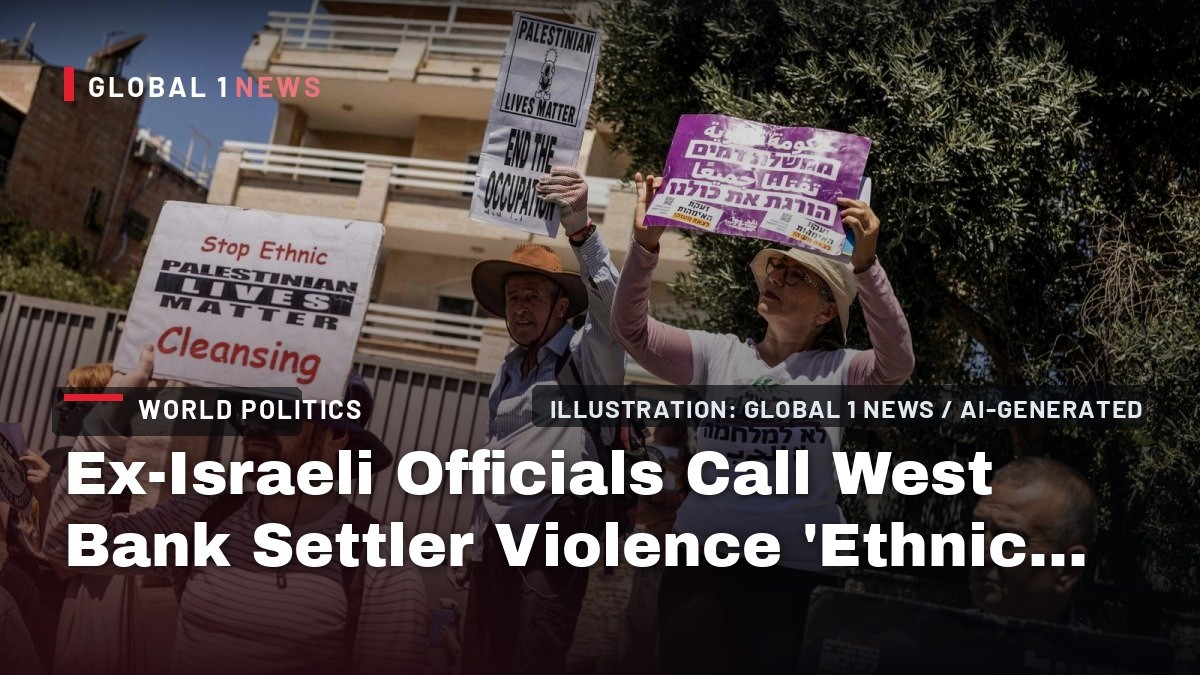
Retired Israeli generals and former security chiefs are publicly breaking ranks, describing a campaign of settler violence in the occupied West Bank in stark terms that have shaken the country's political establishment. Their condemnation, detailed in a New York Times investigation, lands at a moment of acute regional fragility, with the Gaza war's ripple effects still reshaping Israeli-Palestinian dynamics and Arab-Israeli relations.
Ex-Israeli Officials Call West Bank Settler Violence 'Ethnic Cleansing'
Jerusalem – September 1, 2026 — A growing chorus of retired Israeli military and intelligence leaders is accusing extremist settlers of carrying out what they describe as "ethnic cleansing" against Palestinian communities in the occupied West Bank, directly implicating Prime Minister Benjamin Netanyahu's government in the violence. The unprecedented public rebuke, reported by The New York Times, signals a deep fracture within Israel's security establishment over the direction of the occupation and the country's moral trajectory.
Generals Break Ranks Over West Bank Violence
Retired Brig. Gen. Ephraim Sneh, a former Israeli health minister, did not mince words when describing the attacks on Palestinian farmers and shepherds. "This is ethnic cleansing, to put it simply," Sneh told the Times. His assessment was echoed by Maj. Gen. Eyal Ben-Reuven, a former commander of Israel's ground forces who once led a division in the West Bank. Ben-Reuven went further, declaring that settler violence now poses a greater threat to Israel than any external enemy. "This, what the settlers are doing here, is the real threat to Israel," he said. "This is more concerning to me than Iran, Gaza or Lebanon."
The comments came as a delegation of retired generals and former senior officials toured Palestinian villages and encampments to document the impact of the violence. In the West Bank village of Burin, a limping Palestinian farmer named Bashar Eid told the visiting officials that an attack had left him permanently impaired and that repeated assaults prevented him from working his land. "I don't know what to do," Eid said. "They want to take my house."
Displacement and Fear in the Jordan Valley
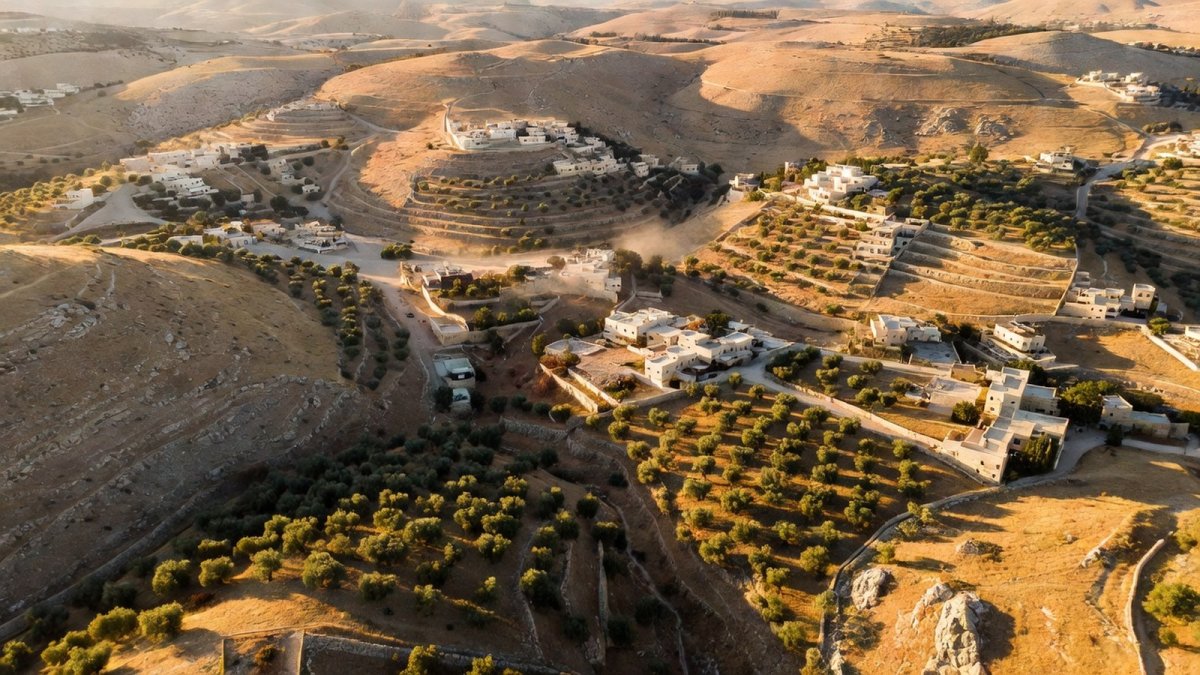
The Times investigation painted a grim picture of life in the Jordan Valley, where Palestinian families have been driven from their homes by nighttime incursions. In the Bedouin encampment of Hamamat al-Maleh, only a few families remained when reporters visited in February. "We don't even sleep an hour," said Mohammad Khalil, 37, a resident. "If they come and you're asleep, you won't survive it." By March, Khalil and the remaining families had also fled following a series of raids, thefts, and attacks.
In another Jordan Valley community, a Palestinian farmer described how an outpost and fencing had cut his family off from their land. "Six months ago, this was our land," he said. "Now, it's like a jail." The accounts underscore a systematic pattern of displacement that UN figures, cited by the Times, suggest is accelerating. More than 3,200 Palestinians have been displaced by settler attacks so far this year — twice the rate recorded in 2025 — while the average number of Palestinians injured in such attacks has risen from one every three days in 2020 to more than three per day in 2026.
The Letter That Shook the Establishment
The retired officials' public statements build on a letter signed by more than 200 prominent Israelis in June, demanding an end to attacks against Palestinian civilians. The signatories included two former prime ministers, more than 30 retired army and air force generals, and former heads of Israel's foreign and domestic intelligence agencies. The letter did not merely condemn the violence; it accused the Netanyahu government of pursuing "a deliberate government policy in which the entire security establishment — including the military, Shin Bet and the police — is knowingly complicit."
The signatories pointed to government funding for illegal settlement outposts and farms, demanding an accounting of public funds used to provide infrastructure and support for them. They also accused Israeli soldiers of sometimes standing by during attacks on Palestinians or participating alongside settlers in assaults on Palestinian communities. The letter called for an end to what it described as "Jewish terrorism" and "ethnic cleansing" in the West Bank.
Moral Language and Historical Echoes
Moshe Ya'alon, a former Israeli army chief of staff and defense minister under Netanyahu, offered a searing critique of the settler ideology driving the violence. "What is Jewish supremacy?" Ya'alon asked. "Eighty years after the Holocaust, 'Mein Kampf' in reverse. The master race is us." His remarks, cited by the Times, drew a direct line between the rhetoric of Jewish supremacy and the historical trauma of the Holocaust, a comparison that has ignited fierce debate within Israeli society.
Asaf Agmon, a retired Israeli Air Force general who joined one of the tours, said the efforts to remove Palestinians from parts of the West Bank reminded him of what Jews endured under Nazi rule, though he stressed he was not comparing the scale of the violence. "Once a society behaves this way," Agmon said, "that society is doomed." These statements, coming from men who spent decades defending Israel, carry a moral weight that transcends partisan politics.
Strategic Implications for Netanyahu's Coalition
The public rupture between the security establishment and the government has profound implications for Netanyahu's political survival. His governing coalition depends on far-right parties whose political base is the settler movement. Finance Minister Bezalel Smotrich and National Security Minister Itamar Ben-Gvir have both advocated for expanded settlement activity and have pushed back against any restrictions on settler behavior. The generals' accusations of government complicity directly challenge the coalition's legitimacy and could embolden centrist and opposition figures to demand a reckoning.
For the Palestinian Authority, the escalating violence presents an existential dilemma. The PA's security coordination with Israel, a cornerstone of the Oslo Accords, has become increasingly untenable as Israeli forces and settlers operate with apparent impunity. The displacement of Palestinian communities in Area C, which constitutes over 60 percent of the West Bank, further erodes the territorial contiguity required for a viable Palestinian state. The PA's inability to protect its citizens undermines its credibility and strengthens the hand of militant factions who argue that only armed resistance can halt the settlement project.
Regional and International Repercussions
The crisis in the West Bank carries significant implications for the broader Middle East. Arab states that normalized relations with Israel under the Abraham Accords — the UAE, Bahrain, Morocco, and Sudan — have watched the settlement expansion with growing unease. Saudi Arabia, which has conditioned any potential normalization on progress toward Palestinian statehood, has repeatedly condemned settler violence. The Trump administration, facing its own domestic pressures and a historic approval slump, has issued muted statements but has taken no concrete action to curb the violence, a stance that regional observers interpret as tacit acceptance.
The international legal dimension is equally fraught. The International Court of Justice's 2024 advisory opinion declaring Israel's occupation unlawful has provided a legal framework for potential sanctions and accountability measures. The generals' use of the term "ethnic cleansing" — a crime against humanity under the Rome Statute — raises the stakes for Israeli officials who may face legal jeopardy in jurisdictions that recognize universal jurisdiction. The United Nations and human rights organizations have documented the pattern of displacement, forced evictions, and violence, creating a growing body of evidence that could support future prosecutions.
The settler violence also complicates Israel's security calculus. The IDF's focus on the Gaza front and the northern border with Lebanon has allowed the West Bank to fester, creating a potential third front that could erupt at any moment. The generals' warning that settler violence is "the real threat to Israel" reflects a strategic assessment that internal decay poses a greater long-term danger than external enemies. The erosion of the rule of law in the West Bank, the blurring of lines between the military and settler militias, and the growing international isolation all threaten the very institutions that have sustained Israel's security for decades.
As the world watches, the question is whether the retired generals' moral clarity can translate into political change. Their words have already reverberated through Israeli society, forcing a national conversation about the nature of the occupation and the values that define the Jewish state. But the levers of power remain in the hands of a coalition that has shown little appetite for restraint. The coming months will test whether Israel's security establishment can reclaim its authority from the settler movement, or whether the "ethnic cleansing" that these generals describe will become an irreversible reality.
This article was produced with AI-assisted research and editorial support. Sources: Daily Sabah, The New York Times.
By Malik Hassan, Staff WriterWhat's Your Reaction?
 Like
0
Like
0
 Dislike
0
Dislike
0
 Love
0
Love
0
 Funny
0
Funny
0
 Wow
0
Wow
0
 Sad
0
Sad
0
 Angry
0
Angry
0

Middle East Correspondent at Global1.News. Based in Beirut, covering politics, conflict, energy, and society across the Middle East. Brings context and depth to a region often reduced to headlines.














Comments (0)