
Bolivia Military Barracks Explosion Kills at Least Two in Viacha
Explosion at Bolivia military barracks in Viacha kills at least two, injures 81; 14 soldiers missing. Health official fears 10-15 dead. Fireworks stored on base; investigation underway. Three days of mourning declared.
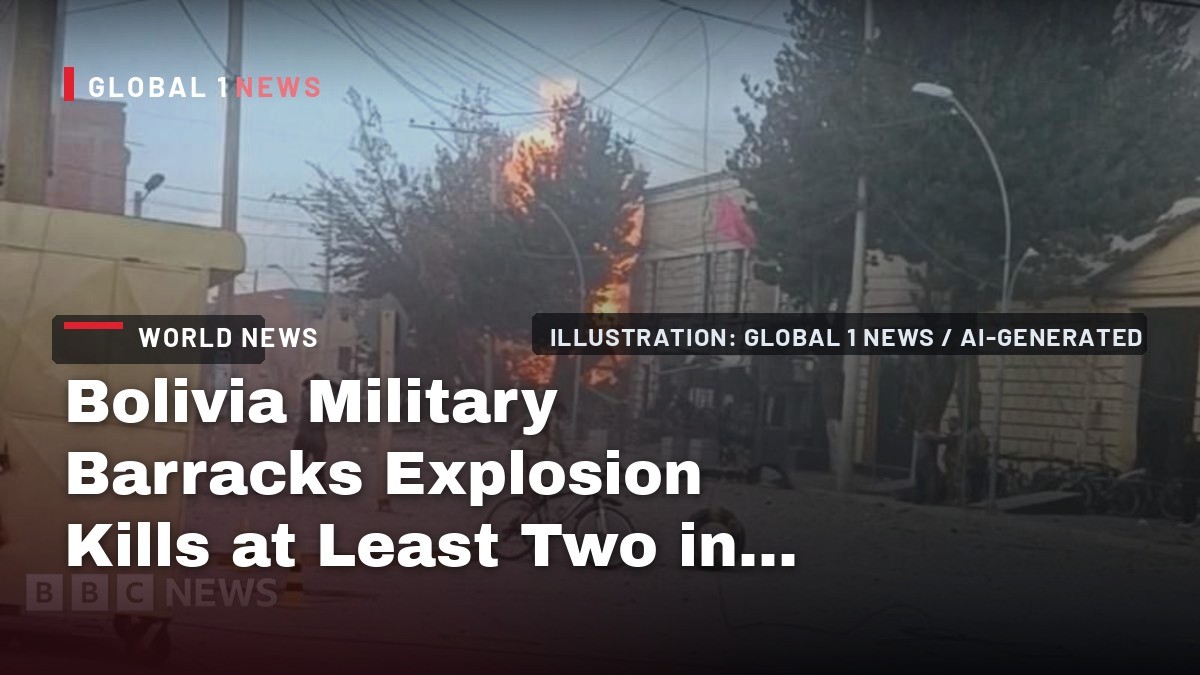
At least two people have been killed and more than 80 injured after an explosion tore through a military barracks in the Bolivian town of Viacha on Saturday, with authorities warning the death toll could rise significantly as rescue teams search through damaged homes and rubble. The blast, which occurred at an artillery regiment base roughly 30 kilometres from La Paz, sent residents running for shelter and damaged dozens of homes in the surrounding neighbourhood. Defence Minister Ernesto Justiniano confirmed the initial casualties, while a regional health official told Reuters that between 10 and 15 people are believed to have died. Fourteen soldiers, including a sergeant and 13 conscripts aged 18 to 19, remain missing.
Viacha, Bolivia — The explosion ripped through the barracks at approximately 14:30 local time on Saturday, when "pyrotechnic material" stored at the facility detonated, according to Defence Minister Justiniano. The blast damaged dozens of homes in the working-class town, which sits on the high plains about 30km west of La Paz and has long been home to military installations near civilian areas. Emergency workers were sifting through rubble late into the evening, while police urged residents to keep their distance amid fears of a secondary explosion.
A Blast That Shook a Quiet Saturday Afternoon
The detonation occurred at a barracks housing an artillery regiment, a fixture in Viacha where military land borders residential streets. Witnesses described people running for shelter as the shockwave rippled through the town, according to video footage aired by local media. Police spokesman Roger Roca told AFP that fireworks had been stored at the barracks, though the precise cause of the blast remains under active investigation. The timing — early afternoon on a weekend — meant many residents were at home, amplifying the risk to civilians in the densely populated area around the base.
Health official Rita Nebraska, speaking to local television, said between 10 and 15 people were believed to have died in the incident, a figure that contrasts with the defence minister's confirmed toll of at least two dead. Nebraska also warned of the potential for further explosions and urged people to remain at least 150 metres from the military base. The discrepancy between official and unofficial casualty figures reflects the chaos of the immediate aftermath, as rescue teams worked to reach those trapped under debris and account for the missing.
The Missing: A Sergeant and 13 Young Conscripts
Base commander Colonel Antonio Amaru told reporters on Saturday that a sergeant and 13 conscripted soldiers aged between 18 and 19 years old were among the missing. These are the youngest members of Bolivia's armed forces, often drawn from rural and working-class communities where military service remains a common path for young men. The loss of so many conscripts in a single incident would mark a devastating blow not only to the regiment but to the families in Viacha and beyond who sent their sons to serve.
The confirmed injured — at least 81 people, per Defence Minister Justiniano — include both military personnel and civilians, though the minister did not provide a breakdown. Emergency workers were treating the wounded as they searched the rubble, with the toll expected to be revised as rescue teams reached those trapped under debris. The gap between the minister's confirmed figure and the health official's warning of a higher death toll reflects how fluid the situation remained hours after the blast.
Official Response and a Promised Investigation
Bolivia's President Rodrigo Paz expressed his "deepest solidarity" with the families of those who had died and been injured, writing on social media that a "thorough, technical and transparent investigation" would take place into what happened. The president's statement signals the political weight of the incident, which comes at a time when Bolivia's military has faced scrutiny over safety protocols and the management of hazardous materials. Defence Minister Justiniano's early confirmation of the death toll and injuries suggests the government is moving to control the narrative, even as the full scale of the tragedy remains unclear.
Police spokesman Roger Roca confirmed that fireworks had been stored at the barracks, raising immediate questions about why such materials were kept on a military base and whether proper safety procedures were followed. The investigation will likely focus on the chain of custody for the pyrotechnics, the conditions under which they were stored, and whether any warnings were ignored. For a country where military installations often sit close to civilian neighbourhoods, the answers will carry implications far beyond Viacha.
Community Impact: Three Days of Mourning in Viacha
Viacha's authorities have declared three days of mourning, a reflection of the town's deep connection to the barracks and the soldiers who serve there. The blast damaged dozens of homes, according to police, and residents in the affected area were seen sifting through debris as emergency workers continued their search. The town, a working-class hub with a history tied to mining, railways and the military, now faces the dual challenge of grieving its dead and rebuilding damaged properties.
Local officials have not yet provided estimates of the number of displaced families or the cost of structural damage, but the scale of the blast suggests significant destruction. The 150-metre exclusion zone imposed around the base has disrupted daily life, with roads closed and businesses shuttered as a precaution. For a community that has long coexisted with the barracks, the explosion represents a rupture of trust — a reminder that the line between military and civilian life can be dangerously thin.
What This Raises for Bolivia
The Viacha explosion is the latest in a series of pyrotechnics-related accidents across Latin America, where fireworks are a staple of festivals and religious celebrations but are often stored and handled with insufficient oversight. In Bolivia, such materials have caused deadly incidents in markets and homes before, but a detonation on a military base raises distinct concerns about institutional protocols. The presence of an artillery regiment — a unit trained to handle explosives — makes the storage of fireworks all the more puzzling to observers.
The investigation promised by President Paz will need to answer not only how the blast occurred but why pyrotechnic material was on a military installation in the first place. For the families of the missing conscripts, the wait for answers is agonising. For the residents of Viacha, the mourning period is just beginning. And for Bolivia's armed forces, the incident threatens to undermine public confidence at a moment when the military's role in national life is already a subject of debate.
As rescue operations continue and the toll is revised, the focus remains on the human cost: the young soldiers who may never come home, the injured civilians caught in the shockwave, and a town that must now bury its dead. The full picture will emerge in the coming days, but the questions raised by this blast — about safety, accountability and the relationship between Bolivia's military and its people — will linger far longer.
This article was produced with AI-assisted research and editorial support. Sources: BBC News, Reuters, AFP.
By Elena Vasquez, Staff Writer
What's Your Reaction?
 Like
0
Like
0
 Dislike
0
Dislike
0
 Love
0
Love
0
 Funny
0
Funny
0
 Wow
0
Wow
0
 Sad
0
Sad
0
 Angry
0
Angry
0

Latin America Correspondent at Global1.News. Based in Mexico City, covering politics, economics, energy, and culture across the region. Brings an on-the-ground perspective to stories spanning from the Rio Grande to Patagonia.













Comments (0)