
Beijing Introduces Targeted Housing Measures to Address Market Challenges
Beijing has eased homebuying rules for non-resident families, cutting the social insurance and income tax requirement inside the Fifth Ring Road from two years to one year and doubling provident fund loan caps. The August 2026 measures target China's fifth-year property slump under the 15th Five-Year Plan.
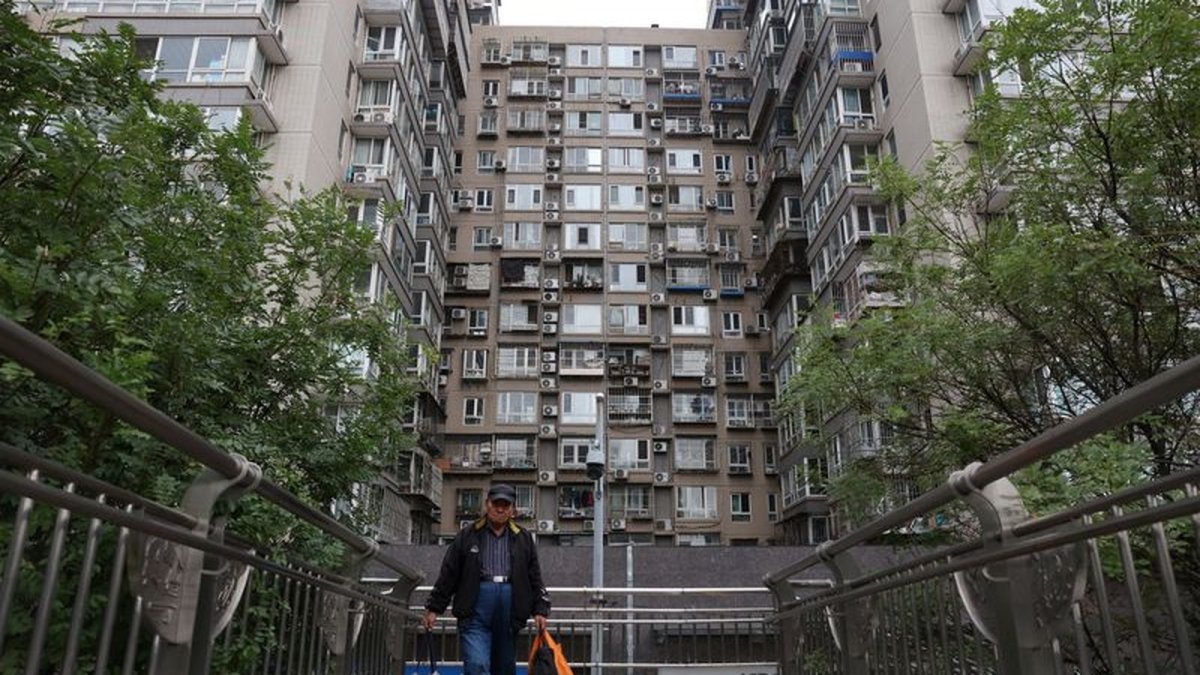
Beijing municipal authorities have unveiled a series of adjustments to housing purchase rules and financing limits, aiming to support the capital's property sector amid ongoing economic pressures. The measures, announced on August 7, 2026, and effective the following day, focus on reducing barriers for certain buyers while expanding access to provident fund loans.
Beijing Housing Policy Easing Signals Targeted Market Support
Beijing, China — Article continues with analysis of the August 7 announcement and its place in China's evolving property strategy.
Details of the New Housing Policies
The Beijing Municipal Commission of Housing and Urban-Rural Development, together with the Beijing Municipal Commission of Planning and Natural Resources and the Beijing Housing Fund Management Center, issued a circular outlining the changes. These steps reduce the social insurance or individual income tax payment requirement for non-local families seeking homes inside the fifth ring road from two years to one year. The adjustment aligns the central zone requirement with the existing rule for areas outside the fifth ring road.
Easing Restrictions for Non-Resident Buyers
Non-local families without Beijing hukou now face a shorter qualifying period of consecutive contributions before purchasing property in central districts. This targeted relaxation follows a pattern of incremental adjustments rather than wholesale removal of controls. Properties transferred as gifts from parents to children are exempt from standard eligibility reviews, providing additional flexibility for family transactions.
Enhancements to Housing Provident Fund Loans
The maximum provident fund loan amount for couples who both contribute has doubled to 2.4 million yuan for first-home purchases and 2 million yuan for second-home purchases. Single contributors can access up to 1.2 million yuan for a first home. Eligible buyers may receive further increases of up to 1 million yuan when purchasing in suburban districts, acquiring green-certified homes, or meeting multi-child family criteria, raising the effective caps to 3.4 million yuan and 3 million yuan respectively.
Special Provisions for Multi-Child Families and Suburban Purchases
Families with housing registration in Beijing's six central urban districts who buy in suburban areas, have two or more children, and select green-certified properties qualify for the highest loan top-ups. Local families contributing to the provident fund may apply for an additional loan when acquiring a new property, provided they hold no more than one existing home and have repaid any prior provident fund loans in full.
Historical Context of China's Property Sector Downturn
China's real estate market once accounted for a quarter of the world's second-largest economy at its peak, serving as a central driver of growth through construction, related industries, and household wealth effects. The sector's contraction began in the second half of 2021 and has now entered its fifth year, marked by a debt crisis that originated from regulatory deleveraging efforts targeting highly leveraged developers. This prolonged slump has directly constrained household consumption as property values stagnated or fell, reducing the wealth effect that previously supported spending on durable goods and services. At the same time, industrial output has remained robust, creating a visible imbalance between strong supply and weak domestic demand that policymakers continue to address through targeted interventions.
National Bureau of Statistics data released on June 16, 2026, underscored the depth of the downturn. In the first five months of the year, only four of seventy major cities recorded year-on-year price increases for new homes. Secondary-market prices showed even weaker performance, with no city registering an increase and most locations experiencing year-on-year declines between 5 and 8 percent. These figures reflect a market where transaction activity has slowed markedly and buyer sentiment remains cautious. Home price growth has effectively returned to levels not seen since the mid-2000s, erasing much of the rapid appreciation that characterized the previous two decades.
The resulting pressure on household balance sheets has limited consumption while developers face ongoing liquidity constraints from the multi-year debt overhang. This combination has amplified the economy's structural imbalance, with industrial capacity continuing to expand even as domestic demand for housing and related goods weakens. Authorities have therefore prioritized measures that support transaction volumes without dismantling the broader regulatory framework established after 2021.
Alignment with Broader National Economic Strategies
The Beijing measures coincide with the launch of the 15th Five-Year Plan in 2026, during which stabilizing the property market was identified as a core priority at a national conference held earlier in the week. This timing reflects a deliberate sequencing in which local policy adjustments support national objectives of restoring market confidence and easing liquidity pressures on developers. Rather than relying on a single large-scale stimulus package, central authorities have favored incremental steps such as value-added tax reductions on homes resold within two years, allowing transaction activity to recover gradually while preserving regulatory oversight.
Professor Liu Jing of the Cheung Kong Graduate School of Business noted that policies introduced in the national capital are viewed as a benchmark for other cities. This perspective highlights how Beijing's adjustments serve both as a practical response to local conditions and as a signal of the central government's preferred approach to market support. City-by-city experimentation enables authorities to test the effects of easing measures in different market environments before wider application, reducing the risk of unintended consequences across the national housing system.
The incremental strategy also aligns with the broader governance pattern of addressing specific bottlenecks rather than pursuing wholesale deregulation. By focusing on provident fund loan limits and targeted reductions in qualifying periods, the measures aim to revive activity in a controlled manner. This approach supports the 15th Five-Year Plan's emphasis on balanced growth while maintaining the purchase restriction framework that has defined housing policy in major cities since the mid-2010s.
Potential Impacts on Regional Markets and Policy Benchmarks
Shanghai's February 2026 seven-item policy package lowered thresholds for non-local buyers who had paid social security or individual income tax for one year. Following implementation on February 26, new-home inquiries rose by 30 percent, and real estate agents reported a significant increase in group visits to residential projects. This outcome demonstrated that modest reductions in entry barriers could stimulate buyer interest even in a cautious market environment. Beijing's August 7 announcement applies similar logic but confines the change to the area inside the Fifth Ring Road, preserving stricter requirements in the most central zones.
The hukou system continues to function as the primary gatekeeper for housing eligibility, requiring non-local families to demonstrate consecutive contributions before purchasing property. Beijing's adjustment reduces this period from two years to one year inside the Fifth Ring Road, aligning it with the existing rule outside that boundary. This targeted change maintains the overall structure of residency-based controls while addressing a specific constraint that had limited transactions in core districts.
The sequencing of easing measures between tier-one cities carries implications for lower-tier markets. Shanghai's earlier move and Beijing's subsequent adjustment establish precedents that other municipalities may reference when calibrating their own policies. Tier-two and tier-three cities, which often face different demand dynamics and developer exposure, can observe the results in the largest markets before implementing comparable changes, supporting a measured national rollout consistent with the incremental strategy of the 15th Five-Year Plan period.
Challenges Remaining in the Housing Market Recovery
Despite the new provisions, many purchase controls remain in place, and the city continues to favor targeted adjustments over a broad repeal of restrictions. Non-local families still must meet the one-year contribution requirement, and local buyers face ongoing limits on the number of properties they may acquire. This measured approach reflects authorities' preference for supporting activity without removing the regulatory tools developed after 2021 to curb speculative demand.
Analysts have noted that buyers continue to wait for clearer signs of price stabilization before committing to purchases. The "buyers waiting for floor prices" dynamic has prolonged the slump, as households delay decisions amid uncertainty over future value trends. Developer cash shortages and the lingering debt overhang from the mid-2021 crisis further complicate recovery, since reduced transaction volumes limit the cash flow needed to complete projects and service obligations.
Provident fund loan enhancements and demand-side measures alone may not fully restore confidence if broader economic conditions remain subdued. Indicators that would signal genuine stabilization include sustained increases in transaction volumes, reductions in unsold inventory reflected in listing counts, and the emergence of price floors in tier-one cities. Until these metrics show consistent improvement, the sector is likely to experience continued pressure even as incremental policy support continues under the 15th Five-Year Plan framework.
By Prof. Marcus Chen, Staff Writer
This article was produced with AI-assisted research and editorial support. Sources: Xinhua, Reuters, National Bureau of Statistics, Global Times.
What's Your Reaction?
 Like
0
Like
0
 Dislike
0
Dislike
0
 Love
0
Love
0
 Funny
0
Funny
0
 Wow
0
Wow
0
 Sad
0
Sad
0
 Angry
0
Angry
0

World Politics Analyst at Global1.News. Based in Beijing, covering US-China relations, global trade, and geopolitical strategy. Brings deep analytical perspective to the power dynamics shaping international affairs.















Comments (0)