
Transitional Justice or Political Retaliation? Bangladesh's Journalists Face Crimes-Against-Humanity Charges
The revival of Bangladesh's International Crimes Tribunal (ICT) was intended to deliver accountability for the estimated 1,400 people who died during the July 2024 uprising that led to Prime Minister Sheikh Hasina's ouster. Instead, the tribunal's current application is raising profound questions about whether the nation's transitional justice mechanism is being transformed into a tool for political retaliation against the media. Four journalists and one secular writer, imprisoned since 2024 on
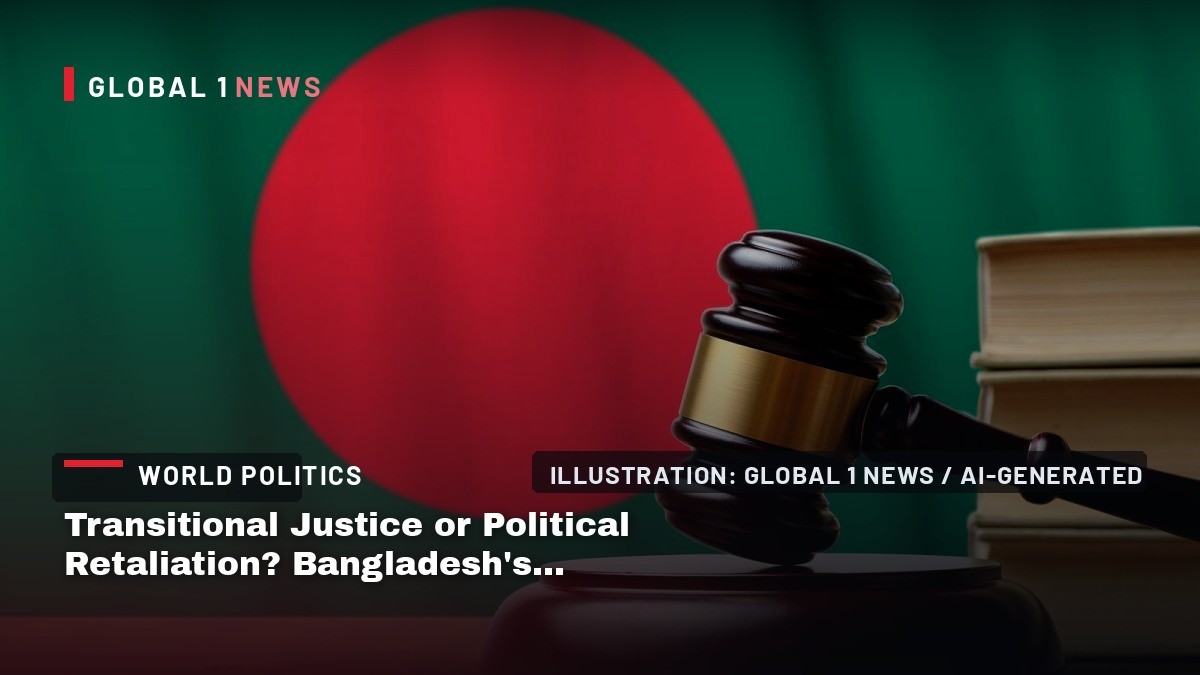
The revival of Bangladesh's International Crimes Tribunal (ICT) was intended to deliver accountability for the estimated 1,400 people who died during the July 2024 uprising that led to Prime Minister Sheikh Hasina's ouster. Instead, the tribunal's current application is raising profound questions about whether the nation's transitional justice mechanism is being transformed into a tool for political retaliation against the media. Four journalists and one secular writer, imprisoned since 2024 on a wave of murder charges in regular courts, have now been arrested in separate ICT cases accusing them of crimes against humanity through incitement—an escalation that international legal experts warn stretches the tribunal's mandate beyond internationally recognized bounds.
The Tribunal's Troubled Legacy and Its New Target
The ICT was created in 2010 under the 1973 ICT Act, a statute originally designed to prosecute atrocities committed by the Pakistan Army and its collaborators during the 1971 Liberation War. Throughout Sheikh Hasina's tenure, the tribunal was heavily criticized—particularly during 2011-2012—for being politically instrumentalized to put opposition figures on trial for 1971-era crimes, with critics citing a lack of due process. Following the 2024 uprising, the tribunal was revived to address the violence against the student-led movement, a purpose that human rights lawyer Toby Cadman, a former advisor to the ICT's Chief Prosecutor, acknowledges is legitimate. "The crimes committed against the student-led movement in July and August 2024, in which hundreds were killed, demand a proper accounting, and those responsible should face justice," Cadman said. However, he stressed that victims "are entitled to a process directed at truth, justice and reconciliation rather than retribution," requiring trials that meet "the highest standards of due process."
The current cases, however, target journalists rather than perpetrators of violence. Farzana Rupa, her husband Shakil Ahmed, Mozammel Babu, Shyamal Dutta, and writer Shahriar Kabir have all been imprisoned since 2024. Rupa and Shakil were initially arrested at Dhaka airport on August 21, 2024, in connection with a murder case concerning the death of a garment worker named Fazlul. Rupa reportedly faces nine murder cases, while Shakil faces six. Babu, Dutta, and Kabir were arrested in September 2024 under similar uprising-related murder charges. The escalation to ICT proceedings began earlier this year, with Rupa, Babu, Dutta, and Kabir arrested in separate cases. The first concerns Ekattor TV's coverage and a subsequent documentary on the 2013 Shapla Chattar crackdown. A second ICT proceeding, initiated in August 2026 concerning the July uprising, named Rupa, Babu, and Dutta, who were arrested at the hearing on August 25, 2026.
Government Acknowledgment and Unfulfilled Promises
The murder charges against the journalists have drawn criticism from human rights organizations, and even the interim government has distanced itself from them. In a Daily Star interview published on November 21, 2024, Dr. Muhammad Yunus, then head of the interim government, acknowledged that the murder cases filed against journalists had been "done hastily." His then law adviser, Asif Nazrul, went further at a press-freedom roundtable on June 26, 2025, disclosing that 266 journalists had been sued. Nazrul stressed that the cases "were not initiated by the government – they were filed by ordinary citizens," adding, "[W]e have made it clear that no arrests should be made unless there is substantial evidence."
The Bangladesh Nationalist Party (BNP), which came to power in February 2026, made its own explicit pledge in its election manifesto to ensure press freedom by reviewing the Digital Security Act, preventing attacks on media outlets, withdrawing politically motivated cases, and ensuring justice for tortured and murdered journalists. Yet neither the interim government's acknowledgment nor the BNP's commitment has translated into relief for the four journalists and one writer. Bail applications filed by family members, citing lack of evidence, an absence of a prima facie case, and the advanced age or poor health of several defendants—Kabir is 75, and Babu is suffering from cancer—have been continuously rejected. On May 11, 2026, the Dhaka High Court granted interim bail to Rupa in six cases and to Shakil in five, but the Appellate Division subsequently suspended that bail.
The Legal Chasm: Domestic Standards Versus International Law
The move from murder charges to crimes against humanity represents a significant legal escalation. Under the 1973 Act, crimes against humanity require acts committed as part of a widespread or systematic attack against a civilian population. International legal scholars, Human Rights Watch, and Amnesty International have long flagged a critical gap: Bangladesh's law historically lacked the mandatory requirement to prove that an alleged crime was part of such an attack, as Article 7 of the Rome Statute demands. The Bangladesh Supreme Court's 2013 judgment in Abdul Quader Molla v. Government of Bangladesh declined to incorporate this threshold, leaving the tribunal free to try crimes against humanity by domestic standards incompatible with international law.
This legal framework creates a situation where portraying a protest as "provocative," producing a television documentary, or asking a prime minister a pointed question at a press conference could theoretically fall within the ambit of crimes against humanity. Procedural weaknesses compound the problem. Interlocutory orders on arrest, detention, or bail cannot be appealed, and the Constitution suspends fundamental protections, including the right to a speedy, public trial, for anyone charged under the Act. Because the Act sets no distinct sentencing thresholds, a documentary producer and a perpetrator of mass atrocities face the same maximum penalty: death. Defense lawyers report receiving nothing in writing corroborating the allegations even after their clients are shown arrested, with months passing before a charge sheet—and a real defense—becomes possible.
International Jurisprudence: The Rwanda Precedent
International law has already addressed the question of journalists and crimes against humanity, and the precedent is demanding. Cadman pointed to the Rwanda tribunal's media jurisprudence, which establishes that liability does not attach to reporting, commentary, or editorial line, however partisan. The RTLM broadcasters were convicted because they broadcast the names, addresses, and vehicle registrations of identified individuals so that they could be hunted down and killed while the killing was underway. Even on those facts, the Appeals Chamber in Nahimana reversed a substantial part of the trial judgment, holding that hate speech falling short of a direct call to commit the crime is not incitement, and that seniority at a broadcaster is no substitute for proof of the accused's own contribution, intent, and knowledge.
"For crimes against humanity the speech must additionally form part of the widespread or systematic attack charged," Cadman concluded. "That is the threshold. It should be applied in Bangladesh as it would be anywhere else." Cadman emphasized the need for "prosecutorial discipline," warning that "a case brought without that foundation does not simply fail; it weakens the cases that deserve to succeed, and it invites the very skepticism the Tribunal can least afford."
The Human Cost of Legal Uncertainty
Behind the legal arguments lies a profound human toll. Rupa and Shakil's daughter, Monphool, was only 17 when both of her parents were arrested. She has spent the past two years working for their release, abandoning her own education to advocate for them. Monphool described falling asleep and waking up each day "asking the same question – whether today will be the day my mother or father comes home." She lives in a state of "constant fear that cannot be put down. Ordinary conversations, home-cooked meals together, birthdays, things that most families often take for granted, have been lost."
"Waiting, every single day, has changed me," Monphool said. "Cases like my parents' have become a pattern in Bangladesh for far too long and many other families have already experienced what I am going through. I feel like I have lost my childhood to something that I have no control over, I only hope that it will come to an end." Her words echo a recurring pattern in South Asia, where transitional justice mechanisms have often been weaponized by successive ruling coalitions to criminalize their predecessors. The experience of Korea's own democratization offers a comparative lesson: the durability of a democratic transition depends on whether institutions apply rules uniformly, distinguishing between perpetrators of grave violations, political associates, and journalists engaged in routine professional conduct.
A Principled Path Forward
Bangladesh's political transition presents an opportunity to break this cycle. A durable democratic transition requires stable institutions whose rules apply uniformly, narrow evidence-based prosecutions of grave violations, and a clear distinction between perpetrators, political associates, and journalists. The interim government has moved to amend the ICT Ordinance to align statutory definitions with the Rome Statute, but how these legal standards are executed in practice remains contested. The tribunal's logic will ultimately be judged by whether it declines to weigh a documentary or a press conference question on the same scale as mass atrocity.
Bangladesh had a chance to fix this in 2012 and did not do so. The reforms since have moved to align the ICT framework with international standards, but whether the tribunal enforces these thresholds in practice remains the real test. Crimes-against-humanity charges against media actors should be pursued only where evidence establishes internationally recognized modes of responsibility. Where allegations concern routine journalistic conduct, courts should order release under standard bail provisions, avoid serial charge-filing, and permit international observers to monitor proceedings. The transitional justice project need not become an instrument of revenge—but without prosecutorial discipline and adherence to international legal thresholds, Bangladesh risks repeating the very patterns of political instrumentalization that discredited the ICT under its previous incarnation.
This article was produced with AI-assisted research and editorial support. Sources: The Diplomat (Julia Wesemann and Shahnewaj Patwari, August 28, 2026).
By Prof. David Park, Staff Writer
What's Your Reaction?
 Like
0
Like
0
 Dislike
0
Dislike
0
 Love
0
Love
0
 Funny
0
Funny
0
 Wow
0
Wow
0
 Sad
0
Sad
0
 Angry
0
Angry
0

East Asia/Technology Correspondent at Global1.News. Seoul-based voice covering Korean politics, technology, business, and culture. Analyzes how technology and geopolitics intersect across East Asia.











Comments (0)