
Baidu ERNIE-Image 8B Open-Sourced: New AI Image Era Begins
Baidu just changed the game. The Chinese tech giant has open-sourced ERNIE-Image, an 8-billion parameter text-to-image model that runs on everyday consumer GPUs and lands on Hugging Face with zero content filters. The AI image generation landscape just shifted again, and this time the move comes from Beijing, not San Francisco. Baidu Open-Sources ERNIE-Image 8B Text-to-Image Mo
Baidu just changed the game. The Chinese tech giant has open-sourced ERNIE-Image, an 8-billion parameter text-to-image model that runs on everyday consumer GPUs and lands on Hugging Face with zero content filters. The AI image generation landscape just shifted again, and this time the move comes from Beijing, not San Francisco.
Baidu Open-Sources ERNIE-Image 8B Text-to-Image Model
Atlanta, GA – June 7, 2026 — Baidu has released the full weights of ERNIE-Image, an 8-billion parameter single-stream Diffusion Transformer, to the public on Hugging Face under the repo baidu/ERNIE-Image. The model arrived in April 2026 and immediately drew attention for its ability to generate 1024×1024 images in only eight inference steps while supporting high-quality multilingual text rendering inside images.
What Is ERNIE-Image?
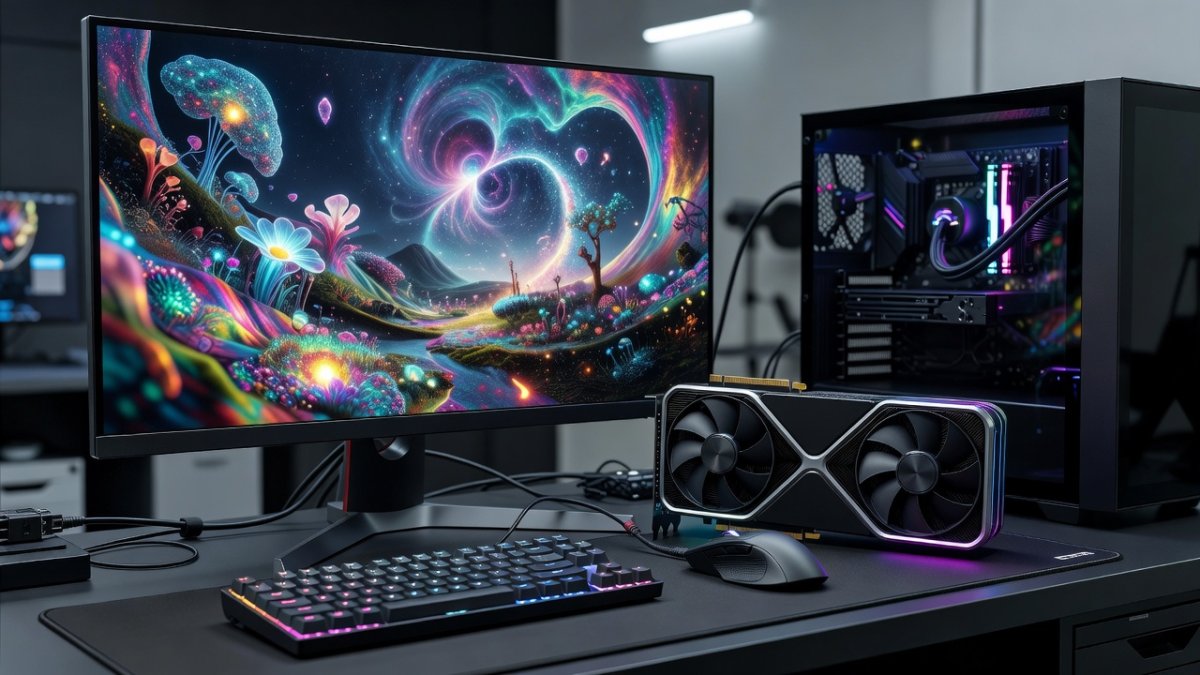
ERNIE-Image uses a single-stream Diffusion Transformer architecture paired with a lightweight Prompt Enhancer module. The Prompt Enhancer takes short user prompts and expands them into detailed, structured descriptions that improve output quality without requiring users to write long prompts themselves. This design keeps the system fast while delivering strong results on complex tasks such as poster layouts, comic panels, and accurate Chinese-English text placement within generated images.
The model supports Turbo mode that produces usable 1024×1024 images in eight steps. Full-precision inference requires roughly 24 GB of VRAM, but quantized versions run comfortably on 8 GB GPUs, making the technology accessible to hobbyists and small studios. Integration hooks exist for ComfyUI, the Hugging Face Diffusers library, and ready-to-use Spaces, lowering the barrier for immediate experimentation.
ERNIE-Image sits inside Baidu’s larger ERNIE family that already includes the ERNIE 4.5 language models. By releasing the image model under fully open weights, Baidu joins a growing list of major Chinese technology companies choosing complete open-source strategies rather than gated APIs.
Why This Matters for Open-Source AI
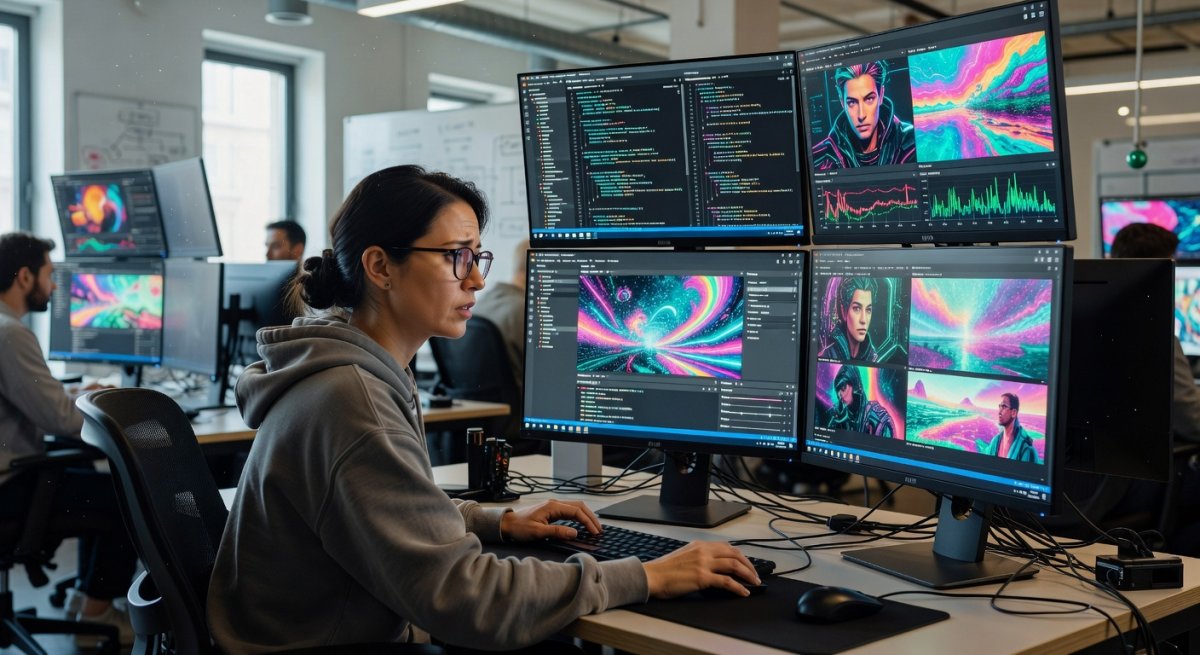
Until now, the strongest text-to-image systems with native multilingual text support remained behind closed APIs or carried heavy licensing restrictions. ERNIE-Image removes those barriers. Researchers and developers can now fine-tune, distill, or merge the 8B weights without asking permission, accelerating innovation across both academic and commercial labs.
The decision also signals a strategic shift. Baidu is betting that widespread adoption of its open model will strengthen the broader ERNIE ecosystem and create downstream demand for its cloud services. At the same time, the release puts competitive pressure on Western labs that have hesitated to open their largest diffusion models.
Because the weights carry no safety filters, the community gains an uncensored baseline that can be studied for alignment research or used to train better guardrails. That transparency has been missing from many recent releases and represents a genuine step forward for the open-source movement.

Performance and Benchmarks
Early community evaluations place ERNIE-Image competitively on GenEval and similar automated metrics, particularly in categories that test text rendering and layout coherence. The model frequently matches or exceeds Z-Image-Turbo and approaches Flux performance on Chinese-language prompts while remaining faster at inference.
Side-by-side comparisons with Stable Diffusion 3.5 and SDXL show clear advantages in poster-style compositions and comic sequencing. The Prompt Enhancer contributes measurably to these gains by producing more consistent prompt interpretations than raw short prompts fed to competing models.
Hardware benchmarks confirm the eight-step Turbo mode delivers acceptable quality for many use cases, cutting generation time dramatically compared with 20- or 50-step baselines. Quantized checkpoints maintain most of this speed advantage while fitting on mid-range GPUs, a practical win for independent creators.
Running ERNIE-Image Locally
Getting started requires only a Hugging Face account and a compatible GPU. The Diffusers pipeline loads the model in a few lines of code, and ComfyUI users can drop in ready-made nodes that expose the Prompt Enhancer as a separate stage. Several community Spaces already host live demos for those without local hardware.
Users with 8 GB cards should begin with the INT8 or INT4 quantized checkpoints. These versions preserve text accuracy and overall composition quality while reducing memory footprint enough to run at batch size one. Full-precision users with 24 GB or more can enable higher guidance scales for maximum fidelity.
Documentation on the Hugging Face repo includes example workflows for both Diffusers and ComfyUI, plus tips for merging LoRAs trained on the base weights. The setup process is deliberately straightforward, reflecting Baidu’s intent to encourage broad experimentation.
The NSFW Question
Because the released weights contain no content filters, ERNIE-Image can generate NSFW imagery when run locally. This capability mirrors other fully open models but stands in contrast to cloud services that apply strict moderation layers. Users who want uncensored output now have a high-quality, locally runnable option.
The absence of filters also creates responsibility. Developers building applications on top of ERNIE-Image must implement their own safeguards if they intend to distribute generated content publicly. The open weights make such customization possible, but they do not remove the need for thoughtful deployment practices.
Researchers have already begun publishing filter fine-tunes and negative-prompt collections tailored to the model. These community efforts demonstrate how open weights can accelerate both creative freedom and safety research simultaneously.
What This Means for Creators
Graphic designers gain a fast tool for generating posters and social-media assets that include accurate bilingual text. Comic artists can produce consistent panel sequences without fighting spelling errors in speech bubbles. Indie game developers can prototype UI elements and marketing art on modest hardware.
The Prompt Enhancer lowers the learning curve for non-technical users who previously struggled to craft effective prompts. By expanding short descriptions automatically, the model delivers professional-looking results from simple inputs, democratizing access to high-end image generation.
Because the model is fully open, creators can train custom styles or characters on their own datasets and share those adaptations without licensing friction. This freedom has already sparked dozens of fine-tuned variants on Hugging Face in the weeks since release.
The arrival of ERNIE-Image proves that open-source image generation has reached a new tier of quality and accessibility. Whether you are a researcher, artist, or hobbyist, the weights are now yours to explore. Download them, run them locally, and decide for yourself what the next chapter of AI imagery looks like.
By Jessica Ali, Staff Writer
This article was produced with AI-assisted research and editorial support. Reporting is based on sources cited in the article.
What's Your Reaction?
 Like
0
Like
0
 Dislike
0
Dislike
0
 Love
0
Love
0
 Funny
0
Funny
0
 Wow
0
Wow
0
 Sad
0
Sad
0
 Angry
0
Angry
0

Editor-in-Chief at Global1.News. Atlanta-based journalist who cuts through the BS and tells it like it is. Lead anchor, host, and the voice you hear when the spin stops and the truth starts.












Comments (0)