
Armistice Regime, Peace Regime, or Time for a Different Mindset on the Korean Peninsula?
The recent declarations from Seoul—first by President Lee Jae-myung before the Peaceful Unification Advisory Council in early July, and then by Unification Minister Chung Dong-young on the 73rd anniversary of the Korean Armistice Agreement—represent a significant rhetorical and policy departure from decades of established South Korean practice. Minister Chung’s assertion that "we must end the Armistice regime and move to a peace regime," coupled with the administration’s explicit shift to a "pea
The recent declarations from Seoul—first by President Lee Jae-myung before the Peaceful Unification Advisory Council in early July, and then by Unification Minister Chung Dong-young on the 73rd anniversary of the Korean Armistice Agreement—represent a significant rhetorical and policy departure from decades of established South Korean practice. Minister Chung’s assertion that "we must end the Armistice regime and move to a peace regime," coupled with the administration’s explicit shift to a "peace-first" theory that discards denuclearization as a precondition for dialogue, signals a fundamental recalibration of how the Republic of Korea approaches peacebuilding on the peninsula. This is not merely a change in tactics but a redefinition of the strategic end-state. The question is whether this new mindset, which seeks to transcend the binary of armistice versus peace regime, can overcome the structural and political realities that have doomed previous initiatives. An examination of the historical record, the operational utility of the current mechanisms, and the specific obstacles ahead suggests that while the ambition is laudable, the path to a durable peace requires a more granular and patient approach than the pursuit of a single, signature agreement.
Defining the "Peace Regime" and Its Historical Roots
The concept of a "peace regime" is not a novel invention of the Lee administration; it is a long-standing policy design with roots in the early 1990s. The operative notion is to transition from the 1953 Armistice Agreement to a new inter-Korean peace arrangement, reduce foreign interference in the Korean peace process, and establish interdependencies that would advance the two Koreas toward eventual reunification. The legal and conceptual foundation for this was laid in the "Agreement on Reconciliation, Nonaggression, Exchanges and Cooperation," commonly known as the Basic Agreement, signed in 1991. That document explicitly stipulated that "South and North Korea shall together endeavor to transform the present state of armistice into a solid state of peace." From this provision, successive South Korean governments formed policies around the notion of the peace process existing in discrete phases: an "armistice regime," representing the existing Cold War-era paradigm, and a "peace regime," which would establish a new framework for inter-Korean relations.
Different administrations have operationalized this idea in markedly different ways. The four-party talks of the mid-1990s, involving the two Koreas, China, and the United States, were an early attempt to give it multilateral form. During the Sunshine Policy era under presidents Kim Dae-jung and Roh Moo-hyun, the focus shifted to building economic interdependence through flagship projects like the Kaesong Industrial Complex and Kumgang tourism. The Moon Jae-in administration made perhaps the most ambitious attempt, pursuing an End-of-War Declaration, the September 2018 Comprehensive Military Agreement, and efforts to restore the Kaesong and Kumgang projects. Each of these initiatives ultimately failed to take root, a pattern that underscores the fundamental mismatch between Seoul’s phased approach and the preferences of both Pyongyang and domestic political stakeholders in the South.
The Enduring Operational Value of the 1953 Armistice
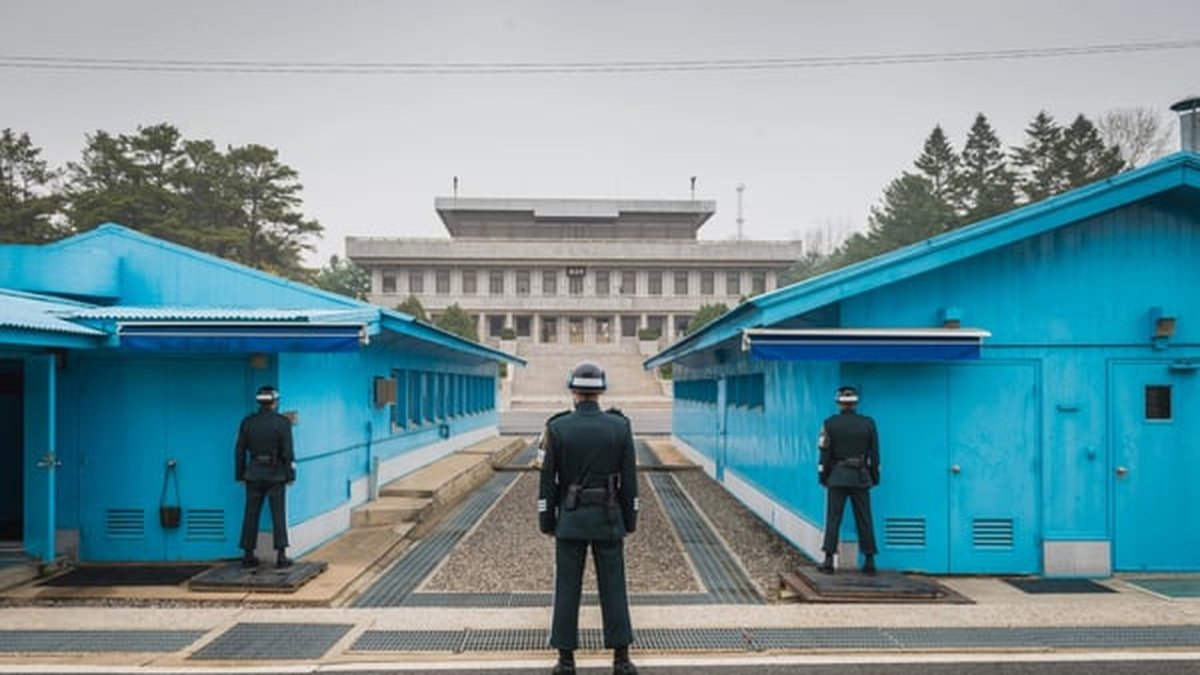
To understand Seoul’s desire to move beyond the armistice, it is essential to recognize what the agreement currently does to support stability. The Korean Armistice Agreement is an interim instrument meant to maintain a cessation of hostilities and provide space for peacebuilding. It is not incompatible with the peace process; rather, it is integral to it. The agreement provides a foundation for preserving the cessation of hostilities, institutionalizing the peace process, and creating opportunities for non-violent engagement. Despite notable violations over the years, both sides by and large continue to abide by its rules today. On the northern side, the Korean People's Army (KPA) Panmunjom Mission manages its obligations, while on the southern side, the United Nations Command Military Armistice Commission (UNCMAC), staffed by countries including the United States, South Korea, Denmark, and New Zealand, does the same.
The practical importance of these mechanisms is often overlooked because their most successful efforts are invisible. The armistice provides a vital avenue for communication during periods when broader inter-Korean relations have broken down. Although North Korea ceased communication across inter-Korean channels in April 2023, the hotline between the UNCMAC and the KPA Panmunjom Mission has remained operational since September 2019. This channel has been a critical tool for mitigating escalation cycles following the drone incursion incidents of 2022 and 2024, as well as lower-level events such as the May 2020 exchange of fire between KPA and South Korean military forces inside the demilitarized zone. The armistice has thus provided the space for peacebuilding for over seven decades, even as a permanent political settlement has remained elusive.
Seoul’s Policy Shift: From Denuclearization-First to Peace-First
The Lee Jae-myung administration’s approach marks a clear break from the policies of its conservative predecessors. At a briefing on July 23, marking his one-year anniversary in office, Unification Minister Chung Dong-young stated, "We have effectively discarded the previous administration's nuclear dismantlement first and denuclearization first theories and shifted to a 'peace first' theory." The ministry’s stated goal is now "the realization of a nuclear-free Korean Peninsula," but the sequencing has been inverted. Chung argued that demanding denuclearization at the entrance to talks is counterproductive, noting that "dialogue has been cut off for seven years." He pointed to new estimates from the Stockholm International Peace Research Institute’s 2026 Yearbook, which put North Korea’s assembled warheads at 60, up from 50 a year earlier, with enough fissile material for up to 90. This data underscores the urgency of a freeze-first approach, which President Lee has personally raised with U.S. President Donald Trump, including at a Group of 7 dinner.
This shift is packaged within a broader framework Chung has called "two peaceful states pursuing unification." This is Seoul’s answer to Kim Jong Un’s declaration that inter-Korean relations should be treated as relations between "hostile two states." To explain the concept, Chung reached for a concept from the seventh-century Buddhist monk Wonhyo—"not-one, not-two"—signifying two separate states that nonetheless remain inherently connected toward eventual unification. The administration is also pursuing perceptual and social reforms, including urging news organizations to retire the term "talbukmin" (North Korean defector) in favor of "bukhyangmin" (people whose home region is in the North), and detailing changes at Hanawon, the state resettlement center, where barbed wire has been removed and trainees now use smartphones. These symbolic and practical gestures are designed to signal a new era of engagement, but they have yet to elicit a positive response from Pyongyang, which has remained unresponsive to dialogue overtures and has instead hardened its hostile stance.
The Three Obstacles to a Traditional Peace Regime
Despite the administration’s optimism, there are three major obstacles to the traditional South Korean conception of a peace regime. The first is the transformation of North Korea’s own policy preferences. Economic interdependence initially appeared promising, but projects like Kaesong and Kumgang became leverage for the South Korean government in times of tension, as when the Park Geun-hye administration shut down operations at the Kaesong Industrial Complex following the 2016 nuclear test. More fundamentally, North Korea’s conception of inter-Korean relations has changed under Kim Jong Un. The DPRK has now constitutionally recognized separate, sovereign states on the Korean Peninsula and abandoned unification as a policy objective. In doing so, the Kim regime has dismantled all previous inter-Korean-related organizations and disavowed prior initiatives, making the "two peaceful states" framework a necessary adaptation but also a difficult negotiation starting point.
The second obstacle is South Korean domestic politics. While the government has been consistent in maintaining the principle of a peace regime, the conservative and progressive parties remain far apart on their interpretations of what it means in practice. This has led to inconsistency in approaches, such as with the inter-Korean military agreement negotiated by the Moon administration, which was subsequently suspended. Compounding these challenges are divides even within the progressive party over how to proceed with North Korea: some believe unification must be the ultimate objective, while others contend that peaceful coexistence is a necessary prerequisite. There is also a second domestic complication: not every South Korean interest in moving beyond the armistice is necessarily about peacebuilding. Debates over the armistice often involve questions of sovereignty, access to the DMZ, tourism, economic development, and the role of the United Nations Command, which complicates a unified policy approach.
A New Mindset for Peacebuilding: Process Over Ceremony
The third and deeper problem with the traditional approach is the treatment of the peace process as discrete phases. This places too much emphasis on achieving a signed agreement that can quickly fall apart rather than addressing the specific issue areas contributing to continued risk of conflict. It also locks the South Korean government into a policy paradigm that is easily rejected, whether in Pyongyang or among different stakeholders in Seoul. The alternative is to treat peacebuilding as a continuous process that ultimately moves towards a comprehensive peace agreement, rather than treating that agreement as a prerequisite for progress. Adopting this new mindset requires preserving what works—namely, the armistice mechanisms—while targeting individual issues that remain unresolved.
In practical terms, a durable peace on the Korean Peninsula will ultimately require agreement on a range of issues, including basic principles governing peace, territory and boundaries, risk reduction, denuclearization and arms control, compliance management mechanisms, protocols governing relations between the parties, and humanitarian considerations. None of these issues needs to be resolved simultaneously, nor does progress on one require movement on every other issue. In the meantime, the armistice can continue to provide utility to help the two sides weather acute incidents, North Korean recalcitrance, and swings in the South Korean political pendulum. This approach may not carry the pomp of a signing ceremony, but it reduces the risk of incidents, creates opportunities for non-violent engagement, and enables resolution of long-standing sources of conflict.
Regional Implications and the Path Forward
The shift in Seoul’s policy has significant implications for the region. By dropping denuclearization as a precondition, the Lee administration is signaling a willingness to engage with the North’s nuclear reality in the short term, a position that aligns with the "cold peace" concept advocated by Victor Cha of the Center for Strategic and International Studies. This may create friction with Washington, although President Lee’s personal appeals to President Trump suggest an attempt to align the two allies. The upcoming meetings between President Trump and Chinese President Xi Jinping could create opportunities for diplomacy, as Minister Chung has noted, given the "strategic demand" for renewed negotiations in both Washington and Pyongyang. However, the fundamental challenge remains: North Korea has shown little interest in resuming talks, and its constitutional abandonment of unification as a goal complicates any framework premised on eventual reunification.
Ultimately, the Lee administration’s "peace-first" policy represents a pragmatic acknowledgment that the status quo is untenable and that a different approach is required. The shift from a focus on the armistice regime versus a peace regime to a more continuous, issue-based approach to peacebuilding is intellectually sound. It recognizes that durable peace is achieved through consistent effort, not through a single transformative event. Whether Seoul can sustain this mindset in the face of domestic political opposition and North Korean intransigence remains to be seen. But by reframing the debate and preserving the utility of the armistice while targeting specific unresolved issues, the administration has at least opened a new path forward, one that may prove more resilient than the grand but fragile initiatives of the past.
By Prof. David Park, Staff Writer
This article was produced with AI-assisted research and editorial support. Reporting is based on sources cited in the article.
What's Your Reaction?
 Like
0
Like
0
 Dislike
0
Dislike
0
 Love
0
Love
0
 Funny
0
Funny
0
 Wow
0
Wow
0
 Sad
0
Sad
0
 Angry
0
Angry
0

East Asia/Technology Correspondent at Global1.News. Seoul-based voice covering Korean politics, technology, business, and culture. Analyzes how technology and geopolitics intersect across East Asia.












Comments (0)