
Alberta's finances swing to $2-billion surplus as Middle East conflict drives oil prices higher
Alberta's finances have swung dramatically back into surplus, with the province's latest fiscal update projecting a $2-billion windfall for the 2026-27 budget year — a stunning reversal from the $9.4-billion deficit originally forecast just six months ago. The turnaround, presented Aug.
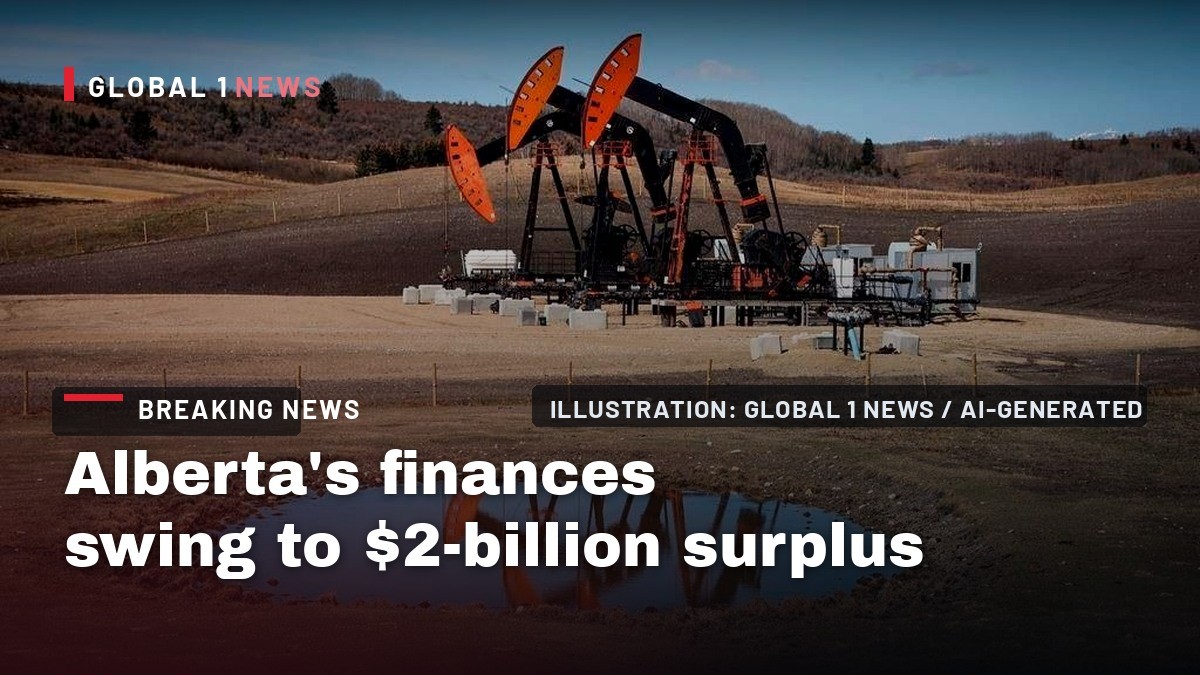
Alberta's finances swing to $2-billion surplus as Middle East conflict drives oil prices higher
Alberta's finances have swung dramatically back into surplus, with the province's latest fiscal update projecting a $2-billion windfall for the 2026-27 budget year — a stunning reversal from the $9.4-billion deficit originally forecast just six months ago.
The turnaround, presented Aug. 27 by Finance Minister Jason Nixon, comes as war in the Middle East has sent global energy prices surging, choking off oil tanker traffic through the Strait of Hormuz and driving West Texas Intermediate — the North American benchmark — to average just above US$88 per barrel since April.
From deficit to surplus: The numbers behind the swing
The province's first-quarter fiscal update now anticipates total revenue of $86.3 billion, a full $11.7 billion above what was budgeted in February. That represents an $11.4-billion swing from the $9.4-billion deficit projected when the United Conservative government tabled Budget 2026. The dramatic reversal of fortune is the latest reminder of how deeply Alberta's fiscal health remains tied to international energy markets. Six months ago, the province anticipated WTI would average US$60.50 a barrel this year. Two days after the budget was introduced, the U.S.-Iran conflict began, and the calculus changed entirely. With every dollar increase in the average WTI price, Alberta's treasury stands to gain approximately $680 million. At current prices, the arithmetic has moved decisively in the province's favour. For the latest budget numbers to hold, WTI would need to average US$73.50 per barrel over the full twelve months, or US$65 for the remainder of the fiscal year, which ends next March. Given current market conditions, those thresholds appear within reach — but energy markets are notoriously difficult to predict.Nixon urges caution despite windfall
Finance Minister Jason Nixon celebrated the quarterly windfall as welcome news for the province, but he was quick to temper expectations, warning that the forecast could just as quickly take another turn. "Energy prices can change quickly, trade uncertainty is real, and every dollar spent on debt is a dollar taken away from classrooms, hospitals and families," Nixon said. "We will not commit temporary revenues to permanent expenses." That caution reflects hard lessons learned in a province that has seen boom-and-bust cycles tied to oil prices for decades. The government's approach, Nixon indicated, will be to treat the surplus as a one-time windfall rather than a recurring revenue stream, using it to pay down debt and shore up the province's fiscal position rather than locking in new permanent spending. The minister's remarks also acknowledged the broader economic uncertainty facing the province, including the ongoing trade war between Canada and the United States. Counter-tariffs imposed in response to American duties could drive further price increases, Nixon noted, adding another layer of unpredictability to the outlook.Cost-of-living pressures persist despite government windfall
While the surging oil prices are padding the government's coffers, the same market forces are driving up costs for ordinary Albertans. Fuel prices at the pump have climbed alongside crude, putting pressure on household budgets already strained by inflation and the broader cost-of-living crisis affecting Canadians from coast to coast. In June, Premier Danielle Smith announced $100 fuel tax rebate cheques for most Albertans, choosing a direct payment approach rather than reducing the province's tax on gasoline at the pumps. The one-time rebate was designed to provide immediate relief without permanently reducing the province's fuel tax revenue. Nixon did not commit to another round of rebate cheques, but said cabinet is actively considering its options to find relief for Albertans grappling with higher prices. The decision, he suggested, would need to balance the desire to help households with the fiscal prudence the government has promised to maintain. The tension between the province's improved fiscal position and the lived experience of Albertans is a recurring theme in the government's messaging. While the surplus is welcome news for the treasury, it does little to ease the burden on families filling up their vehicles or heating their homes.
Health-care restructuring complicates year-end accounting
The province's year-end results for 2025-26 have been delayed, but officials are anticipating that the latest revenue bump will more than erase that year's $4.1-billion projected deficit. Nixon said he is confident the United Conservative government will also report a surplus for that fiscal year. However, the minister acknowledged that the UCP's massive health-care restructuring has created an accounting challenge. Newly created government organisations are still working to match up their financial reporting with the provincial budget framework, a process that takes time when major institutional changes are underway. The health-care overhaul, a signature initiative of the Smith government, has involved consolidating and reorganizing various health authorities and agencies across the province. While the restructuring is intended to improve service delivery and reduce administrative duplication, it has also created temporary complications in the province's financial reporting. Nixon expressed confidence that these accounting issues would be resolved and that the final numbers would confirm the surplus, but the delay highlights the complexities involved in managing a provincial budget of this scale.Balancing prosperity and prudence in uncertain times
The swing from deficit to surplus is undeniably good news for Alberta's fiscal position, but it comes with significant caveats. Energy prices remain volatile, trade tensions with the United States continue to create uncertainty, and the cost-of-living pressures facing Albertans show no signs of abating. The government's stated approach — refusing to commit temporary revenues to permanent expenses — reflects a recognition that today's windfall could evaporate as quickly as it appeared. The province has been here before, and history has shown that oil prices can fall as dramatically as they rise. For Albertans, the surplus offers some reassurance about the province's fiscal health, but it does little to address the immediate pressures of higher fuel costs and inflation. The $100 rebate cheques announced in June provided some relief, but whether additional measures will follow remains an open question. Nixon's comments suggest the government is weighing its options carefully, mindful of both the need to support households and the importance of maintaining fiscal discipline. With the trade war with the United States ongoing and energy markets in flux, the path forward remains uncertain. What is clear is that Alberta's fortunes remain inextricably linked to the price of oil. For now, that linkage is working in the province's favour — but as any veteran observer of Alberta politics knows, the pendulum can swing in the other direction just as quickly. The coming months will reveal whether the government can translate this windfall into lasting fiscal stability, or whether it will prove to be another temporary reprieve in a province perpetually at the mercy of global energy markets.Tags: Alberta budget, fiscal update, oil prices, WTI, Jason Nixon, Danielle Smith, surplus, deficit, Strait of Hormuz, fuel rebate, energy revenue, Alberta finance, cost of living, trade war
By Alex Thompson, Staff Writer
This article was produced with AI-assisted research and editorial support. Sources: Global News (globalnews.ca).
What's Your Reaction?
 Like
0
Like
0
 Dislike
0
Dislike
0
 Love
0
Love
0
 Funny
0
Funny
0
 Wow
0
Wow
0
 Sad
0
Sad
0
 Angry
0
Angry
0

Canada Correspondent at Global1.News. Based in Toronto, covering Canadian politics, energy, trade, and US-Canada relations. Provides the Canadian perspective on North American and global affairs.














Comments (0)