
Activists Protest Smotrich Over West Bank Settler Violence
In a recent Middle East Eye report, Israeli activists from the Standing Together movement were shown at the Religious Zionist Party's Shoham headquarters, their hands and white clothing painted red to represent the blood of Palestinians terrorised and killed by settlers in the occupied West Bank. The demonstration on August 5, 2026, east of Tel Aviv, focused attention on Finance Minister Bezalel Smotrich, the party's leader, whom activists accuse of funnelling public money
In a recent Middle East Eye report, Israeli activists from the Standing Together movement were shown at the Religious Zionist Party's Shoham headquarters, their hands and white clothing painted red to represent the blood of Palestinians terrorised and killed by settlers in the occupied West Bank. The demonstration on August 5, 2026, east of Tel Aviv, focused attention on Finance Minister Bezalel Smotrich, the party's leader, whom activists accuse of funnelling public money toward settler outposts linked to violence against Palestinian communities.
Israeli Activists Stage Blood-Red Sit-In Outside Smotrich's Party Offices
Shoham, Israel – August 5, 2026 — A group of Israeli activists from the Arab-Jewish left-wing movement Standing Together held a sit-in outside the headquarters of the Religious Zionist Party, chanting slogans accusing Finance Minister Bezalel Smotrich and his party of funding settler terrorism in occupied Palestine. Clad in white outfits splattered with red paint, the demonstrators held up red-stained hands and displayed posters in Hebrew and Arabic declaring: "Smotrich finances, the settlers burn, the blood is on the hands of the government."
Sit-In at the Heart of the Settlement Project
Videos shared by Standing Together showed demonstrators sitting with their backs to the glass doors of the party's offices, chanting in Hebrew and Arabic while party employees filmed them from inside. The protest was directed at Smotrich, who leads the Religious Zionist Party and, as finance minister and a minister within the Defense Ministry, exercises direct authority over settlement planning, funding and the Civil Administration that governs much of the occupied West Bank.
Activists chanted that the blood of Palestinians "is on the hands of the bloody government," along with "Arabs want to live" and "The suit will not help, here they are preparing terror." Standing Together said its activists had come to the headquarters "because the party enables violence against Palestinians."
'The Blood Is on the Hands of the Government'
Standing Together activist Ron Feiner said the Religious Zionist Party is "transferring millions to support the activities of terror farms in the West Bank." He accused Smotrich of "transferring Israeli citizens' money to settler terror that burns villages, dispossesses and expels people from their lands and homes, and burns our future."
"As long as this terror continues, there will be no security here for us," Feiner added. "We will not stop fighting until the farms are dismantled and the terror is stopped. Until there is Israeli-Palestinian peace." Another protester said Smotrich "finances the outposts from which [extremist settlers] go out to burn villages, in order to expel people from their homes," adding: "Only peace will bring security."
Party and Police Respond
The Religious Zionist Party claimed the protesters attempted to "violently break into" the headquarters and said employees were instructed to remain in their offices until law enforcement arrived. Standing Together disputed the account, saying the doors were not locked and party members were free to leave. After the activists dispersed, the party issued a statement attributing the protest to "incitement by Yair Golan and his associates, along with Gadi Eisenkot's silence, against the settlers," and called on opposition leaders including Eisenkot, Naftali Bennett and Chili Tropper to "condemn the violence of the far left."
Israel Police said protesters had already dispersed by the time officers arrived, describing "a small number of participants who painted their hands red and posed for photographs at the entrance to the party's offices." The incident remained under review, with police stating that "incitement, violence, or any violation of the law under the guise of protest" would not be tolerated.
Same-Day Attack on Tuba Village
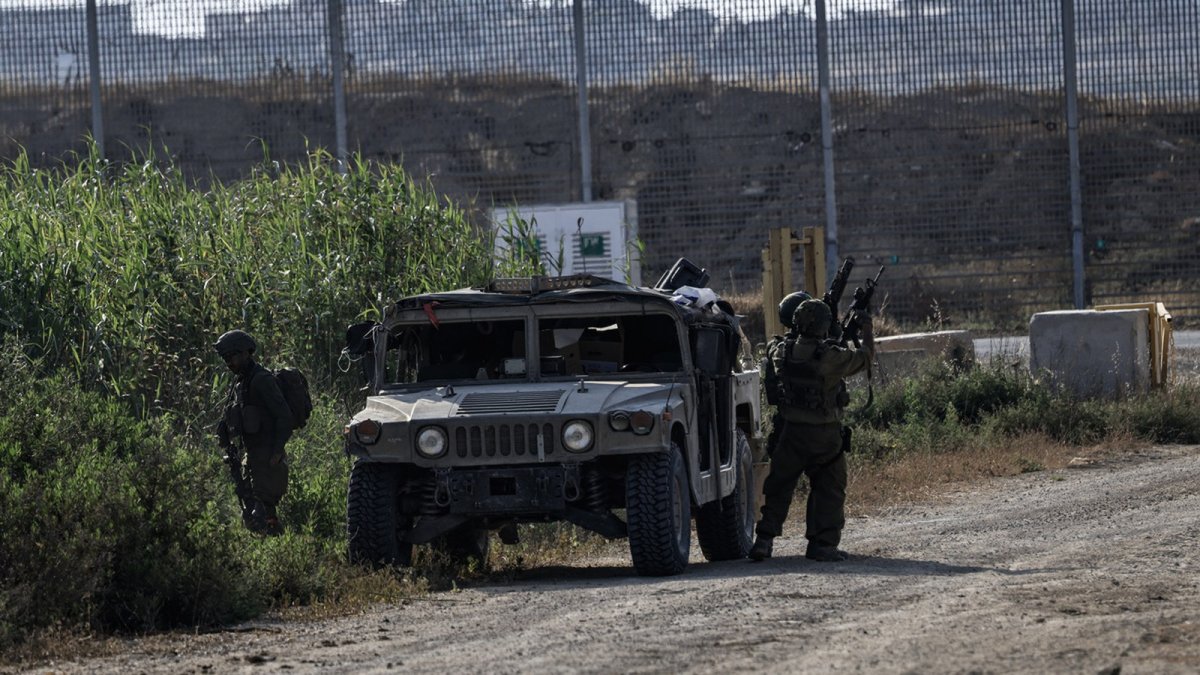
The sit-in unfolded on the same day that a large group of settlers carried out a coordinated overnight attack on the village of Tuba, in the Masafer Yatta area of the South Hebron Hills. At least six Palestinians were injured, including a mother, three girls aged between five and eight, a ten-year-old boy and a 22-year-old man. Attackers arrived in vehicles, stormed homes, set fire to buildings, trees and bales of hay, destroyed solar panels and damaged at least six structures before retreating toward the nearby Havat Ma'on outpost.
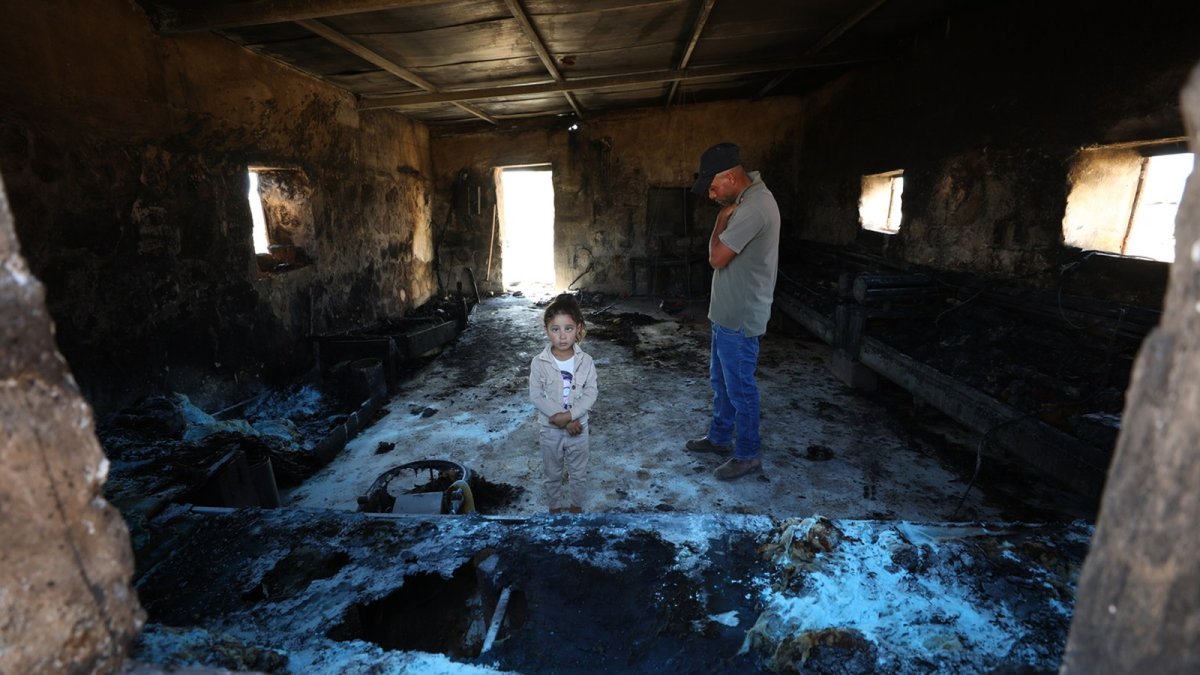
Radwan Abu Jundi, a Tuba resident, said his family hid inside their home as settlers threw stones and attempted to break in. "If any of us had stayed outside, they would have killed us," he told Haaretz. His wife suffered injuries to her head and body, and his daughter required medical treatment. The Israeli army said the attackers had fled before soldiers reached the village; police collected evidence but announced no arrests.
The attack underscored warnings from veteran Ynet military analyst Ron Ben-Yishai that Jewish extremists had effectively become "the sovereign" in the occupied West Bank. "The IDF has lost control of the extremists among the settlers and has become a security company for their whims and illegal actions," Ben-Yishai wrote.
A Settlement Machine Under Smotrich
Smotrich, 46, a lifelong settler who grew up in the Beit El settlement, has used his dual role to ramp up settlement construction and outpost expansion. The Palestinian Colonization and Wall Resistance Commission reported that the Israeli government approved 34 new settlements in the first half of 2026, bringing the total approved since the current government took office to 104. Settlers established 42 additional outposts during the same period, and the commission documented 3,488 settler attacks that led to the complete displacement of 18 Bedouin communities and the partial displacement of eight others.
United Nations data underscores the human cost: OCHA reported on July 23, 2026, that fatalities linked to settler attacks in 2026 had already surpassed the total for all of 2025, with 18 Palestinians killed as of July 20 compared with 17 throughout the previous year. The Israeli human rights organization Yesh Din found that police closed about 91 percent of complaint files on settler attacks without convictions, with indictments in only 7.4 percent of cases. Several Western countries have imposed entry bans on Smotrich over accusations that he supports violence by settlers against Palestinians.
An Election Test for Smotrich
Smotrich now faces a fight for political survival. Israel's next election is set for October 27, 2026 — the first national vote since the Gaza war began — after the Knesset dissolved itself on July 17. His party holds seven seats in the 120-seat parliament, a residual of the 14-seat joint list he ran with Itamar Ben-Gvir in 2022, and opinion polls suggest Religious Zionism could struggle to breach the 3.5 percent threshold needed to win any seats.
He has also angered parts of his settler base. Last month he supported legislation shielding ultra-Orthodox Jews from arrest over military conscription, drawing heckles at a settler event where attendees shouted the numbers of dead soldiers. Analysts say the position reflects a calculated decision to stay in the coalition — and keep advancing settlement expansion — even as his electoral standing weakens.
Impunity and Its Human Cost
The sit-in's participation by both Arab and Jewish activists signalled cross-community recognition that ministerial decisions and on-the-ground violence are connected. For Palestinians in places like Masafer Yatta, the combination of settlement approvals, outpost growth and enforcement gaps translates into burned homes, destroyed solar panels, disrupted agriculture and families hiding indoors at night.
These developments connect directly to policies that prioritize expansion over coexistence. Palestinian communities report that outposts near their lands create constant insecurity, with attacks often occurring without intervention. The sit-in and the Tuba attack together illustrate how funding decisions and accountability failures shape real lives — and why residents say the cycle will continue until outposts are dismantled and equal security is guaranteed for Israelis and Palestinians alike.
By Fatima Al-Rashid, Staff Writer
This article was produced with AI-assisted research and editorial support. Reporting is based on sources cited in the article.
What's Your Reaction?
 Like
0
Like
0
 Dislike
0
Dislike
0
 Love
0
Love
0
 Funny
0
Funny
0
 Wow
0
Wow
0
 Sad
0
Sad
0
 Angry
0
Angry
0

Gulf/MENA Correspondent at Global1.News. Based in Doha, covering Gulf politics, energy markets, diplomacy, and development across the Middle East and North Africa. Tracks the economic transformation of the Gulf states.













Comments (0)