
A Generation Under Siege: One in Thirteen Haitian Children Now Faces Acute Malnutrition
In the sprawling, gang-controlled alleys of Cité Soleil, the smallest coffins are becoming the most common sight. New preliminary data from the 2026 National Nutrition SMART Survey reveals that approximately one in thirteen children aged between six months and five years in Haiti is now suffering from acute malnutrition—a catastrophic deterioration in a nation already buckling under the weight of violence and displacement.
In the sprawling, gang-controlled alleys of Cité Soleil, the smallest coffins are becoming the most common sight. New preliminary data from the 2026 National Nutrition SMART Survey reveals that approximately one in thirteen children aged between six months and five years in Haiti is now suffering from acute malnutrition—a catastrophic deterioration in a nation already buckling under the weight of violence and displacement. This is not merely a statistic of public health failure; it is a visceral indictment of a humanitarian system overwhelmed by a perfect storm of armed conflict, economic strangulation, and climate shocks that is starving the hemisphere’s most vulnerable population.
A Generation Under Siege: One in Thirteen Haitian Children Now Faces Acute Malnutrition
Port-au-Prince, Haiti – September 8, 2026 — The survey, conducted in July 2026 and released by UNICEF on August 28, shows that the Global Acute Malnutrition (GAM) prevalence among children aged 6-59 months has surged from 5.1% in 2023 to a critical 7.4% today. Acute malnutrition—which encompasses moderate or severe wasting and nutritional oedema—is the body’s final, desperate response to prolonged caloric and nutrient deprivation. For the mothers of Port-au-Prince, this means watching their children’s limbs wither and their eyes hollow out, a slow-motion tragedy unfolding against the backdrop of gunfire and roadblocks that prevent aid from reaching those who need it most.
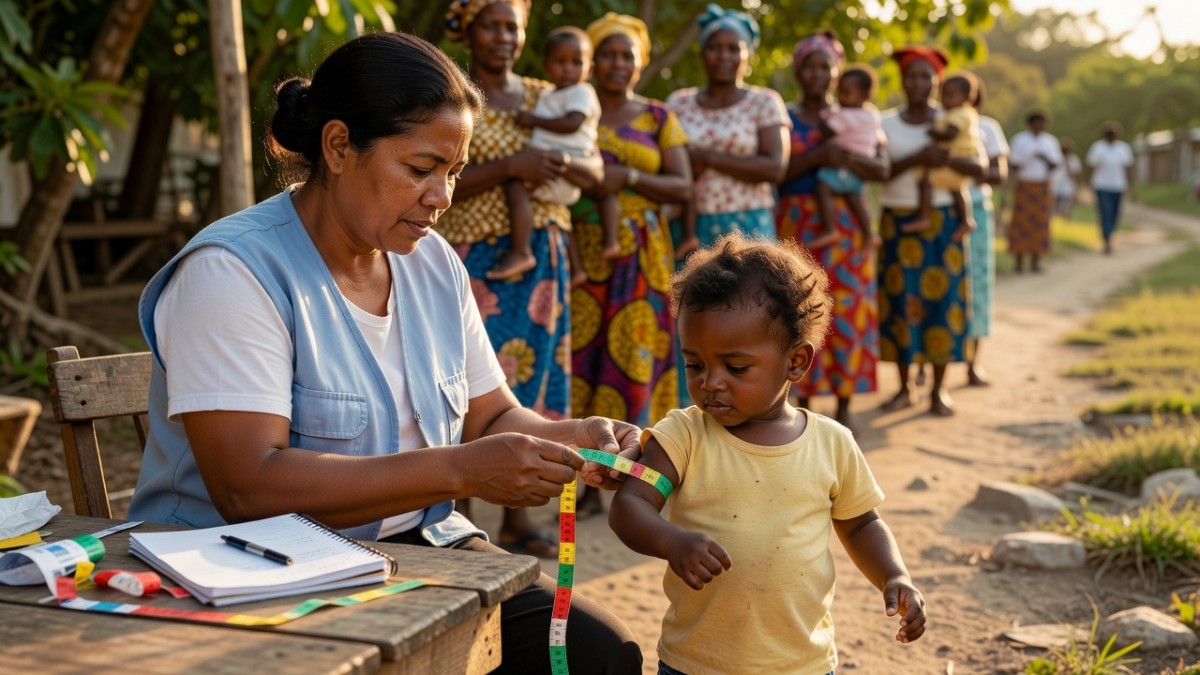
The Anatomy of a Collapse: Violence as a Primary Driver of Hunger
The roots of this nutritional catastrophe are not agronomic but political and criminal. Armed groups now control an estimated 90% of metropolitan Port-au-Prince, effectively holding the capital’s food supply chain hostage. These gangs systematically tax and block roads, ports, and critical distribution corridors, creating a siege economy where a bag of rice becomes a luxury item and humanitarian convoys require armed escorts or are turned back entirely. The violence has metastasized beyond the capital, spreading into the Artibonite Valley—historically Haiti’s breadbasket—as well as the Centre and Northwest departments, disrupting planting seasons and forcing farmers to abandon their fields.
The human cost of this territorial fragmentation is staggering. Between 2023 and 2025, grave violations against children—including the denial of humanitarian access and direct attacks on schools and hospitals where children receive nutrition services—have tripled. UNICEF estimates that a shocking 30-50% of armed group members are children themselves, recruited with the promise of food and protection in a context where the state has vanished. Yannig Dussart, UNICEF Deputy Representative in Haiti, contextualized the findings: "The findings emerge against a backdrop of prolonged insecurity, economic hardship and humanitarian needs that continue to constrain families' access to sufficient nutritious food, health care and nutrition services." This is not a natural disaster; it is a man-made famine engineered by armed actors who weaponize hunger as a tool of control.
Displacement and Deportation: The Unraveling of the Social Fabric
Compounding the violence is an unprecedented displacement crisis that has shredded the traditional family and community support networks that once served as a buffer against food insecurity. As of December 2025, the International Organization for Migration (IOM) Displacement Tracking Matrix (Round 12) recorded 1.45 million Haitians—a staggering 12% of the entire population—living in internal displacement. Of these, 755,000 are children, representing 53% of the displaced population, a record figure that signals a generation growing up without stable shelter, sanitation, or consistent access to food. These families are often crammed into makeshift sites in Port-au-Prince or host communities in the provinces, where they are entirely dependent on external assistance that is shrinking by the day.
Across the border, the situation is equally dire. More than 5,500 Haitian children have been forcibly returned from the Dominican Republic, often undocumented and without any transition support. These deportations strain a Haitian state that is already incapable of feeding its own citizens, dumping vulnerable children into a context where their chances of survival are statistically grim. The Dominican Republic’s policy, while legally its prerogative, has profound regional implications, effectively exporting instability into a neighbor that is already a failed state. For the Caribbean as a whole, this represents a dangerous precedent: the inability to manage a humanitarian crisis within one border inevitably spills over, creating a cycle of forced migration and regional insecurity that CARICOM nations are watching with growing alarm.
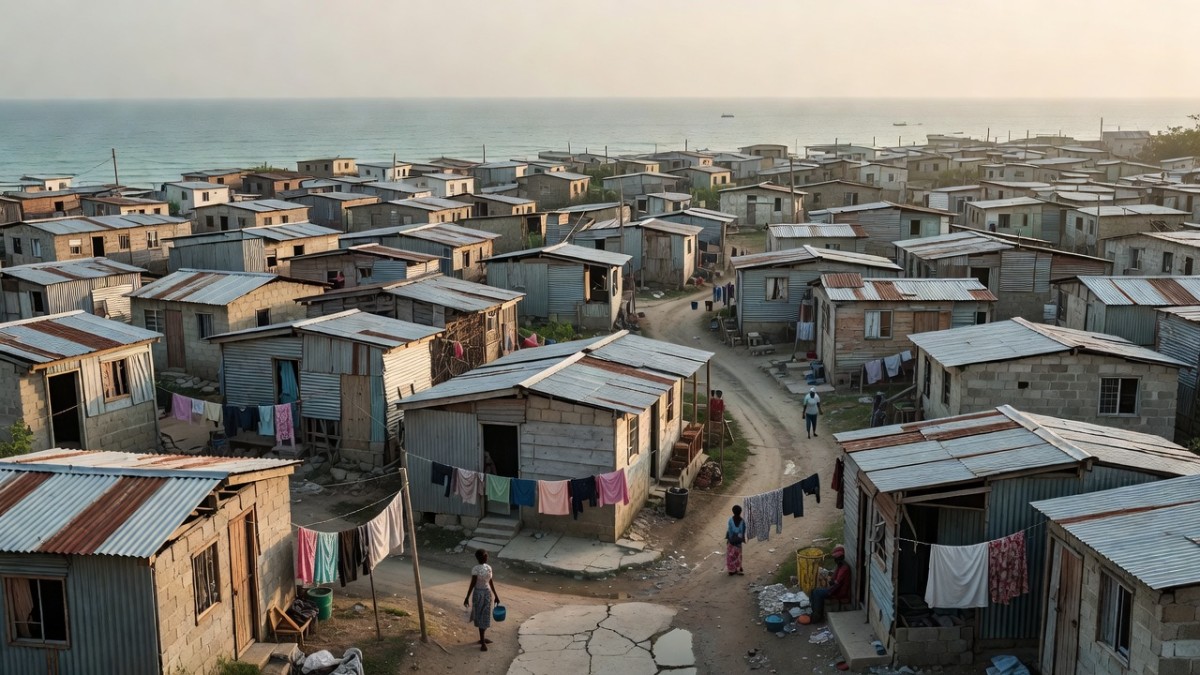
The Geopolitics of Hunger: From the Strait of Hormuz to Haitian Dinner Tables
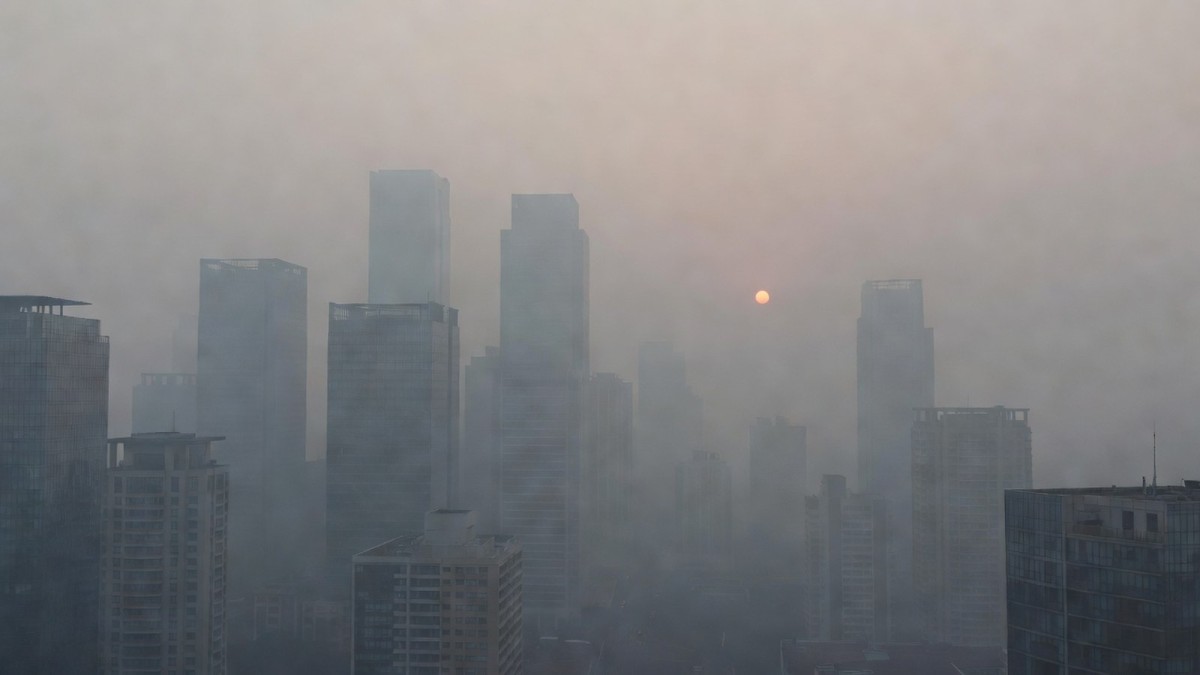
While local violence is the immediate trigger, the deeper structural vulnerability of Haiti—and the wider Caribbean—lies in its total dependence on imported food and fuel. The conflict in the Middle East and the blockade of the Strait of Hormuz have sent shockwaves through global energy markets, with direct consequences for Caribbean consumers. In Haiti, gasoline prices have surged by 29% and diesel by 37%, increases that have raised transport and distribution costs by more than 50% on some routes. This is a brutal arithmetic: even if food were available in the ports, the cost of moving it to the interior or into besieged neighborhoods has become prohibitive for both commercial traders and humanitarian agencies.
Although Haiti’s inflation rate slowed to 22.1% in February 2026, down from a peak of 31.9% in September 2025, food prices remain stubbornly high, eroding the purchasing power of families who have already sold their assets. The fuel shock demonstrates a critical lesson for Latin America: a geopolitical crisis on the other side of the world lands directly on Caribbean dinner tables, exposing the region’s acute vulnerability to external price volatility. The Caribbean food system is effectively held hostage to imported fuel and grain, and when those supply chains are disrupted, the poorest are the first to starve. This is not a Haitian problem alone; it is a structural weakness that affects every small island and coastal state in the region, from Jamaica to Guyana.
A Health System in Its Death Throes
Even when food is available, the infrastructure to treat malnourished children is collapsing. The health system in Haiti is in a state of near-total paralysis. According to the WHO/PAHO 2026 appeal, only 37 of 100 inpatient facilities in Port-au-Prince are functional, and nationwide, just 26% of the 268 inpatient facilities are fully operational. UNICEF corroborates this grim picture, noting that only 41% of health facilities with beds in the capital are fully functional. For a child with severe acute malnutrition, the difference between life and death often hinges on access to a therapeutic feeding center—a resource that is increasingly scarce or located in areas controlled by armed groups.
The collapse of the health system has also resurrected old scourges. Cholera persists, with approximately 4,000 suspected cases reported in 2025, primarily in the Ouest department and in internally displaced person (IDP) sites, where sanitation is virtually nonexistent. The resurgence risk is high, particularly as the rainy season approaches and displaced populations remain in flood-prone areas. Furthermore, UNFPA reports that Haiti has the highest maternal mortality rate in Latin America and the Caribbean, a stark indicator of the systemic failure to provide basic reproductive and emergency obstetric care. The combination of malnutrition, cholera, and maternal death creates a syndemic of suffering that overwhelms the few remaining health workers, who often operate without pay, supplies, or security.
The Climate Shock Multiplier: Hurricane Melissa and the Road to Recovery
Just as the humanitarian community struggles to respond to the violence-induced crisis, nature has delivered another devastating blow. Hurricane Melissa, which struck in late October 2025, killed 43 people, including 10 children, and flooded the Grand Sud and Ouest departments. The storm damaged critical health infrastructure, displaced more than 15,000 people, and destroyed crops that were meant to provide a buffer during the lean season. This climate shock acts as a force multiplier, exacerbating existing vulnerabilities and pushing families who were already on the edge into outright destitution.
The compounding effects of violence, displacement, and climate change are precisely what the Integrated Food Security Phase Classification (IPC) analysis for March to June 2026 captures. The IPC acute food insecurity report shows that 5.83 million people—52% of the analysed population—are in IPC Phase 3 or above (Crisis or worse). Nearly 1.9 million people, or 16% of the population, are in Phase 4 (Emergency), a level just one step short of famine. Ten of the 30 analysed areas are in Phase 4, including the poor neighbourhoods of Port-au-Prince, Cité Soleil, and parts of the Artibonite department. This represents a deterioration compared to the September 2025 to February 2026 period, when 5.7 million people were food insecure, indicating that the situation is worsening, not stabilizing.
A Regional Call to Action: The Cost of Inaction
The international response, however, is faltering at precisely the moment it is needed most. The funding gap for nutrition interventions under UNICEF’s 2026 Humanitarian Action for Children (HAC) appeal stands at more than 64%. UNICEF is requesting $256.6 million to assist 1.7 million people in Haiti in 2026, including 1.2 million children. The specific nutrition requirement is $37.3 million, up 7% from 2025, yet the supply of Ready-to-Use Therapeutic Foods (RUTF)—the peanut-based paste that is the gold standard for treating severe acute malnutrition—is at risk due to funding shortfalls. The cancellation of US aid has further weakened an already fragile humanitarian response, as documented in the Human Rights Watch World Report 2026.
Wanja Kaaria, WFP Country Director in Haiti, delivered a stark warning: "We cannot build peace when families have nothing to feed their children. Hunger opens the door to armed groups who will exploit the crisis, luring children with food." This is not hyperbole; it is a recruitment strategy. Food assistance is the first line of defense, not just against starvation, but against the further militarization of a child population that has known nothing but violence since the assassination of the president five years ago. The UN Security Council has transformed the Kenya-led Multinational Security Support (MSS) mission into a Gang Suppression Force (GSF) with a UN Support Office (UNSOH), but security solutions alone cannot fill empty stomachs.
For the wider Latin American and Caribbean region, Haiti is a warning siren. The UNICEF Child Alert from October 2025 noted that more than 3.3 million children need humanitarian assistance—three out of every four Haitian children. Roberto Benes, UNICEF Regional Director for Latin America and the Caribbean, has repeatedly stressed that this is a regional crisis requiring a regional response. CARICOM must look at Haiti not as an isolated failed state, but as a symptom of what happens when violence, climate change, and global economic shocks converge on a nation with no social safety net. The lessons for Latin America are clear: investing in resilience, local food production, and universal health coverage is not a luxury but a survival imperative. The children of Cité Soleil are not just Haiti’s future; they are a test of the hemisphere’s collective moral and political will.
By Elena Vasquez, Staff Writer
This article was produced with AI-assisted research and editorial support. Sources: UNICEF, WFP, IPC, WHO, UNFPA, Al Jazeera English.
What's Your Reaction?
 Like
0
Like
0
 Dislike
0
Dislike
0
 Love
0
Love
0
 Funny
0
Funny
0
 Wow
0
Wow
0
 Sad
0
Sad
0
 Angry
0
Angry
0

Latin America Correspondent at Global1.News. Based in Mexico City, covering politics, economics, energy, and culture across the region. Brings an on-the-ground perspective to stories spanning from the Rio Grande to Patagonia.











Comments (0)