
80% of Consumers Want FSSAI Junk-Food Warning Labels From Day One, Survey Finds
A LocalCircles survey of more than 108,000 consumers across 328 districts finds 80% want FSSAI front-of-pack warnings from day one when packaged food is high in sugar, salt or saturated fat. Supreme Court reviews the plan on September 10.
At least eight in every ten Indian consumers want front-of-pack warning labels on packaged foods from day one — the moment a product is high in sugar, salt or saturated fat, even if it is high in only one of them. That is the central finding of a nationwide LocalCircles survey of more than 108,000 household consumers across 328 districts, released this week as the Food Safety and Standards Authority of India (FSSAI) and the Supreme Court prepare for a pivotal hearing on the country's stalled junk-food labelling regime.
FSSAI Warning Labels: 80% of Consumers Want Junk-Food Warnings From Day One
New Delhi, September 9: The debate over what India's warning labels should look like — and how fast they should arrive — moved from courtrooms and boardrooms to prime-time television on Tuesday, when India Today convened nutrition scientists, consumer advocates and public-interest paediatricians to examine the difference between hunger and craving in the country's packaged-food boom. The timing was deliberate. With the Supreme Court scheduled to review FSSAI's proposed front-of-pack labelling (FoPL) framework on September 10, the panel confronted a regulator proposal that consumer groups say is weaker than what the public is demanding, and a food environment engineered, in the words of health researchers, to keep Indians reaching for another biscuit, chip or fizzy drink.

The Numbers Behind the Demand
The LocalCircles survey, whose findings were presented in the India Today debate by founder Sachin Taparia, leaves little room for ambiguity about consumer appetite for regulation. Among 23,516 respondents who answered the question on FSSAI's proposed two-phase system, 80 percent said warnings should apply immediately when a packaged food is high in any one of the three nutrients of concern — sugar, salt or saturated fat. Only 12 percent backed the two-phase approach proposed by the regulator, and just 6 percent said warnings should wait until a product is high in two or more nutrients.
The survey's demands go beyond timing. Of 23,491 respondents, 88 percent said the warning should be large, clearly visible and immediately noticeable on the front of the pack; only 10 percent considered the size FSSAI has proposed sufficient. On measurement, 53 percent of 20,525 respondents wanted warnings based on the total amount of sugar, salt and saturated fat in a product, while another 37 percent wanted both added and total amounts displayed — meaning nine in ten consumers want total nutrient content reflected. And on speed, 88 percent of 20,068 respondents said food and beverage companies should implement the warnings within six months.
The survey drew more than 108,000 responses from household consumers across 328 districts — 62 percent men and 38 percent women, with 45 percent from Tier-1 cities, 31 percent from Tier-2 cities and 24 percent from Tier-3, Tier-4, Tier-5 and rural districts. LocalCircles puts the margin of error at under 4 percent with a confidence level above 96 percent.
What FSSAI Has Actually Proposed
The consumer pressure lands against a regulatory backdrop that has swung sharply in recent weeks. FSSAI submitted a compliance affidavit to the Supreme Court on August 28, 2026, proposing red hexagonal warning labels on packaged foods and drinks, with declarations such as "HIGH FAT," "HIGH SUGAR," "HIGH SALT" and "HIGHLY SWEETENED BEVERAGE." The filing marked a reversal of sorts — Reuters reported last month that the government had dropped an earlier warning-label proposal in 2026 after food companies privately opposed it, triggering public anger and sustained intervention by the Supreme Court.
The proposed framework, however, is phased. In the first phase, a red warning would apply only to products high in two or more of added sugar, added salt and added saturated fat, along with certain sweetened beverages. Products high in just one nutrient would be covered in a second phase — for which, critics note, no date has been fixed. Single-ingredient foods and products naturally rich in these nutrients, such as ghee, edible oil, salt, sugar, jaggery and honey, are proposed to be exempt.
India has required back-of-pack nutrition information for years but has never had a mandatory, interpretive front-of-pack warning flagging products high in sugar, salt or saturated fat. FSSAI began examining FoPL in 2018 and proposed regulations built around an Indian star-rating system in 2022, but the process stalled amid industry resistance and repeated consultations. The Supreme Court's 2026 intervention — and the September 10 hearing — has compressed years of deliberation into a matter of weeks.
Why the 'Two-or-More' Trigger Worries Nutrition Experts
Nutrition advocacy groups describe the two-nutrient trigger as the framework's central flaw. Dr Arun Gupta, a Delhi-based paediatrician and convenor of the Nutrition Advocacy in Public Interest (NAPI) group, told the India Today debate — and has argued publicly — that a product high in sugar alone would escape a warning if it is low in fat and salt, defeating the entire purpose of a label. NAPI has called the two-or-more threshold a "massive loophole" and is pressing for a simple rule: high in sugar means a warning, high in salt means a warning, high in saturated fat means a warning.
Experts have also questioned the proposed use of "added" rather than total nutrients, arguing the thresholds should align with the Indian Council of Medical Research-National Institute of Nutrition (ICMR-NIN) Dietary Guidelines, 2024, which set out limits for total sugar and total fat per 100 grams. They want the definition of high fat, sugar and salt (HFSS) foods to follow the 2022 draft notification rather than being reinvented in a weaker form. Dr Gupta has further called for the warning size to be linked to the package's principal display area — a warning "one point larger" than a tiny back-of-pack nutrition table, he argues, is not prominence — and for labels to appear in Hindi and English so they reach consumers beyond the English-reading urban minority.
Craving by Design: The Science Behind the Labels
Underlying the regulatory fight is a neurological one. On India Today's Health Wealth segment, experts decoded why so many Indians find it difficult to stop eating ultra-processed foods: the food industry engineers what researchers call the "bliss point" — the precise balance of sugar, salt and fat calibrated to trigger dopamine spikes in the brain. The result is that much of what looks like hunger is actually craving, a distinction with real public-health consequences for a country where packaged and ultra-processed foods are no longer urban luxuries but staples of school lunches, office snack drawers and quick-commerce deliveries.
This is not an abstract worry. The World Health Organization's South-East Asia regional office has developed a nutrient profile model to help countries identify foods high in nutrients of concern, and a 2025 consensus statement by Indian and international researchers published in Preventive Medicine: Research & Reviews described mandatory front-of-pack warning labels as a "simple, inexpensive, practical and effective" tool against the NCD epidemic. India's disease burden gives the argument force: the ICMR-INDIAB study published in 2023 estimated more than 101 million adults in India live with diabetes, with a further 136 million in a pre-diabetic state, while the National Family Health Survey's fifth round found roughly a quarter of women and nearly a quarter of men aged 15-49 overweight or obese.
What This Means for India
If the Supreme Court directs FSSAI to harden its framework, India would join a growing club of developing economies that have adopted interpretive warning labels — Chile led the way with black octagonal "high in" warnings from 2016, followed by Mexico, Peru and Brazil, with post-implementation studies in Chile linking the labels to measurable reductions in purchases of high-sugar beverages. India's version would be the largest test yet, given a packaged-food market expanding across income brackets and a dietary transition that has moved millions of Indians from fresh-cooked meals toward shelf-stable, hyper-palatable products.
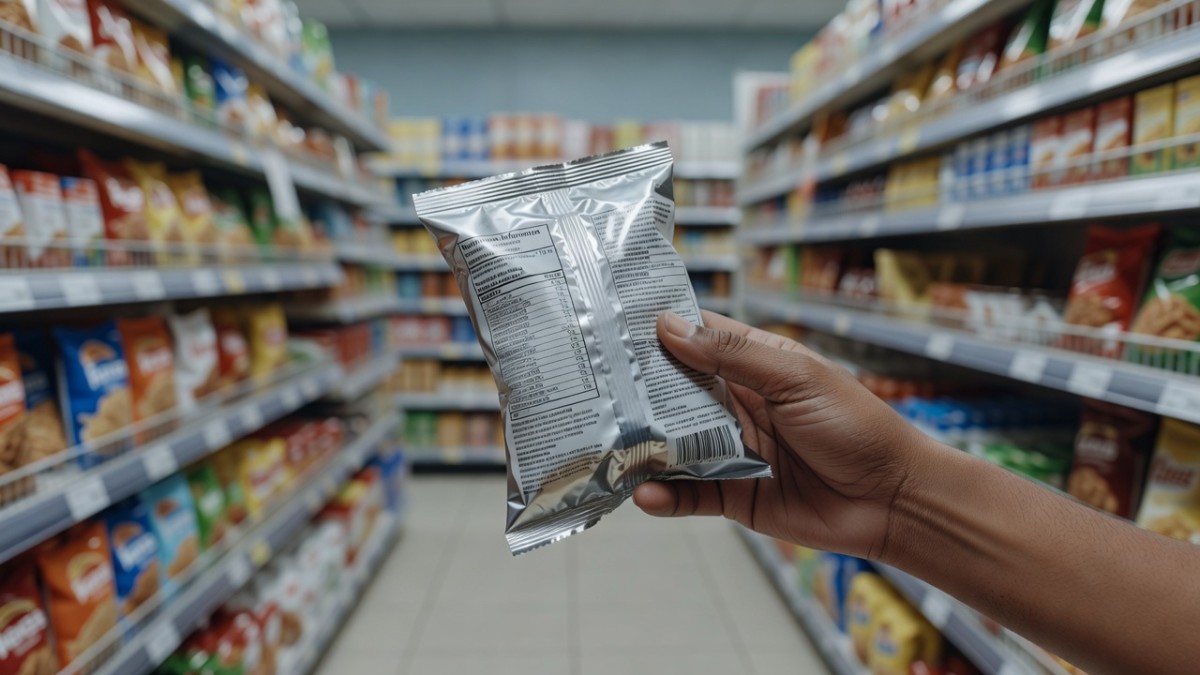
The survey also signals where enforcement will need to reach. Consumers want the same warnings shown on online product listings and quick-commerce platforms, not just physical packs — a reminder that a growing share of India's packaged-food purchases now happen on a phone screen. For the food industry, the direction of travel implies reformulation pressure: in markets with mandatory warnings, companies have quietly cut sugar, salt and fat from recipes rather than carry the labels. For consumers, the stakes are simpler and more immediate — the ability to know, in two seconds and in their own language, whether the packet in their hand is high in the nutrients that are driving India's diabetes and hypertension epidemic.
The Bottom Line
When the Supreme Court takes up the matter on September 10, it will be deciding more than the shape of a label. The reported two-week ultimatum to the government and FSSAI to finalise a visual format has forced a confrontation between what the regulator has proposed — a cautious, phased system triggered only when two or more nutrients are excessive — and what more than 100,000 surveyed consumers are demanding: immediate, prominent warnings the moment any one nutrient crosses the line. The science of craving says consumers need the help; the survey says they want it; the court now has to decide whether the regulator's caution will stand. For Indian public health, where diabetes, childhood obesity and diet-related disease are compounding with every food-transition year, the cost of getting the label wrong is measured not in compliance delays but in the health of a generation.
— By Dr. Raj Patel, Staff Writer
This article was produced with AI-assisted research and editorial support. Sources: India Today, The Hindu, Reuters, Business Today, Mathrubhumi, The Week, Firstpost, LocalCircles, ICMR-INDIAB (Lancet Diabetes & Endocrinology, 2023), NFHS-5.
What's Your Reaction?
 Like
0
Like
0
 Dislike
0
Dislike
0
 Love
0
Love
0
 Funny
0
Funny
0
 Wow
0
Wow
0
 Sad
0
Sad
0
 Angry
0
Angry
0

India/South Asia Correspondent at Global1.News. Analytical voice with a background in science and health journalism. Based in New Delhi, covering Indian politics, education, healthcare, technology, and policy. Breaks down complex data into clear, actionable reporting.















Comments (0)