
21 dead, over 3 million affected as 'Luis,' 'Maymay,' and habagat batter the Philippines
Cyclones Luis and Maymay and the enhanced southwest monsoon left 21 people dead and over 3.7 million affected across Metro Manila and nine regions, the NDRRMC reported Thursday. Infrastructure losses reached P2.65 billion with P458 million in relief assistance extended to impacted families.
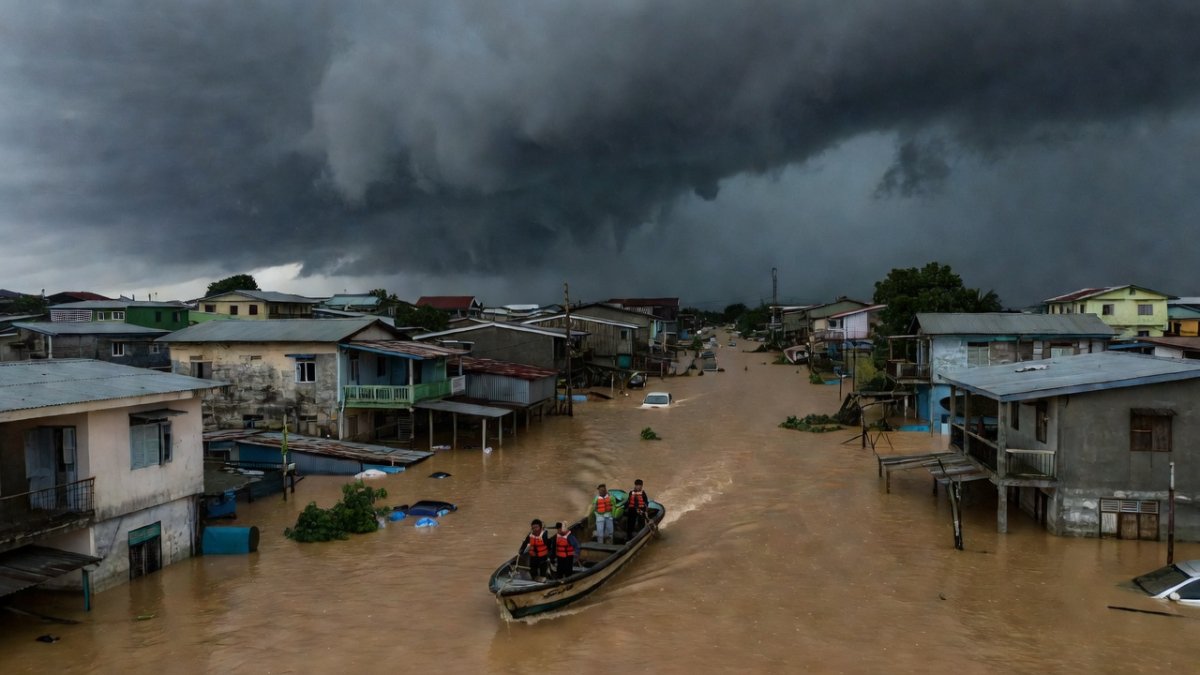
The numbers are staggering, and for the families huddled inside 553 evacuation centers across the country, they are not just statistics. As of Thursday, August 13, the National Disaster Risk Reduction and Management Council (NDRRMC) reported that the combined fury of tropical cyclones Luis and Maymay, further enhanced by the southwest monsoon, or habagat, has claimed 21 lives and left 14 people injured. The weather disturbances have impacted a total of 1,087,246 families, or 3,733,883 individuals, across Metro Manila and nine other regions.
For many of our kababayans, this is not just another storm. It is a week of relentless rain, rising floodwaters, and the agonizing wait for help. The NDRRMC also confirmed that three persons remain missing. As the nation grapples with the aftermath, the focus now shifts to the long road to recovery for the millions whose lives have been upended by these successive weather systems.
A nation under water: The scale of displacement
The sheer volume of people affected is difficult to comprehend. With over 3.7 million individuals impacted, this crisis touches nearly every barangay in the affected regions. The NDRRMC’s latest bulletin paints a picture of a nation under siege by water. Currently, 15,017 families, or 53,570 persons, are still taking shelter in evacuation centers. These are our kapitbahay, our fellow Filipinos who had to abandon their homes, their belongings, and in many cases, their livelihoods, to seek higher ground.
Inside these centers, the spirit of bayanihan is palpable. Families share what little food they have, mothers look after children who are not their own, and volunteers from local communities work tirelessly to distribute relief goods. But the strain is evident. The constant hum of anxiety, the worry about what awaits them back home, and the uncertainty of when they can return are heavy burdens. For many, especially those in low-lying areas of Metro Manila and nearby provinces, the floodwaters have become a terrifying and familiar enemy.
The NDRRMC data, while comprehensive, only tells part of the story. Behind the figure of 53,570 persons in evacuation centers are countless stories of resilience. There are students who worry about missed classes, workers who cannot report to their jobs, and elderly residents who struggle with the discomfort of cramped, temporary shelters. The psychological toll of such displacement is immense, and it will linger long after the floodwaters recede.
Counting the cost: Homes, infrastructure, and agriculture
The physical damage wrought by Luis, Maymay, and the enhanced habagat is a heavy blow to the national economy. The NDRRMC has reported that infrastructure losses have reached a staggering P2,647,707,229. This figure represents damaged roads, bridges, flood control facilities, and public buildings—the very arteries of our communities. When infrastructure fails, the delivery of aid is delayed, and the recovery process is slowed down significantly.
Equally devastating is the damage to the agricultural sector, which has been valued at P347,372,392. For our farmers, this is not just a financial loss; it is the loss of their season’s hard work, their investment, and their family’s food security. Rice paddies and vegetable farms that were ready for harvest have been submerged or destroyed. This damage will have a ripple effect, potentially leading to higher prices of goods in the markets in the coming weeks and months, affecting every Filipino household, from the sari-sari store owner in the province to the office worker in Makati.
The NDRRMC also reported that a total of 1,339 homes were damaged. Of this number, 1,336 were partially damaged, while 103 were completely destroyed. For the families whose homes were destroyed, the road to recovery is particularly arduous. They are not just waiting for the flood to subside; they are facing the daunting task of rebuilding their lives from scratch. The loss of a home is the loss of a family’s anchor, their security, and their sanctuary.
Government and LGU response: A collective effort
In the face of this calamity, government agencies and local government units (LGUs) have mobilized their resources to provide immediate assistance. According to the NDRRMC, a total of P458,024,188 worth of relief assistance has been extended to help impacted families. This aid comes in various forms, including food packs, hygiene kits, and financial assistance, and is crucial for the immediate survival of those in evacuation centers.
This response, however, is a race against time. The Department of Social Welfare and Development (DSWD), along with local government units, is working to ensure that no family goes hungry. Barangay captains and their councils have been at the forefront of the response, conducting rapid damage assessments and coordinating the distribution of aid. Their role is vital, as they are the first to know the specific needs of their constituents. The spirit of bayanihan is not just a cultural ideal; it is a practical necessity in times like these.
However, the P458 million in assistance, while substantial, is just a fraction of the total damage. The P2.6 billion in infrastructure losses and the P347 million in agricultural damage will require a much larger, long-term rehabilitation effort from the national government. The challenge now is to ensure that the aid reaches those who need it most, without delay, and that the rebuilding process is swift and inclusive. The call for unity and cooperation between the national government, LGUs, and the private sector has never been more urgent.
What the numbers mean for ordinary Filipinos
For the ordinary Filipino, these figures translate into a daily struggle. For the jeepney driver, it means navigating flooded streets and losing income because passengers cannot go out. For the market vendor, it means spoiled goods and empty stalls. For the factory worker, it means the anxiety of a suspended work schedule and the fear of a reduced paycheck. The economic impact of this disaster will be felt in the coming weeks, as supply chains are disrupted and the cost of basic goods may rise.
For families in evacuation centers, the immediate concern is health and sanitation. Crowded conditions can lead to the spread of diseases like leptospirosis and dengue. The Department of Health (DOH) has repeatedly warned about the dangers of wading in floodwaters, which are often contaminated. Parents are worried about their children’s health, and the lack of clean drinking water and proper sanitation facilities is a major concern. The resilience of the Filipino people is legendary, but even the strongest spirit needs support, rest, and a glimmer of hope.
This disaster also highlights the urgent need for better disaster preparedness and climate change adaptation. As we see more frequent and stronger typhoons, the call for sustainable urban planning, stricter building codes, and the preservation of our natural barriers like mangroves and forests becomes more critical. The cost of inaction is measured not just in pesos, but in lives lost and futures disrupted.
The road to recovery: What happens next
The immediate emergency is far from over, but attention is already turning to the long process of rebuilding. With 553 evacuation centers still operational and more than 53,000 people sheltering inside them, the first priority for government agencies and local government units is making sure that families have food, clean water, and medical care while the floodwaters recede. The P458,024,188 in relief assistance extended so far is a start, but officials and community leaders alike know that rehabilitation will demand far more in the weeks and months ahead.
The damage to homes, infrastructure, and farmlands will take time to repair. Families whose houses were partially damaged will need construction materials and financial support to make their homes safe again, while those whose homes were destroyed face the hardest road of all. For farmers, the P347 million in agricultural losses means lost harvests and lost income, and the effects may be felt in market prices in the coming months. The NDRRMC continues to monitor the situation, and LGUs are conducting damage assessments that will shape the next wave of assistance. For the 3.7 million affected Filipinos, recovery will not be measured in days, but in the steady, patient work of rebuilding lives, one barangay at a time.
Staying safe: A practical guide for the monsoon season
As the southwest monsoon continues to bring heavy rains, it is crucial for everyone to remain vigilant. The threat is not over, and the possibility of more flooding and landslides remains. Here are some practical steps to ensure your safety and the safety of your loved ones:
First, always monitor official weather updates from the Philippine Atmospheric, Geophysical and Astronomical Services Administration (PAGASA) and heed the warnings of your local government unit. Do not rely on unverified information from social media. If your area is under a flood warning, prepare to evacuate immediately. Do not wait for the water to rise before you decide to leave. Remember, your life and your family’s lives are more important than any material possession.
Second, if you are in an evacuation center, practice good hygiene. Wash your hands frequently with soap and clean water, and avoid wading in floodwaters to prevent leptospirosis. If you must go through floodwater, wear protective boots if possible. Ensure that your family drinks only clean, safe water. Boil water if you are unsure of its source. Also, be mindful of the risk of dengue; eliminate stagnant water around your temporary shelter to prevent mosquitoes from breeding.
Third, stay connected with your barangay officials. They are your primary source of information and assistance. Participate in community efforts to clean up and assess the damage once the waters recede. The spirit of bayanihan is our greatest strength. By helping our neighbors, we are also helping ourselves. Check on elderly relatives and those with special needs in your community. A simple act of kindness can make a world of difference to someone in distress.
Finally, prepare an emergency "go bag" with essential items like important documents, medicines, flashlights, batteries, a portable radio, and a few days’ worth of food and water. Keep it in an accessible place. Being prepared can significantly reduce the stress and danger during an emergency. As we have seen this week, the weather can change in an instant, and it is always better to be safe than sorry.
The road to recovery for the 3.7 million affected Filipinos will be long and difficult. But as we have done countless times before, we will rise. We will rebuild our homes, our farms, and our communities. The resilience of the Filipino spirit, coupled with the unwavering support of the government and the bayanihan of our people, will see us through this dark chapter. Our thoughts and prayers are with all those who have lost loved ones and with everyone who is struggling to pick up the pieces.
By Bella Reyes, Staff Writer
This article was produced with AI-assisted research and editorial support. Sources: Philstar.com, NDRRMC.
What's Your Reaction?
 Like
0
Like
0
 Dislike
0
Dislike
0
 Love
0
Love
0
 Funny
0
Funny
0
 Wow
0
Wow
0
 Sad
0
Sad
0
 Angry
0
Angry
0

Philippines/Southeast Asia Correspondent at Global1.News. Manila-based journalist covering Philippine politics, environment, maritime security, and social issues. Passionate about marine conservation and the communities protecting the Philippines' natural heritage.














Comments (0)