
Zambia Vote Count Resumes After Attacks on Poll Staff
Zambia Vote Count Resumes After Attacks on Poll Staff Lusaka, Zambia — Article continues after the electoral commission's suspension of the nationwide tallying of votes from Thursday's general elections, a pause that was lifted after the commission s
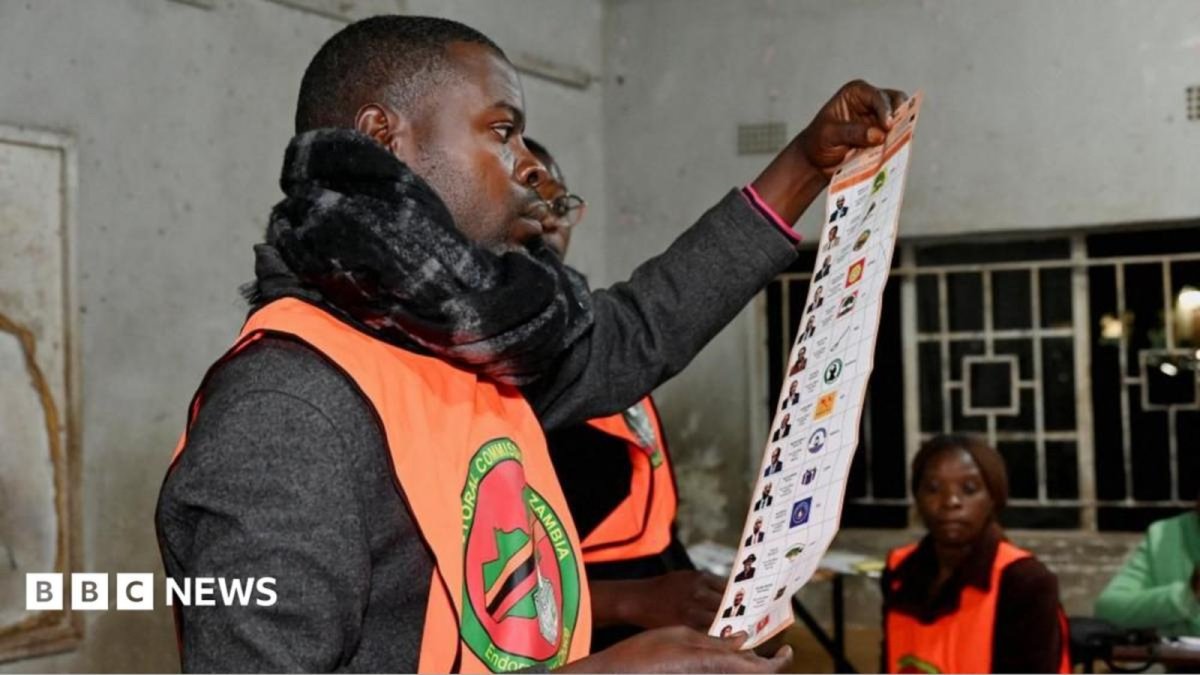
Zambia Vote Count Resumes After Attacks on Poll Staff
Lusaka, Zambia — Article continues after the electoral commission's suspension of the nationwide tallying of votes from Thursday's general elections, a pause that was lifted after the commission said it would review the decision within 24 hours. The interruption, triggered by alleged attacks on polling staff and the theft of marked ballot papers, has cast a shadow over a process that had largely proceeded peacefully. As counting resumes, the nation waits to see whether the final results will be accepted by a deeply engaged and divided electorate.
Counting Halted, Then Resumed
Zambia's electoral commission on Friday suspended the nationwide tallying of votes from Thursday's general elections, citing alleged attacks on polling staff that resulted in the theft of marked ballot papers in ballot boxes. The dramatic intervention came just hours after counting had begun, throwing the southern African nation's electoral timeline into uncertainty. By Friday evening, however, the commission announced it would review the suspension decision within 24 hours, and the BBC headline reports that vote counting resumed after the pause.
The commission's initial statement expressed grave concern over reports of violence that had "resulted in the theft of marked ballot papers in ballot boxes." The halt was applied with immediate effect nationwide, a move that stunned observers who had witnessed a largely peaceful polling day. No official results had been declared when the pause came into effect, leaving millions of Zambians in a tense limbo as they awaited word on who would lead the country for the next five years.
The commission had previously set itself the target of announcing final results by the end of Sunday, a deadline that now appears increasingly ambitious given the disruption. Electoral officials have not specified which regions experienced the alleged attacks, nor have they provided details on the number of incidents reported. Civil society monitors, who reported mostly orderly voting alongside some delays and procedural issues, have called for transparency in the investigation.
Opposition Alarms and Allegations
Just hours before the commission's suspension statement, main opposition candidate Brian Mundubile had already raised the alarm. The former minister in the Patriotic Front (PF) government expressed "grave concern" over delays in the announcement of presidential results, warning that the lag could create opportunities for interference or manipulation. Mundubile cited what he described as "deeply troubling reports" from several areas, including alleged military involvement at tallying centres and allegations concerning the movement of ballot boxes.
Mundubile, running under the banner of the National Reconciliation Party for Unity and Prosperity (NRPUP), called for the immediate publication of results polling station by polling station. He also demanded protection of the chain of custody for all ballot materials and investigations into the reported incidents. His statements reflect a deep-seated distrust of the electoral process, a sentiment that has been building for months in opposition circles.
The opposition candidate's alliance draws significant support from backers of the late former President Edgar Lungu, who died more than a year ago. Lungu's body remains unburied in South Africa amid a bitter dispute between his family and President Hakainde Hichilema, a standoff that has heightened political divisions in Zambia and cast a long shadow over this election cycle.
A Test for Africa's 'Stable Democracy'
Thursday's vote was widely seen as a test of Zambia's reputation as one of Africa's most stable democracies, amid growing concerns that political freedoms are being undermined. The country has long prided itself on peaceful transitions of power, a record that stands in contrast to many of its neighbours. But the current electoral cycle has tested that reputation, with Amnesty International criticising the United Party for National Development (UPND) government for restricting rights and freedoms in the run-up to the election.
Zambian authorities have yet to comment on those accusations, but the suspension of counting will do little to reassure those who worry about the integrity of the process. International observers are present across the country, and their preliminary assessments will be closely watched in the coming days. The electoral commission's handling of this crisis will likely shape both domestic confidence and international perception of Zambia's democratic credentials.
For many ordinary Zambians, the election is about more than abstract democratic principles. It is about jobs, education, and the daily struggle to make ends meet. The queues that formed before dawn on Thursday, with voters braving the morning chill to cast their ballots, spoke to a population deeply engaged with the political process despite their frustrations.
The Two-Horse Race
Despite 14 candidates appearing on the presidential ballot paper, the contest was largely seen as a two-horse race between the incumbent and his main challenger. Hichilema, 64, won the 2021 election on his sixth attempt and is seeking a second and final five-year term. He is credited with steering Zambia through a difficult economic climate, but his popularity has been dented as many people say their circumstances have not improved.
Mundubile hoped to capitalise on that dissatisfaction. A former minister in the PF government that ruled from 2011 to 2021, he has positioned himself as the candidate of change, promising to address the economic hardships that continue to plague ordinary Zambians. His campaign drew on the legacy of Lungu, whose death has left a political vacuum that Mundubile has sought to fill.
The election was seen as a referendum on Hichilema's economic record, which has boasted debt restructuring, currency strengthening, and lowered inflation. But these macroeconomic achievements have not translated into tangible improvements for many citizens, and the gap between official statistics and lived experience has become a central theme of the campaign.
Economic Record on the Ballot
Hichilema's government has bet heavily on job creation and an ambitious infrastructure drive to secure a second term. The president has argued that his policies are laying the groundwork for long-term prosperity, even if the benefits have yet to reach all Zambians. His supporters point to the re-introduction of meal allowances for students and other targeted interventions as evidence of progress.
But critics argue that the economic recovery has been uneven, benefiting urban elites while leaving rural communities behind. The welder Samuel Chitendwe, a 47-year-old father of four, told Reuters he voted for Mundubile. "I have just come from firing someone. We are tired of stories about economic progress," he said. Such sentiments have been echoed across the country, particularly in areas that have not felt the effects of the debt restructuring or currency stabilisation.
The economic stakes are high. Zambia has spent years navigating a debt crisis that has constrained public spending and limited the government's ability to deliver services. The next president will inherit these challenges, and the choices made in the coming months will shape the country's trajectory for years to come.
Voices From the Queue
For many voters, the election was a deeply personal decision. Mwiche Nalupumbwe, 26, was among hundreds who braved Thursday's morning chill to queue at polling stations well before they opened. "Zambians are frustrated and this election is a 50-50, that is why we are all here early to make the change," he told the AFP news agency. His words capture the ambivalence of a population that is both hopeful and wary.
Others expressed confidence in the incumbent. "I voted for HH because he cares about us," James Phiri, a 29-year-old student at the University of Zambia, told the Reuters news agency, using a common nickname for the president. "Things are better after he re-introduced meal allowances," he said. For Phiri and others like him, the president's targeted interventions have made a tangible difference in their daily lives.
The diversity of voices in the queues reflected the complexity of the electoral landscape. Young voters, in particular, appeared divided between those who see Hichilema as a reformer and those who view him as out of touch with their struggles. The more than eight million registered voters had the chance to choose not only a president but also a new parliament and local councils, making this one of the most consequential elections in Zambia's history.
What Happens Next
The immediate priority for the electoral commission is to complete the counting process and announce results. If no presidential candidate secures more than 50% of the vote, a run-off must be held within 37 days, a scenario that would extend the uncertainty and potentially heighten tensions. The Sunday deadline for announcing the result was one set by the electoral commission and not the law, leaving room for flexibility if the process requires more time.
Hichilema has urged Zambians to "remain peaceful, patient and patriotic as we await the official outcome from those entrusted with managing the vote." His call for calm is echoed by civil society groups and international observers, who are monitoring the situation closely. The coming days will test whether Zambia can navigate this crisis without descending into the kind of electoral violence that has plagued other African nations.
The suspension of counting, even if brief, has already left a mark on the electoral process. Trust, once eroded, is difficult to restore. The commission's handling of the investigation into the alleged attacks will be scrutinised, and its ability to conduct a transparent and credible count will determine whether Zambians accept the final result. For a country that has prided itself on being a beacon of stability in the region, the stakes could not be higher.
As the counting resumes and the nation waits, the words of the young voter Mwiche Nalupumbwe linger: "Zambians are frustrated and this election is a 50-50." The outcome will reveal whether that frustration translates into change or continuity, and whether Zambia's democracy can withstand the pressures of a deeply divided electorate.
This article was produced with AI-assisted research and editorial support. Sources: BBC Africa, Reuters, AFP
By Amara Diop, Staff WriterWhat's Your Reaction?
 Like
0
Like
0
 Dislike
0
Dislike
0
 Love
0
Love
0
 Funny
0
Funny
0
 Wow
0
Wow
0
 Sad
0
Sad
0
 Angry
0
Angry
0

West Africa/Sahel Correspondent at Global1.News. Dakar-based journalist covering politics, security, climate, and development across Francophone and Anglophone West Africa. Tells the stories of a region undergoing profound transformation.










Comments (0)