
Tupac Trial Begins: Director Seeks Closure for a Global Legacy
In the suffocating heat of a Las Vegas summer, three decades of silence are finally cracking open. The man accused of orchestrating the murder of Tupac Shakur—the poet, the rebel, the voice of a generation—is finally standing trial, and the world is watching.
In the suffocating heat of a Las Vegas summer, three decades of silence are finally cracking open. The man accused of orchestrating the murder of Tupac Shakur—the poet, the rebel, the voice of a generation—is finally standing trial, and the world is watching. From the bustling streets of Dakar to the townships of Johannesburg, this is not just an American story; it is a reckoning for a global family that has carried Tupac's spirit in their hearts since that tragic September night in 1996.
Thirty Years Later, Las Vegas Courtroom Hears the Case of Tupac Shakur's Death, and a Continent Waits for Answers
Las Vegas, United States — The first criminal trial in the murder of Tupac Shakur is underway, nearly three decades after the rap icon was gunned down on the Las Vegas Strip. For African fans who grew up memorizing his lyrics in Wolof, Swahili, and Zulu, this trial is a long-awaited moment of potential justice, a chance to see if the truth can finally outrun the shadows of history.
The case centers on Duane "Keffe D" Davis, a 63-year-old former gang leader who stands accused of orchestrating the drive-by shooting that killed Shakur. As the trial unfolds, an Emmy-nominated director who has spent years examining the case hopes this moment will bring a measure of peace to a family and a culture that have mourned for too long.
Thirty Years Later, a Trial Begins
Duane "Keffe D" Davis entered the Clark County Regional Justice Center this week with the weight of history on his shoulders. The 63-year-old is charged with murder with a deadly weapon in connection with Tupac Shakur's September 1996 killing, a charge that carries the possibility of life in prison without parole if convicted. Davis, who has pleaded not guilty, sat stoically as the court began the meticulous process of selecting a jury on August 10, 2026, a task that was completed by August 12, leaving both prosecution and defense ready to make their opening statements.
The path to this trial has been long and fraught with legal maneuvering. In July 2026, Judge Carli Kierny ruled that a crucial police interview with Davis is admissible as evidence, a decision that prosecutors believe will be pivotal. In that interview, Davis allegedly made statements that, combined with his own memoir and public admissions, paint a picture of a man who was not just a witness but a central architect of the plot to kill Shakur.
Prosecutors allege that Davis orchestrated the drive-by shooting that killed Shakur, acting on orders from higher-ups in the rap industry's volatile East Coast-West Coast feud. The narrative they present is one of cold-blooded calculation, a man who used his position in the South Side Compton Crips to exact revenge and secure a financial reward. Davis's defense team, however, has signaled they will challenge the credibility of the witnesses and the admissibility of the recordings, arguing that the case relies on the word of a man seeking to profit from his own infamy.
This trial is the first criminal trial in the case nearly 30 years after the killing, a fact that underscores the immense difficulty of prosecuting a decades-old crime. Witness memories have faded, evidence has been lost, and key figures have died, yet the core question remains: who was responsible for silencing one of the most powerful voices of a generation? The courtroom is packed with journalists from around the world, including several from African outlets, reflecting the global interest in a case that transcends borders.
For the Shakur family, who have waited 30 years for this day, the trial is a painful reopening of an old wound. Tupac's sister, Sekyiwa Shakur, has been a constant presence in the courtroom, her face a mask of quiet determination. The family has long accused the Las Vegas Metropolitan Police Department of a botched investigation, and this trial represents their best hope for answers that have eluded them for three decades.
The Documentary at the Centre of the Case
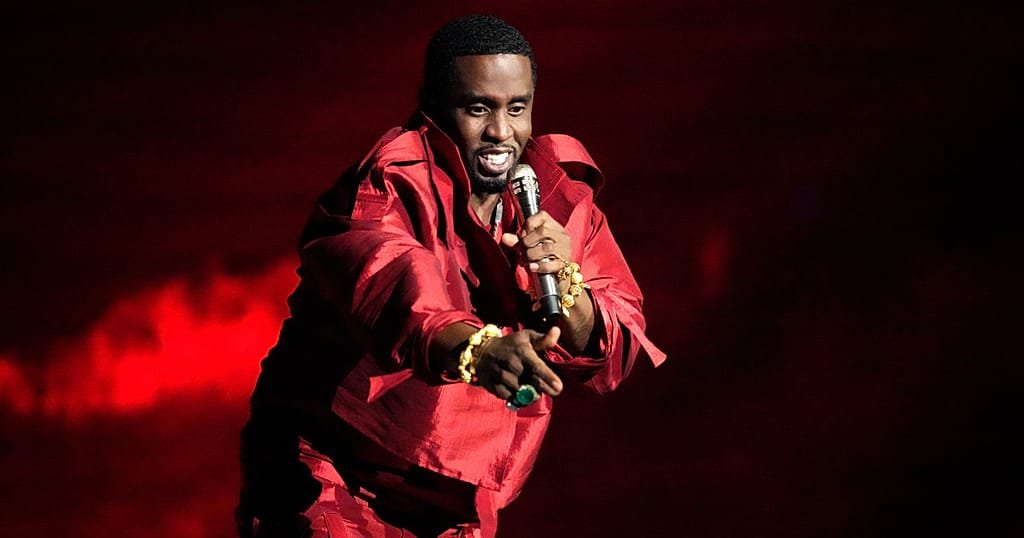
At the heart of this legal drama is a piece of media that has reignited public interest in the case: the Emmy-nominated director Alexandria Stapleton's four-part Netflix documentary series, "Sean Combs: The Reckoning." Released on Netflix in December 2025 and executive produced by Curtis "50 Cent" Jackson, the series has become a cultural touchstone, nominated for three Emmy Awards including best documentary or nonfiction series. Stapleton, who has spent years immersed in the world of 1990s hip-hop, has crafted a narrative that examines the complex and often deadly relationships between the era's biggest stars.
The documentary specifically examines Sean Combs' relationship with Shakur and with Davis, weaving together archival footage, interviews, and never-before-seen recordings. The most explosive element of the series is the inclusion of recordings in which Davis allegedly claimed that Combs hired him to carry out the killing. These recordings, which were also central to the police investigation, have thrust Combs back into the spotlight, though he is not charged in connection with Shakur's killing and has denied any involvement.
Stapleton, speaking to Global1.News from her editing suite in Los Angeles, is careful to distinguish between the documentary's revelations and the legal reality. "As of right now, they're allegations," she said, her voice measured and deliberate. "The documentary presents what was said and what was found, but it is not a court of law. The trial will determine how these claims stand up in court." Her insistence on this distinction is a testament to her journalistic integrity, a refusal to let the power of storytelling outpace the pursuit of factual truth.
The series has not been without its critics. Some have accused Stapleton of sensationalizing a tragedy for commercial gain, while others have praised her for shining a light on a cold case that had gone cold. For Stapleton, the goal was always more nuanced. "This is a story about power, about the music industry, and about the consequences of silence," she explained. "It's about how a culture that was built on expression and rebellion also had a dark underbelly that we have to confront."
The documentary's success has also had a tangible impact on the legal proceedings. Legal analysts believe that the public attention generated by the series may have pressured prosecutors to move forward with charges against Davis, who had been known to investigators for years. The recordings featured in the documentary are now expected to be a key piece of evidence in the trial, giving the jury a firsthand look at the alleged confession that has remained out of public view for so long.
A Continent That Never Forgot Tupac
While the trial unfolds in a Las Vegas courtroom, the echoes of Tupac's voice are resonating across the African continent with an intensity that has never faded. From Senegal to South Africa to Kenya, Tupac Shakur is not just a memory; he is a living presence, a prophet whose words about injustice, poverty, and resistance speak directly to the realities of African life. His influence on African hip-hop scenes is immeasurable, a foundational pillar upon which a generation of artists built their craft.
In Dakar, the city of my birth, you can hear Tupac's influence in the flow of rappers like Didier Awadi, who has long cited Shakur as a primary inspiration. Awadi, a pioneer of African hip-hop, often speaks of how Tupac's music provided a template for using art as a tool for social commentary, a way to challenge corrupt governments and give voice to the voiceless. The same can be said for artists in Nigeria, where the late Dagrin and current stars like Falz have woven Tupac's themes of struggle and resilience into their own narratives.
The connection runs deeper than mere musical influence; it is rooted in a shared cultural heritage. Hip-hop's roots in African rhythm and storytelling traditions are well-documented, and Tupac, with his theatrical delivery and poetic lyricism, embodied that connection more than any other artist of his era. He was a griot for the modern age, a storyteller who used the rhythm of the streets to convey the pain and hope of a people. For African fans, listening to Tupac was not an act of cultural appropriation but a recognition of a kindred spirit.
African fans have kept Tupac's legacy alive for three decades, not just through music but through fashion, art, and language. His image, often depicted with a bandana and a defiant stare, adorns murals from Lagos to Nairobi. His quotes are scrawled on the backs of taxis and shared as WhatsApp statuses. He is a symbol of defiance against oppression, a reminder that even in the face of overwhelming odds, the human spirit can endure.
This deep connection is why the trial in Las Vegas feels so personal to so many Africans. It is not just about solving a crime; it is about honoring a legacy that has given so much to the continent. When the verdict is read, it will be felt in the bustling markets of Accra and the quiet villages of the Sahel, a collective holding of breath for a man who, though he never set foot on much of the continent, has always been one of its own.

Legacy, Art and Speaking Truth
Alexandria Stapleton, who has spent countless hours studying Tupac's life and work, describes him as an artist who used music, poetry, and writing to confront difficult social realities. "He was never afraid to look into the abyss and describe what he saw," she said. "He didn't shy away from the ugliness of poverty, the brutality of police violence, or the hypocrisy of the system. He used his art as a mirror, forcing society to look at itself." This unflinching honesty is what has made his work so enduring, a quality that resonates as strongly today as it did in the 1990s.
Tupac's legacy is not confined to his music. He was an actor, starring in films like "Juice" and "Poetic Justice," and a poet, publishing a collection of verse titled "The Rose That Grew from Concrete." He was an activist, speaking out against systemic racism and advocating for Black empowerment. His evolution from a young, hungry rapper to a mature, politically conscious artist was cut short, but the trajectory of his growth remains a blueprint for artists who seek to use their platform for more than just entertainment.
"I think that his legacy will only continue to live on," Stapleton said, her voice filled with conviction. "His work is timeless because it speaks to fundamental truths about the human condition. As long as there is injustice, his words will find new relevance. As long as there is struggle, his music will be a source of strength." This sentiment is echoed by the millions of fans who continue to discover his music, a new generation that finds in his lyrics a voice that speaks to their own experiences.
The enduring mystery of who killed Tupac and why the world still cares is a testament to the power of his art. He was more than a rapper; he was a symbol of a generation's hopes and fears. His death, like his life, was a statement, a violent end to a story that seemed destined for greatness. The world still cares because his story is unfinished, and the trial offers a chance to write a final chapter, one that might provide answers and, perhaps, a sense of justice.
For African artists, Tupac's example is a powerful reminder of the importance of speaking truth to power. In a continent where many governments are still hostile to free expression, his courage is an inspiration. He showed that art can be a weapon, a shield, and a healing balm, all at once. His legacy challenges African creatives to be bold, to be honest, and to never forget the communities that gave them their voice.
What the Trial Means for Hip-Hop's Global Family
This trial is more than a legal proceeding; it is a reckoning moment for hip-hop culture. For decades, the genre has been haunted by the ghosts of its past, the violence and feuds that claimed the lives of its brightest stars. The trial forces a confrontation with that history, a painful but necessary examination of how the culture's internal conflicts spiraled out of control. It is a moment for the global hip-hop family to reflect on its own accountability and to consider how to move forward.
Sean Combs, who is not charged in connection with Shakur's killing and has denied involvement, remains a central figure in the narrative. The documentary and the trial have renewed scrutiny of his role in the East Coast-West Coast rivalry, a feud that many believe contributed to the climate of violence that led to Shakur's death. While Combs has not been legally implicated, the court of public opinion is a different matter, and the trial is likely to keep him in the headlines for weeks to come.
The case has also renewed scrutiny of 1990s hip-hop's darker chapters, a period marked by extraordinary creativity and tragic loss. The deaths of Tupac and The Notorious B.I.G. remain open wounds in the culture, and the trial offers a chance to address at least one of those wounds. For African audiences, who have consumed hip-hop as a global export, this is a moment to understand the full context of the music they love, including its struggles and its contradictions.
What African audiences are watching for is not just a verdict but a narrative of accountability. They want to see that justice can be served, even decades later, and that the powerful are not immune to the consequences of their actions. The trial is a test of the legal system's ability to reckon with the past, and its outcome will be scrutinized not just in Las Vegas but in living rooms from Dakar to Dar es Salaam.
Documentaries like "The Reckoning" have changed how the culture tells its own history. They have moved beyond the hagiography and the myth-making to ask difficult questions and present complex truths. This new wave of storytelling is empowering a generation of filmmakers and journalists to hold the culture accountable, to ensure that the lessons of the past are not forgotten. The trial, in this context, is the ultimate test of whether that accountability can extend beyond the screen and into the halls of justice.
Closure and the Road Ahead
Alexandria Stapleton's hope for the trial is simple yet profound. "I hope that it potentially brings some sort of closure," she said, "to Tupac's family, to his friends, and to the fans who have carried his memory for so long." Closure is a elusive concept, especially in a case that has been shrouded in mystery for three decades, but the trial offers a path toward it. A verdict, whether guilty or not guilty, will provide a definitive answer to the question of who was responsible, even if it cannot undo the tragedy of his loss.
The timeline of the trial in Las Vegas is expected to extend over several weeks, with testimony from former gang members, retired detectives, and forensic experts. The prosecution will likely rely heavily on the police interview with Davis, as well as the recordings featured in the documentary. The defense will attempt to poke holes in the prosecution's case, arguing that Davis's statements were the boasts of a man seeking attention, not a confession of guilt. The jury, selected this week, will have the unenviable task of sifting through decades of conflicting accounts to reach a verdict.
What the verdicts could mean is a matter of intense speculation. A guilty verdict would be a historic moment, a long-delayed victory for the Shakur family and for those who have campaigned for justice. It would send a message that no one is above the law, no matter how much time has passed. An acquittal, on the other hand, would be a devastating blow, a confirmation of the fear that the truth might never be fully known. Either way, the trial will have a lasting impact on how the story of Tupac Shakur is told.
For African creatives, the broader lesson of this trial is about the importance of legacy and truth-telling. Tupac's life and death are a reminder that art has consequences, that the stories we tell can shape the world in profound ways. It is a call to be intentional about the narratives we create, to ensure that they reflect the truth as we see it, and to use our platforms to fight for justice. This moment connects directly to Africa's own cultural renaissance, a period of explosive creativity and global influence, and it challenges African artists to carry the torch of truth-telling with the same courage that Tupac did.
As the trial moves forward, the world will be watching, but none more closely than the global family that Tupac left behind. His music will continue to play in the streets of Dakar, in the clubs of Lagos, and in the hearts of millions. The verdict will not change that. It will, however, determine whether the story of his death can finally be closed, allowing his legacy to shine even brighter. For a continent that never forgot him, this trial is a final, hopeful note in a song that has been playing for thirty years.
By Amara Diop, Staff Writer
This article was produced with AI-assisted research and editorial support. Reporting is based on sources cited in the article.
What's Your Reaction?
 Like
0
Like
0
 Dislike
0
Dislike
0
 Love
0
Love
0
 Funny
0
Funny
0
 Wow
0
Wow
0
 Sad
0
Sad
0
 Angry
0
Angry
0

West Africa/Sahel Correspondent at Global1.News. Dakar-based journalist covering politics, security, climate, and development across Francophone and Anglophone West Africa. Tells the stories of a region undergoing profound transformation.














Comments (0)