
Yu, 13, wins record-breaking first major gold medal
China’s emergence on the global sporting stage has long been a cornerstone of its soft‑power strategy, intertwining athletic achievement with national prestige.
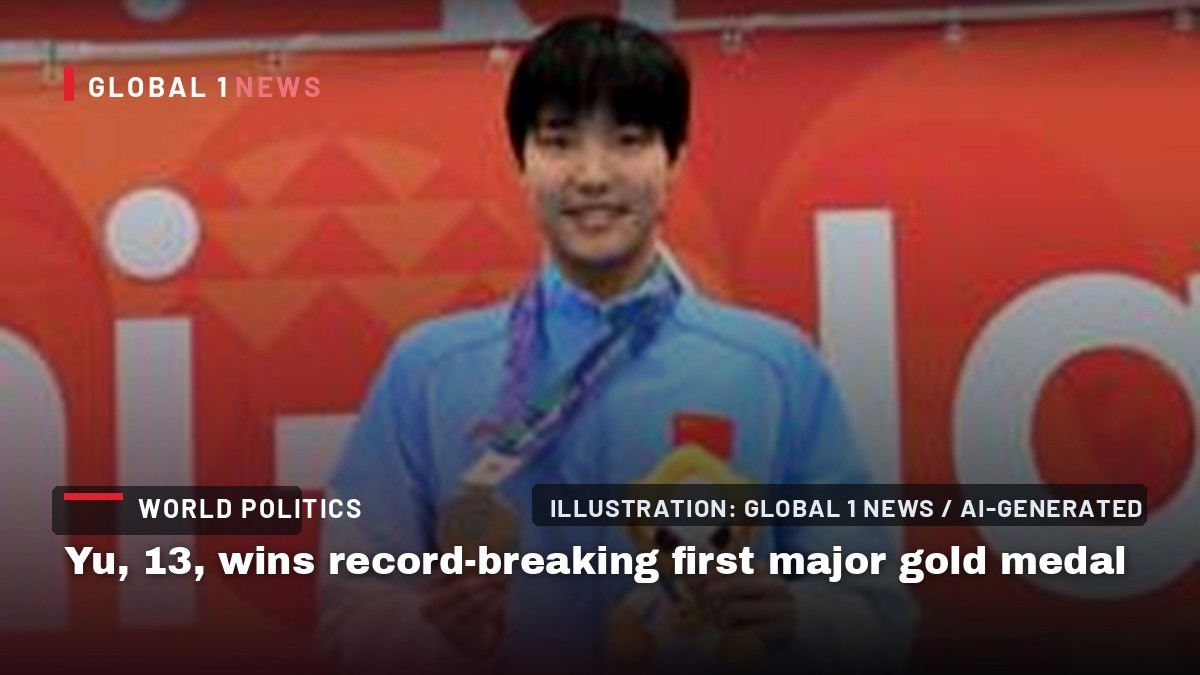
China’s emergence on the global sporting stage has long been a cornerstone of its soft‑power strategy, intertwining athletic achievement with national prestige. The recent triumph of 13‑year‑old swimmer Yu Zidi at the Asian Games in Tokyo underscores this dynamic, illustrating how youthful talent is cultivated within a state‑directed sports system that seeks both domestic legitimacy and international recognition. By examining Yu’s record‑breaking performance, the broader institutional mechanisms that produced it, and the geopolitical reverberations of her ascent, we can discern how China continues to leverage sport as a diplomatic instrument while also navigating the internal pressures of talent development.
Record‑breaking performance and its immediate significance
On the opening day of the Asian Games, Yu Zidi captured the 200 metre women’s butterfly title in a time of two minutes 05.08 seconds, establishing a new Games record that shaved nearly half a second from the previous mark set by fellow Chinese swimmer Zhang Yufei three years earlier. The margin of victory—over three seconds ahead of teammate Chang Mohan—highlighted not only Yu’s dominance in the event but also the depth of China’s talent pool in women’s butterfly.
Yu’s modest post‑race assessment, describing her swim as “only so‑so” and noting that her technique remains “slightly lacking,” reflects a cultural emphasis on continual self‑improvement. She reported an improvement of 0.9 seconds over her previous best, signaling a rapid developmental trajectory that aligns with the state’s long‑term objective of producing world‑class athletes capable of excelling at the forthcoming 2028 Los Angeles Olympics.
Historical context of Chinese youth success in swimming
Yu’s achievement builds upon a pattern of early‑age breakthroughs within China’s swimming program. At age 12, she earned a bronze medal as part of the 4 × 200 metre freestyle relay at the World Championships, becoming the youngest swimmer ever to medal at that level. This precedent illustrates the systematic identification and nurturing of prodigious talent, a hallmark of China’s sports bureaucracy that dates back to the 1990s when the state intensified its focus on Olympic success as a vehicle for national rejuvenation.
The continuity between Yu’s relay bronze and her individual gold underscores the dual pathway of collective and solo development emphasized by Chinese coaches. By integrating young athletes into team events early, the system fosters both technical proficiency and psychological resilience, preparing them for the heightened pressures of individual competition on the continental and global stages.
State‑driven talent pipelines and institutional support
Yu’s rapid ascent is rooted in a highly coordinated talent pipeline that spans local schools, provincial sports academies, and national training centres. While the source material does not detail her specific training environment, the broader Chinese model typically channels promising youngsters into specialised sports schools where academic curricula are adapted to accommodate intensive training schedules. This approach ensures that athletes like Yu receive world‑class coaching, scientific support, and access to state‑funded facilities from an early age.
The emphasis on technique refinement—Yu herself acknowledging a “slightly lacking” butterfly style—reflects the systematic use of biomechanical analysis and sports science within Chinese programs. By embedding such expertise within the athlete’s development, the state aims to convert raw physical talent into refined, internationally competitive performance, thereby reinforcing the narrative of a modern, technologically advanced China.
Soft power implications of youthful sporting triumphs
Beyond the pool, Yu’s victory serves a diplomatic function. International sporting events provide a platform for China to project an image of youthful vigor and progressive opportunity. The narrative of a 13‑year‑old achieving continental glory aligns with the country’s broader messaging about the prospects available to its citizens under the current political system.
Such stories are amplified through state‑controlled media, reinforcing domestic pride while offering an appealing tableau to foreign audiences. By showcasing a young athlete who modestly attributes her success to hard work and future potential, China cultivates a perception of meritocratic advancement that can counterbalance critiques of its political model, especially in the context of heightened US‑China rivalry.
Strategic timing ahead of the 2028 Los Angeles Olympics
The Asian Games performance arrives at a pivotal moment in the lead‑up to the 2028 Los Angeles Olympics. Yu is “strongly tipped” to make an impact at those Games, and her current trajectory suggests she could be a medal contender. The timing of her record‑breaking swim, therefore, functions as both a confidence booster for the athlete and a signal to competitors of China’s depth in women’s butterfly.
From a strategic perspective, early successes in the Olympic cycle allow Chinese sports authorities to allocate resources, refine race strategies, and manage athlete workloads to optimise peak performance in Los Angeles. Yu’s demonstrated capacity to improve her time by nearly a second within a single competition provides a data point for coaches to calibrate training intensity and tapering schedules in the years ahead.
Domestic narrative and the cultivation of national heroes
Within China, Yu’s story is likely to be woven into the larger tapestry of national heroism that the Party employs to galvanise public sentiment. Her humility—characterising a gold‑medal swim as “only so‑so”—mirrors the cultural ideal of modesty prized in Chinese society, while her ambition to “swim even faster” aligns with the collective aspiration for continual national advancement.
The emphasis on her youth and record‑breaking status amplifies her symbolic value, positioning her as a role model for aspiring athletes across the country. By highlighting her achievements in state media, the Party can reinforce the narrative that the nation’s political and economic system nurtures exceptional talent, thereby legitimising its governance model in the eyes of the populace.
Strategic implications for US‑China sporting rivalry
The United States has traditionally viewed international sport as a venue for soft‑power competition with China. Yu’s emergence as a potential Olympic champion adds a new dimension to this rivalry, particularly in events where the US has historically excelled. While the source material does not reference US athletes directly, the broader context of US‑China competition in the 2020s suggests that each new Chinese star intensifies the contest for medal supremacy.
Should Yu translate her Asian Games dominance into Olympic success, it would further cement China’s reputation as a sporting superpower, potentially influencing bilateral perceptions in other arenas such as trade, technology, and security. The symbolic weight of a teenage swimmer standing atop a podium in Los Angeles—a city emblematic of American cultural influence—could resonate beyond the sporting realm, reinforcing narratives of Chinese ascendancy in global affairs.
This article was produced with AI-assisted research and editorial support. Reporting is based on the source material cited below. Sources: BBC News China; bbc.co.uk; Global1.News (21 September 2026).
By Prof. Marcus Chen, Staff Writer
What's Your Reaction?
 Like
1
Like
1
 Dislike
0
Dislike
0
 Love
0
Love
0
 Funny
0
Funny
0
 Wow
0
Wow
0
 Sad
0
Sad
0
 Angry
0
Angry
0

World Politics Analyst at Global1.News. Based in Beijing, covering US-China relations, global trade, and geopolitical strategy. Brings deep analytical perspective to the power dynamics shaping international affairs.















Comments (0)