
Why Brunei prefers ‘quiet diplomacy’ over confrontation in South China Sea
Brunei’s diplomatic posture in the South China Sea continues to be defined by a preference for quiet, low‑key engagement rather than overt confrontation.
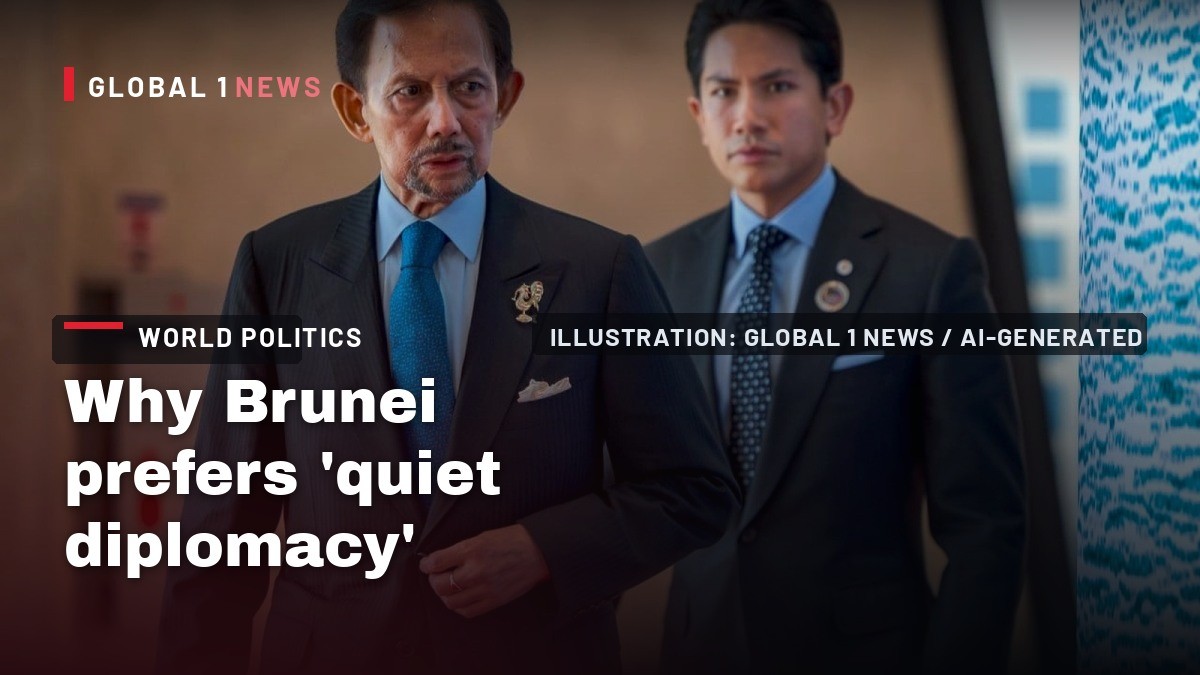
Brunei’s diplomatic posture in the South China Sea continues to be defined by a preference for quiet, low‑key engagement rather than overt confrontation. Recent developments underscore this approach, as the nation’s defence leadership met with Chinese counterparts in Beijing, pledging practical cooperation while deliberately keeping the scope of the relationship modest. Analysts interpret this as a calculated strategy that balances the need for security partnerships with the realities of Brunei’s limited military capacity and its broader foreign‑policy aim of diversification.
Strategic context of Brunei’s defence posture
Brunei Darussalam, a small sovereign state on the island of Borneo, maintains one of the region’s smallest armed forces. This limitation shapes its security calculations, compelling the government to seek partnerships that can offset capability gaps without entangling the nation in contentious disputes. The South China Sea, a maritime arena marked by overlapping claims and heightened naval activity, presents a particular challenge. For Brunei, the stakes are relatively modest compared to larger claimants, yet the potential for escalation remains a concern for the capital, Bandar Seri Begawan.
Within this environment, Brunei’s defence ministry has consistently emphasized contributions to multilateral peacekeeping and humanitarian operations as a means of demonstrating constructive engagement. By focusing on “safe zones” such as United Nations‑mandated missions, the country can align with major powers, including China, while avoiding direct involvement in territorial confrontations. This approach reflects a broader diplomatic philosophy that prioritises stability and incremental cooperation over headline‑grabbing posturing.
Recent high‑level defence dialogue in Beijing
Last Tuesday, Brunei’s Defence Minister Halbi Mohammad Yussof led a delegation to the 13th Beijing Xiangshan Forum, a prominent security conference that convenes senior officials from across Asia and beyond. On the sidelines of the forum, Minister Halbi met with Admiral Dong Jun, the senior Chinese defence official responsible for overseeing the People’s Liberation Army Navy’s strategic outreach. The meeting, described in official statements as “cordial and forward‑looking,” resulted in a mutual pledge to deepen practical cooperation and to support regional stability.
The language used by both sides was deliberately measured. While the two parties expressed a willingness to expand collaboration, there was no indication of a formal defence treaty or a commitment to joint exercises that would significantly alter the existing security architecture. Instead, the emphasis was placed on “practical cooperation” in areas such as maritime safety, training exchanges, and capacity‑building initiatives that align with Brunei’s limited defence budget and operational needs.
Analysts’ interpretation of the diplomatic tone
Security analysts observing the Beijing talks note that the subdued tone is consistent with Brunei’s broader foreign‑policy pattern. The country has historically pursued a “quiet diplomacy” that seeks to maintain harmonious relations with all major powers, avoiding the kind of overt alignment that could provoke retaliation from rival claimants. By focusing on low‑risk cooperation, Brunei can reap the benefits of Chinese goodwill—such as access to training and technical assistance—without compromising its strategic autonomy.
Moreover, the analysts stress that Brunei’s preference for peacekeeping and other non‑combat roles serves a dual purpose. First, it allows the nation to contribute meaningfully to regional security in a manner proportionate to its capabilities. Second, it provides a diplomatic buffer that can be leveraged in negotiations over maritime claims, presenting Brunei as a responsible stakeholder committed to collective stability.
Constraints imposed by maritime claims
Despite the amicable atmosphere of the recent defence dialogue, Brunei’s maritime claims in the South China Sea remain a point of caution. The country’s exclusive economic zone overlaps with contested waters that are also claimed by China, the Philippines, Vietnam, and Malaysia. While Brunei’s claims are relatively modest, any perceived shift towards a more assertive posture could complicate its relations with neighboring states and invite diplomatic friction.
Consequently, Brunei’s defence officials are likely to keep any deepening of ties with Beijing within the bounds of non‑controversial cooperation. The focus on “practical” measures—such as joint training in humanitarian assistance and disaster relief—helps to sidestep the sensitive issue of sovereignty while still delivering tangible benefits to Brunei’s armed forces.
Diversified security partnerships as a hedge
Another cornerstone of Brunei’s security strategy is the cultivation of a diversified network of partners. The nation maintains defence relations not only with China but also with the United States, Japan, Australia, and regional ASEAN members. This multi‑track approach provides Brunei with strategic flexibility, ensuring that it is not overly dependent on any single power.
The recent meeting in Beijing can be viewed as part of this broader balancing act. By engaging China constructively, Brunei signals its willingness to cooperate, while simultaneously keeping channels open with other allies who may view Chinese influence with caution. This diversification reduces the risk that Brunei will be forced to choose sides in any future escalation, preserving its core interest of maintaining peace and stability in its maritime environment.
Implications for regional stability
The incremental cooperation between Brunei and China, though modest in scale, contributes to a wider tapestry of confidence‑building measures in the South China Sea. Each bilateral engagement that emphasizes practical, non‑confrontational collaboration helps to lower the overall tension level, creating a more predictable security environment.
From a regional perspective, Brunei’s approach exemplifies how smaller states can navigate great‑power competition by focusing on niche areas of cooperation that do not threaten the status quo. By aligning its defence activities with broader peacekeeping and humanitarian objectives, Brunei reinforces the narrative that the South China Sea can be managed through dialogue and shared security interests rather than through militarised posturing.
Future outlook for Brunei‑China defence ties
Looking ahead, the trajectory of Brunei‑China defence cooperation is likely to remain incremental. The two sides have signalled an intent to expand practical collaboration, but the scope will be bounded by Brunei’s limited military resources and its need to maintain a balanced set of international partners. Expect future engagements to focus on capacity‑building workshops, joint training in non‑combat scenarios, and continued dialogue at forums such as the Xiangshan Conference.
In the broader strategic calculus, Brunei’s quiet diplomacy serves as a template for other small states seeking to safeguard their interests amid great‑power rivalry. By prioritising stability, modest cooperation, and diversified partnerships, Brunei demonstrates that even nations with modest defence capabilities can play a constructive role in the complex security dynamics of the South China Sea.
This article was produced with AI-assisted research and editorial support. Reporting is based on the source material cited below. Sources: South China Morning Post; scmp.com; Global1.News (23 September 2026).
By Kenji Tanaka, Staff Writer
What's Your Reaction?
 Like
0
Like
0
 Dislike
0
Dislike
0
 Love
0
Love
0
 Funny
0
Funny
0
 Wow
0
Wow
0
 Sad
0
Sad
0
 Angry
0
Angry
0

Japan Correspondent at Global1.News. Tokyo-based voice covering Japanese politics, technology, economy, and culture. Tracks the intersection of tradition and innovation in one of the world's most dynamic societies.














Comments (0)