
UK to review Chagos Islands deal over lack of US support, Streeting tells BBC
Defence Secretary Wes Streeting has confirmed that the United Kingdom will re‑examine its agreement to hand over the Chagos Islands to Mauritius, after US President Donald Trump labelled the deal “terrible” at the United Nations General Assembly.
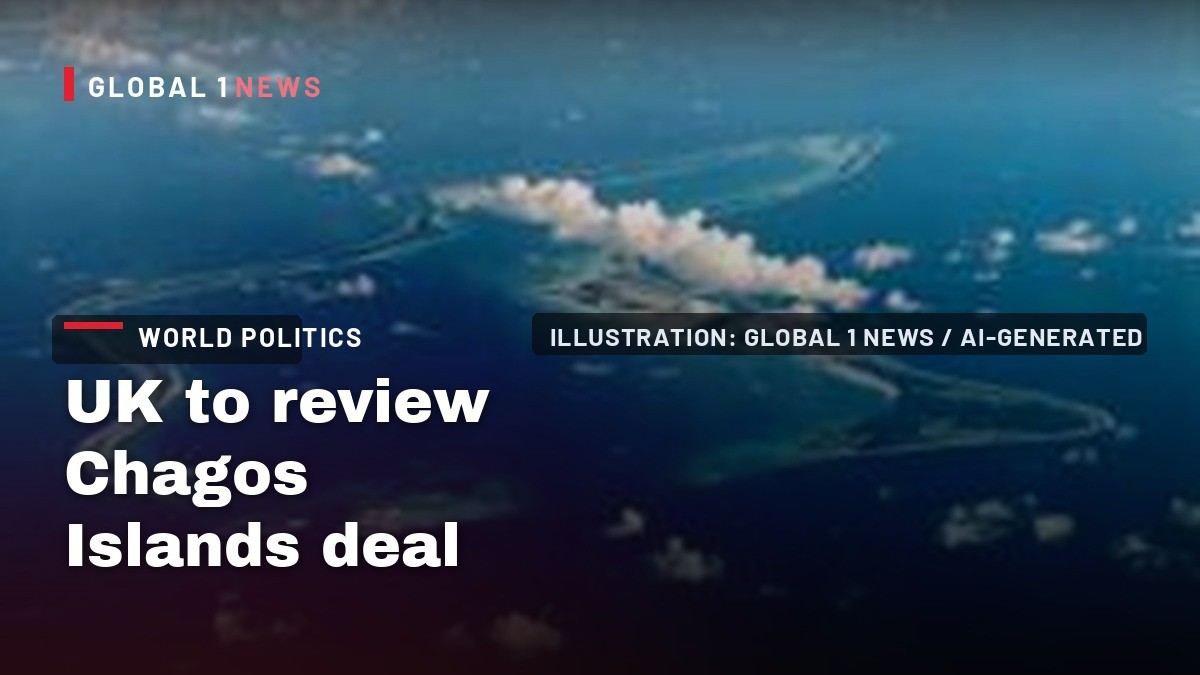
Defence Secretary Wes Streeting has confirmed that the United Kingdom will re‑examine its agreement to hand over the Chagos Islands to Mauritius, after US President Donald Trump labelled the deal “terrible” at the United Nations General Assembly. The review, announced on BBC Breakfast, reflects a growing unease in Westminster that the arrangement – which hinges on American backing – may be untenable without a shift in US policy. As the debate unfolds, the future of the strategic Diego Garcia base, the linchpin of Britain’s Indian Ocean presence, hangs in the balance.
The origins of the Chagos deal
The agreement, first sealed in May 2025, would see Britain cede sovereignty over the Chagos archipelago to Mauritius while leasing back the Diego Garcia military installation for 99 years. In return, the UK would pay an average of £101 million a year to retain the base, a figure the government described as a “net overall cost” of £3.4 billion. The deal was championed by then‑Prime Minister Sir Keir Starmer as a pragmatic solution to a long‑standing sovereignty dispute that dates back to the 1965 forced removal of the Chagossian population.
Critics, however, warned that the financial outlay could swell dramatically when adjusted for inflation, with opponents suggesting a potential cost of up to £35 billion. They also argued that the hand‑over could open a corridor for Chinese influence in the Indian Ocean, a concern that has coloured British strategic thinking since the agreement’s inception.
Trump’s intervention and the April pause
President Trump’s public condemnation of the deal at the UN General Assembly provided the catalyst for the UK’s decision to pause the process indefinitely in April. During a face‑to‑face meeting with Prime Minister Andy Burnham in New York, Trump described the arrangement as “terrible” and warned that the United Kingdom would be “looking” at it. He later reiterated to broadcasters that he had “inherited the situation and we need a resolution”, signalling a clear reluctance to endorse the hand‑over without further concessions.
Streeting’s remarks on BBC Breakfast underscored the significance of the US stance: “What President Trump said yesterday wasn’t new but it does provide absolute clarity that his position on this Chagos deal as currently drafted is not changing.” The defence secretary added that the UK must now “do more work with our American allies… to get the deal to a place where he can support it”, making explicit the dependence of the Chagos settlement on US approval.
Political fallout at home
Within Westminster, the review has sparked a familiar partisan tussle. Conservative leader Kemi Badenoch called on Burnham to “just scrap this terrible deal”, echoing a broader right‑wing narrative that the hand‑over is a betrayal of British interests. Reform UK’s Nigel Farage went further, declaring “The Chagos deal is dead. Thank God.” Both statements highlight how the issue has become a rallying point for opposition parties seeking to capitalise on perceived government weakness.
Streeting, however, sought to temper the rhetoric, describing the base as “one of the most sensitive and valuable national security assets” and insisting that the review is not a formal process with a set timetable. He told BBC Radio 4’s Today programme that no money would be transferred to Mauritius “at this stage”, signalling that the government is still seeking a compromise that can satisfy both American concerns and domestic political pressures.
Legal underpinnings and international context
The Chagos dispute is rooted in a 2019 advisory opinion from the International Court of Justice, which found Britain’s separation of the islands from Mauritius unlawful and urged a rapid end to UK administration. Although the opinion is non‑binding, it was endorsed by the UN General Assembly and has bolstered Mauritian claims to sovereignty. The UK’s 2022 negotiations with Mauritius were a direct response to that legal backdrop, positioning the 2025 agreement as a pragmatic way to resolve the dispute while preserving the Diego Garcia base.
Streeting’s reference to “the view of every UK prime minister since Boris Johnson” that the ongoing legal process threatens the base’s security underscores the continuity of British concerns. Yet the current impasse illustrates how legal, diplomatic, and strategic dimensions intersect, with the US now acting as a decisive arbiter.
The strategic importance of Diego Garcia
Diego Garcia remains the cornerstone of Britain’s power projection in the Indian Ocean, hosting a joint UK‑US military facility that underpins operations ranging from anti‑piracy patrols to intelligence gathering. Its value is amplified by its location, offering a launch point for forces monitoring the increasingly contested maritime routes that link the Middle East, Africa and Asia.
Streeting’s emphasis on securing “long‑term certainty” for the base reflects the anxiety that any uncertainty could erode the UK’s strategic posture. He acknowledged that the forthcoming deal may “not be everyone’s favourite, but everyone can live with”, hinting at a possible compromise that could retain the base while adjusting the terms of sovereignty transfer to appease Washington.
What the review could mean for the future
While the review is not expected to evolve into a formal, time‑bound process, its very existence signals a potential recalibration of the UK’s approach to the Chagos issue. If the United States continues to withhold support, London may be forced to renegotiate the lease terms, seek alternative security guarantees, or even reconsider the hand‑over altogether.
Burnham’s earlier commitment, expressed in a read‑out after speaking with Mauritian President Navin Ramgoolam, to “continue doing everything possible” alongside the US to ratify the deal suggests that the British government still hopes for a diplomatic solution. However, the explicit acknowledgement by Streeting that “without changes the deal is not going to attract Trump’s support” marks a departure from the previous stance that any agreement would simply require American backing.
Implications for UK‑US relations and beyond
The Chagos episode adds a new layer of complexity to an already fraught transatlantic relationship. President Trump’s willingness to publicly denounce a British‑Mauritian agreement – despite earlier backing – indicates a more transactional approach to alliances, where strategic assets are weighed against domestic political considerations.
For the UK, the challenge now lies in navigating a path that safeguards its security interests, respects international legal judgments, and accommodates a US administration that appears increasingly sceptical of the current terms. The outcome of Streeting’s review will likely set a precedent for how Britain manages future defence‑related agreements that depend on allied endorsement, especially as geopolitical competition intensifies across the Indo‑Pacific.
This article was produced with AI-assisted research and editorial support. Reporting is based on the source material cited below. Sources: BBC News UK; bbc.co.uk; Global1.News (23 September 2026).
By Erica Thornton, Staff Writer
What's Your Reaction?
 Like
0
Like
0
 Dislike
0
Dislike
0
 Love
0
Love
0
 Funny
0
Funny
0
 Wow
0
Wow
0
 Sad
0
Sad
0
 Angry
0
Angry
0

US Politics and Policy Correspondent at Global1.News. Based in Washington DC, covering American politics, policy, elections, and the courts. Knows how the system works and tells you what it actually means.











Comments (0)