
Army Commander tasks promoted soldiers on professionalism, family welfare
The gathering, attended by families, senior officers and the local community, was more than a routine decoration; it was a clear signal that the Nigerian Army is sharpening its focus on professionalism, disciplined leadership and the welfare of the families that sustain its ranks.
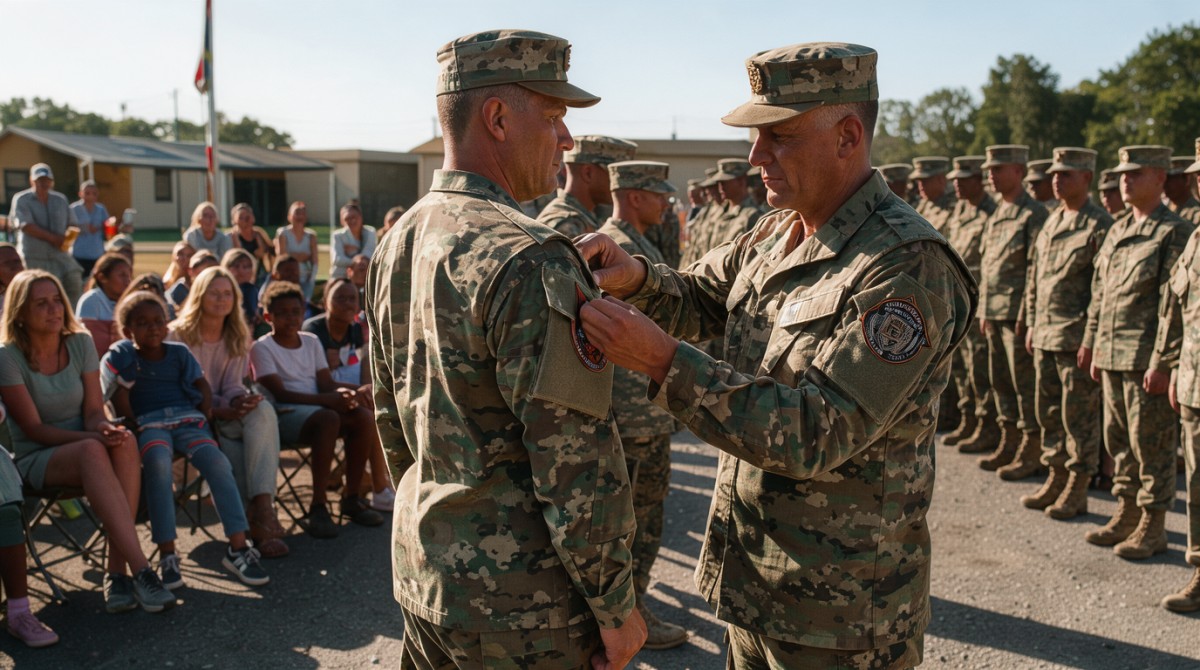
In a ceremony that blended solemn tradition with forward‑looking ambition, Brigadier General Chukwuemeka Michael Akaliro, commander of the 6 Brigade and Sector 2 of Operation Mountain Watch, addressed a group of newly promoted soldiers at the 6 Brigade Soldiers’ Club in Wukari, Taraba State. The gathering, attended by families, senior officers and the local community, was more than a routine decoration; it was a clear signal that the Nigerian Army is sharpening its focus on professionalism, disciplined leadership and the welfare of the families that sustain its ranks.
The ceremony and its significance
The event, held on Thursday, marked the elevation of thirty‑seven soldiers to higher ranks. The promotion list included one Master Warrant Officer, seven Warrant Officers, six Staff Sergeants, one Sergeant, eleven Corporals and eleven Lance Corporals. While the numbers themselves are modest, the ceremony underscored a broader strategic intent: to reinforce a culture of merit and responsibility within the army’s lower and middle echelons.
Brigadier General Akaliro’s charge to the newly promoted personnel was framed around three core themes—professionalism, discipline and exemplary conduct. By foregrounding these values at the moment of promotion, the commander sought to embed them as the yardsticks by which future performance will be measured, linking personal advancement directly to the collective reputation of the force.
Leadership as a mentorship model
One of the most striking elements of the commander’s address was the emphasis on the newly promoted soldiers serving as role models and mentors to junior troops. In a hierarchy where rank often dictates influence, Akaliro’s call for seniority to be exercised with humility and guidance reflects a shift toward a more collaborative command structure. He urged the officers to “promote discipline, dedication and professionalism within the ranks,” a directive that resonates with the army’s ongoing reforms aimed at curbing indiscipline and enhancing operational effectiveness.
This mentorship model aligns with broader African military trends that recognize the importance of peer‑to‑peer learning. By encouraging senior soldiers to actively shape the conduct of their subordinates, the Nigerian Army is fostering a ripple effect that could improve unit cohesion, morale and, ultimately, combat readiness across the continent’s security landscape.
Education as a pathway to greater responsibility
Beyond the call for disciplined conduct, General Akaliro highlighted the importance of personal and professional education. He urged the newly promoted troops to “pursue personal and professional education to enhance their knowledge, prepare for greater responsibilities and achieve higher milestones in their military careers.” This appeal reflects an understanding that modern warfare demands more than physical prowess; it requires analytical thinking, technical proficiency and strategic insight.
In practice, this could translate into increased enrollment in military academies, attendance at specialized courses, and participation in civilian higher‑education programmes. Such educational investments not only prepare soldiers for higher command but also equip them with skills that are transferable to civilian life, thereby strengthening the human capital pool that underpins Nigeria’s broader socioeconomic development.
Family welfare as a pillar of military success
Equally central to the commander’s message was the acknowledgement of families as “a vital pillar of success in military service.” By explicitly urging soldiers to prioritize the welfare of their families, Akaliro recognized that the well‑being of spouses, children and extended relatives directly influences morale and operational focus. The sacrifices made by families—often enduring long periods of separation and uncertainty—are integral to the army’s ability to maintain a disciplined and motivated force.
This emphasis dovetails with ongoing government initiatives aimed at improving military welfare, such as housing schemes, healthcare provisions and educational scholarships for soldiers’ children. By reinforcing the link between family support and professional duty, the commander is championing a holistic approach to service that could reduce attrition and foster a more resilient fighting force.
Personal testimonies from the promoted ranks
Among the decorated, Master Warrant Officer Gowon Marcus spoke on behalf of his peers, describing the promotion as “a call to greater responsibility.” His remarks encapsulated the sentiment that advancement is not merely a personal accolade but a collective commitment to higher standards of loyalty and service. Marcus pledged renewed dedication and unwavering commitment to both the Nigerian Army and the nation, echoing the commander’s expectations.
Such statements from within the ranks are significant; they signal that the message of professionalism is resonating at the ground level. When senior non‑commissioned officers internalize and vocalize these values, they become powerful conduits for cultural change, influencing the attitudes and behaviours of the soldiers they lead.
Implications for Operation Mountain Watch
Sector 2 of Operation Mountain Watch, under the 6 Brigade’s jurisdiction, has been a focal point of counter‑insurgency and border security operations in Nigeria’s north‑eastern frontier. The promotion ceremony, therefore, carries operational weight. By reinforcing discipline and leadership among the troops directly engaged in these missions, the army seeks to sharpen its tactical edge and reduce the frictions that have historically hampered sustained security efforts.
Moreover, the emphasis on education and family welfare can enhance the long‑term sustainability of the operation. Soldiers who are better educated and whose families are secure are less likely to experience the stressors that can lead to misconduct or desertion, thereby maintaining a steadier, more reliable presence in volatile regions.
Broader continental relevance
While the ceremony took place in Wukari, its implications ripple across the African continent. Many nations grapple with similar challenges—balancing the need for disciplined, professional armed forces with the realities of limited resources and complex security environments. Nigeria’s approach, as articulated by Brigadier General Akaliro, offers a template: promote merit, embed mentorship, invest in education, and recognise the indispensable role of families.
As African militaries increasingly engage in joint operations, peacekeeping missions and regional security frameworks, the standards set by one of the continent’s largest armies can influence collective norms. By foregrounding professionalism and welfare, the Nigerian Army is not only strengthening its own ranks but also contributing to a broader narrative of responsible, people‑centric security across Africa.
This article was produced with AI-assisted research and editorial support. Reporting is based on the source material cited below. Sources: Daily Post Nigeria; dailypost.ng; Global1.News (27 November 2026).
By Sarah Okafor, Staff Writer
What's Your Reaction?
 Like
0
 Dislike
0
 Love
0
 Funny
0
 Wow
0
 Sad
0
 Angry
0

Africa Correspondent at Global1.News. Based in Lagos, covering politics, business, technology, and culture across the continent. Focused on telling African stories beyond the headlines — the innovation, entrepreneurs, and communities shaping the region's future.













Comments (0)